Full Text (PDF)
Journal of Global Public Health 5(1):p 55-58, January – June 2023. | DOI: N/A
Case Report
Management of a COVID Positive Electrical Burn Patient: Challenges and Our Experience
Ravi Kumar Chittoria, Nishad K. null, Neljo Thomas, Barath Kumar Singh P, Jacob Antony Chakiath
Author Information
Licence:
Attribution-Non-commercial 4.0 International (CC BY-NC 4.0)This license enables reusers to distribute, remix, adapt, and build upon the material in any medium or format for noncommercial purposes only, and only so long as attribution is given to the creator
Journal of Global Public Health 5(1):p 55-58, January – June 2023. | DOI: N/A
How Cite This Article:
Nishad K, Thomas N, Chittoria RK, et al. Role of Er:YAG laser in full thickness skin grafting: Our experience. J Glob Public Health. 2023;5(1):55–8.Timeline
Received : December 13, 2022
Accepted : December 31, 2022
Published : January 30, 2023
Abstract
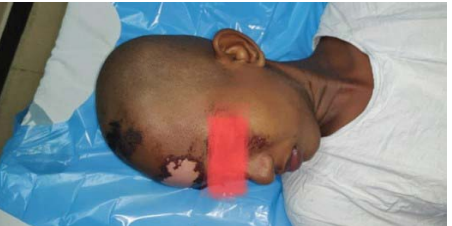
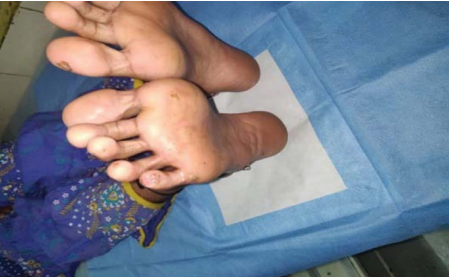
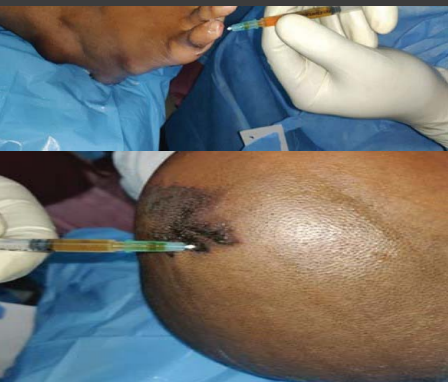
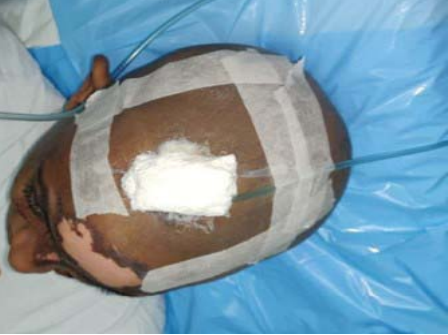
The COVID-19 Pandemic has brought about unprecedented challenges in the management of patients. The increased number of COVID cases compelled the diversion of manpower and infrastructure into the management of COVID patients. The burns patients were a subset of patients who were still given priority even during the pandemic. Like any other specialty Burns units also needed to adapt themselves during this pandemic time in the management of burns, with special care of resources and to prevent transmission of the virus to the healthcare providers as well as to the patients. Among burn patients, electrical burns, in particular, needs to be managed aggressively due to the nature of their pathophysiology. In this article, we share our experience in managing a patient who was detected to be COVID-19 Positive.
References
- 1. Ma S, Yuan Z, Peng Y, et al. Experience and suggestion of medical practices for burns during the outbreak of COVID-19. Burns. 2020;46(4):749–55.
- 2. Gorbalenya AE, Baker SC, Baric RS, et al. Severe acute respiratory syndrome-related coronavirus: The species and its viruses—a statement of the Coronavirus Study Group [Preprint]. bioRxiv 2020.02.07.937862. 2020 [cited 2026 Feb 9]. Lai CC, Shih TP, Ko WC, Tang HJ, Hsueh PR. Severe acute respiratory syndrome coronavirus 2 (SARS-CoV-2) and coronavirus disease-2019 (COVID-19): The epidemic and the challenges. Int J Antimicrob Agents. 2020;55(3):105924.
- 3. Farroha A. Reduction in length of stay of patients admitted to a regional burn centre during COVID-19 pandemic. Burns. 2020;46(7):1715.
- 4. British Association of Aesthetic Plastic Surgeons. Planning for the resumption of elective aesthetic plastic surgery—BAAPS guidance Version 1 [Internet]. London: BAAPS; 2020 May [cited 2020 Jul 5].
- 5. Cooper MA. Electrical injuries in emergency medicine. Medscape [Internet]. 2017 [cited 2026 Feb 9American Burn Association. Burn incidence and treatment in the United States: 2013 fact sheet. Chicago: American Burn Association; 2013.
- 6. Vierhapper MF, Lumenta DB, Beck H, Keck M, Kamolz LP, Frey M. Electrical injury: A long-term analysis with a review of regional differences. Ann Plast Surg. 2011;66(1):43–6.
- 7. Sahin I, Ozturk S, Alhan D, Acikel C, Isik S. Cost analysis of acute burn patients treated in a burn centre: The Gulhane experience. Ann Burns Fire Disasters. 2011;24(1):9–13.
- 8. Saracoglu A, Kuzucuoglu T, Yakupoglu S, et al. Prognostic factors in electrical burns: A review of 101 patients. Burns. 2014;40(4):702–7.
- 9. Sun CF, Lv XX, Li YJ, Li WZ, Jiang L, Li J, et al. Epidemiological studies of electrical injuries in Shaanxi province of China: A retrospective report of 383 cases. Burns. 2012;38(4):568–72.
Data Sharing Statement
There are no additional data available. All raw data and code are available upon request.
Funding
This research received no funding.
Author Contributions
Whether all authors contributed significantly to the work and approve its publication.
Ethics Declaration
This article does not involve any human or animal subjects, and therefore does not require ethics approval.
Acknowledgements
We would like to express our gratitude to the patients, their families, and all those who have contributed to this study.
Conflicts of Interest
The authors report no conflicts of interest in this work.
About this article

Cite this article
Nishad K, Thomas N, Chittoria RK, et al. Role of Er:YAG laser in full thickness skin grafting: Our experience. J Glob Public Health. 2023;5(1):55–8.
Licence:
Attribution-Non-commercial 4.0 International (CC BY-NC 4.0)This license enables reusers to distribute, remix, adapt, and build upon the material in any medium or format for noncommercial purposes only, and only so long as attribution is given to the creator
| Received | Accepted | Published |
|---|---|---|
| December 13, 2022 | December 31, 2022 | January 30, 2023 |
DOI: N/A
Keywords
Electrical burnBurnCOVID-19COVID positiveSearch for Similar Articles
Similar Articles
- Nursing Informatics Applications: Transforming Clinical Documentation and Decis...
- Public Health Interventions for Reducing Screen-Induced Sleep Disruption in Sem...
- Mindfulness in the Digital Era: Leveraging Buddhist Philosophy for 21st Century...
- Mental Health Outcomes in Sickle Cell Anemia through a Qualitative Study
- E-Governance Practices in Indian Universities: A Study of Telangana and Andhra...
Article Level Metrics
Last UpdatedThursday 18 June 2026, 01:15:45 (IST)
239
Accesses
4
60
00
Citations
NA
NA
NA
Download citation
Article Keywords
Keyword Highlighting
Highlight selected keywords in the article text.
Timeline
| Received | December 13, 2022 |
| Accepted | December 31, 2022 |
| Published | January 30, 2023 |
licence
Attribution-Non-commercial 4.0 International (CC BY-NC 4.0)
This license enables reusers to distribute, remix, adapt, and build upon the material in any medium or format for noncommercial purposes only, and only so long as attribution is given to the creator