Full Text (PDF)
Indian Journal of Agriculture Business 12(1):p 21-28, January 2026. | DOI: https://doi.org/10.21088/ijab.2454.7964.12126.3
Original Article
Impact of Government Policies and Programmes on Rural Youth Self-Employment Generation in Rural Nainital, Uttarakhand
Amit Kesarwani, Jayant Singh Farswan, Sneha Dohare
Author Information
Licence:
Attribution-Non-commercial 4.0 International (CC BY-NC 4.0)This license
enables reusers to distribute, remix, adapt, and build upon the material in any
medium or format for noncommercial purposes only, and only so long as
attribution is given to the creator.
Indian Journal of Agriculture Business 12(1):p 21-28, January 2026. | DOI: https://doi.org/10.21088/ijab.2454.7964.12126.3
How Cite This Article:
Jayant Singh Farswan, Amit Kesarwani, Sneha Dohare. Impact of Government Policies and Programmes on Rural Youth Self-Employment Generation in Rural Nainital, Uttarakhand. J Agri Busi 2026; 12(1): 21–28Timeline
Received : September 25, 2025
Accepted : October 29, 2025
Published : June 20, 2026
Abstract
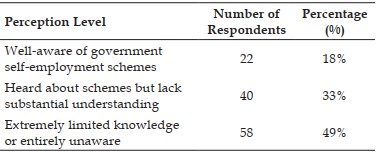
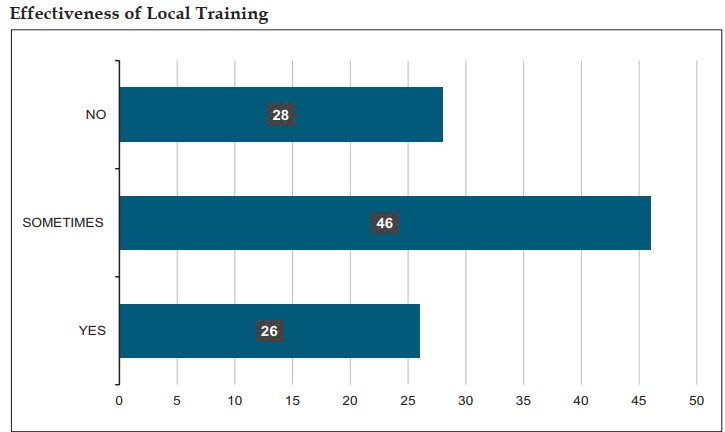
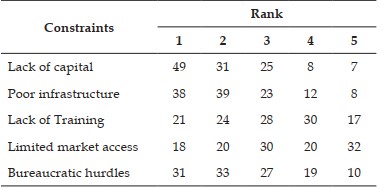
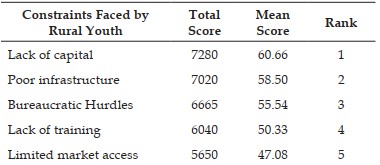
Background: Rural unemployment remains a key challenge in Uttarakhand, where many youths depend on seasonal farming and limited jobs. Promoting selfemployment offers a viable path to reduce migration and improve rural livelihoods. Aims: The study evaluates the effectiveness of government programmes PMEGP, MUDRA, and SVEP in generating self-employment among rural youth in Nainital district. Methods: Using purposive sampling, data were collected from 120 rural youths across hilly and plain zones through surveys and interviews. Descriptive statistics and percentage analysis were applied. Results: Only 18% of respondents were fully aware of self-employment schemes, while 49% remained uninformed. About 58% lacked vocational training, and 46% found existing programmes only moderately effective. Major barriers included lack of capital, weak infrastructure, and bureaucratic hurdles. Conclusion: Government initiatives can transform youth into entrepreneurs, but awareness, training, and credit access remain constraints. Localized outreach, simplified processes, and mentorship are vital for success.
References
- 1. Ahmad, S. B., & Yahiya, A. M. (2023). A study on youth perception and awareness towards entrepreneurship and government schemes in India with special reference to Dindigul district. Digital India: A Progress Towards Sustainable Development Goals (SDGs), 331-342.
- 2. Biswal, P., Sahoo, C. K., & Mishra, N. (2024). Participation among tribal youths of India in vocational training measures: A systematic review of literature. Evaluation and Program Planning, 104, 102530. https://doi. org/10.1016/j.evalprogplan.2024.102530.
- 3. Dhasmana, P., & Bhandari, H. (2022). Hill tourism and its impact on economy and employment generation: A review of Almora district, Uttarakhand. ECS Transactions, 107(1), 8485-8493. https://doi. org/10.1149/10701.8485ecst
- 4. Ghosh, M., Lepakshi, H., Sanjana, S., & Bhaskar, A. A. (2021). A study on the financial and non-financial sectors of rural India. Catalyst - Journal of Business Management, 3(2), 1-20.
- 5. Ilahi, S. (2019). Rural entrepreneurship: The current scenario in India. International Journal of Science and Research, 8(11), 1428-1432.
- 6. Jaisankar, K., & Chandrasekaran, S. (2020). Training and awareness programs for rural entrepreneurship: A pathway to sustainable ventures. Journal of Rural Entrepreneurship Studies, 6(2), 58-66.
- 7. Joshi, N., Nautiyal, A., & Mehra, R. (2022). Challenges of rural entrepreneurship in Uttarakhand: A case study of the Kumaon region. Indian Journal of Development Research, 12(3), 89-97.
- 8. Kumar, G. A., Nain, M. S., Singh, R., Kumbhare, N. V., Parsad, R., & Kumar, S. (2021). Training effectiveness of skill development training programmes among the aspirational districts of Karnataka. Indian Journal of Extension Education, 57(4), 67-70.
- 9. Meera, H. N. (2017). A study on the impact of social background on rural entrepreneurship. International Journal of Research Culture Society, 1(7), 57-62.
- 10. Negi, A., & Singh, B. (2024). Entrepreneurship and self-employment potential among Uttarakhand youth under MUDRA and SVEP schemes. Economic Affairs, 69(1), 65-72.
- 11. Patidar, S. (2017). Opportunities available for entrepreneurs in India. International Research Journal of Engineering and Technology, 4(5), 2390-2392
- 12. Patil, R., & Bhurke, V. (2019). Impact of rural entrepreneurship on migration: A case study of Dahanu, Maharashtra, India. Indian Journal of Agricultural Research, 53(4), 500-503.
- 13. Piketty, T. (2014). Capital in the twenty-first century. Belknap Press of Harvard University
- 14. Radhakrishnan, P., & Arunachalam, R. (2017). Constraints perceived by the rural youth towards participation in rural development activities in Tamil Nadu. International Journal of Educational Science and Research, 7(2), 109-112.
- 15. Rawat, R., & Pandey, S. (2023). Youth migration and employment trends in Uttarakhand’s hill districts. Journal of Rural Studies, 102, 45-54. https://doi.org/10.1016/j. jrurstud.2023.01.004.
- 16. Saud, I. (2019). Rural entrepreneurship: The current scenario in India. International Journal of Science and Research, 8(11), 1428-1432.
- 17. Shivkumar, N. R. (2017). Poverty and employment generation in India. International Journal of Scientific Research in Multidisciplinary Studies, 3(4), 25-29.
- 18. Shrivastava, U., & Dwivedi, A. K. (2020). Manifestations of rural entrepreneurship: The journey so far and future pathways. Management Review Quarterly, 70(2), 1-29. https://doi.org/10.1007/s11301-020-00173-5.
Data Sharing Statement
There are no additional data available. All raw data and code are available upon request.
Funding
This research received no funding.
Author Contributions
All authors contributed significantly to the work and approve its publication.
Ethics Declaration
This article does not involve any human or animal subjects, and therefore does not require ethics approval.
Acknowledgements
We would like to express our gratitude to the patients, their families, and all those who have contributed to this study.
Conflicts of Interest
No conflicts of interest in this work.
About this article

Cite this article
Jayant Singh Farswan, Amit Kesarwani, Sneha Dohare. Impact of Government Policies and Programmes on Rural Youth Self-Employment Generation in Rural Nainital, Uttarakhand. J Agri Busi 2026; 12(1): 21–28
Licence:
Attribution-Non-commercial 4.0 International (CC BY-NC 4.0)This license
enables reusers to distribute, remix, adapt, and build upon the material in any
medium or format for noncommercial purposes only, and only so long as
attribution is given to the creator.
| Received | Accepted | Published |
|---|---|---|
| September 25, 2025 | October 29, 2025 | June 20, 2026 |
DOI: https://doi.org/10.21088/ijab.2454.7964.12126.3
Keywords
Self-EmploymentRural YouthGovernment PoliciesPmegpMudraSvepUttarakhandNainitalSearch for Similar Articles
Similar Articles
- Studies on Bee and Pollination is Changing Environment: A Review
- Cultivating Rosemary: A Guide to its Medicinal and Therapeutic Wonders
- Active Biodegradable Edible Packaging System: An Affluent Predisposition Towards...
- Routine Management Practices for Sustainable Dairy Production
- Diagnosis and Management of Diseases Caused by Abiotic and Biotic Stress in Vege...
Article Level Metrics
Last UpdatedWednesday 21 October 2026, 10:32:22 (IST)
3481
Accesses
27
496
00
Citations
NA
NA
NA
Download citation
Article Keywords
Keyword Highlighting
Highlight selected keywords in the article text.
Timeline
| Received | September 25, 2025 |
| Accepted | October 29, 2025 |
| Published | June 20, 2026 |
licence
Attribution-Non-commercial 4.0 International (CC BY-NC 4.0)
This license
enables reusers to distribute, remix, adapt, and build upon the material in any
medium or format for noncommercial purposes only, and only so long as
attribution is given to the creator.