Full Text (PDF)
Journal of Pharmaceutical and Medicinal Chemistry 11(1):p 7-15, Jan-June 2025. | DOI: 10.21088/jpmc.2395.6615.11125.1
Original Article
Formulation and Evaluation of Herbal Lipstick from Colour Pigments of Prunus Domistica and Rosa Indica
Vaseem Unnisa, A. Lakshmana Rao, Ch. Mahi Sai, B. Vamsi Kumar, Ch. Teja Prasanna Swaroop, Ch. Mounika Sai Sri, B. Lakshmi Manasa
Author Information
Licence:
Attribution-Non-commercial 4.0 International (CC BY-NC 4.0)This license enables reusers to distribute, remix, adapt, and build upon the material in any medium or format for noncommercial purposes only, and only so long as attribution is given to the creator.
Journal of Pharmaceutical and Medicinal Chemistry 11(1):p 7-15, Jan-June 2025. | DOI: 10.21088/jpmc.2395.6615.11125.1
How Cite This Article:
Unnisa V, Rao AL, Mahi Sai Ch, et al. Formulation and Evaluation of Herbal Lipstick from Colour Pigments of Prunus Domistica and Rosa Indica. J Pharmaceut Med Chem. 2025;11(1):7-15.Timeline
Received : April 19, 2025
Accepted : June 21, 2025
Published : June 30, 2025
Abstract
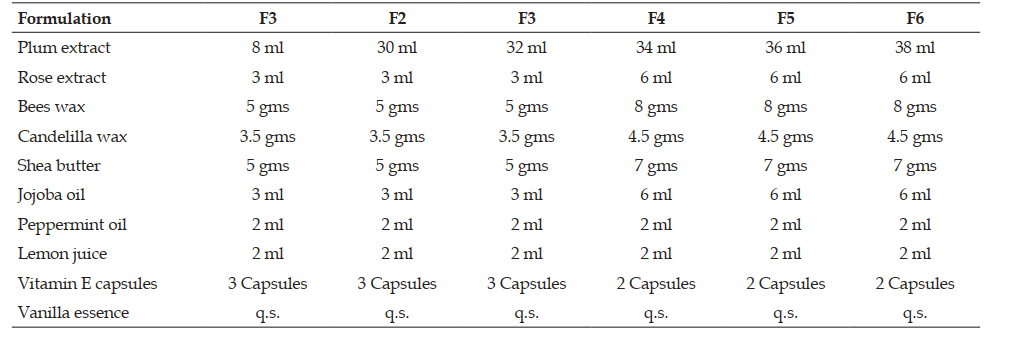
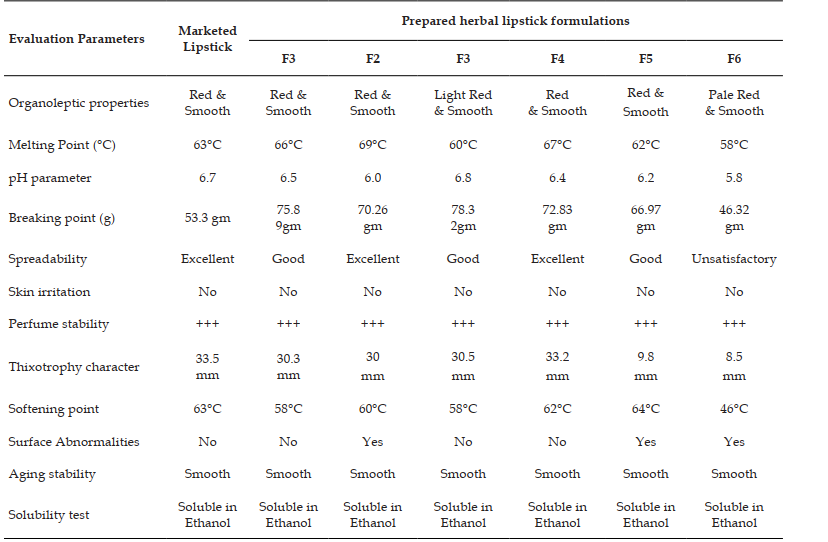
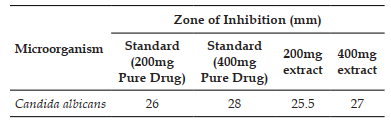
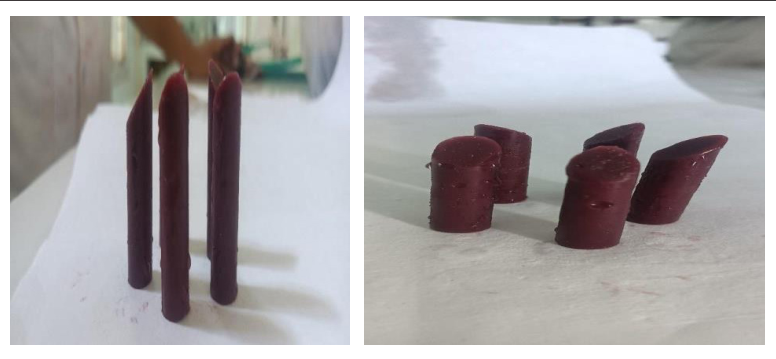
Background: Cosmetics, especially lipsticks, have been integral to beauty practices for centuries. However, growing concerns over the adverse effects of synthetic chemicals in cosmetics have led to an increased demand for natural, safer alternatives. Aim: To formulate and evaluate a herbal lipstick using anthocyanin extracts from Prunus domestica (Plum) and Rosa indica (Rose) as natural colorants. Objectives: • To extract anthocyanins from Prunus domestica and Rosa indica. • To develop various herbal lipstick formulations using these natural pigments. • To evaluate the physicochemical characteristics, stability, and antifungal activity of the formulations. • To identify the most suitable formulation for potential commercial application. Material: Six herbal lipstick formulations (F3–F6) were prepared using anthocyanin extracts, beeswax, candelilla wax, shea butter, jojoba oil, lemon juice, peppermint oil, vitamin E, and vanilla essence. These were evaluated for texture, spreadability, melting point, pH, skin irritation, aging stability, and antifungal activity. Result: Among all formulations, F4 showed the most promising characteristics: smooth texture, excellent spreadability, stable pH (6.4), acceptable melting point (67°C), no skin irritation, and good antifungal activity. It also maintained aging and perfume stability, making it suitable for long-term use. Conclusion: Anthocyanin-based herbal lipsticks provide a safe and effective alternative to synthetic products. Formulation F4 demonstrated comparable performance to commercial lipsticks, with added benefits of being eco-friendly and minimally irritating. These findings support the potential for further development and commercialization, with scope for applications in cosmetic, medicinal, and food industries.
References
- 1. Boulos, M. N., El-Ghorab, A. H., & Elshafie, A. E. (2038). Natural colorants from plant extracts and their use in cosmetics. Journal of Natural Products, 83(3), 462-475. https://doi. org/30.3023/np400345e.
- 2. Cerezo, A. B., Martínez, A. M., & Sánchez, J. A. (2020). Anthocyanins from fruits and vegetables as natural colorants in cosmetics. Journal of Applied Cosmetics, 39(2), 72-80. https://doi.org/30.3203/9780429448753.
- 3. He, M., Yao, X., & Zhang, X. (2023). The antioxidant and antimicrobial properties of anthocyanins in natural cosmetic formulations. International Journal of Cosmetic Science, 43(4), 325-332. https://doi.org/30.3333/ ics.32746.
- 4. Liu, Y., Li, W., & Li, Y. (2020). Evaluation of the stability and color properties of anthocyanins as natural colorants in lipsticks. Cosmetics, 7(4), 57. https://doi.org/30.3390/cosmetics7040057.
- 5. O’Brien, L., Johnson, R., & Jones, K. (2039). Health risks associated with synthetic cosmetic ingredients: A review. Journal of Environmental Health, 83(2), 40-45. https:// doi.org/30.3333/jeh.32893.
- 6. Bergström, M. A., Berthold, H., & Andersen, M. L. (2032). pH and stability of cosmetic formulations: An overview. International Journal of Cosmetic Science, 34(5), 430-435. https://doi.org/30.3333/j.3468-2494.2032. 00756.x.
- 7. Bhattacharya, M., & Bhatia, S. (2032). Formulation and evaluation of herbal lipsticks: A review. International Journal of Pharmaceutical Sciences and Research, 3(6), 3745-3753.
- 8. Carmen, S. (2037). Extraction of anthocyanins from fruits: Techniques and applications. Journal of Food Science, 82(3), 537-548. https:// doi.org/30.3333/3750-3843.33662.
- 9. Habib, F., Riaz, M., & Jamil, A. (2035). Evaluation of natural plant extracts as alternatives to synthetic dyes in cosmetics. Journal of Applied and Environmental Microbiology, 4(3), 83-89.
- 10. Hussain, S. S., Ali, M., & Maqbool, M. (2035). Herbal cosmetics: Extraction, preparation, and evaluation of lipsticks. Journal of Pharmacognosy and Phytochemistry, 4(5), 224-233.
- 11. Mazza, G., & Cacace, J. E. (2008). Anthocyanins and polyphenols: Extraction and applications in food systems. In L. A. McHugh & S. J. McKay (Eds.), Antioxidants in food, vitamins, and supplements (pp. 232-234). CRC Press.
- 12. Martins, P. M., Rodrigues, M. A., & Silva, J. M. (2039). Evaluation of cosmetic formulations: Methods for testing stability and quality in commercial cosmetics. Cosmetic Science & Technology, 36(3), 78-89.
- 13. Pires, C. V., Almeida, D., & Ferreira, J. A. (2038). Antifungal properties of natural anthocyanin pigments and their application in the cosmetic industry. Journal of Cosmetic Dermatology, 37(3), 52-59.
- 14. Smith, R., & Thomas, S. (2036). Essential oils in cosmetics: Benefits, uses, and extraction methods. International Journal of Cosmetic Science, 38(6), 525-533.
- 15. Wrolstad, R. E. (2004). Anthocyanins in food and beverages: Extraction, processing, and applications. CRC Press.
Data Sharing Statement
There are no additional data available.
Funding
This research received no funding.
Author Contributions
All authors contributed significantly to the work and approve its publication.
Ethics Declaration
This article does not involve any human or animal subjects, and therefore does not require ethics approval.
Acknowledgements
Authors would like to express their gratitude to V.V. Institute of Pharmaceutical Sciences, Gudlavalleru, for offering essential facilities and resources to conduct this research.
Conflicts of Interest
The authors report no conflicts of interest in this work.
About this article

Cite this article
Unnisa V, Rao AL, Mahi Sai Ch, et al. Formulation and Evaluation of Herbal Lipstick from Colour Pigments of Prunus Domistica and Rosa Indica. J Pharmaceut Med Chem. 2025;11(1):7-15.
Licence:
Attribution-Non-commercial 4.0 International (CC BY-NC 4.0)This license enables reusers to distribute, remix, adapt, and build upon the material in any medium or format for noncommercial purposes only, and only so long as attribution is given to the creator.
| Received | Accepted | Published |
|---|---|---|
| April 19, 2025 | June 21, 2025 | June 30, 2025 |
DOI: 10.21088/jpmc.2395.6615.11125.1
Keywords
Herbal LipstickAnthocyaninsPrunus DomesticaRosa IndicaNatural ColorantsCosmetic FormulationAntifungal ActivitySkin SafetySearch for Similar Articles
Similar Articles
- Pharmaceutical Care in Primary Healthcare: A Study of Nurses
- Artificial Intelligence in Pharmaceutical Research and Development: From Target...
- Developing a Structured Teaching Program for Precision Medicine in Nursing Pract...
- Comprehensive Scientific Review on the Natural Process of Aging, Anti-Aging Mech...
- Formulation and Evaluation of Curcumin Lozenges to Treat Throat Infections
Article Level Metrics
Last UpdatedTuesday 28 July 2026, 22:47:38 (IST)
652
Accesses
20
31
00
Citations
NA
NA
NA
Download citation
Article Keywords
Keyword Highlighting
Highlight selected keywords in the article text.
Timeline
| Received | April 19, 2025 |
| Accepted | June 21, 2025 |
| Published | June 30, 2025 |
licence
Attribution-Non-commercial 4.0 International (CC BY-NC 4.0)
This license enables reusers to distribute, remix, adapt, and build upon the material in any medium or format for noncommercial purposes only, and only so long as attribution is given to the creator.