Full Text (PDF)
Journal of Plastic Surgery and Transplantation 2(1):p 05-10, 2022 2022. | DOI: Not available
Original Article
Evaluation of Effect of Negative Pressure Wound Therapy on Split Thickness Skin Graft Take
Naveen Kumar, Umesh N, V.K. Tiwari, Anchit Kumar, Harini BS
Author Information
Licence:
Attribution-Non-commercial 4.0 International (CC BY-NC 4.0)This license enables reusers to distribute, remix, adapt, and build upon the material in any medium or format for noncommercial purposes only, and only so long as attribution is given to the creator.
Journal of Plastic Surgery and Transplantation 2(1):p 05-10, 2022 2022. | DOI: Not available
How Cite This Article:
Umesh N, Kumar N, Tiwari VK, et al. Evaluation of effect of negative pressure wound therapy on split thickness skin graft take. J Plast Surg Transpl. 2022;2(1):05-10.Timeline
Received : May 28, 2022
Accepted : June 05, 2022
Published : June 30, 2022
Abstract
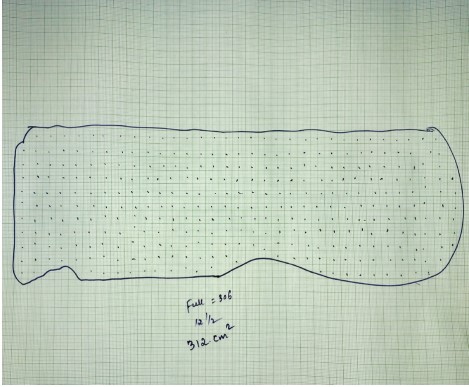
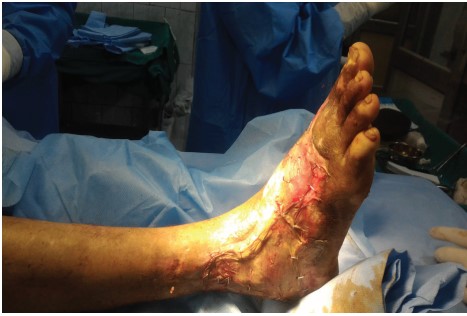
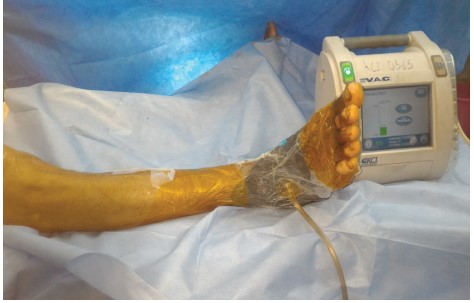
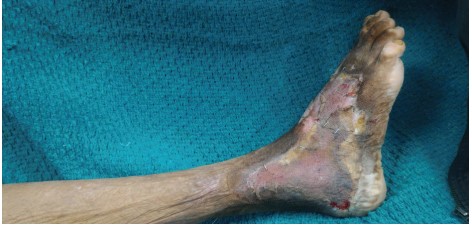
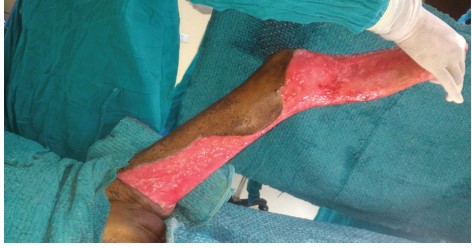
Background: Conventional dressing of choice is a cotton bolster or sterile compressive dressing that is used for at least five days. The negative pressure wound therapy using reticulated open cell foam dressing conforms to the wound geometry by addition of negative pressure and promotes skin graft adherence while removing exudates and oedema from surrounding tissues. Methodology: An observational comparative study was conducted in our department from November 2016 to may 2018. A total of 60 patients were included and the subjects were divided in 2 study groups Group-A i.e. standard dressing group and Group-B i.e. negative pressure wound therapy group of 30 patients each. Initially, during intra-operative period, size of the grafted area was measured in surface area using graph sheet method. Photographs were taken intra operatively and on post operative day 7, Percentage of graft take was measured on post operative day 7. Besides these some other variables were also compared. Result: In Group B, the mean area of grafted wound was 396.70 cm2 with standard deviation of 94.57 and the graft take on postoperative day 7 was 391.83 cm2 with standard deviation of 93.23 showing the statistically significant difference when compared group A. None of the patients in Group B had shown any evidence of haematoma/seroma. Mean numbers of days of hospital stay were less in Group B. Conclusion: Negative pressure wound therapy is effective in improving the percentage of split thickness graft take.
References
- 1. Kloth LC. Adjunctive interventions for wound healing. In: Kloth LC, McCulloch JM, eds. Wound Healing Alternatives in Management, 3rd edition. Philadelphia, PA: FA Davis; 2001.p.345-6.
- 2. Mir Mohsin, Haroon Rashid Zargar, Adil Hafeez Wani, Mohammad Inam Zaroo. Role of customised negative-pressure wound therapy in the integration of split-thickness skin grafts: A randomised control study,Indian Journal of Plastic Surgery Volume 50 Issue 1 January-April 2017.
- 3. Llanos S., Danilla S., Barraza C. et al. Effectiveness of negative pressure closure in the integration of splitthickness skin grafts. Annals of Surgery. 2006; 244:700–05.
- 4. Morykwas MJ, Argenta LC. Use of negative pressure to increase the rate of granulation tissue formation in chronic open wounds. Presented at the annual meeting of the Federation of American Societies for Experimental Biology. New Orleans, LA: March 1993.
- 5. Moisidis E, Heath T, Boorer C, Ho K, Deva AK. A prospective,mblinded, randomized, controlled clinical trial oftopical negative pressure use in skin grafting. Plast Reconstr Surg. 2004;114:917-22.
- 6. Jeschke MG, Rose C, Angele P, Füchtmeier B, Nerlich MN, Bolder U. Development of new reconstructive techniques: Useof Integra in combination with fibrin glue and negative-pressuretherapy for reconstruction of acute and chronic wounds. PlastReconstrSurg. 2004;113:525-30.
- 7. Scherer L.A., Shiver S., Chang M., et al. The vacuum assisted closure device: A method of securing skin grafts and improving graft survival. Archives of Surgery. 2002; 137:930–34.
- 8. Petkar KS, Dhanraj P, Kingsly PM, Sreekar H, Lakshmanarao A, Lamba S, et al. A prospective randomized controlled trial comparing negative pressure dressing and conventional dressing methods on split thickness skin grafts in burned patients. Burns. 2011;37:925-9.
- 9. Dorafshar AH, Franczyk M, Gottlieb LJ, Wroblewski KE, Lohman RF. A prospective randomized trial comparing subatmospheric wound therapy with a sealed gauze dressing and the standard vacuum assisted closure device. Ann Plast Surg. 2012;69:79- 84.
- 10. Blume PA, Key JJ, Thakor P, Thakor S, Sumpio B. Retrospective evaluation of clinical outcomes in subjects with split thickness skin graft: Comparing V.A.C.® therapy and conventional therapy in foot and ankle reconstructive surgeries. Int Wound J. 2010 Dec;7(6):480-7.
- 11. Morykwas MJ, Argenta LC, Shelton-Brown E, McGuirt W. Vacuum assisted closure: a new method for wound control and treatment: animal studies and basic foundation. Ann PlastSurg. 1997;38:553- 62.
- 12. Chen S.Z., Cao D.Y., Li J.Q., et al. Effect of vacuumassisted closure on the expression of protooncogenes andits significance during wound healing. Zhonghua Zheng Xing WaiKeZaZhi. 2005;21: 197.
- 13. Ploumis A., Mehbod A.A., Dressel T.D., et al. Therapy of spinal wound infections using vacuumassisted wound closure: Risk factors leading to resistance to treatment. Journal of Spinal Disorders and Techniques. 2008;21:320–23.
- 14. Stannard J.P., Volgas D.A., Stewart R., et al. Negative pressure wound therapy after severe open fractures: Aprospective randomized study. Journal of Orthopaedic Trauma. 2009;23:552–557.
- 15. Reddix R.N., Tyler H.K., Kulp B., et al. Incisional vacuum- assisted wound closure in morbidly obese patients undergoing acetabular fracture surgery. The American Journal of Orthopedics (Belle Mead NJ). 2009;38:446–49.
Data Sharing Statement
There are no additional data available.
Funding
This research received no funding.
Author Contributions
All authors contributed significantly to the work and approve its publication.
Ethics Declaration
All procedures performedin studies involving human participants werein accordance with the ethical standards of the institutional and/or national research committeeand with the 1964 Helsinki declaration and its lateramendments or comparable ethical standards.
Acknowledgements
Information not provide.
Conflicts of Interest
The authors report no conflicts of interest in this work.
About this article

Cite this article
Umesh N, Kumar N, Tiwari VK, et al. Evaluation of effect of negative pressure wound therapy on split thickness skin graft take. J Plast Surg Transpl. 2022;2(1):05-10.
Licence:
Attribution-Non-commercial 4.0 International (CC BY-NC 4.0)This license enables reusers to distribute, remix, adapt, and build upon the material in any medium or format for noncommercial purposes only, and only so long as attribution is given to the creator.
| Received | Accepted | Published |
|---|---|---|
| May 28, 2022 | June 05, 2022 | June 30, 2022 |
DOI: Not available
Keywords
WoundTherapyNegative pressureSkin graftHaematomaSearch for Similar Articles
Similar Articles
- Application of Amnion Allograft in Treatment of Thermal Burns
- Bio-cellulose Dressing in the Management of Deep Second-Degree Burns: Our Experi...
- Autologous Whole Blood Clot Matrix in the Management of SecondDegree Burns
- CT Image Reconstruction & 3D Reconstruction CT in Plastic Surgery: A Review
- Out of Love and Affection: A Medicolegal Paradox for Denying Gains Vs Pleading C...
Article Level Metrics
Last UpdatedSaturday 24 October 2026, 22:37:32 (IST)
1122
Accesses
16
539
00
Citations
NA
NA
NA
Download citation
Article Keywords
Keyword Highlighting
Highlight selected keywords in the article text.
Timeline
| Received | May 28, 2022 |
| Accepted | June 05, 2022 |
| Published | June 30, 2022 |
licence
Attribution-Non-commercial 4.0 International (CC BY-NC 4.0)
This license enables reusers to distribute, remix, adapt, and build upon the material in any medium or format for noncommercial purposes only, and only so long as attribution is given to the creator.