Full Text (PDF)
Journal of Nurse Midwifery and Maternal Health 9(3):p 89-94, September - December 2023. | DOI: https://doi.org/10.21088/jnmmh.2454.7506.9323.1
Original Article
Empowering Primipara Mothers through Structured Teaching Programme: A Quasi-Experimental Study on Enhancing Knowledge of Perineal Care
Shatrughan Pareek, Hemlata Bhanwaria, Himanshu Soni, Lekha Chouhan, Nitesh Kumawat, Jyoti Bala Jangid
Author Information
Licence:
Attribution-Non-commercial 4.0 International (CC BY-NC 4.0)This license
enables reusers to distribute, remix, adapt, and build upon the material in any
medium or format for noncommercial purposes only, and only so long as
attribution is given to the creator.
Journal of Nurse Midwifery and Maternal Health 9(3):p 89-94, September - December 2023. | DOI: https://doi.org/10.21088/jnmmh.2454.7506.9323.1
How Cite This Article:
Hemlata Bhanwaria, Himanshu Soni, Lekha Chouhan et al./Empowering Primipara Mothers through Structured Teaching Programme: A Quasi-Experimental Study on Enhancing Knowledge of Perineal Care/J Nurse Midwifery Matern Health. 2023;9(2):89–94.Timeline
Received : May 24, 2023
Accepted : June 26, 2023
Published : December 30, 2023
Abstract
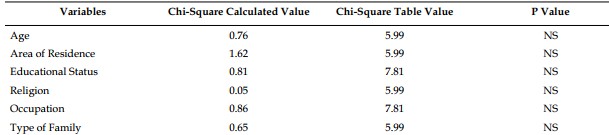
Introduction: Childbirth is a life-altering experience for every woman, particularly for firsttime mothers (primiparas). The postpartum pe riod is a crucial time when a mother requires special care, including perineal care, to ensure optimal recovery and prevent complications. This quasi-experimental study aimed to assess the effect of a structured teaching program on the knowledge of perineal care among primipara mothers. Methods: A quasi-experimental study was conducted on 60 primipara mothers who were randomly assigned to either the intervention or control group. The intervention group received a structured teaching programme on perineal care, while the control group received routine care. Pre and post-test assessments were conducted to evaluate the knowledge of both groups. The data was analyzed using descriptive statistics, independent t-tests, and chi-square tests. Results: The study found a significant improvement in knowledge regarding perineal care among the intervention group (p<0.0001), while no significant improvement was observed in the control group (p=0.11). The chi-square test also showed no significant association between knowledge and demographic variables such as age, area of residence, educational status, religion, occupation, and type of family. Conclusion: The structured teaching programme was effective in improving the knowledge of primipara mothers regarding perineal care. The study suggests that healthcare providers should incorporate structured teaching programmes in their routine care to improve the knowledge of mothers regarding perineal care.
References
- 1. American College of Obstetricians and Gynecologists. (2018). ACOG Committee Opinion No. 742: Postpartum Care. Obstetrics & Gynecology, 131(5), e140-e150. doi:10.1097/ AOG.0000000000002633.
- 2. WHO Reproductive Health Library. (2011). Episiotomy: A RHL summary. Geneva: World Health Organization.
- 3. International Institute for Population Sciences (IIPS) and ICF. (2017). National Family Health Survey (NFHS-4), India, 2015-16: Rajasthan. Mumbai: IIPS.
- 4. Ahmed, H. M., & Abd-El-Maw good, E. A. (2018). Evaluation of episiotomy practice in a rural hospital in Egypt. International Journal of Women's Health, 10, 39-44. doi:10.2147/IJWH. S152504.
- 5. Jangland, E., Ladfors, L., & Gåreberg, B. (2019). Negative and positive experiences of childbirth in women with high and low levels of fear: Findings from a Swedish cohort study. Journal of Obstetric, Gynecologic, and Neonatal Nursing, 48(6), 647-656. doi:10.1016/j. jogn.2019.08.005.
- 6. Rathore, A. M., & Gupta, S. (2017). Study on perineal hygiene practices among postnatal mothers. International Journal of Scientific Research, 6(2), 164-166. doi:10.36106/ ijsr/6217537.
- 7. Liu, N. H., Mazzoni, A., & Zamberlin, N. (2019). Interventions to improve postpartum perineal pain and/or healing: A systematic review and meta-analysis. Women and Birth, 32(1), 3-13. doi:10.1016/j.wombi.2018.03.003.
- 8. Javadpour, M., Sheikh, M., & Kalani, N. (2016). The effect of perineal care education on primiparous women's health. Iranian Journal of Nursing and Midwifery Research, 21(3), 277–281.
- 9. Rizk, D. E., Othman, S., & Morsi, M. M. (2019). Postpartum perineal care: A cross-sectional study among women in Alexandria, Egypt. Women and Birth, 32(2), e232–e238.
- 10. Saberi, F., Heydari, A., Azam, S., & Mohammad poorasl, A. (2017). The effect of educational intervention on knowledge and performance of postpartum perineal care. Journal of Clinical and Diagnostic Research, 11(4), QC06–QC09.
- 11. Tzeng, Y. L., & Yin, T. J. (2008). Women's knowledge of perineal care during postpartum period. Journal of Nursing Research, 16(4), 307–316.
- 12. M. Anjali, M. Bijaya & P. Shatrughan (2021). The knowledge and practices toward neonatal care among primipara mothers in Dehradun, Uttarakhand: a correlation study. MRIMS Journal of Health Science, 9(2), 124–126.
- 13. Kumar S., Pareek S (2021). Impact of Videoassisted Teaching Programs Regarding Hand Hygiene among Oncology Nurses. MGM Journal of Medical Science, 8(2), 131-135.
- 14. Anupam Pareek, Narendra Kumar Kausik, Ghanshyam Jangir, Shatrughan Pareek (2018). The Effectiveness of planned teaching programme regarding knowledge on selected venous access device care among B.Sc Nursing final year Students. Asian Journal of Nursing Education Research, 8(4),471-474. doi: 10.5958/2349-2996.2018.00095.2.
- 15. Adetokunbo, O. A., Onasoga, O. A., Balogun, M. R., Olakunle, O. O., & Oyewumi, A. S. (2020). Effectiveness of a structured teaching program on the knowledge and practice of perineal care among Nigerian mothers. Journal of Public Health in Africa, 11(2), 1200.
Data Sharing Statement
There are no additional data available. All raw data and code are available upon request.
Funding
This research received no funding.
Author Contributions
All authors contributed significantly to the work and approve its publication.
Ethics Declaration
This article does not involve any human or animal subjects, and therefore does not require ethics approval.
Acknowledgements
We would like to express our gratitude to the patients, their families, and all those who have contributed to this study.
Conflicts of Interest
No conflicts of interest in this work.
About this article

Cite this article
Hemlata Bhanwaria, Himanshu Soni, Lekha Chouhan et al./Empowering Primipara Mothers through Structured Teaching Programme: A Quasi-Experimental Study on Enhancing Knowledge of Perineal Care/J Nurse Midwifery Matern Health. 2023;9(2):89–94.
Licence:
Attribution-Non-commercial 4.0 International (CC BY-NC 4.0)This license
enables reusers to distribute, remix, adapt, and build upon the material in any
medium or format for noncommercial purposes only, and only so long as
attribution is given to the creator.
| Received | Accepted | Published |
|---|---|---|
| May 24, 2023 | June 26, 2023 | December 30, 2023 |
DOI: https://doi.org/10.21088/jnmmh.2454.7506.9323.1
Keywords
Perineal CarePrimipara MothersStructured Teaching ProgrammeKnowledgeHealthcareSearch for Similar Articles
Similar Articles
- Psychological Distress and Quality of Life Among Parents of Children with Cancer...
- We Must be Aware about Water Birth: An Overview
- Digital Health Literacy Among Mothers and Its Impact on Neonatal Outcomes: An In...
- Effectiveness of Vedio assisted Technique Programme on knowledge regarding Techn...
- A Comprehensive review of Uterine Prolapse: Etiology, Diagnosis of Management
Article Level Metrics
Last UpdatedTuesday 29 September 2026, 16:32:10 (IST)
1780
Accesses
3
293
00
Citations
NA
NA
NA
Download citation
Article Keywords
Keyword Highlighting
Highlight selected keywords in the article text.
Timeline
| Received | May 24, 2023 |
| Accepted | June 26, 2023 |
| Published | December 30, 2023 |
licence
Attribution-Non-commercial 4.0 International (CC BY-NC 4.0)
This license
enables reusers to distribute, remix, adapt, and build upon the material in any
medium or format for noncommercial purposes only, and only so long as
attribution is given to the creator.