Full Text (PDF)
International Journal of Food, Nutrition & Dietetics 12(3):p 120-124, September - December 2024. | DOI: https://doi.org/10.21088/ijfnd.2322.0775.12324.3
Original Article
Effect of Zinc Rich Supplementation of Sesame Seeds Incorporated Biscuits on FBG of Type-2 Diabetic Subjects
Author Information
Licence:
Attribution-Non-commercial 4.0 International (CC BY-NC 4.0)This license enables reusers to distribute, remix, adapt, and build upon the material in any medium or format for noncommercial purposes only, and only so long as attribution is given to the creator.
International Journal of Food, Nutrition & Dietetics 12(3):p 120-124, September - December 2024. | DOI: https://doi.org/10.21088/ijfnd.2322.0775.12324.3
How Cite This Article:
Silky and Gita Bisla, Effect of Zinc Rich Supplementation of Sesame Seeds Incorporated Biscuits on FBG of Type-2 Diabetic Subjects. Int J Food Nutr Diet. 2024;12(3):120-124.Timeline
Received : September 11, 2024
Accepted : October 13, 2024
Published : December 30, 2024
Abstract
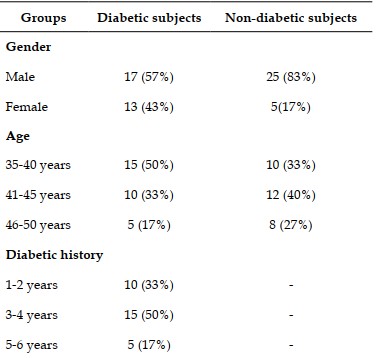
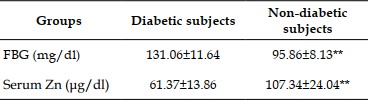
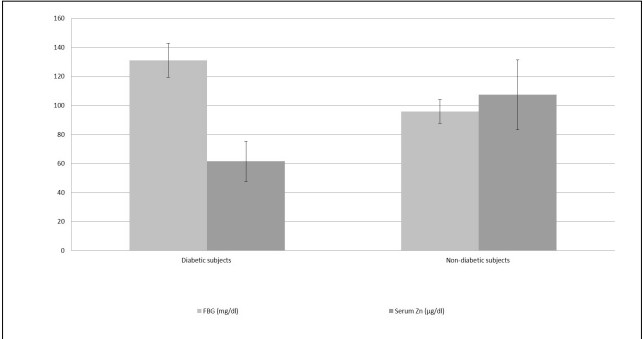
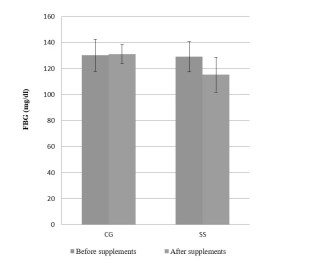
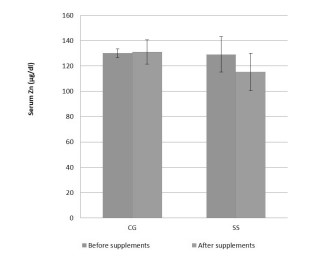
Introduction: The zinc ion plays an essential role with insulin in the pancreatic β cell, activating multiple cell signaling cascades. It also plays a relevant role in antioxidant defense in patients with type 2 diabetes mellitus. Supplementation of zinc has been found to improve insulin level and fasting glucose level. Sesame (Sesamum indicum, family Pedaliaceae) seeds are one of the richest sources of zinc, iron and also have pharmacological activities such as antidiabetic, antihypertensive, antibacterial and antioxidant effects. Objectives: the aim of present study, to evaluate serum zinc level in normal and type-2 diabetic patients and to assess the effect of zinc food supplementation in the improvement in control of blood glucose level. Methodology: In the study normal (n-30) and type-2 diabetic (n-30) volunteer subjects of both genders (age 35-50 years) enrolled for the study. All normal and diabetic subjects were screened for FBG and serum zinc level, to find out if there is any correlation between serum zinc level and FBG level. Then the group of diabetic subjects was supplemented biscuits prepared by incorporation of defatted sesame seeds powder with 3mg/day zinc content. Intervention was done for 45 days. All diabetic subjects were screened after zinc supplementation for FBG and serum Zn level, to compare both normal and diabetic subjects to assess the effect of zinc in diabetic subjects FBG level again. Results: The results revealed that the mean of serum zinc level in normal subjects was 107.34±24.04 μg/dl and diabetic subjects it was 61.37±13.86 μg/dl. The mean of FBG in non-diabetic subjects was 95.86±8.13 mg/dl and in diabetic subjects was 131.06±11.64mg/dl. After the supplementation of zinc in diabetic subjects in serum zinc level was increased to 109.53±14.79 µg/dl and FBG decreased to 115.26±13.51 mg/dl and these changed were significantly at 1% level of significance. Conclusion: Zinc supplementation in patients with diabetes improves glycemic control and promotes healthy life. So, in study the role of zinc has been found to be associated with the improvement of glycemic control.
References
- 1. Alam, S, Hasan, MK, Neaz S; Hussain N, Hossain, MF, Rahman, T Diabetes Mellitus: Insights from Epidemiology, Biochemistry, Risk Factors, Diagnosis, Complications and Comprehensive Management Diabetology 2021, 2, 36-50 https:// doiorg/103390/ diabetology2020004
- 2. Carocho M, Ferreira IC. A review on antioxidants, prooxidants and related controversy: natural and synthetic compounds, screening and analysis methodologies and future perspectives. Food Chem Toxicol 2013; 51: 15-25 PMID: 23017782 DOI: 10.1016/j.fct.2012.09.021
- 3. Chen L, Chen R, Wang H, Liang F. Mechanisms linking inflammation to insulin resistance. Int J Endocrinol. 2015. 1–9
- 4. Cruz KJC, de Oliveira ARS, Morais JBS, Severo JS, Mendes PMV, de Sousa Melo SR, et al. Zinc and insulin resistance: biochemical and molecular aspects. Biol Trace Elem Res. 2018; 186:407–12.
- 5. Cruz, K. J. C., de Oliveira, A. R. S. & Marreiro, D. do N. Antioxidant role of zinc in diabetes mellitus. World J. Diabetes 6, 333–337 (2015).
- 6. Wessels, I., Fischer, H. J., & Rink, L. (2012). Dietary and physiological effects of zinc on the immune system. Annual review of nutrition, 41(1), 133-175.
- 7. Hotz. C., Peerson. J.M., Brown. K.H. (2003). Suggested lower cutoffs of serum zinc concentrations for assessing zinc status: reanalysis of the second national health and nutritional examination survey data (1976-1980). Am J Clin Nutr, 78:756-64
- 8. Norouzi, S., Adulcikas, J., Sohal, S. S. & Myers, S. Zinc transporters and insulin resistance: therapeutic implications for type 2 diabetes and metabolic disease. J. Biomed. Sci. 24, 87 (2017).
- 9. Selvaraj, K., Ramaswamy, G., Radhakrishnan, S., Thekkur, P., Chinnakali, P., & Roy, G. (2016). Selfcare practices among diabetes patients registered in a chronic disease clinic in Puducherry, South India. Journal of Social health and Diabetes, 4(01), 025-029.
- 10. Shivhare, N., & Satsangee, N. (2012). Wonders of sesame: nutraceutical uses and health benefits. Chemistry of Phytopotentials: Health, Energy and Environmental Perspectives, 63-68.
- 11. Silky and Bisla. G. (2024).Nutritional profile and sensory attributes of sesame seedsflour incorporated biscuitsGlobal journal for research analysis, 13(04), 2277-8160, doi: 10.36106/gjra
- 12. Silky and Bisla. G. (2024). Phytochemical composition, medicinal benefits and foodapplications of sesame seeds.International Journal of Scientific Research, 13(05), 2277-8179., doi: 10.36106/ijsr
- 13. Tomic D, Shaw, JE and Magliano, DJ The burden and risks of emerging complications of diabetes mellitus. Nat Rev Endocrinol 18:525–539. 2022. https://doiorg/101038/s41574-022-00690-7
- 14. Wei, P., Zhao, F., Wang, Z., Wang, Q., Chai, X., Hou, G., & Meng, Q. (2022). Sesame (Sesamum indicum L.): A comprehensive review of nutritional value, phytochemical composition, health benefits, development of food, and industrial applications. Nutrients, 14(19), 4079.
Data Sharing Statement
There are no additional data available. All raw data and code are available upon request.
Funding
This research received no funding.
Author Contributions
All authors contributed significantly to the work and approve its publication.
Ethics Declaration
This article does not involve any human or animal subjects, and therefore does not require ethics approval.
Acknowledgements
We would like to express our gratitude to the patients, their families, and all those who have contributed to this study.
Conflicts of Interest
No conflicts of interest in this work.
About this article

Cite this article
Silky and Gita Bisla, Effect of Zinc Rich Supplementation of Sesame Seeds Incorporated Biscuits on FBG of Type-2 Diabetic Subjects. Int J Food Nutr Diet. 2024;12(3):120-124.
Licence:
Attribution-Non-commercial 4.0 International (CC BY-NC 4.0)This license enables reusers to distribute, remix, adapt, and build upon the material in any medium or format for noncommercial purposes only, and only so long as attribution is given to the creator.
| Received | Accepted | Published |
|---|---|---|
| September 11, 2024 | October 13, 2024 | December 30, 2024 |
DOI: https://doi.org/10.21088/ijfnd.2322.0775.12324.3
Keywords
DiabetesZincSesameSupplementsInsulinSearch for Similar Articles
Similar Articles
- Smart and Sustainable Packaging Approaches for Reducing Heavy Metal Contaminatio...
- Traditional Rhythms for Modern Health: Seed Cycling in the Management of Women’s...
- School-Based Nutrition Education Improves Knowledge and Consumption of Omega-3-R...
- Nutrition as Precision Therapy in Rare Genetic Diseases: Moving beyond Supportiv...
- A Review on Health Risks Associated with the Repetitive use of Cooking Oil and D...
Article Level Metrics
Last UpdatedMonday 07 September 2026, 02:46:29 (IST)
1797
Accesses
4
247
00
Citations
NA
NA
NA
Download citation
Article Keywords
Keyword Highlighting
Highlight selected keywords in the article text.
Timeline
| Received | September 11, 2024 |
| Accepted | October 13, 2024 |
| Published | December 30, 2024 |
licence
Attribution-Non-commercial 4.0 International (CC BY-NC 4.0)
This license enables reusers to distribute, remix, adapt, and build upon the material in any medium or format for noncommercial purposes only, and only so long as attribution is given to the creator.