Full Text (PDF)
International Journal of Food, Nutrition & Dietetics 13(1):p 11-16, Jan -April 2025. | DOI: https://doi.org/10.21088/ijfnd.2348.9987.161224.2
Original Article
Effect of Soaking Time on the Anti-Nutritional Properties of Barnyard Millet (Echinochloa frumentacea)
Author Information
Licence:
Attribution-Non-commercial 4.0 International (CC BY-NC 4.0)This license enables reusers to distribute, remix, adapt, and build upon the material in any medium or format for noncommercial purposes only, and only so long as attribution is given to the creator.
International Journal of Food, Nutrition & Dietetics 13(1):p 11-16, Jan -April 2025. | DOI: https://doi.org/10.21088/ijfnd.2348.9987.161224.2
How Cite This Article:
Manasa R, Shekhara Naik R. Effect of Soaking Time on the Anti-Nutritional Properties of Barnyard Millet (Echinochloa frumentacea). International Journal of Food, Nutrition and Dietetics. 2025;13(1): 11–16.Timeline
Received : February 28, 2025
Accepted : March 27, 2025
Published : April 30, 2025
Abstract
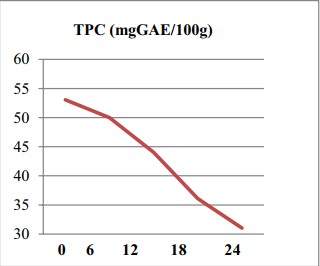
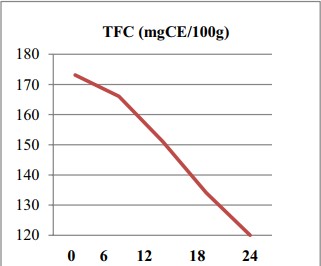
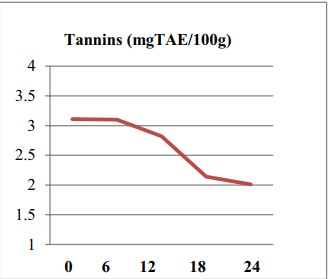
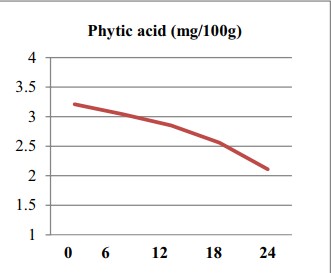
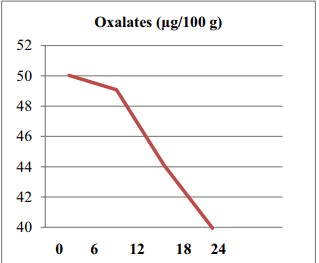
Background: Millets serve as a staple food for a significant portion of the global population. Despite their high nutritional value and therapeutic benefits, they are often overlooked. While millets contain certain anti-nutrients that may have adverse health effects, employing specific processing methods can effectively reduce these compounds. Materials and methods: In the present study, soaking was used as the method to reduce the anti-nutrients like tannins, phytates and oxalates, phenolics and flavonoids. The grains were washed and soaked for different time periods from 6, 12, 18, 24 hours. Results: Results showed that Total phenolic content (TPC) content varied from 31.03 to 53.06 mgGAE/100g; Total flavonoid content (TFC) content varied from 120.02 to 173.12 mgCE/100g; Tannin content varied from 2.01 to 3.11 mgTAE/100g; Phytic acid content varied from 2.11 to 3.21 mg/100g; Oxalate content varied from 0.03 to 0.05 µg/100g. Conclusion: The results indicate that the anti-nutrients of the barnyard millet can be reduced by soaking the millet grains before cooking which also improves the cooking quality and increases the digestibility of the barnyard millet.
References
- 1. Upadhyaya HD, Dwivedi SL, Singh SK, Singh S, Vetriventhan M, Sharma S. Forming core collection in barnyard , kodo and little millet using morphogronomic descriptors. Crop Sci. 2014: 54(6); 2673-2682.
- 2. Dwivedi SH, Upadhyay S, Senthilvel C, Hash K, Fukunaga XDD, Santra D, Baltensperger, Prasad M. Millet genetic and genomic resources. Plant Breeding Rev. 2012; 35: 247- 375.
- 3. Veena B, ChimKmad BV, Naik RK, Malagiu. Physico-chemical and nutrition studies in Barnyard millet Karnatka. Journal of Agriculture Sciences. 2005; 18(1):101-105.
- 4. Vijayakumar PT, Mohankumar BJ, Srinivasial T. Quality evaluation of noodles from millet flour blend incorporated composite flour. Journal of Scientific and Indusrtrial Research. 2010; 69(1):48-54.
- 5. Prakash D, Suri S, Upadhyay G and BN Singh Total phenol, antioxidant and free radical scavenging activities of some medicinal plants. International Journal of Food Science and Nutrition. 2007; 58(1):18-28.
- 6. Lestiennem I, Mouquet-Rivier C, IcardVerniere C, Rochette I and S Treche The effects of soaking of whole, dehulled and ground millet and soybean seeds on phytate degradation and Phy: Fe and Phy: Zn molar ratios. International Journal of Food Science. 2005; 40(4): 391-399.
- 7. Swami SB, Thakor NJ and HS Gurav Effect of soaking and malting on finger millet (Eleusine Coracana) grain. Agricultural Engineering International: CIGR Journal. 2013; 15(1):194-200.
- 8. Singleton VL, Orthofer R and RM LamuelaRaventós Analysis of total phenols and other oxidation substrates and antioxidants by means of FolinCiocalteu reagent. Methods in Enzymology. 1998; 299: 152–178.
- 9. Lamaison JLC, Carnet A (1990) Teneures en principaux flavonoids des fleurs de Crataegeus monogyna Jacq et de Crataegeus laevigata (Poiret D.C.) en fonction de la vegetation. Pharm Acta Helvetiae 65:315–320
- 10. Makkar H P S Quantification of tannins in tree and shrubs foliages – a laboratory manual. The Netherland: Kluwer Academic Press Dordrecht. 2003.
- 11. Holt R. Studies on dried peas I—The determination of phytate phosphorus. J. Sci. Food Agric. 1955;6:136–142. doi: 10.1002/ jsfa.2740060303.
- 12. Day, R.A. and Underwood, A.L. (1986) Quantitative Analysis. 5th Edition, Prentice Hall Publication, Upper Saddle River, 701.
- 13. Guo, W., & Romano, J. (2007). A generalized Sidak-Holm procedure and control of generalized error rates under independence. Statistical applications in genetics and molecular biology, 6(1).
- 14. Hejazi SN and V Orsat Malting process optimization for protein digestibility enhancement in finger millet grain. Journal of Food Science and Technology. 2016; 53(4): 1929–1938.
- 15. Panwar H and G Manisha Effect of processing on nutraceutical properties of garden cress (Lepidium sativum l.) Seeds. International Journal of Pharmacy and Pharmaceutical Sciences. 2014; 6 (7): 315-318.
- 16. Hithamani Gavirangappa and Krishnapura Srinivasan. “Effect of domestic processing on the polyphenol content and bioaccessibility in finger millet (Eleusine coracana) and pearl millet (Pennisetum glaucum)”. Food Chemistry 164 (2014): 55-62.
- 17. Sharma Alka and AC Kapoor. “Levels of antinutritional factors in pearl millet as affected by processing treatments and various types of fermentation”. Plant Foods for Human Nutrition 49.3 (1996): 241-252
- 18. Singh Ajay., et al. “Process optimization for anti-nutrient minimization of millets”. Asian Journal of Dairy and Food Research 36.4 (2017): 322-326
- 19. Abioye, V. F., Olatunde, S. J., Ogunlakin, G. O., & Abioye, O. A. (2022). Effect of soaking conditions on chemical composition, antioxidant activity, total phenols, flavonoids and antinutritional contents of finger millet. African Journal of Food, Agriculture, Nutrition and Development, 22(7), 20942- 20956.
- 20. Bhuvaneshwari, G., Nirmalakumari, A., & Kalaiselvi, S. (2020). Impact of soaking, sprouting on antioxidant and antinutritional factors in milletgrains. J Phytol, 12, 62-66
- 21. Sharma, A., Kapoor, A.C. Levels of antinutritional factors in pearl millet as affected by processing treatments and various types of fermentation. Plant Food Hum Nutr 49, 241–252 (1996). https://doi. org/10.1007/BF01093221
- 22. Lestiennem I, Mouquet-Rivier C, IcardVerniere C, Rochette I and S Treche The effects of soaking of whole, dehulled and ground millet and soybean seeds on phytate degradation and Phy: Fe and Phy: Zn molar ratios. International Journal of Food Science. 2005; 40(4): 391-39
Data Sharing Statement
There are no additional data available. All raw data and code are available upon request.
Funding
This research received no funding.
Author Contributions
All authors contributed significantly to the work and approve its publication.
Ethics Declaration
This article does not involve any human or animal subjects, and therefore does not require ethics approval.
Acknowledgements
We would like to express our gratitude to the patients, their families, and all those who have contributed to this study.
Conflicts of Interest
No conflicts of interest in this work.
About this article

Cite this article
Manasa R, Shekhara Naik R. Effect of Soaking Time on the Anti-Nutritional Properties of Barnyard Millet (Echinochloa frumentacea). International Journal of Food, Nutrition and Dietetics. 2025;13(1): 11–16.
Licence:
Attribution-Non-commercial 4.0 International (CC BY-NC 4.0)This license enables reusers to distribute, remix, adapt, and build upon the material in any medium or format for noncommercial purposes only, and only so long as attribution is given to the creator.
| Received | Accepted | Published |
|---|---|---|
| February 28, 2025 | March 27, 2025 | April 30, 2025 |
DOI: https://doi.org/10.21088/ijfnd.2348.9987.161224.2
Keywords
Barnyard milletSoakingPhytateTanninOxalateSearch for Similar Articles
Similar Articles
- Smart and Sustainable Packaging Approaches for Reducing Heavy Metal Contaminatio...
- Traditional Rhythms for Modern Health: Seed Cycling in the Management of Women’s...
- School-Based Nutrition Education Improves Knowledge and Consumption of Omega-3-R...
- Nutrition as Precision Therapy in Rare Genetic Diseases: Moving beyond Supportiv...
- A Review on Health Risks Associated with the Repetitive use of Cooking Oil and D...
Article Level Metrics
Last UpdatedMonday 07 September 2026, 02:46:27 (IST)
1797
Accesses
7
247
00
Citations
NA
NA
NA
Download citation
Article Keywords
Keyword Highlighting
Highlight selected keywords in the article text.
Timeline
| Received | February 28, 2025 |
| Accepted | March 27, 2025 |
| Published | April 30, 2025 |
licence
Attribution-Non-commercial 4.0 International (CC BY-NC 4.0)
This license enables reusers to distribute, remix, adapt, and build upon the material in any medium or format for noncommercial purposes only, and only so long as attribution is given to the creator.