Full Text (PDF)
Physiotherapy and Occupational Therapy Journal 18(1):p 63-70, Jan -March 2025. | DOI: 10.21088/potj.0974.5777.18125.8
Original Article
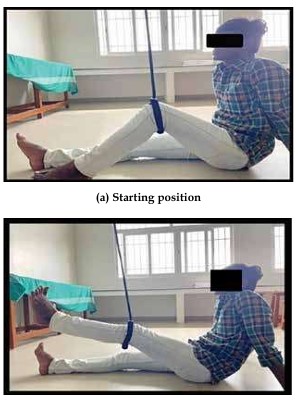
Effect of Sling Open Chain Knee Extension Exercise on Q-Angle and Jumping Performance among College Volleyball Play
A. Kirthiga, S. Selvaganabathy, K. Gnanasekar
Author Information
Licence:
Attribution-Non-commercial 4.0 International (CC BY-NC 4.0)This license enables reusers to distribute, remix, adapt, and build upon the material in any medium or format for noncommercial purposes only, and only so long as attribution is given to the creator.
Physiotherapy and Occupational Therapy Journal 18(1):p 63-70, Jan -March 2025. | DOI: 10.21088/potj.0974.5777.18125.8
How Cite This Article:
Kirthiga A, Selvaganabathy S, Gnanasekar K. Effect of Sling Open Chain Knee Extension Exercise on Q-Angle and Jumping Performance among College Volleyball Play. Physio Occu Ther Jr. 2025;18(1):63-70.Timeline
Received : December 18, 2024
Accepted : February 03, 2025
Published : March 21, 2025
Abstract
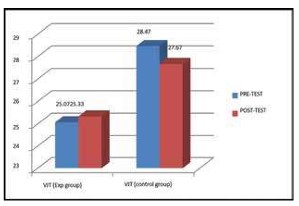
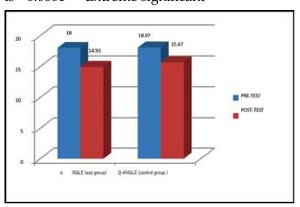
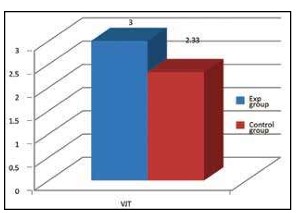
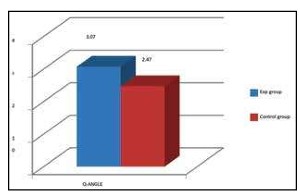
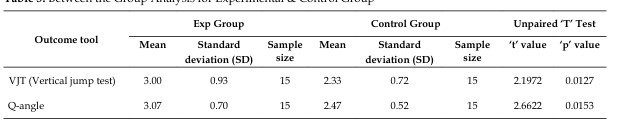
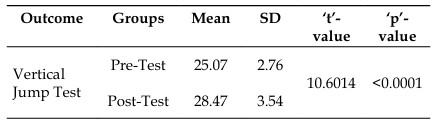
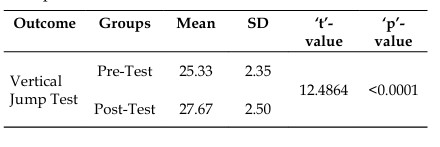
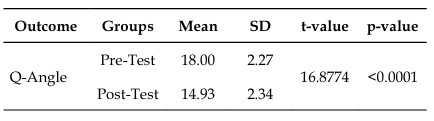
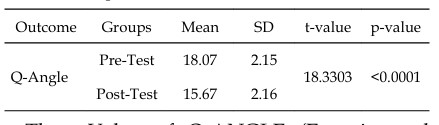
Background: Sports knee injury usually occurs by an uncontrolled movement of Lowerextremity.Athleteswithsignicantexternaltibialtorsionandknee exion more than 90 degrees during take-off are at risk for developing Patellofemoral pain syndrome. SOCKE exercise is designed for quadriceps muscle training and has a high recruitment impact on the VMO, thereby help to alter the Q-angle mechanism inkneepain.Objectiveofthisstudyistofindout theeffectsofslingopenchain knee extension exercise in altering the Q angle and improving their jumping performance in volleyball players among college students. Method: This Experimental study involves 30 volley ball players & they were divided into 2 groups (experimental & control). Experimental group received SOCKE Exercise along with conventional knee exercise & Control group received only conventional knee exercise with treatment duration of 6 weeks. Pre & post test outcome measures of VJT and Q-angle were assessed. Results: Pre-test and post-test values obtained were analysed using paired &unpaired‘t’ test for28degreesof freedomata5%levelof significance.The mean value of VJT and Q-ANGLE in experimental group 3.00 & 3.07 shows more signicantthanmeanvalueofVJTandQ-ANGLEcontrolgroup2.33&2.47. Conclusion: This study concludes that Experimental group who received sling open chain knee extension exercise shows greater statistically signicant in reducing Q-angle and improving the jumping performance than control Group who received only Conventional knee exercises.
References
- 1. Beneka A., Malliou P., Gioftsidou A., Tsigganos G., Zetou H., Godilas G. Injury incidence rate, severity and diagnosis in male volleyball players, Sport Sci Health, 2009, 5: 93-99.
- 2. Baker M.M., Juhn M.S. Patellofemoral pain syndrome in the female athlete. ClinSports Med,2000,19:315-329.
- 3. Mrityunjay, Kumar & Chhabra, Deepak. (2014). Comparison between Effect of Isometric Quadriceps Exercise and Vastus Medialis Oblique Strengthening on Quadriceps Angle and Patellar Shift in Normal Individuals. European Academic Research. 2. 5360-5370. 10.2286/2286-4822-2-4.
- 4. Ali Fatahi, Heydar Sadeghi, Mitra Ameli. Relationship Between Q. Angle and Knee Injuries. Prevalence in Elite Volleyball Players. AdvancesinSurgicalSciences.Vol.5,No.4,2017, pp.45-48.doi:10.11648/j.ass.20170504.11
- 5. Smith T.O., Davies L., O’driscoll M.L., Donell ST. An evaluation of the clinical tests and outcome measures used to assess patellar instability. JKnee,2008,15:255-262
- 6. Sendur O.F., Gurer G., Yildirim T., Ozturke E, Aydeniz A. Relationship of Q. angle and joint hypermobility and Q. angles in different positions. ClinRheumatol,2000,25:304-308.
- 7. Jandova, Sona & Janura, Miroslav. Jumping performance and take-off efciency in two different age categories of female volleyball players. Acta of bioengineering and biomechanics /WroclawUniversityofTechnology.21.10.5277/ ABB-01328-2019-02.
- 8. Yingling V.R., Castro D.A., Duong J.T., Malpartida F.J., Usher J.R., O.J. The reliability of vertical jump tests between the Vertec and My Jump phone application. PeerJ.2018 Apr 20;6:e4669. doi: 10.7717/peerj.4669. PMID: 29692955;PMCID:PMC5912202
- 9. Mahnoor Asif, Yasha Sajjad Comparison of Specific Hip Strengthening Exercises and Conventional Knee Exercises on Pain, Muscle Strength and Function in Sprinters with Patello-Femoral Pain Syndrome Vol. 16No. 05(2022):PakistanJournal ofMedical&Health Sciences
- 10. Chang W.D., Huang W.S., Lee C.L., Lin H.Y., Lai P.T. Effects of open and closed kinetic chains of sling exercise therapy on the muscle activity of the vastus medialis oblique and vastus lateralis. JPhysTherSci.2014Sep;26(9): 1363-6.doi:10.1589/jpts.26.1363.Epub2014Sep 17.PMID:25276016;PMCID:PMC4175237.
- 11. Thor F. Besier A., Michael Fredericson a, Garry E. Gold B., Gary S. Beaupre’ D., Scott L.D. Knee muscle forces during walking and running in patellofemoral pain patients and pain-free controls,JournalofBiomechanics,2009,42:898–905.
- 12. Elias J.J., Bratton D.R., Weinstein D.M., Cosgarea A.J. Comparing two estimations of the quadriceps force distribution for use during patellofemoralsimulation. J. Biomech, 2006,39:865–872.
- 13. Zhang L.Q., Wang G., Nuber G.W., Press J.M., Koh J.L. In vivo load sharing among the quadriceps components. J.Orthop. Res. 2003, 21,565–571.
- 14. B.D. Dannelly, S.C. Otey, T. Croy et al., “The effectiveness of traditional and sling exercise strength training in women,” Journal of Strength andConditioningResearch,vol.25,no.2,pp.464 471,2011.
- 15. Spairani L., Barbero M., Cescon C., et al. An electromyographic study of the vastii muscles during open and closed kinetic chain submaximal isometric exercises. Int J Sports PhysTher, 2012, 7: 617–626 [PMCfree article] [PubMed][GoogleScholar][Reflist].
- 16. Tang S.F., Chen C.K., Hsu R., et al. Vastus medialis obliquus and vastus lateralis activity in open and closed kinetic chain exercises in patients with patellofemoral pain syndrome: an electromyographic study. ArchPhysMed Rehabil, 2001, 82: 1441–1445 [PubMed] [Google Scholar][Reflist].
- 17. Jellad A., Kalai A., Guedria M., Jguirim M., Elmhamdi S., Salah S., et al. Combined hip abductor and external rotator strengthening and hip internal rotator stretching improves pain and function in patients with patellofemoral pain syndrome: a randomized controlled trial with crossover design. Orthopaedic Journal of SportsMedicine.2021;9(4):2325967121989729.
- 18. Syme G., Rowe P., Martin D., et al. Disability in patients with chronic patellofemoral pain syndrome: A randomised controlled trial of VMO selective training versus general quadriceps strengthening. ManTher,2009,14: 252–263.
- 19. Cowan S.M., Bennell K.L., Hodges P.W.: Therapeutic patellar taping changes the timing of vasti muscle activation in people with patellofemoral pain syndrome. Clin J Sport Med,2002,12:339–347.
- 20. Bennell K., Duncan M., Cowan S., McConnell J., Hodges P., Crossley K. Effects of vastus medialis oblique retraining versus general quadriceps strengthening on vasti onset. MedSciSportsExerc. 2010May; 42(5): 856-64. doi: 10.1249/MSS.0b013e3181c12771. PMID: 19997004.
- 21. Fukuda T.Y., Melo W.P., Zaffalon B.M., et al. Hip posterolateral musculature strengthening in sedentary women with patellofemoral pain syndrome: a randomized controlled clinical trial with 1-year follow-up. JOrthopSportsPhys 2012;42(10):823–830[PubMed][GoogleScholar]
Data Sharing Statement
There are no additional data available. All raw data and code are available upon request.
Funding
This research received no funding.
Author Contributions
Whether all authors contributed significantly to the work and approve its publication.
Ethics Declaration
This article does not involve any human or animal subjects, and therefore does not require ethics approval.
Acknowledgements
We would like to express our gratitude to the patients, their families, and all those who have contributed to this study.
Conflicts of Interest
No conflicts of interest in this work.
About this article

Cite this article
Kirthiga A, Selvaganabathy S, Gnanasekar K. Effect of Sling Open Chain Knee Extension Exercise on Q-Angle and Jumping Performance among College Volleyball Play. Physio Occu Ther Jr. 2025;18(1):63-70.
Licence:
Attribution-Non-commercial 4.0 International (CC BY-NC 4.0)This license enables reusers to distribute, remix, adapt, and build upon the material in any medium or format for noncommercial purposes only, and only so long as attribution is given to the creator.
| Received | Accepted | Published |
|---|---|---|
| December 18, 2024 | February 03, 2025 | March 21, 2025 |
DOI: 10.21088/potj.0974.5777.18125.8
Keywords
Volley ball playersSOCKEQ-angleVJTSearch for Similar Articles
Similar Articles
- Cross-Cultural Adaptation, Reliability, and Validity of the Gujarati Version of...
- Physiotherapy Management of Multiple Sclerosis: An Overview of Recent Technologi...
- Converging Technologies in Cardiopulmonary Physiotherapy: A Review of VR, AR, AI...
- Cross-Cultural Adaptation, Reliability, and Validity of the Gujarati Version of...
- Effects of Kinesiotaping in Lateral Epicondylitis: A Narrative Review
Article Level Metrics
Last UpdatedTuesday 28 July 2026, 22:20:58 (IST)
1957
Accesses
3
425
00
Citations
NA
NA
NA
Download citation
Article Keywords
Keyword Highlighting
Highlight selected keywords in the article text.
Timeline
| Received | December 18, 2024 |
| Accepted | February 03, 2025 |
| Published | March 21, 2025 |
licence
Attribution-Non-commercial 4.0 International (CC BY-NC 4.0)
This license enables reusers to distribute, remix, adapt, and build upon the material in any medium or format for noncommercial purposes only, and only so long as attribution is given to the creator.