Full Text (PDF)
Journal of Nurse Midwifery and Maternal Health 8(3):p 77-83, September-December 2022. | DOI: https://doi.org/10.21088/jnmmh.2454.7506.8322.1
Original Article
Effect of Maternal weight on Perinatal Outcomes
Linda Varghese, Bency Bhasi, Meenu Pradeep, Mena Boby
Author Information
Licence:
Attribution-Non-commercial 4.0 International (CC BY-NC 4.0)This license enables reusers to distribute, remix, adapt, and build upon the material in any medium or format for noncommercial purposes only, and only so long as attribution is given to the creator.
Journal of Nurse Midwifery and Maternal Health 8(3):p 77-83, September-December 2022. | DOI: https://doi.org/10.21088/jnmmh.2454.7506.8322.1
How Cite This Article:
Linda Varghese, Bency Bhasi, Meenu Pradeep, et. al./Effect of Maternal weight on Perinatal Outcomes/J Nurse Midwifery Matern Health. 2022;8(3):77–83.Timeline
Received : June 27, 2022
Accepted : August 28, 2022
Published : December 30, 2022
Abstract
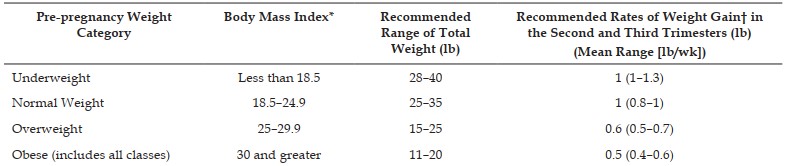
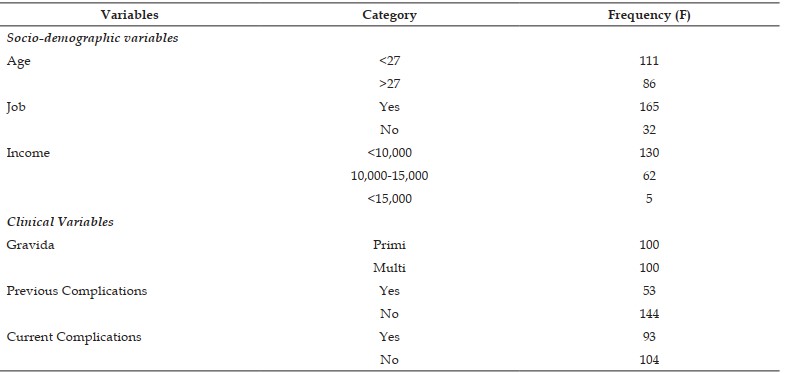
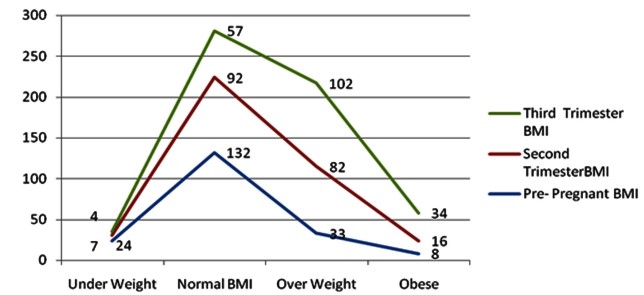
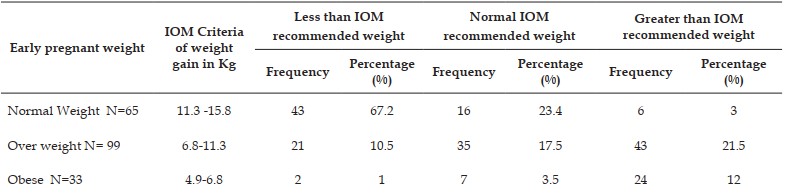
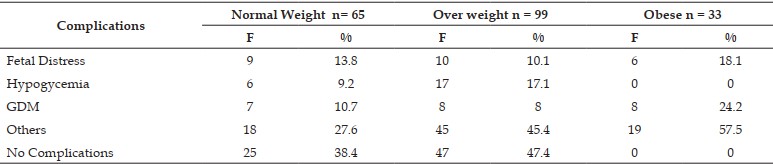
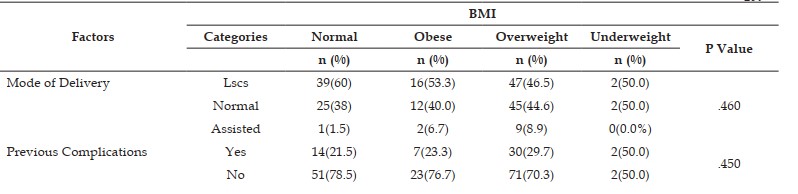
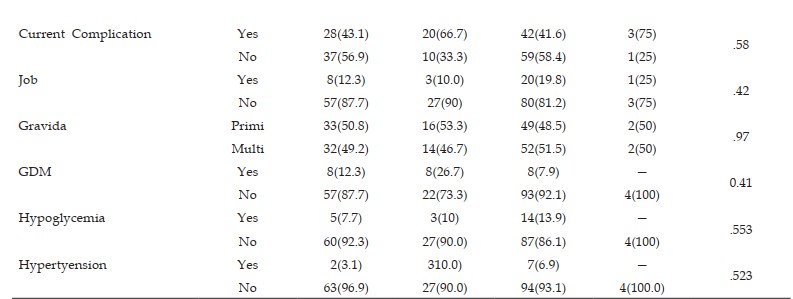
Maternal overweight and obesity increase risks of pregnancy and delivery complications and neonatal mortality, but the mechanisms are unclear. The purpose of the study was to assess the trends of maternal weight gain among the pregnant women. Quantitative approach with non-experimental descriptive correlative design was usedamong 200 antenatal mothersin Gynecology wards and OPD of a tertiary care hospital, Kochi, India. Maternal weight gain in this studywasassessed based on Institute of Medicine (IOM) weight gain recommendations 2011 for pregnancy. All singleton Pregnancy with cephalic presentation, on or above 35 weeks of gestation and Pre-pregnancy/Early pregnancy BMI ≥ 18.5 kg/m2 were included. BMI was calculated and women were categorized into 4 groups. Results revealed that, 57%of them were below 27 years of age, almost half of the mothers were primi and 75% of them were without previous complications whereas 53% of pregnant mothers have complications currently. In pre pregnancy, Maternal weight gain trends in mothers were 67.5% and 16.5% in Normal BMI and Overweight respectively whereas in third trimester, 51% were overweight and 30% were only remained in normal BMI. The trend in underweight category shown remarkable reduction from 12% in Pre pregnancy to 2% in third trimester whereas pregnant mothers in category Obese were increased from 4% to 17% in third trimester. Out of Normal weight gain (N=65) mothers in Early pregnant state, 67.2% of them gained Less than IOM recommended weight (11.3-15.8 Kg), followed by 23.4% of Normal IOM recommended weight and only 3% gained greater than IOM recommendation. Major complications include Fetal distress, Hypoglycemia and GDM. The study concluded that, IOM weight gain recommendations for antenatal women should be followed to minimize adverse health outcomes for mother and child.
References
- 1. https://blog.wsj.com>2016/04/04>india
- 2. http://www.ncbi.nlm.nih.gov>pubmed
- 3. www.jabfm.org>content
- 4. https://www.who.int/news-room/factsheets/detail/obesity-and-overweight#:~: text=Facts%20about%20overweight%20 and%20obesity,%25%20of%20women)%20 were%20overweight.
- 5. El-Koofy NM, Anwar GM, El-Raziky MS, ElHennawy AM, El-Mougy FM, El-Karaksy HM, Hassanin FM, Helmy HM. The association of metabolic syndrome, insulin resistance and non-alcoholic fatty liver disease in overweight/obese children. Saudi journal of gastroenterology: official journal of the Saudi Gastroenterology Association. 2012 Jan;18(1):44.
- 6. Johansson Stefan, Villamor Eduardo, Altman Maria, Bonamy Anna-Karin Edstedt, Granath Fredrik, Cnattingius Sven et al. Maternal overweight and obesity in early pregnancy and risk of infant mortality: a population based cohort study in Sweden BMJ 2014; 349 :g6572 http://doi.org/10.1136/vinj.36572.
- 7. www.mayoclinic.org>art-20044409
- 8. http://www.acog.org/patients/faqs/ reducing-risk-of-birth defect
- 9. Agrawal, S. & Singh, A. J Obstet Gynecol India (2016) 66: 448. doi:10.1007/s13224-015-0735- 439.
- 10. https://www.ncbi.nlm.nih.gov/pmc/ articles/PMC4366803
- 11. https://www.ncbi.nlm.nih.gov/pubmed/ 24845218.
- 12. https://www.acog.org/clinical/clinicalguidance/committee-opinion/articles/ 2013/01/weight-gain-during-pregnancy.
- 13. Siega-Riz AM, Viswanathan M, Moos M-K, et al. A systematic review of outcomes of maternal weight gain according to the Institute of Medicine recommendations: birthweight, fetal growth, and postpartum weight retention. Am J Obstet Gynecol 2009;201:339.e1-14.
- 14. Schieve, Laura A. Phd; Cogswell, Mary E. Drph; Scanlon, Kelley S. Phd An Empiric Evaluation of the Institute of Medicine’s Pregnancy Weight Gain Guidelines by Race, Obstetrics & Gynecology: June 1998 - Volume 91 - Issue 6 - p 878-884.
- 15. Ellen A Nohr, Michael Vaeth, Jennifer L Baker, Thorkild IA Sørensen, Jorn Olsen, Kathleen M Rasmussen, Combined associations of prepregnancy body mass index and gestational weight gain with the outcome of pregnancy, The American Journal of Clinical Nutrition, Volume 87, Issue 6, June 2008, Pages 1750–1759, https://doi.org/10.1093/ajcn/87.6.1750.
- 16. M. Cedergren, Effects of gestational weight gain and body mass index on obstetric outcome in Sweden, International Journal of Gynecology & Obstetrics, Volume 93, Issue 3,2006,Pages 269- 274,ISSN 0020-7292,https://doi.org/10.1016/j. ijgo.2006.03.002.
- 17. Leddy MA, Power ML, Schulkin J. The impact of maternal obesity on maternal and fetal health. Reviews in obstetrics and gynecology. 2008;1(4):170.
Data Sharing Statement
There are no additional data available. All raw data and code are available upon request.
Funding
This research received no funding.
Author Contributions
All authors contributed significantly to the work and approve its publication.
Ethics Declaration
This article does not involve any human or animal subjects, and therefore does not require ethics approval.
Acknowledgements
We would like to express our gratitude to the patients, their families, and all those who have contributed to this study.
Conflicts of Interest
No conflicts of interest in this work.
About this article

Cite this article
Linda Varghese, Bency Bhasi, Meenu Pradeep, et. al./Effect of Maternal weight on Perinatal Outcomes/J Nurse Midwifery Matern Health. 2022;8(3):77–83.
Licence:
Attribution-Non-commercial 4.0 International (CC BY-NC 4.0)This license enables reusers to distribute, remix, adapt, and build upon the material in any medium or format for noncommercial purposes only, and only so long as attribution is given to the creator.
| Received | Accepted | Published |
|---|---|---|
| June 27, 2022 | August 28, 2022 | December 30, 2022 |
DOI: https://doi.org/10.21088/jnmmh.2454.7506.8322.1
Keywords
Maternal Weight gainIOM recommendationsAntenatal mothersComplicationsSearch for Similar Articles
Similar Articles
- Psychological Distress and Quality of Life Among Parents of Children with Cancer...
- We Must be Aware about Water Birth: An Overview
- Digital Health Literacy Among Mothers and Its Impact on Neonatal Outcomes: An In...
- Effectiveness of Vedio assisted Technique Programme on knowledge regarding Techn...
- A Comprehensive review of Uterine Prolapse: Etiology, Diagnosis of Management
Article Level Metrics
Last UpdatedTuesday 29 September 2026, 16:31:58 (IST)
1780
Accesses
4
293
00
Citations
NA
NA
NA
Download citation
Article Keywords
Keyword Highlighting
Highlight selected keywords in the article text.
Timeline
| Received | June 27, 2022 |
| Accepted | August 28, 2022 |
| Published | December 30, 2022 |
licence
Attribution-Non-commercial 4.0 International (CC BY-NC 4.0)
This license enables reusers to distribute, remix, adapt, and build upon the material in any medium or format for noncommercial purposes only, and only so long as attribution is given to the creator.