Full Text (PDF)
Journal of Forensic Chemistry and Toxicology 11(1):p 58-64, Jan-June 2025. | DOI: 10.21088/jfct.2454.9363.11125.7
Case Report
Diagnostic Intricacies in Positional Asphyxia: Insights from a Case Study and Literature Overview
Swati Tyagi, Gokul G., Abilash Srinivasa Murthy, Mahalakshmi Narendira Babu, Karthi Vignesh Ra, Sudhir K Gupta
Author Information
Licence:
Attribution-Non-commercial 4.0 International (CC BY-NC 4.0)This license enables reusers to distribute, remix, adapt, and build upon the material in any medium or format for noncommercial purposes only, and only so long as attribution is given to the creator.
Journal of Forensic Chemistry and Toxicology 11(1):p 58-64, Jan-June 2025. | DOI: 10.21088/jfct.2454.9363.11125.7
How Cite This Article:
Tyagi S, et al. Diagnostic Intricacies in Positional Asphyxia: Insights from a Case Study and Literature Overview. J Forensic Chem Toxicol. 2025;11(1):58–64.Timeline
Received : December 17, 2024
Accepted : February 15, 2025
Published : June 12, 2025
Abstract
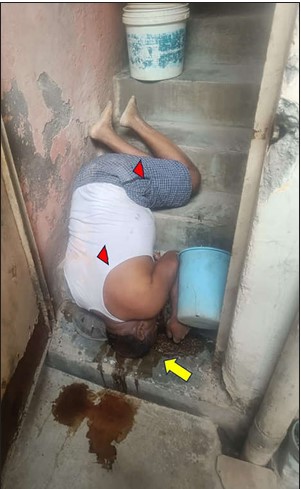
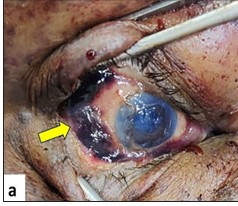
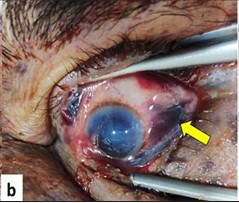
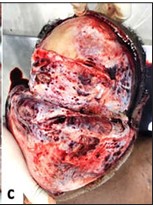
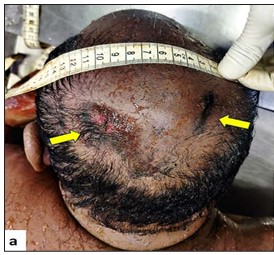
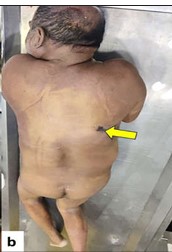
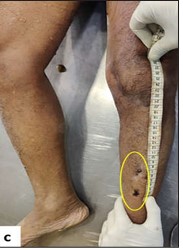
Positional asphyxiamaybede nedas fatal ventilatoryandcirculatoryfailure causedbythe xationof thebodyinanabnormalposition,whichmechanically interferes with ventilation and venous return. This report describes a 30-year old male who was found in a head-down position on a staircase. A thorough history and crime scene analysis unveiled that the deceased had fallen down the stairs and subsequently became unconscious. Autopsy revealed classical signs of asphyxia, and the injuries found were corroborated with crime scene evidence. The findings of the case were discussed by assessing Bell’s criteria for positional asphyxia. Improvisations of Bell’s criteria were suggested based on the case findings. Such case spresent to forensic pathologists as sudden death, where crime scene examination, detailed history, and meticulous autopsy reveal evidence on the cause and manner of death.
References
- 1. SauvageauA., Boghossian E. Classi cation of asphyxia: the need for standardization. Journal of forensic sciences. 2010 Sep; 55(5): 1259-67.DOI:https://doi.org/10.1111/j.1556 4029.2010.01459.x.
- 2. Chmieliauskas S., Mundinas E., Fomin D., Andriuskeviciute G., Laima S., Jurolaic E., Stasiuniene J, Jasulaitis A. Sudden deaths from positional asphyxia: a case report. Medicine. 2018 Jun 1; 97(24): e11041. DOI: https://doi.or g/10.1097%2FMD.0000000000011041.
- 3. Bell M.D., Rao V.J., Wetli C.V., Rodriguez R.N. Positional asphyxiation in adults: a series of 30 cases from the Dade and Broward County FloridaMedicalExaminerOf cesfrom1982to 1990. The American Journal of Forensic Medicine and Pathology. 1992 Jun 1; 13(2): 101-7.
- 4. Chaudhari V.A., Ghodake D.G., Kharat R.D. Positional asphyxia: death due to unusual head-down position in a narrow space. The American Journal of Forensic Medicine and Pathology. 2016 Jun 1; 37(2): 51-3. DOI: https:// doi.org/10.1097/paf.0000000000000217.
- 5. Behera C., Krishna K. Fatal positional asphyxia following a fall in bathroom. Medico-Legal Journal. 2020 Sep; 88(3): 169-71. DOI: https:// doi.org/10.1177/0025817219876094.
- 6. GeorgeS.B., ShettyS.S., RajM.S., ShettyM. Death due to Positional Asphyxia–a Case Report. International Journal of Medical Toxicology and Forensic Medicine. 2016 Jan 1; 6(3 (Summer): 164-6. DOI: https://doi. org/10.22037/ijmtfm.v6i3(Summer).10888.
- 7. Pareja-Pined J.I., Viloria V. Homicides due to positional asphyxia: two case reports. Romanian Society of Legal Medicine. 2014; 22: 229-32.DOI:10.4323/rjlm.2014.229.
- 8. SauvageauA.,DesjarlaisA.,RacetteS.Deaths in a head-down position: a case report and review of the literature. Forensic science, medicine, and pathology. 2008 Mar; 4(1): 51-4. DOI: 10.1007/s12024-007-0031-4.
- 9. StrakaĽ.,JaníkM.,HejnaP.Asphyxiatedwhile hunting for treasure: an unusual geocaching fatality. Forensic Science, Medicine and Pathology. 2019 Dec; 15: 653-7. DOI: 10.1007/ s12024-019-00125-2.
- 10. Steinberg A. Prone restraint cardiac arrest: a comprehensive review of the scienti c literature and an explanation of the physiology. Medicine, Science and the Law. 2021 Jul; 61(3): 215-26. DOI: https://doi. org/10.1177/0025802420988370.
- 11. Benomran F.A., Hassan A.I. An unusual accidental death from positional asphyxia. The American Journal of Forensic Medicine and Pathology. 2011 Mar 1; 32(1): 31-4. DOI: https:// doi.org/10.1097/paf.0b013e3181f70d41.
- 12. Saukko P., Knight B. Knight’s forensic pathology.3rd edn. CRC, Boca Raton, FL. 2004.
- 13. Ward M, Macklem PT. The act of breathing and how it fails. Chest. 1990 Mar 1; 97(3): 36S 9S. DOI: https://doi.org/10.1378/chest.97.3_ supplement.36 s.
- 14. Kosinski S. Comparison of visual assessment of coronary stenosis with independent quantitative coronary angiography: Findings from the PROMISE trial. Am Heart J. 2017 Feb; 184: 1-9. DOI: https://doi.org/10.1016%2Fj. ahj.2016.10.014.
- 15. Chan T.C., Vilke G.M., Neuman T. Reexamination of custody restraint position and positional asphyxia. The American Journal of Forensic Medicine and Pathology. 1998 Sep 1; 19(3): 201-5. DOI: https://doi. org/10.1097/00000433-199809000-00001.
- 16. Padosch S.A., Schmidt P.H., Kröner L.U., Madea B. Death due to positional asphyxia under severe alcoholisation: pathophysiologic and forensic considerations. Forensic science international. 2005 Apr 20; 149(1) 67-73. DOI: https://doi.org/10.1016/j. forsciint.2004.05.016.
- 17. Singer K., Lundberg W.B. Ventricular arrhythmias associated with the ingestion of alcohol. Ann Intern Med. 1972 Aug; 77(2): 247 8. doi: 10.7326/0003-4819-77-2-247.
- 18. Eisenhofer G., Lambie D.G., Johnson R.H. Effects of ethanol ingestion on alpha adrenoceptor mediated circulatory responses in man. British Journal of Clinical Pharmacology. 1984 Oct; 18(4): 581-6. DOI: https://doi.org/10.1111%2Fj.1365-2125.1984. tb02507.x.
- 19. KelbaekH.,GjørupT.,BrynjolfI.,Christensen N.J., Godtfredsen J. Acute effects of alcohol on leftventricularfunctioninhealthysubjectsat rest and during upright exercise. The American journal of cardiology. 1985 Jan 1; 55(1): 164-7. DOI: https://doi.org/10.1016/0002 9149(85)90320-0.
- 20. Vega R.S., Adams V.I. Suffocation in motor vehicle crashes. The American journal of forensic medicine and pathology. 2004 Jun 1; 25(2): 101-7. DOI: https://doi.org/10.1097/01. paf.0000114136.84700.f5.
- 21. Amadasi A., Tsokos M., Bushmann C.T. Differential diagnosis on discolorations of the skin in a case of suspected positional asphyxia. Forensic Science, Medicine and Pathology. 2019 Dec; 15: 671-4. https://doi.org/10.1007/ s12024-019-00126-1.
Data Sharing Statement
There are no additional data available. All raw data and code are available upon request.
Funding
This research received no funding.
Author Contributions
All authors contributed significantly to the work and approve its publication.
Ethics Declaration
This article does not involve any human or animal subjects, and therefore does not require ethics approval.
Acknowledgements
No Imformation Provided.
Conflicts of Interest
No conflicts of interest in this work.
About this article

Cite this article
Tyagi S, et al. Diagnostic Intricacies in Positional Asphyxia: Insights from a Case Study and Literature Overview. J Forensic Chem Toxicol. 2025;11(1):58–64.
Licence:
Attribution-Non-commercial 4.0 International (CC BY-NC 4.0)This license enables reusers to distribute, remix, adapt, and build upon the material in any medium or format for noncommercial purposes only, and only so long as attribution is given to the creator.
| Received | Accepted | Published |
|---|---|---|
| December 17, 2024 | February 15, 2025 | June 12, 2025 |
DOI: 10.21088/jfct.2454.9363.11125.7
Keywords
Positional asphyxiaBell’s criteriaCrime scene forensicsSearch for Similar Articles
Similar Articles
- Simultaneous Determination and Method Validation For Opioids, Cannabinol and Nic...
- Algorithm for Investigating Suspected Mothball Poisoning
- Analytical Advances in Date Rape Drug Detection: A Comparative Study of Metaboli...
- An Empirical Assessment of Dermatoglyphics & Psychological Profiling of Juvenile...
- Detection of Mustard Oil Adulteration in Kanpur City
Article Level Metrics
Last UpdatedWednesday 09 September 2026, 00:29:42 (IST)
1386
Accesses
13
143
00
Citations
NA
NA
NA
Download citation
Article Keywords
Keyword Highlighting
Highlight selected keywords in the article text.
Timeline
| Received | December 17, 2024 |
| Accepted | February 15, 2025 |
| Published | June 12, 2025 |
licence
Attribution-Non-commercial 4.0 International (CC BY-NC 4.0)
This license enables reusers to distribute, remix, adapt, and build upon the material in any medium or format for noncommercial purposes only, and only so long as attribution is given to the creator.