Full Text (PDF)
Physiotherapy and Occupational Therapy Journal 19(1):p 13-26, Jan - March 2026. | DOI: 10.21088/potj.0974.5777.19126.2
Original Article
Comparing Core Stability and Trunk Extensor Endurance Exercises for Chronic Nonspecific Low Back Pain
Bid Dibyendunarayan Dhrubaprasad, Jadav Dharmisthaben Ramanbhai
Author Information
Licence:
Attribution-Non-commercial 4.0 International (CC BY-NC 4.0)This license enables reusers to distribute, remix, adapt, and build upon the material in any medium or format for noncommercial purposes only, and only so long as attribution is given to the creator.
Physiotherapy and Occupational Therapy Journal 19(1):p 13-26, Jan - March 2026. | DOI: 10.21088/potj.0974.5777.19126.2
How Cite This Article:
Jadav Dharmisthaben Ramanbhai, Bid Dibyendunarayan Dhrubaprasad. Comparing Core Stability and Trunk Extensor Endurance Exercises for Chronic Nonspecific Low Back Pain. Therapy Jr. 2026; 19(1): 13-26.Timeline
Received : November 18, 2025
Accepted : January 27, 2026
Published : March 30, 2026
Abstract
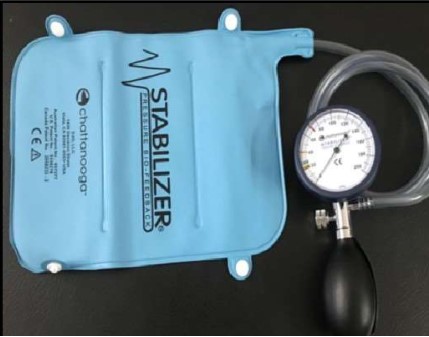
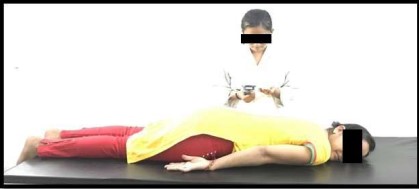
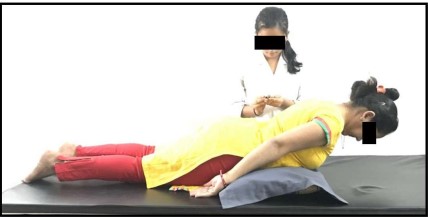
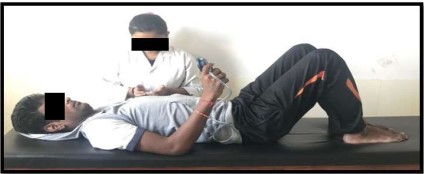
Background: Chronic nonspecific low back pain (CNSLBP) is a prevalent musculoskeletal disorder affecting approximately 80% of individuals at some point in their lives, with a significant impact on functional capacity and quality of life. Objective: This study compared the effectiveness of core stability exercises (CSE) and trunk extensor endurance exercises (TEEE) in managing CNSLBP. Methods: Forty-six participants aged 30-50 years with CNSLBP were randomly allocated into two groups receiving either CSE (n=23) or TEEE (n=23), both combined with conventional physiotherapy for four weeks. Outcome measures included transversus abdominis (TrA) activation measured by the pressure biofeedback unit, trunk extensor endurance via prone isometric chest raise test, pain intensity using the numerical pain rating scale (NPRS), fear-avoidance beliefs questionnaire-Gujarati version (FABQ-G), and global rating of change scale (GROC). Results: Both groups demonstrated significant within-group improvements in all outcomes (p<0.001). Between-group analysis revealed that CSE showed superior improvements in TrA activation (p=0.001), pain reduction (p=0.009), fear-avoidance beliefs (p=0.026), and patient satisfaction (p=0.005), while trunk extensor endurance showed no significant difference (p=0.203). Conclusion: Core stability exercises demonstrated greater efficacy than trunk extensor endurance exercises in managing CNSLBP across multiple outcome domains.
References
- 1. Bala K., Gakhar M., Jagga V. Effect of endurance training of trunk extensor muscles on pain and endurance in patients with sub acute nonspecific low backache. Journal of Exercise Science and Physiotherapy. 2012; 8(2): 82.
- 2. Beith I.D., Kemp A., Kenyon J., Prout M., Chestnut T.J. Identifying neuropathic back and leg pain: a cross-sectional study. Pain. 2011; 152(7): 1511-6.
- 3. Anderson G. The epidemiology of spinal disorders. In: Frymoyer J, editor. The adult spine: principles and practice. 2 ed. New York: Raven Press; 1997. pp. 93-141.
- 4. Hoy D., Bain C., Williams G., March L., Brooks P., Blyth F., et al. A systematic review of the
- 5. Bindra S., Sinha A.G.K, Benjamin A.I. Epidemiology of low back pain in indian population: A review. International Journal of Basic and Applied Medical Sciences. 2015 5(1):166-79.
- 6. Refshauge K.M., Maher C.G. Low back paini nvestigations and prognosis: A review. British
- 7. Franca F.R., Burke T.N., Hanada E.S., Marques A.P. Segmental stabilization and muscular
- 8. Bizzoca D., Solarino G., Pulcrano A., Brunetti G., Moretti A.M., Moretti L., et al. GenderRelated Issues in the Management of LowBack Pain: A Current Concepts Review. Clinics and practice. 2023; 13(6): 1360-8.
- 9. Wáng Y.X., Wáng J.Q., Káplár Z. Increased low back pain prevalence in females than in
- 10. Schneider S., Randoll D., Buchner M. Why do women have back pain more than men? A
- 11. Costa L.O., Maher C.G., Latimer J., Hodges P.W., Herbert R.D., Refshauge K.M., et al. Motor control exercise for chronic low back pain: A randomized placebo-controlled trial. Physical therapy. 2009; 89(12): 1275-86.
- 12. van Tulder M., Malmivaara A., Esmail R., Koes B. Exercise therapy for low back pain: a systematic review within the framework of the cochrane collaboration back review group. Spine. 2000; 25(21): 2784-96.
- 13. Liddle S.D., Baxter G.D., Gracey J.H. Exercise and chronic low back pain: what works? Pain.
- 14. Biely S., Smith S.S., S.P.S. Clinical instability of the lumbar spine: diagnosis and intervention.
- 15. Panjabi M.M. The stabilizing system of the spine. Part I. Function, dysfunction, adaptation,
- 16. Panjabi M.M. Clinical spinal instability and low back pain. Journal of electromyography
- 17. Panjabi M.M. The stabilizing system of the spine. Part II. Neutral zone and instability
- 18. Hodges P.W. Core stability exercise in chronic low back pain. The Orthopedic clinics of North America. 2003; 34(2): 245-54.
- 19. Akuthota V., Ferreiro A., Moore T., Fredericson M. Core stability exercise principles. Current
- 20. Richardson C., Hodges P.W., J.H. Therapeutic Exercise for Lumbopelvic Stabilization: A
- 21. Hultman G., Nordin M., Saraste H., Ohlsen H. Body composition, endurance, strength, crosssectional area, and density of MM erector spinae in men with and without low back pain. Journal of spinal disorders. 1993; 6(2): 114-23.
- 22. Parnianpour M., Nordin M., Kahanovitz N., Frankel V. 1988 Volvo award in biomechanics.
- 23. Calliet R. Low back pain syndrome. 3rd ed: FA Davis; 1981.
- 24. Liebenson C. Spinal stabilization training. Journal of Bodywork and Movement Therapies.
- 25. Keefe F.J., Rumble M.E., Scipio C.D., Giordano L.A., Perri L.M. Psychological aspects of persistent pain: current state of the science. The journal of pain: Official journal of th American Pain Society. 2004; 5(4): 195-211.
- 26. Pincus T., Vogel S., Burton A.K., Santos R., Field A.P. Fear avoidance and prognosis in
- 27. Leeuw M., Goossens M.E., Linton S.J., Crombez G., Boersma K., Vlaeyen J.W. The fear-avoidance model of musculoskeletal pain: current state of scientific evidence. Journal of
- 28. von Garnier K., Koveker K., Rackwitz B., Kober U., Wilke S., Ewert T., et al. Reliability of a test
- 29. Ito T., Shirado O., Suzuki H., Takahashi M., Kaneda K., Strax T.E. Lumbar trunk muscle
- 30. Childs J.D., Piva S.R., Fritz J.M. Responsiveness of the numeric pain rating scale in patients
- 31. Waddell G., Newton M., Henderson I., Somerville D., Main C.J. A Fear-Avoidance Beliefs Questionnaire (FABQ) and the role of fear-avoidance beliefs in chronic low back pain and disability. Pain. 1993; 52(2): 157-68.
- 32. Bid D.D., Soni N.C., Rathod P.V., Ramalingam A.T., Sinha R.K. Cross Cultural Adaptation,
- 33. Kamper S.J., Maher C.G., Mackay G. Global Rating of Change Scales: A Review of Strengths
- 34. Akbari A., Khorashadizadeh S., Abdi GJJoB, Rehabilitation M. The effect of motor control
- 35. Richardson C.A., Jull G.A. Muscle control-pain control. What exercises would you prescribe? Manual therapy. 1995; 1(1): 2-10.
- 36. Clarke L. A comparison study between core stability and trunk extensor endurance training in the management of acute low back pain in field hockey players 2009.
- 37. Aly S.M. Trunk muscles’ response to core stability exercises in patients with chronic
- 38. Moon H.J., Choi K.H., Kim D.H., Kim H.J., Cho Y.K., Lee K.H.,et al. Effect of lumbar stabilization
- 39. Moffroid M.T., Haugh L.D., Haig A.J., Henry S.M., Pope M.H. Endurance training of trunk extensor muscles. Physical therapy. 1993; 73(1):10-7.
- 40. Chang W.D., Lin H.Y., Lai P.T. Core strength training for patients with chronic low back
- 41. Wang X.Q., Zheng J.J., Yu Z.W., Bi X., Lou S.J., Liu J., et al. A meta-analysis of core stability
- 42. Reddy S.B.A., Jerome E., Sai Kumar N. Effects of core stabilization program and
- 43. Akodu A.K., Akinbo S.R.A., Odebiyi D.O., S.O.G. Effect of stabilization exercise on fear
Data Sharing Statement
There are no additional data available. All raw data and code are available upon request.
Funding
This research received no funding.
Author Contributions
All authors contributed significantly to the work and approve its publication.
Ethics Declaration
This article does not involve any human or animal subjects, and therefore does not require ethics approval.
Acknowledgements
We would like to express our gratitude to the patients, their families, and all those who have contributed to this study.
Conflicts of Interest
No conflicts of interest in this work.
About this article

Cite this article
Jadav Dharmisthaben Ramanbhai, Bid Dibyendunarayan Dhrubaprasad. Comparing Core Stability and Trunk Extensor Endurance Exercises for Chronic Nonspecific Low Back Pain. Therapy Jr. 2026; 19(1): 13-26.
Licence:
Attribution-Non-commercial 4.0 International (CC BY-NC 4.0)This license enables reusers to distribute, remix, adapt, and build upon the material in any medium or format for noncommercial purposes only, and only so long as attribution is given to the creator.
| Received | Accepted | Published |
|---|---|---|
| November 18, 2025 | January 27, 2026 | March 30, 2026 |
DOI: 10.21088/potj.0974.5777.19126.2
Keywords
Chronic low back painCore stability exerciseTrunk extensor enduranceTransverse abdominisPressure biofeedbackFear-avoidance beliefsSearch for Similar Articles
Similar Articles
- Leadership in Physiotherapy: A Narrative Review
- Effectiveness of Low Level Laser Theapy in the Management of Temporomandibular J...
- The Impact of Air Pollution on Cardiopulmonary Health: Molecular Mechanisms, Pre...
- Efectiveness of Physiotherapy in Postpartum Women with Diastasis Recti: A Review
- Pain Neuroscience Education: Transforming Physiotherapy Practice
Article Level Metrics
Last UpdatedSaturday 24 October 2026, 16:08:12 (IST)
4389
Accesses
43
739
00
Citations
NA
NA
NA
Download citation
Article Keywords
Keyword Highlighting
Highlight selected keywords in the article text.
Timeline
| Received | November 18, 2025 |
| Accepted | January 27, 2026 |
| Published | March 30, 2026 |
licence
Attribution-Non-commercial 4.0 International (CC BY-NC 4.0)
This license enables reusers to distribute, remix, adapt, and build upon the material in any medium or format for noncommercial purposes only, and only so long as attribution is given to the creator.