Full Text (PDF)
Indian Journal of Anesthesia and Analgesia 9(6):p 277-293, November-December 2022. | DOI: https://doi.org/10.21088/ijaa.2349.8471.9622.2
Review Article
Clinical Evaluation of Plasma Cholinesterase with Clinical Symptomatology in Organophosphorus Poisoning
Vikrant Navnath Pakhare, Resident, Department of Anesthesia, Government Medical College, Latur 413512, Maharashtra, India. null, Vikrant Navnath Pakhare 1 null, Sirsat Vinayak Shrirang 2 null, Satish G Deshpande 3 null
Author Information
Licence:
Attribution-Non-commercial 4.0 International (CC BY-NC 4.0)This license enables reusers to
distribute, remix, adapt, and build upon the material in any medium or format
for noncommercial purposes only, and only so long as attribution is given to
the creator.
Indian Journal of Anesthesia and Analgesia 9(6):p 277-293, November-December 2022. | DOI: https://doi.org/10.21088/ijaa.2349.8471.9622.2
How Cite This Article:
Vikrant Navnath Pakhare, Sirsat Vinayak Shrirang, Satish G Deshpande/Clinical Evaluation of Plasma Cholinesterase with
Clinical Symptomatology in Organophosphorus Poisoning/Indian J Anesth Analg. 2022;9(6)277-293.
Timeline
Received : March 21, 2022
Accepted : April 25, 2022
Published : December 10, 2022
Abstract
Objective: Level of plasma cholinesterase and its association with clinical manifestations.
Methods: This is a prospective study and observation study of 50 cases of organo phosphorus poisoning compound admitted in casualty and intensive care department. In present study we were evaluated plasma cholinesterase levels and correlate with clinical symptomatology in organo phosphorus poisoning, also included patient requiring ventilator support in respiratory failure patients. Prior approval for the study and the protocol was obtained from the institution ethical committee. In present study, serum cholinesterase estimation was repeated on after 6 hours, 12 hours, 24 hours, 48 hours, 96 hours and 7th day of stay in intensive care unit. The serum cholinesterase activity was measured by Genx cholinesterase butyryl thiocholinemethod (quantitative determination of cholinesterase in human serum).
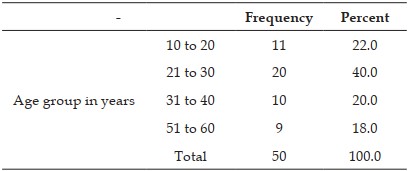
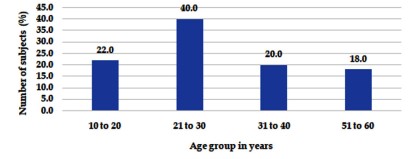
Conclusion: In present study 50 cases of organophosphorus compound poisoning admitted to our tertiary care centre. Commonest age group 21 to 30 years and 31 to 40 years. Serum cholinesterase is a useful marker for predicting clinical outcome in op poisoning as marked reductions are associated with increased need for ventilator support, atropine requirement, duration of hospital stay and outcome. Serum cholinesterase levels correlated well with clinical manifestation, severity of poisoning, ventilator support required or not and outcome.
References
- 1. Agrawal V, Agrawal S, Agrawal U, Kshirsagar A, Patil V. A Study of Serum Cholinesterase Activity with Clinical Correlation in Patients with Acute Organophosphorus Poisoning. The Journal of Medical Research. 2018;4(5):219-22.
- 2. Ahmed SM, Das B, Nadeem A, Samal RK. Survival pattern in patients with acute organophosphate poisoning on mechanical ventilation: A retrospective intensive care unit-based study in a tertiary care teaching hospital. Indian journal of anesthesia. 2014 Jan;58(1):11.
- 3. Haddad LM, Winchester JF. Clinical management of poisoning and drug overdose. WB Saunders company; 1983.
- 4. Eddleston M, Chowdhury FR. Pharmacological treatment of organophosphorus insecticide poisoning: the old and the (possible) new. British journal of clinical pharmacology. 2016 Mar;81(3):462-70.
- 5. Malik GM, Mubarik M, Romshoo GJ: Organophosporus poisoning inthe Kashmir valley 1994 to 1997. NEJM 1998 ; 338:1078-1079.
- 6. Davies JE. Changing profile of pesticide poisoning. NEJM 1987; 316 : 807-808.
- 7. Taylor P. Anticholinesterase agents In: Gilman AG, Goodman LS, Rall TW, Murad F eds. The pharmacological basis of therapeutics. New York: Mac Millan 1985;110-129.
- 8. Senanayaje N, Karalliedde L. neurotoxic effects of Organophosphorus insecticide. NEJM 1987; 316,716-763.
- 9. P.Taylor and Z. Radic(1994) The Cholinesterases: From genes to proteins. Annual Review of Pharmacology and Toxicology 34, 281-320.
- 10. Holmstedt B: Pharmacology of Organophosphorus cholinesteraseinhibitors. Pharmacol Rev:1986.
- 11. KnausWA,DraperEA,WagnerDP,Zimmerman JE.APACHEII:aseverity of disease classification system. Crit Care Med. 1985; 13:818–29. [PubMed: 3928249.
- 12. Maroni M. Review of toxicological properties and biotransformation of organophosphorus esters in: WHO manual of analytical methods, Cre- mona 1985;3:39.
- 13. Karalliedde L, Senanayake N. Acute organophosphorous insecticide poisoning in Sri Lanka. Forensic Science International 1988; 36:97-100.
- 14. Prado VF, Janickova HAl-Onaizi MA, Prado MA. Neuroscience:2016 Sep15.pii;S0306-4522(16).
- 15. Jain A, Kuryatov A, Wang J, Kamenecka TM, Lindstorm J. J Biol Chem; 2016 Sep 19.pii;jbc.M116.
- 16. Cheung J, Beri V, Shiomi K, Rosenberry TL. J Mol Neurosci.2014 Jul; 53(3):506-10.
- 17. Cavallo M, Signorino A, Perucchini ML, Drug Dev Res.2016 Aug 29.doi;10.1002/ddr.
- 18. Gorecki L,Korabecny J, Musilek K, Malinak D, Nepovimova E, Dolezal R. Arch Toxicol.2016 Aug31.
- 19. Thomas Chang – Yao Tsao et al. Respiratory failure of acute Organophosphate and carbamate poisoning. Chest 1990 Sep; 98(3); 631-636.
- 20. Basu A, Das AK, Chandrashekar S: organophosphate poisoning - A clinical profile J. Assoc PhysiciansIndia :36;24.
- 21. Wadia R.S, Saagopal C, Anim R.P. et al. Neurological Manifestation of Organophosphorus Poisoning. Journal of Neurology, neurosurgery, Psychiatry, 1974;37:841-847.
- 22. Kastrup E., ed: Facts and Comparisons, Philadelphia,Lippincott, 1983.
- 23. Prakash, Shoba TR, Glycosuria in OP & Carbamate poisoning JAPI 2000 48:1197.
- 24. Guyton Arthur C: Textbook of Medical Physiology. 9thed.
- 25. Namba T: Nolte CT, Jackrel J et al., Poisoning due to Organophosphate Insecticides. Acute and chronic manifestation - American Journal of Med.1971:50:475-492.
- 26. Aaron C K, Howland M A, Inscticides: Organophosphates and carbamates, Goldfrank Toxicological Emergencies, Goldfrank LR et al., 6thed.
- 27. Kralliede L, Sennannayake N., 1989: Organophosphorus poisoning
- 28. DeBleeckerJ.L: The Intermediate Syndromein Organphosphoruspoisoning: An overview of experimental and clinical observation. J.Toxicol Clin. Toxicol 1995;683-686.
- 29. Wadia R.S, Saagopal C, Anim R.P. et al. Neurological Manifestation of Organophosphorus Poisoning. Journal of Neurology, neurosurgery, Psychiatry,1974;37:841-847.
- 30. Sungur M, Güven M. Intensive care management of organophosphate insecticide poisoning. Critical care. 2001 Aug; 5(4):1-5.
- 31. Sinha PK, Sharma A. Organophosphate poisoning: A review. Medical Journal of Indonesia. 2003 May 1;12(2):120-6.
- 32. Eddleston M, Dawson A, Karalliedde L, Dissanayake W, Hittarage A, Azher S, Buckley NA. Early management after self-poisoning with an organophosphorus or carbamate pesticide–a treatment protocol for junior doctors. Critical Care.
- 33. Eddleston M, Singh S, Buckley N. Organophosphorus poisoning (acute). BMJ Clinical Evidence. 2007;2007.
- 34. Davies JO, Eddleston M, Buckley NA. Predicting outcome in acute organophosphorus poisoning with a poison severity score or the Glasgow coma scale. QJM: An International Journal of Medicine. 2008 May 1;101(5):371-9.
- 35. Prasad DR, Jirli PS, Mahesh M, Mamatha S. Relevance of plasma cholinesterase to clinical findings in acute organophosphorous poisoning. Asia Pacific Journal of Medical Toxicology. 2013;2(1):23-7.
- 36. Ahmed SM, Das B, Nadeem A, Samal RK. Survival pattern in patients with acute organophosphate poisoning on mechanical ventilation: A retrospective intensive care unit-based study in a tertiary care teaching hospital. Indian journal of anesthesia. 2014 Jan;58(1):11.
- 37. Peter JV, Sudarsan TI, Moran JL. Clinical features of organophosphate poisoning: A review of different classification systems and approaches. Indian journal of critical care medicine: peer-reviewed, official publication of Indian Society of Critical Care Medicine. 2014 Nov;18(11):735.
- 38. Eddleston M, Chowdhury FR. Pharmacological treatment of organophosphorus insecticide poisoning: the old and the (possible) new. British journal of clinical pharmacology. 2016 Mar; 81(3):462-70.
- 39. Rao GV, Jyothsna M. Relation between serum cholinesterase and mortality among patients with OP poisoning. Indian Journal of Clinical Anesthesia. 2016 Mar 15;3(1):48-51.
- 40. Rao GV, Jyothsna M. Serum cholinesterase levels in organophosphorous poisoning patients on ventilatory support. Indian Journal of Clinical Anesthesia. 2016 Mar 15;3(1):52-5.
- 41. Yardan T, Baydin A, Acar E, Ulger F, Aygun D, Duzgun A, Nar R. The role of serum cholinesterase activity and S100B protein in the evaluation of organophosphate poisoning. Human & experimental toxicology. 2013 Oct;32(10):1081-8.
- 42. Chowdhury FR, Dewan G, Verma VR, Knipe DW, Isha IT, Faiz MA, Gunnell DJ, Eddleston M. Bans
- 43. Agrawal V, Agrawal S, Agrawal U, Kshirsagar A, Patil V. A Study of Serum Cholinesterase Activity with Clinical Correlation in Patients with Acute Organophosphorus Poisoning. The Journal of Medical Research. 2018;4(5):219-22.
- 44. Honnakatti V, Nimbal N, Doddapattar P. A study on serum cholinesterase level in organophosphorus poisoning and its correlation with severity of organophosphorus poisoning. International Journal of Advances in Medicine. 2018 Jul;5(4):1021.
- 45. Kothiwale VA, Shirol VV, Yerramalla VV, Somannavar VG. Association between serum cholinesterase levels and clinical outcome in patients of organophosphorus compound poisoning–Oneyear hospital-based longitudinal study. APIK Journal of Internal Medicine. 2019 Oct 1;7(4):109.
- 46. Mukherjee S, Gupta RD. Organophosphorus nerve agents: types, toxicity, and treatments. Journal of toxicology. 2020 Sep 22;2020.
- 47. Bardin PG, Van Eeden SF, Joubert JR. Intensive care management of acute organophosphorous compound: a 7-year experience in the west cape. South aferican medicine journal 1987; 72 :593-597.
- 48. Zweiner RJ, Ginsburg CM. Organophosphorus and carbamate poisoning in infants and children. Pediatrics 1988;121-126.
- 49. De Condole CA, Douglas WW, Evans CL, et al. The failure of respiration in death by anticholinesterase poisoning. British journal of pharmacology 1953; 8:446-475.
- 50. Steward WC, Anderson Ea. Effects of cholinesterase inhibition when injected into the medulla of the rabbit. Journal of Pharmacological Experimental Therapy 1968; 162:309-317.
Data Sharing Statement
There are no additional data available. All raw data and code are available upon request.
Funding
This research received no funding.
Author Contributions
All authors contributed significantly to the work and approve its publication.
Ethics Declaration
This article does not involve any human or animal subjects, and therefore does not require ethics approval.
Acknowledgements
We would like to express our gratitude to the patients, their families, and all those who have contributed to this study.
Conflicts of Interest
No conflicts of interest in this work.
About this article

Cite this article
Vikrant Navnath Pakhare, Sirsat Vinayak Shrirang, Satish G Deshpande/Clinical Evaluation of Plasma Cholinesterase with
Clinical Symptomatology in Organophosphorus Poisoning/Indian J Anesth Analg. 2022;9(6)277-293.
Licence:
Attribution-Non-commercial 4.0 International (CC BY-NC 4.0)This license enables reusers to
distribute, remix, adapt, and build upon the material in any medium or format
for noncommercial purposes only, and only so long as attribution is given to
the creator.
| Received | Accepted | Published |
|---|---|---|
| March 21, 2022 | April 25, 2022 | December 10, 2022 |
DOI: https://doi.org/10.21088/ijaa.2349.8471.9622.2
Keywords
Serum Cholinesterase; Organophosphorus Compound; Cholinesterase Butyryl Thiocholine.Search for Similar Articles
Similar Articles
- Awake Fibreoptic Intubation for Airway Management in Massive Thyroid Enlargement...
- A Case of Thoracotomy with One Lung Ventilation for Carcinoma Oesophagus
- A Case of Empyema for Thoracotomy and Decortication-Anaesthesia Management
- Full Mouth Rehabilitation in a 3-Year-Old Female Child with Repaired Tetralogy o...
- Do Gel Manicures Affect SpO2 Readings ? A Clinical Investigation
Article Level Metrics
Last UpdatedMonday 13 July 2026, 13:58:08 (IST)
5655
Accesses
6
678
00
Citations
NA
NA
NA
Download citation
Article Keywords
Keyword Highlighting
Highlight selected keywords in the article text.
Timeline
| Received | March 21, 2022 |
| Accepted | April 25, 2022 |
| Published | December 10, 2022 |
licence
Attribution-Non-commercial 4.0 International (CC BY-NC 4.0)
This license enables reusers to
distribute, remix, adapt, and build upon the material in any medium or format
for noncommercial purposes only, and only so long as attribution is given to
the creator.