Full Text (PDF)
Indian Journal of Anatomy 15(1):p 29-32, Jan - April 2026. | DOI: https://doi.org/10.21088/ija.2320.0022.15126.5
Original Article
Anatomic Variation of the Hepatic Artery and its Importance in Preoperative Planning
Author Information
Licence:
Attribution-Non-commercial 4.0 International (CC BY-NC 4.0)This license enables reusers to distribute, remix, adapt, and build upon the material in any medium or format for noncommercial purposes only, and only so long as attribution is given to the creator.
Indian Journal of Anatomy 15(1):p 29-32, Jan - April 2026. | DOI: https://doi.org/10.21088/ija.2320.0022.15126.5
How Cite This Article:
Choudhary A. Anatomic Variation of the Hepatic Artery and Its Importance in Preoperative Planning. Indian J Anat. 2026;15(1):29-32.Timeline
Received : March 02, 2026
Accepted : March 20, 2026
Published : April 30, 2026
Abstract
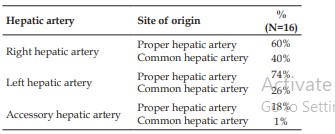
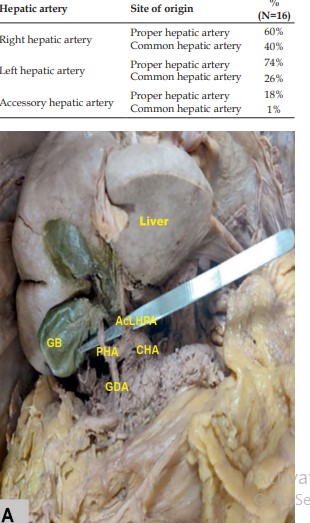
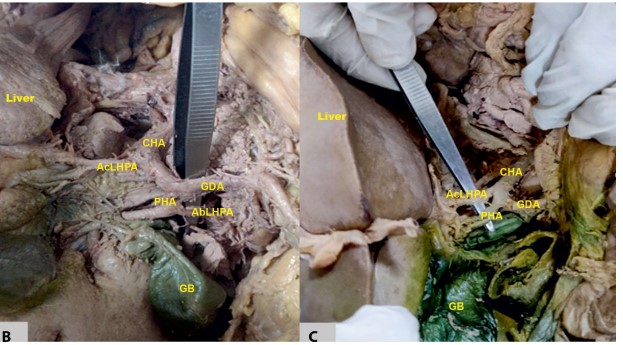
The liver is a complex, highly vascular organ where vascular anatomical variations are the norm. This study aimed to analyse hepatic vascular anatomical variations in a single study, thereby helping us understand the prevalence of hepatic vascular anomalies in the population served by our institution. Method: Abdominal cavities of 16 embalmed adult human cadavers were dissected to investigate the variation in the origin, number, and branching patterns of hepatic arteries Conclusion: The significance of these variants must be considered during preoperative planning and the intra-arterial infusion of targeted drugs. This study further accentuates the importance of proper medical imaging and documentation to ensure the best treatment for each patient.
References
- 1. Standring S. London, United Kingdom: Elsevier-Churchill Livingstone; 2005. Gray’s Anatomy, 39th Edition: The Anatomical Basis of Clinical Practice.
- 2. Michels NA (1966) Newer anatomy of the liver and its variant blood supply and collateral circulation. Am J Surg 112:337–347.
- 3. J. R. Hiatt, J. Gabbay, and R. W. Busuttil (1994) Surgical anatomy of the hepatic arteries in 1000 cases. Annals of Surgery, vol. 220, no. 1, pp. 50–52.
- 4. Ugurel MS, Battal B, Bozlar U, Nural M, Tasar M, et al. (2010) Anatomical variations of hepatic arterial system, coeliac trunk and renal arteries: an analysis with multidetector CT angiography. Br J Radiol 83: 661-667. [Crossref]
- 5. Favelier S, Germain T, Gensons P-Y, et al. Anatomy of liver arteries for interventional radiology. Diagn Interv Imaging. 2015;96(6):537–46. doi: 10.1016/j. diii.2013.12.001.
- 6. Sangster G, Ramirez S, Previgliano C, et al. Celiacomesenteric trunk: A rare anatomical variation with potential clinical and surgical implications. J La State Med Soc. 2014;166(2): 53–55.
- 7. Wang BG, Fröber R: Accessory extrahepatic arteries: blood supply of a human liver by three arteries: a case report with brief literature review. Ann Anat. 2009, 191:477-84. 10.1016/j. aanat.2009.06.006
- 8. Suzuki T, Nakayasu A, Kawabe K, Takeda H, Honjo I. Surgical significance of anatomic variations of hepatic artery. Am J Surg 1971;122:505-12.
- 9. Bhargava KN, Rao CGS, Aziz AMH. A study of hepatic arterial pattern in one hundred cadavers. Indian J Med Sci 1980; 32:293-97.
- 10. Noussios G, Dimitriou I, Chatzis I, Katsourakis A. The main anatomic variations of the hepatic artery and their importance in surgical practice:review of the literature. J Clin Med Res. 2017;9(4):248–248. doi: 10.14740/jocmr2902w. https://doi.org/10.14740/jocmr2902w PMid:28270883 PMC id: PMC5330766.
- 11. Kamath BK. A study of variant hepatic arterial anatomy and its relevance in current surgical practice. Int J Anat Res. 2015;3(01):947–947. https://doi.org/10.16965/ijar.2015.124. [Google Scholar]
- 12. Goud Kurelli SC, Wang J, Abbas S, Kanduri HK, Liu W. Hepatobiliary and hepatic vascular anatomy evaluated with computed tomography and magnetic resonance imaging: the current status. Radiol Infect Dis. (2020) 7(1):1–6. doi: 10.1016/j.jrid.2020.02.005.
- 13. Schroering JR, Kubal CA, Hathaway TJ, Robinson RC, Mangus RS. Impact of variant donor hepatic arterial anatomy on clinical graft outcomes in liver transplantation. Liver Transpl. (2018) 24(10):1481–4. doi: 10.1002/lt.25316.
- 14. Bekker J, Ploem S, Jong KPD. Early hepatic artery thrombosis after liver transplantation: a systematic review of the incidence, outcome, and risk factors. Am J Transplant. (2009) 9(4):746–57. doi: 10.1111/j.1600-6143. 2008.02541.
Data Sharing Statement
There are no additional data available. All raw data and code are available upon request.
Funding
This research received no funding.
Author Contributions
All authors contributed significantly to the work and approve its publication.
Ethics Declaration
Provide information related to the Ethics Committee approval with approval number OR write This article does not involve any human or animal subjects, and therefore does not require ethics approval.
Acknowledgements
We would like to express our gratitude to the patients, their families, and all those who have contributed to this study.
Conflicts of Interest
The authors report no conflicts of interest in this work.
About this article

Cite this article
Choudhary A. Anatomic Variation of the Hepatic Artery and Its Importance in Preoperative Planning. Indian J Anat. 2026;15(1):29-32.
Licence:
Attribution-Non-commercial 4.0 International (CC BY-NC 4.0)This license enables reusers to distribute, remix, adapt, and build upon the material in any medium or format for noncommercial purposes only, and only so long as attribution is given to the creator.
| Received | Accepted | Published |
|---|---|---|
| March 02, 2026 | March 20, 2026 | April 30, 2026 |
DOI: https://doi.org/10.21088/ija.2320.0022.15126.5
Keywords
VascularHepaticLiverImagingSearch for Similar Articles
Similar Articles
- Occipital Encephalocele Diagnosed in Late-Third-Trimester Ultrasonography: A Ca...
- Bifid Xiphoid Process: A Case Report
- Unilateral Carotid Dolichoarteriopathy with Hairpin Kinking of the ICA and Loop...
- Anatomical Variation in the Number of Pulmonary Vein Ostia Draining into the Lef...
- Morphological Variations of Quadrate Lobe of Liver: A Cadaveric Study
Article Level Metrics
Last UpdatedTuesday 10 November 2026, 04:01:56 (IST)
6799
Accesses
66
723
00
Citations
NA
NA
NA
Download citation
Article Keywords
Keyword Highlighting
Highlight selected keywords in the article text.
Timeline
| Received | March 02, 2026 |
| Accepted | March 20, 2026 |
| Published | April 30, 2026 |
licence
Attribution-Non-commercial 4.0 International (CC BY-NC 4.0)
This license enables reusers to distribute, remix, adapt, and build upon the material in any medium or format for noncommercial purposes only, and only so long as attribution is given to the creator.