Full Text (PDF)
International Journal of Pediatric Nursing 10(2):p 61-67, July- Aug 2024. | DOI: https://doi.org/10.21088/ijpen.2454.9126.10224.2
Original Article
A Study to assess the Knowledge, Attitude and Practices Regarding Oral Hygiene of Children (3-5 Years) among Mothers Visiting Paediatric OPD of a Selected Hospital of Ludhiana, Punjab
Author Information
Licence:
Attribution-Non-commercial 4.0 International (CC BY-NC 4.0)This license enables reusers to distribute, remix, adapt, and build upon the material in any medium or format for noncommercial purposes only, and only so long as attribution is given to the creator.
International Journal of Pediatric Nursing 10(2):p 61-67, July- Aug 2024. | DOI: https://doi.org/10.21088/ijpen.2454.9126.10224.2
How Cite This Article:
Mamta, Simranpal Kaur. A Study to Assess the Knowledge, Attitude and Practices regarding Oral Hygiene of Children (3-5 Years) among Mothers Visiting Paediatric Opd of a Selected Hospital of Ludhiana, Punjab. Int J Pediatr Nurs. 2024;10(2):61–67.Timeline
Received : March 11, 2024
Accepted : July 13, 2024
Published : August 30, 2024
Abstract
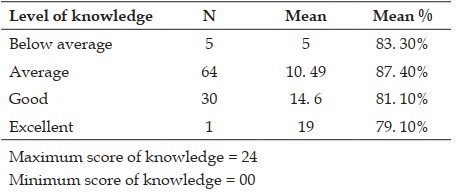
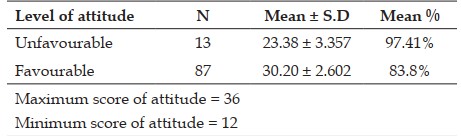
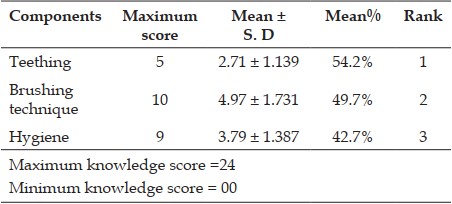
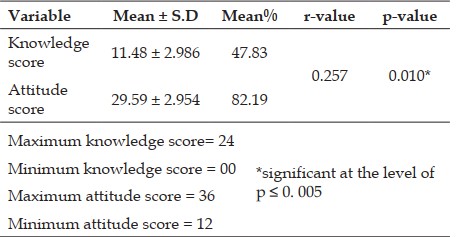
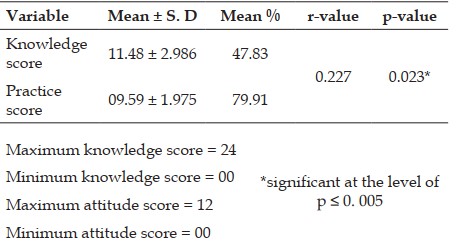
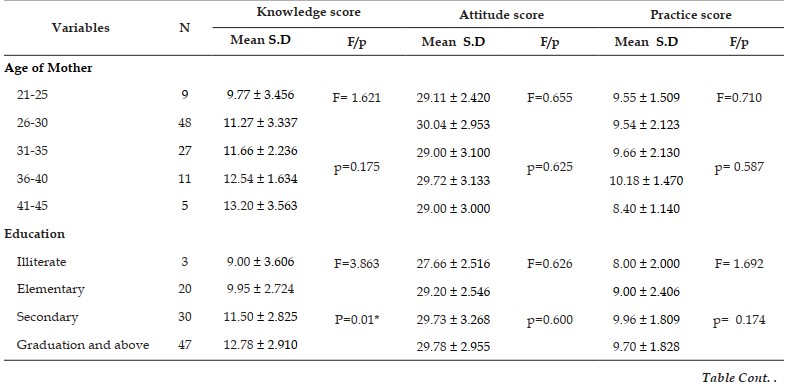
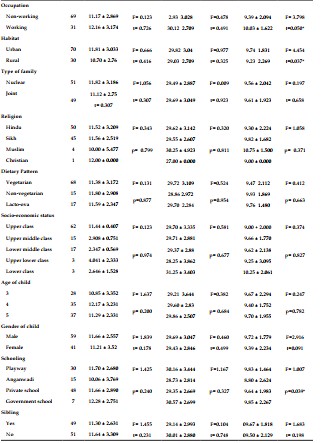
To maintain a good oral hygiene, both the parent and the child must work together. It is seen that poor attitude of parents generally reflect as a poor oral health in children and vice versa. Mother’s oral hygiene knowledge and attitude influence oral hygiene of their children at an early age. The parents with proper oral hygiene knowledge and attitude are likely to positively influence their children’s oral hygiene. Aims: To assess the knowledge, attitude and practices regarding oral hygiene of children (3-5 years) among mothers. Settings and Design: The study was conducted in Paediatric OPD of Dayanand Medical College and Hospital. Descriptive design was used in the study. Methods and Material: A descriptive research design was used for present study. Convenience sampling technique was used to select a sample of 100 mothers. Structured questionnaire to assess knowledge, Likert scale to find out attitude and checklist to assess the practices were used as tools. Statistical analysis used: The data was analysed using descriptive and inferential statistics. Pearson's correlation coefficient was used to assess the correlation between the variables and ANOVA test was used to find out the association between variables. Results: The findings of present study revealed that 64% mothers had average knowledge regarding oral hygiene of children. 87% mothers have favourable attitude and 97% had satisfactory level of practices regarding oral hygiene of their children. The study reveals that there is positive correlation of knowledge with attitude and practices regarding oral hygiene among mother of children (3-5) years. Conclusions: It is concluded that majority of mothers exhibited favourable attitude and satisfactory level of practices and have less knowledge regarding oral hygiene of children.
References
- 1. https://www. who. int WHO
- 2. Jose B, king NM, Early childhood caries lesion in preschool children in Kerala, India. Paediatric dent 2003; 25:594-600
- 3. Frenchken J, Sharma P, Stenhouse L, Green D, Lverty D, Dietrich T. Global epidemiology of dental caries and severe periodontitis. J Clin periodontal 2017;44:94-105
- 4. Benzati A, Bytyci A, Mega K, Latfi-xhemajli B, Berisha M. Mother’s behaviour and knowledge related to caries experiences of their children. Oral health prev dent 2014; 12:133-140.
- 5. Ali M Al-Zahrani, Abdullah S Al-Mushayt, Meshari F Otaibi, Amjad H Wyne, knowledge and attitude of Saudi mother’s towards their pre-school children’s oral heath, Pak J Med Sci. 2014;30:pp. 720-724.
- 6. Rothini JJ, Walish CA, Wang MJ, Morgaine KC, Drummond DK. An exploratory study of pregnant women’s knowledge of child oral health care in New Zealand. N Z Dent J. 2012;108(4):pp. 129-133.
- 7. Ashkanani F, Al-sani M. Knowledge, attitude and practices of care givers in relation to oral health pre-school children med Princ Pract. 2013;22(2):pp. 167-172.
- 8. World Health Organization: world oral health report 2003. Geneva: WHO;2013.
- 9. Chan SC Tsai JS, King NM: Feeding and oral hygiene habits of preschool children in Hongkong and their caregivers’ dental knowledge and attitude. Int. J Paediatric dent 2002,12:322-321.
- 10. Kaur B: Evaluation of oral health awareness parents of preschool children . Ind . J Dent Res 2009, 20:463-465.
- 11. https;//www. census. gov/programs-surveys (international programs) about/idb. html.
- 12. James SL, Abate D, Adobe KH, Abay SM, Abbafati C, Abbasi N, et al . Global, regional, and national incidence, prevalence and years lived with disability for 354 diseases and injuries for 195 countries and territories, 11990-2017; A syetemic analysis for global burden of disease study for 2017. Lancet 2018;392:1789-8583.
- 13. Vasudeva Rajana, Sanjeev Khanagan, S. Nagandinis-http://www. jiaphd. org.
- 14. Sheiham A. Dental caries affect body weight and growth and quality of life in pre-school children – Br Dent J. 2006;201:626-6.
- 15. Low, Tan S, Schwartz S. The effect of severe caries on quality of life in young children. Paediatric Dent. 1999;21:3256.
- 16. Gundala R, Chava. Effect of lifestyle education and socio-economic status on periodontal health. Contemp clin dent 2010;1:23-6.
Data Sharing Statement
There are no additional data available. All raw data and code are available upon request.
Funding
This research received no funding.
Author Contributions
All authors contributed significantly to the work and approve its publication.
Ethics Declaration
This article does not involve any human or animal subjects, and therefore does not require ethics approval.
Acknowledgements
We would like to express our gratitude to the patients, their families, and all those who have contributed to this study.
Conflicts of Interest
No conflicts of interest in this work.
About this article

Cite this article
Mamta, Simranpal Kaur. A Study to Assess the Knowledge, Attitude and Practices regarding Oral Hygiene of Children (3-5 Years) among Mothers Visiting Paediatric Opd of a Selected Hospital of Ludhiana, Punjab. Int J Pediatr Nurs. 2024;10(2):61–67.
Licence:
Attribution-Non-commercial 4.0 International (CC BY-NC 4.0)This license enables reusers to distribute, remix, adapt, and build upon the material in any medium or format for noncommercial purposes only, and only so long as attribution is given to the creator.
| Received | Accepted | Published |
|---|---|---|
| March 11, 2024 | July 13, 2024 | August 30, 2024 |
DOI: https://doi.org/10.21088/ijpen.2454.9126.10224.2
Keywords
Search for Similar Articles
Similar Articles
- Craniosynostosis with Midfacial Hypoplasia and Bilateral Choanal Atresia Present...
- Pediatric Bone Disorders: Interpretation Challenges of Vitamin D and Calcium
- Care of Neonates Under Phototherapy: A Narrative Review on the Impact of Phototh...
- Effectiveness of Structured Teaching Program on Knowledge Regarding Text Neck Sy...
- Hemostatic Testing in Critically Ill Infants and Children
Article Level Metrics
Last UpdatedTuesday 29 September 2026, 14:32:53 (IST)
1498
Accesses
6
286
00
Citations
NA
NA
NA
Download citation
Article Keywords
Keyword Highlighting
Highlight selected keywords in the article text.
Timeline
| Received | March 11, 2024 |
| Accepted | July 13, 2024 |
| Published | August 30, 2024 |
licence
Attribution-Non-commercial 4.0 International (CC BY-NC 4.0)
This license enables reusers to distribute, remix, adapt, and build upon the material in any medium or format for noncommercial purposes only, and only so long as attribution is given to the creator.