Full Text (PDF)
Indian Journal of Medical and Health Sciences 12(2):p 65-71, July - Dec. 2025. | DOI: https://doi.org/10.21088/ijmhs.2347.9981.12225.1
Original Article
To Study the Utility of Cancer Ratio (Serum LDH: Pleural Fluid ADA Ratio) in Identifying Malignant Pleural Effusion in Central Rural India
Deepanshu Chawla, Babaji Ghewade, Ulhas Jadhav, Ajay Lanjewar
Author Information
Licence:
Attribution-Non-commercial 4.0 International (CC BY-NC 4.0)This license enables reusers to distribute, remix, adapt, and build upon the material in any medium or format for noncommercial purposes only, and only so long as attribution is given to the creator.
Indian Journal of Medical and Health Sciences 12(2):p 65-71, July - Dec. 2025. | DOI: https://doi.org/10.21088/ijmhs.2347.9981.12225.1
How Cite This Article:
Deepanshu Chawla, Babaji Ghewade, et al. To Study the Utility of Cancer Ratio (SerumLDH: Pleural FluidADARatio) in Identifying Malignant Pleural Effusion in Central Rural India. Jr. Med. &HealthSci. 2025; 12(2): 65–71.Timeline
Received : June 16, 2025
Accepted : August 05, 2025
Published : December 30, 2025
Abstract
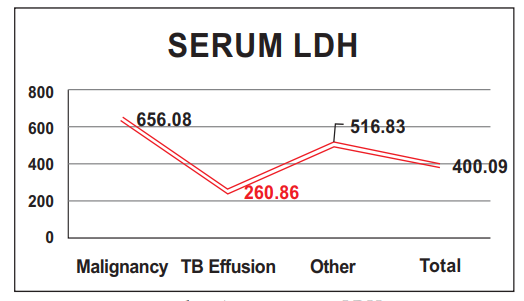
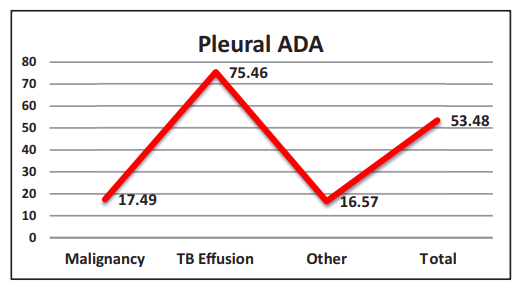
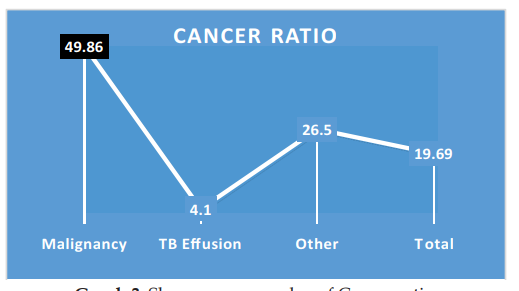
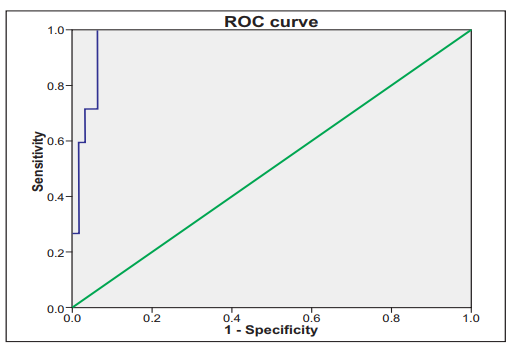
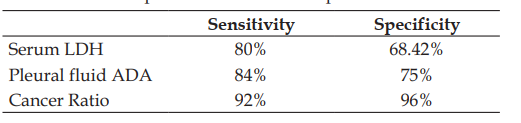
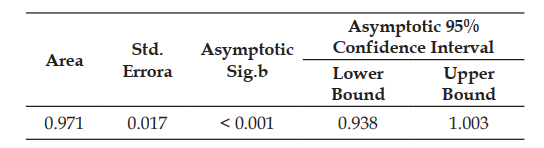
In this study we tried to evaluate the diagnostic ability of Cancer ratio in patients of exudative pleural effusion. Malignant and Tubercular pleural effusion are the two most common exudative pleural effusion encountered. Both of them can present with similar clinical and radiological features. A diagnostic tool that can differentiate between them early is awaited since long time. Methods: This is study of pleural effusion (exudative) in patients admitted in Department of Respiratory Medicine Results: LDH levels in serum and ADA levels in pleural fluid, their ratio which will be known as “Cancer Ratio”. Pleural fluid ADA is assumed to be negatively correlated with malignant effusion, on the other hand serum LDH with Serum LDH: pleural fluid ADA ratio to be positively linked with patients of malignant pleural effusion. Conclusion: Serum LDH: pleural fluid ADA ratio will distinguish malignant from non-malignant effusion. This can be done very early after admission or on outpatient basis and can yield result as early as within one hour of admission. This is one of the pioneer study in India.
References
- 1. Light RW, Macgregor MI, Luchsinger PC, Ball WC. Pleural effusions: the diagnostic separation of transudates and exudates. Ann Intern Med. 1972 Oct;77(4):507–13.
- 2. Gopi A, Madhavan SM, Sharma SK, Sahn SA. Diagnosis and treatment of tuberculous pleural effusion in 2006. Chest. 2007 Mar;131(3):880–9. 3. Sharma SK, Mohan A. Extrapulmonary tuberculosis. Indian J Med Res. 2004 Oct;120(4):316–53.
- 4. Rieder HL, Snider DE, Cauthen GM. Extrapulmonary tuberculosis in the United States. Am Rev Respir Dis. 1990 Feb;141(2):347–51.
- 5. Marel M, Zrůstová M, Stasný B, Light RW. The incidence of pleural effusion in a welldefined region. Epidemiologic study in central Bohemia. Chest. 1993 Nov;104(5):1486–9.
- 6. Marel M, Zrůstová M, Stasný B, Light RW. The incidence of pleural effusion in a welldefined region. Epidemiologic study in central Bohemia. Chest. 1993 Nov;104(5):1486–9.
- 7. Suárez-Santamaría M, Santolaria F, PérezRamírez A, Alemán-Valls M-R, Martínez-Riera A, González-Reimers E, et al. Prognostic value of inflammatory markers (notably cytokines and procalcitonin), nutritional assessment, and organ function in patients with sepsis. Eur Cytokine Netw. 2010 Mar;21(1):19–26.
- 8. Spiess PE, Pettaway CA, Vakar-Lopez F, Kassouf W, Wang X, Busby JE, et al. Treatment outcomes of small cell carcinoma of the prostate: a single-center study. Cancer. 2007 Oct 15;110(8):1729–37.
- 9. Laganá G, Barreca D, Calderaro A, Bellocco E. Lactate Dehydrogenase Inhibition: Biochemical Relevance and Therapeutical Potential. Curr Med Chem. 2019;26(18):3242–52.
- 10. Villena Garrido V, Ferrer Sancho J, Hernández Blasco L, de Pablo Gafas A, Pérez Rodríguez E, Rodríguez Panadero F, et al. [Diagnosis and treatment of pleural effusion]. Arch Bronconeumol. 2006 Jul;42(7):349–72.
- 11. Valdés L, Alvarez D, Valle JM, Pose A, San José E. The etiology of pleural effusions in an area with high incidence of tuberculosis. Chest. 1996 Jan;109(1):158–62.
- 12. de Groot PM, Wu CC, Carter BW, Munden RF. The epidemiology of lung cancer. Transl Lung Cancer Res. 2018 Jun;7(3):220–33.
- 13. Venuta F, Diso D, Onorati I, Anile M, Mantovani S, Rendina EA. Lung cancer in elderly patients. J Thorac Dis. 2016 Nov;8(Suppl 11):S908–14.
- 14. Zhang X, Andersen AB, Lillebaek T, KamperJørgensen Z, Thomsen VØ, Ladefoged K, et al. Effect of Sex, Age, and Race on the Clinical Presentation of Tuberculosis: A 15-Year Population-Based Study. Am J Trop Med Hyg. 2011 Aug 1;85(2):285–90.
- 15. Jasmer RM, Bozeman L, Schwartzman K, Cave MD, Saukkonen JJ, Metchock B, et al. Recurrent tuberculosis in the United States and Canada: relapse or reinfection? Am J Respir Crit Care Med. 2004 Dec 15;170(12):1360–6
- 16. Verma A, Abisheganaden J, Light RW. Identifying Malignant Pleural Effusion by A Cancer Ratio (Serum LDH: Pleural Fluid ADA Ratio). Lung. 2016;194:147–53.
- 17. Purnamasidhi CAW, Suega K, Bakta IM. Association between Lactate Dehydrogenase Levels to the Response of Non-Hodgkin Lymphoma in Elderly Patients Who Treated with First-Line Chemotherapy in Sanglah General Hospital. Open Access Maced J Med Sci. 2019 Jun 30;7(12):1984–6.
- 18. Forkasiewicz A, Dorociak M, Stach K, Szelachowski P, Tabola R, Augoff K. The usefulness of lactate dehydrogenase measurements in current oncological practice. Cell Mol Biol Lett. 2020;25:35.
- 19. Piras MA, Gakis C, Budroni M, Andreoni G. Adenosine deaminase activity in pleural effusions: an aid to differential diagnosis. Br Med J. 1978 Dec 23;2(6154):1751–2.
- 20. Goto M, Noguchi Y, Koyama H, Hira K, Shimbo T, Fukui T. Diagnostic value of adenosine deaminase in tuberculous pleural effusion: a meta-analysis. Ann Clin Biochem. 2003 Jul;40(Pt 4):374–81.
- 21. Aggarwal AN, Agarwal R, Sehgal IS, Dhooria S, Behera D. Meta-analysis of Indian studies evaluating adenosine deaminase for diagnosing tuberculous pleural effusion. Int J Tuberc Lung Dis Off J Int Union Tuberc Lung Dis. 2016;20(10):1386–91.
- 22. Korczyński P, Mierzejewski M, Krenke R, Safianowska A, Light RW. Cancer ratio and other new parameters for differentiation between malignant and nonmalignant pleural effusions. Pol Arch Intern Med. 2018 30;128(6):354–61.
- 23. Jiang X, de Groh M, Liu S, Liang H, Morrison H. Rising incidence of adenocarcinoma of the lung in Canada. Lung Cancer Amst Neth. 2012 Oct;78(1):16–22.
- 24. Toyoda Y, Nakayama T, Ioka A, Tsukuma H. Trends in lung cancer incidence by histological type in Osaka, Japan. Jpn J Clin Oncol. 2008 Aug;38(8):534–9.
- 25. Sahn SA. State of the art. The pleura. Am Rev Respir Dis. 1988 Jul;138(1):184–234.
- 26. Grunze H. The Comparative Diagnostic Accuracy, Efficiency and Specificity of Cytologic Technics Used in the Diagnosis of Malignant Neoplasm in Serous Effusions of the Pleural and Pericardial Cavities. Acta Cytol. 1964 Apr; 8:150–63.
- 27. Escudero Bueno C, García Clemente M, Cuesta Castro B, Molinos Martín L, Rodríguez Ramos S, González Panizo A, et al. Cytologic and bacteriologic analysis of fluid and pleural biopsy specimens with Cope’s needle. Study of 414 patients. Arch Intern Med. 1990 Jun;150(6):1190–4.
- 28. Valdés L, Alvarez D, San José E, Penela P, Valle JM, García-Pazos JM, et al. Tuberculous pleurisy: a study of 254 patients. Arch Intern Med. 1998 Oct 12;158(18):2017–21.
- 29. Pinelli V, Laroumagne S, Sakr L, Marchetti GP, Tassi GF, Astoul P. Pleural fluid cytological yield and visceral pleural invasion in patients with epithelioid malignant pleural mesothelioma. J Thorac Oncol Off Publ Int Assoc Study Lung Cancer. 2012 Mar;7(3):595–8.
- 30. Collins TR, Sahn SA. Thoracocentesis. Clinical value, complications, technical problems, and patient experience. Chest. 1987 Jun;91(6):817–22.
- 31. Rajawat GS, Batra S, Takhar RP, Rathi L, Bhandari C, Gupta ML. Diagnostic yield and safety of closed needle pleural biopsy in exudative pleural effusion. Avicenna J Med. 2017;7(3):121–4.
- 32. ElSharawy DE, Hagras MM, Khedr RA. The clinical utility of joined detection of cancer ratio, cancer ratio plus, Interferon gamma (IFN-γ) & Carcinoembryonic antigen (CEA) in differentiating lymphocytic pleural effusions. Egypt J Bronchol. 2020 May 20;14(1):3.
- 33. Zhang F, Hu L, Wang J, Chen J, Chen J, Wang Y. Clinical value of jointly detection serum lactate dehydrogenase/pleural fluid adenosine deaminase and pleural fluid carcinoembryonic antigen in the identification of malignant pleural effusion. J Clin Lab Anal. 2017 Sep;31.
Data Sharing Statement
There are no additional data available. All raw data and code are available upon request.
Funding
This research received no funding.
Author Contributions
Whether all authors contributed significantly to the work and approve its publication.
Ethics Declaration
This article does not involve any human or animal subjects, and therefore does not require ethics approval.
Acknowledgements
We would like to express our gratitude to the patients, their families, and all those who have contributed to this study.
Conflicts of Interest
The authors report no conflicts of interest in this work.
About this article

Cite this article
Deepanshu Chawla, Babaji Ghewade, et al. To Study the Utility of Cancer Ratio (SerumLDH: Pleural FluidADARatio) in Identifying Malignant Pleural Effusion in Central Rural India. Jr. Med. &HealthSci. 2025; 12(2): 65–71.
Licence:
Attribution-Non-commercial 4.0 International (CC BY-NC 4.0)This license enables reusers to distribute, remix, adapt, and build upon the material in any medium or format for noncommercial purposes only, and only so long as attribution is given to the creator.
| Received | Accepted | Published |
|---|---|---|
| June 16, 2025 | August 05, 2025 | December 30, 2025 |
DOI: https://doi.org/10.21088/ijmhs.2347.9981.12225.1
Keywords
Pleural effusion (PE)Lactate dehydrogenase (LDH)Adenosine deaminase (ADA)Search for Similar Articles
Similar Articles
- Wound Assessment using a Smartphone-based Application: Imitomeasure in Pressure...
- Emerging Pandemic and Silent Killer – Non Aloholic Fatty Liver Disease: A Compr...
- Prenatal and Postnatal Healthcare in Odisha
- Assessment of Diabetic Foot Ulcers: A Review
- IBS – Irritable Bowel Syndrome – Management through Comprehensive Non-Pharmacolo...
Article Level Metrics
Last UpdatedFriday 23 October 2026, 07:31:30 (IST)
1889
Accesses
47
404
00
Citations
NA
NA
NA
Download citation
Article Keywords
Keyword Highlighting
Highlight selected keywords in the article text.
Timeline
| Received | June 16, 2025 |
| Accepted | August 05, 2025 |
| Published | December 30, 2025 |
licence
Attribution-Non-commercial 4.0 International (CC BY-NC 4.0)
This license enables reusers to distribute, remix, adapt, and build upon the material in any medium or format for noncommercial purposes only, and only so long as attribution is given to the creator.