Full Text (PDF)
International Journal of Food, Nutrition & Dietetics 12(2):p 67-72, May - Aug 2024. | DOI: https://doi.org/10.21088/ijfnd.2322.0775.12124.4
Review Article
The Potential of Nutraceuticals for Age Related Macular Degeneration (AMD)
Neelesh Kumar Maurya, Ragi Bubakiya
Author Information
Licence:
Attribution-Non-commercial 4.0 International (CC BY-NC 4.0)This license enables reusers to distribute, remix, adapt, and build upon the material in any medium or format for noncommercial purposes only, and only so long as attribution is given to the creator.
International Journal of Food, Nutrition & Dietetics 12(2):p 67-72, May - Aug 2024. | DOI: https://doi.org/10.21088/ijfnd.2322.0775.12124.4
How Cite This Article:
Ragi Bubakiya, Neelesh Kumar Maurya. The Potential of Nutraceuticals for Age Related Macular Degeneration (AMD). Int J Food Nutr Diet. 2024;12(2):67-72.Timeline
Received : March 23, 2024
Accepted : May 04, 2024
Published : August 30, 2024
Abstract
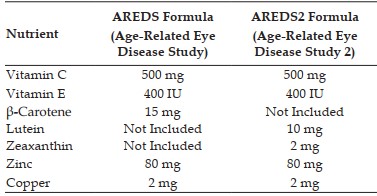
Age related macular degeneration (AMD) is a serious threat to public health as it is the leading cause of visual loss, and its prevalence is predicted to rise considerably. While current treatment options exist for advanced stages, there is a compelling need to explore preventative and management strategies. This review investigates the potential of nutraceuticals in mitigating AMD progression. We explore the proposed mechanisms of action by which specific nutraceuticals may counteract oxidative stress, inflammation, and other detrimental factors. The Age Related Eye Disease Study (AREDS) and AREDS2 are two important clinical research studies that are looked at to show how certain formulations with antioxidants and minerals can help people. Furthermore, we delve into emerging evidence on the potential of promising This review underscores the potential of nutraceuticals as a complementary approach for managing AMD, emphasising the need for further research to optimise their efficacy and personalise treatment plans for individual patients.
References
- 1. Ambati, B. K., & Fowler, B. J. (2012). Mechanisms of age-related macular degeneration: The role of oxidative stress. Survey of Ophthalmology, 57(4), 265-283. https://www.ncbi.nlm.nih.gov/pmc/ articles/PMC7866075/
- 2. Datta, S., Manejwala, M., & Chakravarthy, U. (2017). Age-related macular degeneration. Indian Journal of Ophthalmology, 65(12), 1588- 1595. https://www.ncbi.nlm.nih.gov/books/ NBK560778/
- 3. Pinelli, R., & Bertelli, M. (n.d.). Drusen and agerelated macular degeneration. https://www.ncbi. nlm.nih.gov/pmc/articles/PMC8077017/
- 4. McCarty, M. F. (2000). A review of nutritional factors in the pathogenesis and treatment of age-related macular degeneration. Archives of Ophthalmology, 118(12), 1618-1630. https:// pubmed.ncbi.nlm.nih.gov/35695158/
- 5. National Eye Institute. (n.d.). Facts about AgeRelated Macular Degeneration. National Institutes of Health (.gov). https://www.ncbi.nlm.nih.gov/ pmc/articles/PMC4322741/
- 6. Mitchell, P., et al. (2018). Age-related macular degeneration. Lancet, 392(10153), 1150-1172.
- 7. Seddon, J. M., et al. (2004). Recommendations on dietary intake of lutein and zeaxanthin in the context of age-related macular degeneration. Archives of Ophthalmology, 122(5), 490-495. https://pubmed.ncbi.nlm.nih.gov/21899805/
- 8. National Eye Institute. (n.d.). Facts about agerelated macular degeneration. National Institutes of Health (.gov) https://www.nih.gov/about-nih/ what-we-do.
- 9. Hammond Jr, B. R., et al. (2013). American Academy of Ophthalmology preferred practice pattern on carotenoids, antioxidants, and agerelated macular degeneration (2013 update). Ophthalmology, 120(8), 1630-1641.
- 10. Bryl A, Falkowski M, Zorena K, Mrugacz M. The Role of Resveratrol in Eye Diseases-A Review of the Literature. Nutrients. 2022 Jul 20;14(14):2974. doi: 10.3390/nu14142974. PMID: 35889930; PMCID: PMC9317487.
- 11. Huang, H. C., et al. (2014). Genetic variants associated with age-related macular degeneration and dietary factors: The Beaver Dam Eye Study. Ophthalmology, 121(7), 1424-1433.
- 12. Ostrowski, J., Kątska-Ostrowska, K., Gruszecki, W., & Rejdak, R. (2020). Diet and supplements as a supportive treatment for age-related macular degeneration. Ophthalmology Journal, 5, 100-105.
- 13. Pawaskar, L., Sharma, A., & Kiran, M. (2023). A comparative study in the Indian patients of geographic atrophy for the efficacy and safety for the AREDS 2 Formula, the combination of Vitamin C, Copper, Zeaxanthin, Zinc, Lutein, and Vitamin E, with the combination of L-Glutathione, Lutein (contains Zeaxanthin) and Astaxanthin. Indian Journal of Clinical and Experimental Ophthalmology, 10(4), 555-560.
- 14. Fernandes, N., Araújo, M. C., & Lança, C. (2023). The Roles of Vitamin D and Polyphenols in the Management of Age-Related Macular Degeneration: A Narrative Review. Future Pharmacology, 3(1), 317-328.
- 15. Koçyiğit, E., Gövez, N. E., Arslan, S., & Ağagündüz, D. (2024). A Narrative Review on Dietary Components & Patterns and Age-Related Macular Degeneration. Nutrition Research Reviews, 1-79.
- 16. Rondanelli, M., Gasparri, C., Riva, A., Petrangolini, G., Barrile, G. C., Cavioni, A., ... & Perna, S. (2023). Diet and ideal food pyramid to prevent or support the treatment of diabetic retinopathy, age-related macular degeneration, and cataracts. Frontiers in Medicine, 10, 1168560.
- 17. Broadhead, G. K., Agrón, E., Peprah, D., Keenan, T. D., Lawler, T. P., Mares, J., ... & AREDS/ AREDS2 Investigators. (2023). Association of dietary nitrate and a Mediterranean diet with age-related macular degeneration among US adults: The Age-Related Eye Disease Study (AREDS) and AREDS2. JAMA ophthalmology, 141(2), 130-139.
- 18. Parker, J. (2023). ACNEM fellow article: AMD-age related macular degeneration adjunctive treatment modalities. Journal of the Australasian College of Nutritional and Environmental Medicine, 42(4), 90-103.
- 19. Semenova, Y., & Bjørklund, G. (2023). Antioxidants and neurodegenerative eye disease. Critical Reviews in Food Science and Nutrition, 1-19.
- 20. Kushwah, N., Bora, K., Maurya, M., Pavlovich, M. C., & Chen, J. (2023). Oxidative stress and antioxidants in age-related macular degeneration. Antioxidants, 12(7), 1379.
Data Sharing Statement
There are no additional data available. All raw data and code are available upon request.
Funding
This research received no funding.
Author Contributions
All authors contributed significantly to the work and approve its publication.
Ethics Declaration
This article does not involve any human or animal subjects, and therefore does not require ethics approval.
Acknowledgements
We would like to express our gratitude to the patients, their families, and all those who have contributed to this study.
Conflicts of Interest
No conflicts of interest in this work.
About this article

Cite this article
Ragi Bubakiya, Neelesh Kumar Maurya. The Potential of Nutraceuticals for Age Related Macular Degeneration (AMD). Int J Food Nutr Diet. 2024;12(2):67-72.
Licence:
Attribution-Non-commercial 4.0 International (CC BY-NC 4.0)This license enables reusers to distribute, remix, adapt, and build upon the material in any medium or format for noncommercial purposes only, and only so long as attribution is given to the creator.
| Received | Accepted | Published |
|---|---|---|
| March 23, 2024 | May 04, 2024 | August 30, 2024 |
DOI: https://doi.org/10.21088/ijfnd.2322.0775.12124.4
Keywords
Age-related macular degeneration (AMD)NutraceuticalsLuteinZeaxanthinOxidative stressInflammationSearch for Similar Articles
Similar Articles
- Smart and Sustainable Packaging Approaches for Reducing Heavy Metal Contaminatio...
- Traditional Rhythms for Modern Health: Seed Cycling in the Management of Women’s...
- School-Based Nutrition Education Improves Knowledge and Consumption of Omega-3-R...
- Nutrition as Precision Therapy in Rare Genetic Diseases: Moving beyond Supportiv...
- A Review on Health Risks Associated with the Repetitive use of Cooking Oil and D...
Article Level Metrics
Last UpdatedSunday 06 September 2026, 01:46:55 (IST)
1791
Accesses
8
247
00
Citations
NA
NA
NA
Download citation
Article Keywords
Keyword Highlighting
Highlight selected keywords in the article text.
Timeline
| Received | March 23, 2024 |
| Accepted | May 04, 2024 |
| Published | August 30, 2024 |
licence
Attribution-Non-commercial 4.0 International (CC BY-NC 4.0)
This license enables reusers to distribute, remix, adapt, and build upon the material in any medium or format for noncommercial purposes only, and only so long as attribution is given to the creator.