Full Text (PDF)
Indian Journal of Anesthesia and Analgesia 10(3):p 85-95, July-September 2023. | DOI: https://doi.org/10.21088/ijaa.2349.8471.10323.1
Supraclavicular Brachial Plexusblock/Indian J Anesth Analg. 2023;10(3) 85-95.
Original Article
Study of Dexmedetomidine as an Adjuvant to Bupivacaine- Lignocaine with Adrenaline in Supraclavicular Brachial Plexusblock
Author Information
Licence:
Attribution-Non-commercial 4.0 International (CC BY-NC 4.0)This license enables reusers to distribute, remix, adapt, and build upon the material in any medium or format for noncommercial purposes only, and only so long as attribution is given to the creator.
Indian Journal of Anesthesia and Analgesia 10(3):p 85-95, July-September 2023. | DOI: https://doi.org/10.21088/ijaa.2349.8471.10323.1
How Cite This Article:
Sandhya Gujar, Karuna Sidam/Study of Dexmedetomidine as an Adjuvant to Bupivacaine-Lignocaine with Adrenaline inSupraclavicular Brachial Plexusblock/Indian J Anesth Analg. 2023;10(3) 85-95.
Timeline
Received : May 02, 2023
Accepted : June 15, 2023
Published : August 30, 2023
Abstract
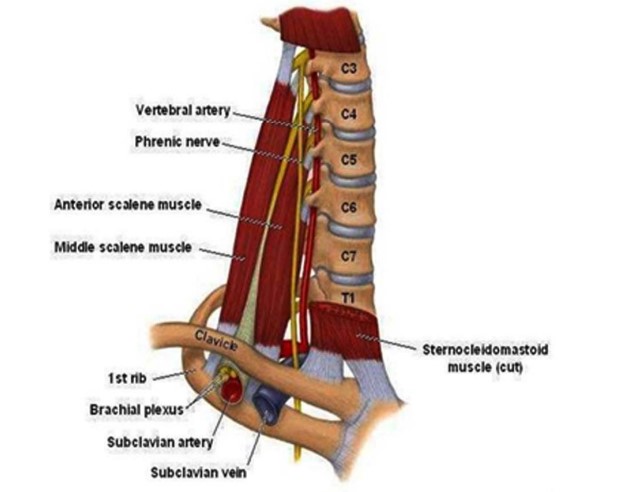
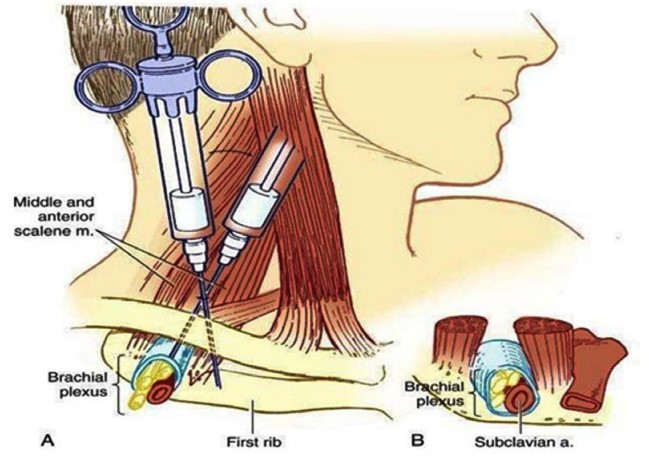
Supraclavicular brachial plexus block is a very popular mode of anesthesia for various upper limb surgeries, as it is easiest and most effective and has good post-operative analgesia. It is carried out at the level of trunks i.e7 at the middle of brachial plexus, resulting in homogenou spread of anesthetic agent throughout the plexus with a fast onset and complete block action.9 Dexmedetomidine, is potent, highly selective α2-adrenoceptor agonist, has been used as an adjuvant during regional and local anesthesia because of rapid onset of action and relatively short half-life up to 2 hours.
Objective of Study: To compare the effects of addition of Dexmedetomidine to Bupivacaine- Lignocaine with Adrenaline combination for Supraclavicular brachial plexus block with regards to onset and duration of sensory block, motor block. Quality of anesthesia, analgesia and Adverse reactions if any after taking written informed consent.
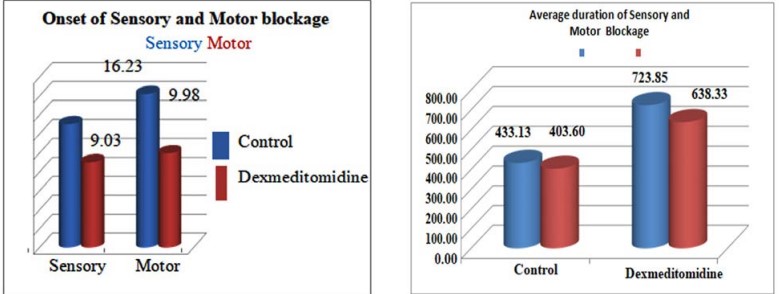
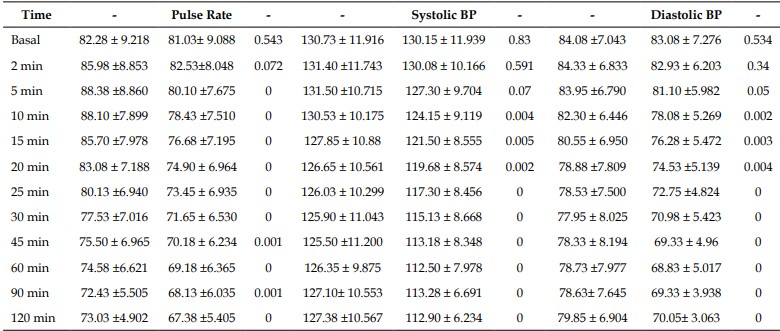
Observations: Onset of sensory as well as motor blockade in Dexmedetomidine group was earlier when compared to plain bupivacaine-lignocaine adrenalin group. The duration of sensory and motor blockade was significantly increased (p<0.05) in Dexmedetomidine group when compared to another group. With respect to hemodynamic parameters Dexmedetomidine group provided a higher Degree of cardiovascular stability with a lesser incidence of hypotension.
Result: There is earlier onset of action and longer duration of sensory; Motor block and Duration of analgesia (sensory block) was prolonged in dexmedetomidine group. Hence it is advisable to add dexmedetomidine as an adjuvant to local anesthetic combinations during supraclavicular block for prolonged anesthesia and to provide better analgesia
References
- 1. Lee A, Atkinson RS, Rushman GB. A synopsis of anaesthesia. 10th ed. Bristol: Wright; 1987. p. 618.
- 2. Carty S, Nicholls B. Ultrasound guided regional anaesthesia. Contin Educ Anaesth Crit Care Pain. 2007 Feb;7(1):20–4.
- 3. Fanelli G, Casati A, Garancini P, Torri G. Nerve stimulator and multiple injection technique for upper and lower limb blockade: failure rate, patient acceptance, and neurologic complications. Anesth Analg. 1999 Apr;88(4):847–52.
- 4. Haleem S, Siddiqui AK, Mowafi HA, Ismail SA, Ali QA. Nerve stimulator evoked motor response predicting a successful supraclavicular brachial plexus block. Anesth Analg. 2010 Jun;110(6):1745–6.
- 5. Brown DL, Cahill DR, Bridenbaugh LD. Supraclavicular nerve block: anatomic analysis of a method to prevent pneumothorax. Anesth Analg. 1993 Mar;76(3):530–4.
- 6. Urmey WF. Upper extremity blocks. In: Brown DL, editor. Regional Anaesthesia and Analgesia. Philadelphia: W. B. Saunders; 1996. p. 254–78.
- 7. Lanz E, Theiss D, Jankovic D. The extent of blockade following various techniques of brachial plexus block. Anesth Analg. 1983 Jan;62(1):55–8.
- 8. Christiansson L. Update on adjuvants in regional anesthesia. Period Biol. 2009;111(2):161–70.
- 9. Förster JG, Rosenberg PH. Clinically useful adjuvants in regional anesthesia. Curr Opin Anaesthesiol. 2003 Oct;16(5):477–86.
- 10. Kanazi GE, Aouad MT, Jabbour-Khoury SI, Al Jazzar MD, Alameddine MM, Al-Yaman R, et al. Effect of low-dose dexmedetomidine or clonidine on the characteristics of bupivacaine spinal block. Acta Anaesthesiol Scand. 2006 Feb;50(2):222–7.
- 11. Konakci S, Adanir T, Yilmaz G, Rezanko T. The efficacy and neurotoxicity of dexmedetomidine administered via the epidural route. Eur J Anaesthesiol. 2008 May;25(5):403–9.
- 12. El-Hennawy AM, Abd-Elwahab AM, Abd-Elmaksoud AM, El-Ozairy HS, Boulis SR. Addition of clonidine or dexmedetomidine to bupivacaine prolongs caudal analgesia in children. Br J Anaesth. 2009 Aug;103(2):268–74.
- 13. Matuszczak M. Supraclavicular block. In: Chelly JE, editor. Peripheral nerve blocks. 2nd ed. New York (NY): Springer; 1999. p. 35–8.
- 14. Stan TC, Denman WS, Conroy JM, Hill DC. The incidence of neurovascular complications following axillary brachial plexus block using a transarterial approach. A prospective study of 1,000 consecutive patients. Reg Anesth. 1995 Nov-Dec;20(6):486–92.
- 15. Moore DC. Supraclavicular approach for the block of the brachial plexus. In: Moore DC. Regional Blocks. 4th ed. Springfield (IL): Charles C Thomas Publisher; 1981. p. 225.
- 16. Greene ER. Intravascular injection of local anesthetic after venipuncture of axillary vein during attempted brachial plexus block. Anesth Analg. 1986 Apr;65(4):419–25.
- 17. Korevaar WC, Burney RG, Moorey PA. Convulsions during stellate ganglion block. Anesth Analg. 1979 Apr;58(4):329–30.
- 18. Brown DL, Ransom JP, Flicker W, Cahill DR. Regional anesthesia and local anesthetic induced systemic toxicity: seizure frequency and accompanying cardiovascular changes. Anesth Analg. 1995 Aug;81(2):321–8.
- 19. Neal JM, Zorychta Z, Vloka JD, Kancir CP, Kopacz DJ, Liguori GA, et al. Quantitative analysis of respiratory, motor, and sensory function after supraclavicular block. Anesth Analg. 1998 Jun;86(6):1239–44.
- 20. Dollery C. Bupivacaine Hydrochloride. In: Dollery C, editor. Therapeutic Drugs. 2nd ed. Edinburgh: Churchill Livingstone; 1999.
- 21. Stoelting RK. Local Anaesthetics. In: Stoelting RK. Pharmacology & Physiology in Anaesthetic Practice. 3rd ed. Philadelphia (PA): Lippincott Raven; 1999.
- 22. Anttila M, Penttila J, Helminen A, Vuorilehto L, Scheinin H. Bioavailability of dexmedetomidine after extravascular doses in healthy subjects. Br J Clin Pharmacol. 2003 Dec;56(6):691–3.
- 23. Winnie AP. Historical consideration. In: Winnie AP. Plexus Anaesthesia. Vol. 1. New York: Churchill Livingstone; 1984. p. 43–116.
- 24. Mulroy MF. Peripheral nerve blockade. In: Barash PG, Cullen BF, Stoelting RK, editors. Clinical Anaesthesia. 4th ed. Philadelphia (PA): Lippincott Williams & Wilkins; 2001. p. 723–7.
- 25. Hall JE, Uhrich TD, Barney JA, Arain SR, Ebert TJ. Sedative, amnestic, and analgesic properties of small-dose dexmedetomidine infusions. Anesth Analg. 2000 Mar;90(3):699–705.
- 26. Ebert TJ, Hall JE, Barney JA, Uhrich TD, Colinco MD. The effects of increasing plasma concentrations of dexmedetomidine in humans. Anesthesiology. 2000 Aug;93(2):382–94.
- 27. Gujar S, Sidam K. Study of dexmedetomidine as an adjuvant to bupivacaine-lignocaine with adrenaline in supraclavicular brachial plexus block. Indian J Anaesth Analg. 2023 Jul-Sep;10(3):95. (This article's citation details were found embedded in entry 23 of your original list).
Data Sharing Statement
There are no additional data available. All raw data and code are available upon request.
Funding
This research received no funding.
Author Contributions
All authors contributed significantly to the work and approve its publication.
Ethics Declaration
This article does not involve any human or animal subjects, and therefore does not require ethics approval.
Acknowledgements
Information not provided.
Conflicts of Interest
The authors report no conflicts of interest in this work.
About this article

Cite this article
Sandhya Gujar, Karuna Sidam/Study of Dexmedetomidine as an Adjuvant to Bupivacaine-Lignocaine with Adrenaline in
Supraclavicular Brachial Plexusblock/Indian J Anesth Analg. 2023;10(3) 85-95.
Licence:
Attribution-Non-commercial 4.0 International (CC BY-NC 4.0)This license enables reusers to distribute, remix, adapt, and build upon the material in any medium or format for noncommercial purposes only, and only so long as attribution is given to the creator.
| Received | Accepted | Published |
|---|---|---|
| May 02, 2023 | June 15, 2023 | August 30, 2023 |
DOI: https://doi.org/10.21088/ijaa.2349.8471.10323.1
Keywords
0.5% Bupivacaine2% lignocaine with adrenalineDexmedetomidinePeripheral nerve stimulator (stimuplex DIG RC)Sensory and motor blockadeSearch for Similar Articles
Similar Articles
- Awake Fibreoptic Intubation for Airway Management in Massive Thyroid Enlargement...
- A Case of Thoracotomy with One Lung Ventilation for Carcinoma Oesophagus
- A Case of Empyema for Thoracotomy and Decortication-Anaesthesia Management
- Full Mouth Rehabilitation in a 3-Year-Old Female Child with Repaired Tetralogy o...
- Do Gel Manicures Affect SpO2 Readings ? A Clinical Investigation
Article Level Metrics
Last UpdatedTuesday 14 July 2026, 09:06:49 (IST)
5690
Accesses
15
679
00
Citations
NA
NA
NA
Download citation
Article Keywords
Keyword Highlighting
Highlight selected keywords in the article text.
Timeline
| Received | May 02, 2023 |
| Accepted | June 15, 2023 |
| Published | August 30, 2023 |
licence
Attribution-Non-commercial 4.0 International (CC BY-NC 4.0)
This license enables reusers to distribute, remix, adapt, and build upon the material in any medium or format for noncommercial purposes only, and only so long as attribution is given to the creator.