Full Text (PDF)
Indian Journal of Anatomy 12(3):p 95-106, July-September 2023. | DOI: https://doi.org/10.21088/ija.2320.0022.12323.1
Review Article
Structure & Development of Heart Valves
Author Information
Licence:
Attribution-Non-commercial 4.0 International (CC BY-NC 4.0)This license enables reusers to distribute, remix, adapt, and build upon the material in any medium or format for noncommercial purposes only, and only so long as attribution is given to the creator.
Indian Journal of Anatomy 12(3):p 95-106, July-September 2023. | DOI: https://doi.org/10.21088/ija.2320.0022.12323.1
How Cite This Article:
Deb H, Sarma D. Structure & development of heart valves. Indian J Anat. 2023;12(3):95–106.Timeline
Received : July 18, 2023
Accepted : August 31, 2023
Published : September 30, 2023
Abstract
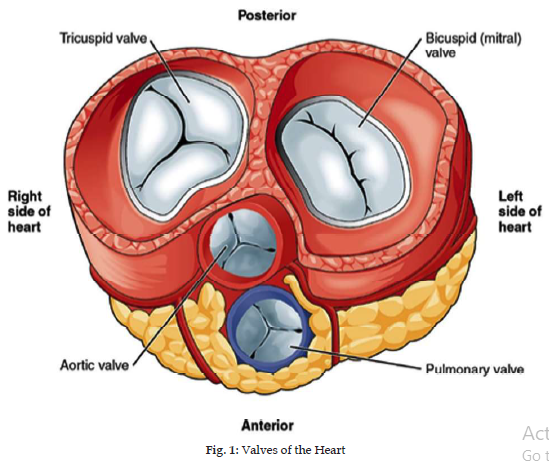
The human heart valves are intricate anatomical structures made up of numerous supporting structures and leaflets. Heart valves' primary function is to ensure that blood flows in a single direction, which is crucial. Malformation and dysfunction of these perplexing designs bring about possibly fatal pathologies. The development, gross anatomy and histology of the four cardiac valves will be discussed in this chapter. These four heart valves can be additionally named two atrioventricular (AV) valves and two semilunar valves; nevertheless, every valve is unique. When subjected to mechanical loading, the leaflets of the two types of valves are supported in different ways. To avoid regurgitation, the AV valves utilize a tension apparatus, which is made out of fibrocartilage containing chordae tendineae (heart strings) and expansions of ventricular myocardium known as papillary muscles. However, the semilunar or ventriculoarterial valve leaflets are self-supporting, with three leaflets that snap shut on thickened edges. Both the AV and semilunar valve primordia appear early in heart development as acellular swellings between the primitive myocardium and the endocardium. These swellings or pads are loaded up with proteoglycans and glycosaminogly cans making them jelly like consistency. The arrangement of valves during embryogenesis (i.e., valvulogenesis) begins from endocardial cells covering the myocardium. These cells go through an endothelial mesenchymal change, multiply and relocate inside an extracellular grid. In both the atrioventricular canal and the outflow tract, this causes bilateral cardiac cushions to form. Both the cells in the prospective valve and the endocardium are thought to have originated in an embryo. This review will help to get thorough knowledge about the dimensions, morphology and development of the heart valves which is required for planning surgical procedures and manufacturing various types of prosthesis for heart valves.
References
- 1. Weinhaus AJ, Roberts KP. Anatomy of the human heart. In: Iaizzo PA, editor. Handbook of Cardiac Anatomy, Physiology, and Devices. 2nd ed. Totowa (NJ): Humana Press; 2009. p. 59–85.
- 2. Standring S, editor. Gray’s Anatomy: The Anatomical Basis of Clinical Practice. 40th ed. London: Churchill Livingstone Elsevier; 2008. p. 966–9.
- 3. Chaurasia BD. B D Chaurasia’s Human Anatomy: Upper Limb, Thorax. Vol 1. 6th ed. New Delhi: CBS Publishers & Distributors; 2013. p. 259–60.
- 4. Anderson RH, Razavi R, Taylor AM. Cardiac anatomy revisited. J Anat. 2004;205(3):159–77.
- 5. Whiteman S, Alimi Y, Carrasco M, Gielecki J, Zurada A, Loukas M. Anatomy of the cardiac chambers: a review of the left ventricle. Transl Res Anat. 2021;23:100095.
- 6. Sadler TW. Langman's Medical Embryology. 13th ed. Philadelphia: Lippincott Williams & Wilkins; 2015.
- 7. Balinsky BI, Fabian BC. An Introduction to Embryology. 5th ed. Philadelphia: Saunders College Publishing; 1981.
- 8. Hinton RB, Yutzey KE. Heart valve structure and function in development and disease. Annu Rev Physiol. 2011;73:29–46.
- 9. Chaudhary K, Dhatrak A, Singh BR, Gajbe U. Morphometry of human tricuspid valve: a cadaveric study. Int J Res Pharm Sci. 2020;11(3):4487–91.
- 10. Singh B, Pandey K, Singh AK, Kausar H, Singh A. Tricuspid valve complex: a study on its variations in North Indian population and clinical implications. Eur J Anat. 2018;22(6):509–14.
- 11. Paper S. Anatomy and physiology of the tricuspid valve. Interv Cardiol Clin. 2018;7(1):1–6.
- 12. Skwarek M, Hreczecha J, Dudziak M, Jerzemowski J, Wilk B, Grzybiak M. The morphometry of the accessory leaflets of the tricuspid valve in a four cuspidal model. Folia Morphol (Warsz). 2007;66(4):323–7.
- 13. Sakthivel S. Morphometry of mitral valve in South Indians: a cadaveric study. Int J Anat Res. 2017;8(1):8–12.
- 14. Gunnal SA, Farooqui MS, Wabale RN. Study of mitral valve in human cadaveric hearts. Heart Views. 2012;13(4):132–5.
- 15. Ho SY. Anatomy of the mitral valve. Heart. 2002;88(Suppl 4):iv5–10.
- 16. Yacoub M. Anatomy of the mitral valve, chordae and cusps. In: Kalmanson D, editor. The Mitral Valve. London: Edward Arnold; 1976. p. 15–20.
- 17. Ranganathan N, Lam JH, Wigle ED, Silver MD. Morphology of the human mitral valve. II. The valve leaflets. Circulation. 1970;41(3):459–67.
- 18. Rusted IE, Scheifley CH, Edwards JE. Studies of the mitral valve. I. Anatomic features of the normal mitral valve and associated structures. Circulation. 1952;6(6):825–31.
- 19. Pant P, Mukhia R, Kumari HN, Mukherjee A. Morphological and morphometric analysis of mitral valve in Maharashtra region: cadaveric study. Indian J Appl Res. 2013;3(5):497–8.
- 20. Garg S, Singh P, Sharma A, Gupta G. A gross anatomical study of pulmonary valve in human cadavers. Int J Med Dent Sci. 2014;3(1):325–31.
- 21. Ashalatha PR, Noone PH. Variations of the pulmonary valve. Indian J Clin Anat. 2017;4(1):58–63.
- 22. Jonas SN, Kligerman SJ, Burke AP, Frazier AA, White CS. Pulmonary valve anatomy and abnormalities: a pictorial essay of radiography, computed tomography (CT), and magnetic resonance imaging. J Thorac Imaging. 2016;31(1):4–12.
- 23. Chester AH, El-Hamamsy I, Butcher JT, Latif N, Bertazzo S, Yacoub MH. The living aortic valve: from molecules to function. Glob Cardiol Sci Pract. 2014;2014(1):11.
- 24. Jermihov PN. Biomechanical implications of congenitally bicuspid aortic valves: a finite element analysis of patient-specific geometry [Dissertation]. Chicago: University of Illinois at Chicago; 2013.
- 25. Kausar A. Morphology of bicuspid aortic valve in adult human cadaver: in correlation with clinical relevance. J Hum Anat. 2017;1(3):000115.
- 26. Hinton RB, Yutzey KE. Heart valve structure and function in development and disease. Annu Rev Physiol. 2011;73:29–46.
- 27. Tan CMJ, Lewandowski AJ. The transitional heart: from early embryonic and fetal development to neonatal life. Fetal Diagn Ther. 2020;47(5):373–86.
- 28. Cohen E, Wong FY, Horne RS, Yiallourou SR. Intrauterine growth restriction: impact on cardiovascular development and function throughout infancy. Pediatr Res. 2016;79(6):821–30.
- 29. Angelini A, Ho SY, Thiene G, Anderson RH. Anatomy of the mitral valve. In: Boudoulas H, Wooley CF, editors. Mitral Valve: Floppy Mitral Valve, Mitral Valve Prolapse, and Mitral Valve Regurgitation. 2nd ed. New York: Futura Publishing Company; 2000. p. 5–29.
- 30. Rutkovskiy A, Malashicheva A, Sullivan G, Bogdanova M, Kostareva A, Stensløkken KO, et al. Valve interstitial cells: the key to understanding the pathophysiology of heart valve calcification. J Am Heart Assoc. 2017;6(9):e006339.
- 31. Begum RH, Kulkarni TC. Cadaveric study on anterior and posterior papillary muscles of tricuspid valve. Int J Anat Res. 2015;3(1):865–8.
- 32. Misfeld M, Sievers HH. Heart valve macro- and microstructure. Philos Trans R Soc Lond B Biol Sci. 2007;362(1484):1421–36.
- 33. Cheng YL, Lee CY, Huang YL, Buckner CA, Lafrenie RM, Dénommée JA, et al. The biology of heart valves. In: Structural Insufficiency of Heart Valves. London: IntechOpen; 2016. p. 13.
- 34. Gumpangseth T, Lekawanvijit S, Mahakkanukrauh P. Histological assessment of the human heart valves and its relationship with age. Anat Cell Biol. 2020;53(3):262–71.
- 35. Sharma P, Begum SY, Joshi A, Kale S, Raipure PK. Validation of mitral valve annulus dimensions measured by 2D trans-thoracic echocardiography with gold standard direct intra-operative measurements. J Evol Med Dent Sci. 2014;3(23):6491–5.
Data Sharing Statement
There are no additional data available. All raw data and code are available upon request.
Funding
This research received no funding.
Author Contributions
Whether all authors contributed significantly to the work and approve its publication.
Ethics Declaration
This article does not involve any human or animal subjects, and therefore does not require ethics approval.
Conflicts of Interest
The authors report no conflicts of interest in this work.
About this article

Cite this article
Deb H, Sarma D. Structure & development of heart valves. Indian J Anat. 2023;12(3):95–106.
Licence:
Attribution-Non-commercial 4.0 International (CC BY-NC 4.0)This license enables reusers to distribute, remix, adapt, and build upon the material in any medium or format for noncommercial purposes only, and only so long as attribution is given to the creator.
| Received | Accepted | Published |
|---|---|---|
| July 18, 2023 | August 31, 2023 | September 30, 2023 |
DOI: https://doi.org/10.21088/ija.2320.0022.12323.1
Keywords
AtrioventricularChordae TendineaeMyocardiumEndocardiumValvulogenesisEmbryonic Stem CellsSearch for Similar Articles
Similar Articles
- Supernumerary Pulmonary Vein: A Rare Anatomical Variation Observed During Cadave...
- Elongated Styloid Process: Anatomical Variations and Their Clinical Relevance: A...
- Bridging the Gap Between Dissection and Surgery: The Role of Soft Embalming in M...
- A Cadaveric Study of Retro Hepatic Segment of Inferior Vena Cava and Ostia Venae...
- Estimation of Stature from Forearm Length in Medical Undergraduate Students of a...
Article Level Metrics
Last UpdatedSunday 20 September 2026, 21:48:51 (IST)
5038
Accesses
23
601
00
Citations
NA
NA
NA
Download citation
Article Keywords
Keyword Highlighting
Highlight selected keywords in the article text.
Timeline
| Received | July 18, 2023 |
| Accepted | August 31, 2023 |
| Published | September 30, 2023 |
licence
Attribution-Non-commercial 4.0 International (CC BY-NC 4.0)
This license enables reusers to distribute, remix, adapt, and build upon the material in any medium or format for noncommercial purposes only, and only so long as attribution is given to the creator.