Full Text (PDF)
Indian Journal of Anatomy 12(4):p 139-145, October–December 2023. | DOI: https://doi.org/10.21088/ija.2320.0022.12423.2
Review Article
Skin Pigmentation Disorders
Ravi Kumar Chittoria, Pranjal Soni, Barath Kumar Singh P
Author Information
Licence:
Attribution-Non-commercial 4.0 International (CC BY-NC 4.0)This license enables reusers to distribute, remix, adapt, and build upon the material in any medium or format for noncommercial purposes only, and only so long as attribution is given to the creator.
Indian Journal of Anatomy 12(4):p 139-145, October–December 2023. | DOI: https://doi.org/10.21088/ija.2320.0022.12423.2
How Cite This Article:
Soni P, Chittoria RK, Singh PB. Skin pigmentation disorders. Indian J Anat. 2023;12(4):139–45.Timeline
Received : October 10, 2023
Accepted : October 20, 2023
Published : November 30, 2023
Abstract
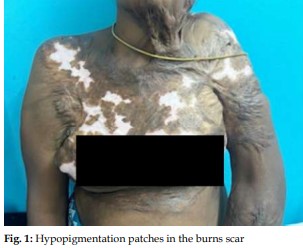
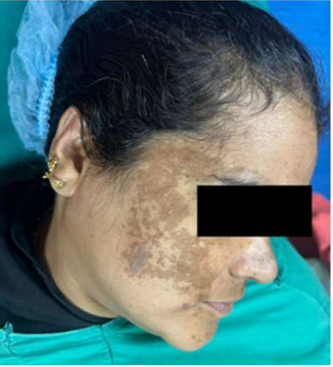
Many pigmentary skin illnesses influence appearance, mental health, and social functioning. The main skin pigmentations include hyperpigmentation and hypopigmentation. Clinically, albinism, melasma, vitiligo, Addison's disease, and post inflammatory hyperpigmentation from eczema, acne vulgaris, and drug interactions are the most common skin pigmentation problems Anti-inflammatory, antioxidant, and tyrosinase-inhibiting medications cure pigmentation. Oral and topical medications, natural therapies, and cosmetic products can help. This review covers pigmentation types, causes, and treatments.
References
- 1. Baxter LL, Pavan WJ. The etiology and molecular genetics of human pigmentation disorders. Wiley Interdiscip Rev Dev Biol. 2013;2(3):379–92.
- 2. Plensdorf S, Livieratos M, Dada N. Pigmentation disorders: diagnosis and management. Am Fam Physician. 2017;96(12):797–804.
- 3. Woolery-Lloyd H, Kammer JN. Treatment of hyperpigmentation. Semin Cutan Med Surg. 2011;30(3):171–5.
- 4. Bala HR, Lee S, Wong C, Pandya AG, Rodrigues M. Oral tranexamic acid for the treatment of melasma: a review. Dermatol Surg. 2018;44(6):814–25.
- 5. Kaur A, Bhalla M, Sarkar R. Tranexamic acid in melasma: a review. Pigment Int. 2020;7(1):12–25.
- 6. Tse TW, Hui E. Tranexamic acid: an important adjuvant in the treatment of melasma. J Cosmet Dermatol. 2013;12(1):57–66.
- 7. Kim SJ, Park JY, Shibata T, Fujiwara R, Kang HY. Efficacy and possible mechanisms of topical tranexamic acid in melasma. Clin Exp Dermatol. 2016;41(5):480–5.
- 8. Sofen B, Prado G, Emer J. Melasma and post inflammatory hyperpigmentation: management update and expert opinion. Skin Therapy Lett. 2016;21(1):1–7.
- 9. Demir B, Çiçek D, Bilik L, Aydogdu EG, Artas H, Demirpolat N, et al. Oral isotretinoin induced pigmentation disorder: a case report. Firat Med J. 2017;22(2):107–9.
- 10. Bagatin E, Costa CS. The use of isotretinoin for acne – an update on optimal dosing, surveillance, and adverse effects. Expert Rev Clin Pharmacol. 2020;13(8):885–97.
- 11. Shao X, Chen Y, Zhang L, Zhang Y, Ariyawati A, Chen T, et al. Effect of 30% supramolecular salicylic acid peel on skin microbiota and inflammation in patients with moderate-to-severe acne vulgaris. Dermatol Ther (Heidelb). 2023;13(1):155–68.
- 12. Yasir M, Goyal A, Sonthalia S. Corticosteroid adverse effects. In: StatPearls [Internet]. Treasure Island (FL): StatPearls Publishing; 2022.
- 13. Patel HK, Barot BS, Parejiya PB, Shelat PK, Shukla A. Topical delivery of clobetasol propionate loaded microemulsion based gel for effective treatment of vitiligo: ex vivo permeation and skin irritation studies. Colloids Surf B Biointerfaces. 2013;102:86–94.
- 14. Gajinov Z. Corticosteroid topical therapy range: fluocinolone-acetonide gel. Galen Med J. 2022;1(1):17–22.
- 15. Nasrollahi SA, Nematzadeh MS, Samadi A, Ayatollahi A, Yadangi S, Abels C, et al. Evaluation of the safety and efficacy of a triple combination cream (hydroquinone, tretinoin, and fluocinolone) for treatment of melasma in Middle Eastern skin. Clin Cosmet Investig Dermatol. 2019;12:437–44.
- 16. Raman P, Pitty R, Krithika CL, Anand SN, Subramani GP. Topical curcumin and triamcinolone acetonide in recurrent minor aphthous ulcers: a pilot trial. J Contemp Dent Pract. 2020;21(8):884–90.
- 17. Rosmarin D, Pandya AG, Lebwohl M, Grimes P, Hamzavi I, Gottlieb AB, et al. Ruxolitinib cream for treatment of vitiligo: a randomised, controlled, phase 2 trial. Lancet. 2020;396(10244):110–20.
- 18. Rothstein B, Joshipura D, Saraiya A, Abdat R, Ashkar H, Turkowski Y, et al. Treatment of vitiligo with the topical Janus kinase inhibitor ruxolitinib. J Am Acad Dermatol. 2017;76(6):1054–60.
- 19. Al-Niaimi F, Chiang NYZ. Topical vitamin C and the skin: mechanisms of action and clinical applications. J Clin Aesthet Dermatol. 2017;10(7):14–7.
- 20. Ravetti S, Clemente C, Brignone S, Hergert L, Allemandi D, Palma S. Ascorbic acid in skin health. Cosmetics. 2019;6(4):58.
- 21. Kanlayavattanakul M, Lourith N. Plants and natural products for the treatment of skin hyperpigmentation – a review. Planta Med. 2018;84(14):988–1006.
- 22. Goik U, Goik T, Załęska I. The properties and application of argan oil in cosmetology. Eur J Lipid Sci Technol. 2019;121(4):1800313.
- 23. Phong C, Lee V, Yale K, Sung C, Mesinkovska N. Coconut, castor, and argan oil for hair in skin of color patients: a systematic review. J Drugs Dermatol. 2022;21(7):751–7.
- 24. Charrouf Z, Guillaume D. The argan oil project: going from utopia to reality in 20 years. OCL. 2018;25(2):D209–14.
- 25. Nasr M, Abdel-Hamid S, Moftah NH, Fadel M, Alyoussef AA. Jojoba oil soft colloidal nanocarrier of a synthetic retinoid: preparation, characterization and clinical efficacy in psoriatic patients. Curr Drug Deliv. 2017;14(3):426–32.
- 26. Chaikul P, Sripisut T, Chanpirom S, Ditthawutthikul N. Anti-skin aging activities of green tea (Camellia sinensis (L) Kuntze) in B16F10 melanoma cells and human skin fibroblasts. Eur J Integr Med. 2020;40:101212.
- 27. Khezri K, Saeedi M, Morteza-Semnani K, Akbari J, Hedayatizadeh-Omran A. A promising and effective platform for delivering hydrophilic depigmenting agents in the treatment of cutaneous hyperpigmentation: kojic acid nanostructured lipid carrier. Artif Cells Nanomed Biotechnol. 2021;49(1):38–47.
- 28. Pinto LM, Chiricozzi A, Calabrese L, Mannino M, Peris K. Novel therapeutic strategies in the topical treatment of atopic dermatitis. Pharmaceutics. 2022;14(12):2767.
- 29. Nautiyal A, Wairkar S. Management of hyperpigmentation: current treatments and emerging therapies. Pigment Cell Melanoma Res. 2021;34(6):1000–14.
- 30. Ferraris C, Rimicci C, Garelli S, Ugazio E, Battaglia L. Nanosystems in cosmetic products: a brief overview of functional, market, regulatory and safety concerns. Pharmaceutics. 2021;13(9):1408.
Data Sharing Statement
There are no additional data available. All raw data and code are available upon request.
Funding
This research received no funding.
Author Contributions
Whether all authors contributed significantly to the work and approve its publication.
Ethics Declaration
This article does not involve any human or animal subjects, and therefore does not require ethics approval.
Acknowledgements
We would like to express our gratitude to the patients, their families, and all those who have contributed to this study.
Conflicts of Interest
The authors report no conflicts of interest in this work.
About this article

Cite this article
Soni P, Chittoria RK, Singh PB. Skin pigmentation disorders. Indian J Anat. 2023;12(4):139–45.
Licence:
Attribution-Non-commercial 4.0 International (CC BY-NC 4.0)This license enables reusers to distribute, remix, adapt, and build upon the material in any medium or format for noncommercial purposes only, and only so long as attribution is given to the creator.
| Received | Accepted | Published |
|---|---|---|
| October 10, 2023 | October 20, 2023 | November 30, 2023 |
DOI: https://doi.org/10.21088/ija.2320.0022.12423.2
Keywords
SkinPigmentation disordersHypopigmentationHyperpigmentationSearch for Similar Articles
Similar Articles
- Supernumerary Pulmonary Vein: A Rare Anatomical Variation Observed During Cadave...
- Elongated Styloid Process: Anatomical Variations and Their Clinical Relevance: A...
- Bridging the Gap Between Dissection and Surgery: The Role of Soft Embalming in M...
- A Cadaveric Study of Retro Hepatic Segment of Inferior Vena Cava and Ostia Venae...
- Estimation of Stature from Forearm Length in Medical Undergraduate Students of a...
Article Level Metrics
Last UpdatedSunday 20 September 2026, 21:48:46 (IST)
5038
Accesses
15
601
00
Citations
NA
NA
NA
Download citation
Article Keywords
Keyword Highlighting
Highlight selected keywords in the article text.
Timeline
| Received | October 10, 2023 |
| Accepted | October 20, 2023 |
| Published | November 30, 2023 |
licence
Attribution-Non-commercial 4.0 International (CC BY-NC 4.0)
This license enables reusers to distribute, remix, adapt, and build upon the material in any medium or format for noncommercial purposes only, and only so long as attribution is given to the creator.