Full Text (PDF)
Physiotherapy and Occupational Therapy Journal 15(1):p 9-15, January-March 2022. | DOI: https://doi.org/10.21088/potj.0974.5777.15122.1
Original Article
Short Term Effect of Active Cycle Breathing Technique and Mechanical Vibration among the Patients with Chronic Bronchitis
Sumit Raghav, Kapil Rastogi, Anshika Singh, Surendar Kumar, Gaurav Pratap Tyagi
Author Information
Licence:
Attribution-Non-commercial 4.0 International (CC BY-NC 4.0)This license enables reusers to distribute, remix, adapt, and build upon the material in any medium or format for noncommercial purposes only, and only so long as attribution is given to the creator.
Physiotherapy and Occupational Therapy Journal 15(1):p 9-15, January-March 2022. | DOI: https://doi.org/10.21088/potj.0974.5777.15122.1
How Cite This Article:
Kapil Rastogi, Sumit Raghav, Anshika Singh, et. al, Short Term Effect of Active Cycle Breathing Technique and Mechanical Vibration among the Patients with Chronic Bronchitis. Physiotherapy and Occupational Therapy Journal. 2022; 15(1): 9-15Timeline
Received : December 16, 2021
Accepted : January 25, 2022
Published : March 30, 2022
Abstract
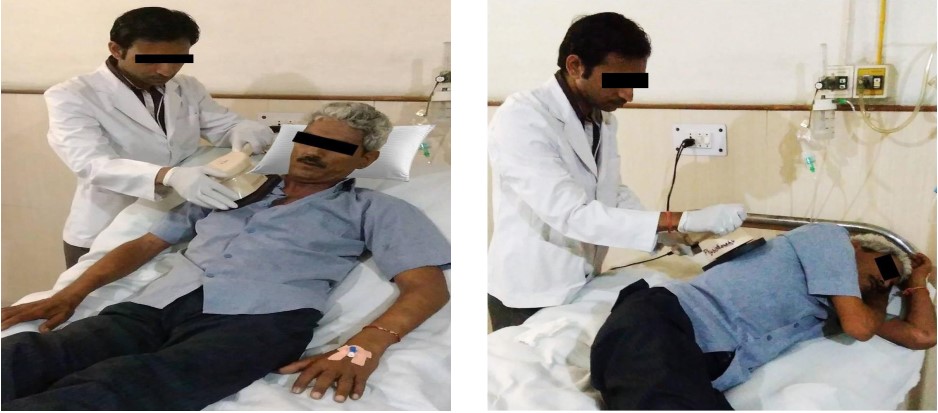
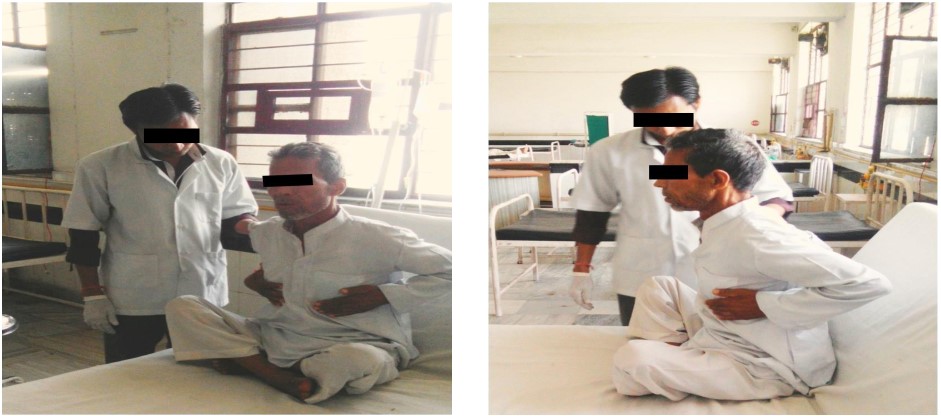
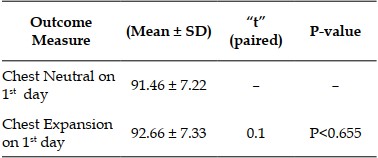
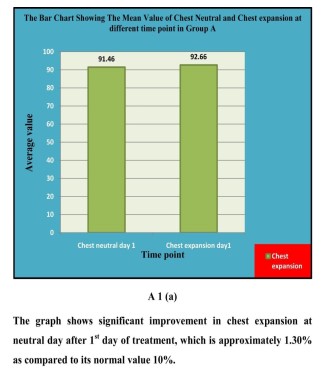
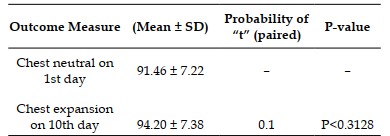
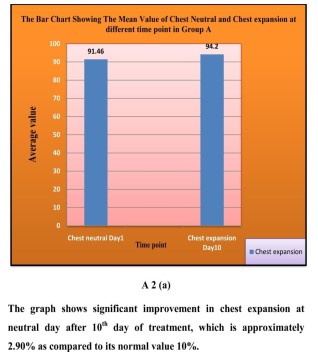
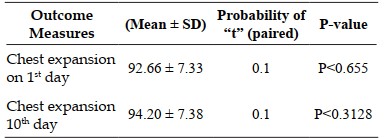
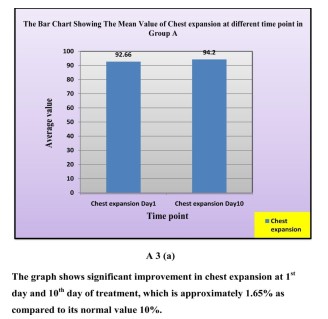
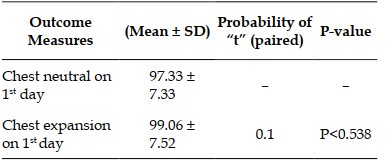
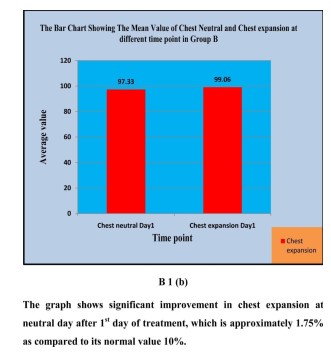
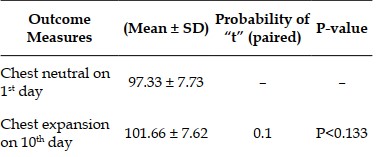
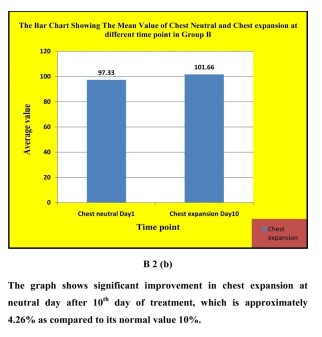
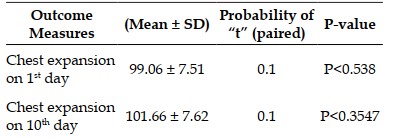
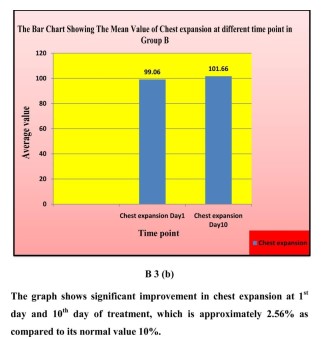
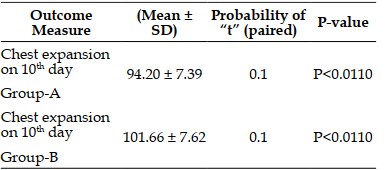
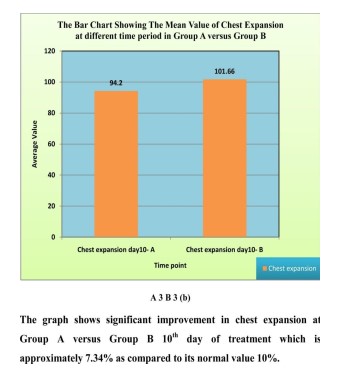
Objective: The purpose of this study was to evaluate the effect of ACBT and Mechanical Vibration on chest expansion among the patients with chronic bronchitis. Methodology: It was a pre and post experimental design study. The patients diagnosed with chronic bronchitis which shows signs and symptoms and were requested to participate in study. The total number of patients 30 was enrolled in this study but on the basis of inclusion and exclusion criteria. Patients were equally divided into two groups, group A and group B respectively. Group A received ACBT and group B received mechanical vibration. Purpose of this study was explained to the patients. An informed consent was taken from each patient prior to participate in this study. This study was conducted at respiratory medicine ward and intensive care unit, CSS Hospital, Swami Vivekanand Subharti University, Meerut India. Result: In both groups, p-value was significant i.e., p<0.10 with Chest expansion score (0.0000), (0.0000) and (0.0000). The 10 days protocol of ACBT and mechanical vibration showed difference in both group individually in improving chest expansion but group B, Mechanical vibration technique showed statistically more significant difference in improving chest expansion from 1st to 10th day. Conclusion: 10 days, both chest physiotherapy techniques resulted in significant effect in both groups individually in improving chest expansion but group B received mechanical vibration technique showed statistically more significant difference in pre to post chest expansion score on consecutive day of protocol.
References
- 1. Chest, Heart and Vascular Disorder 4th edition Cash’s text book of physiotherapists. Page- 90.
- 2. S N Chugh text book of medicine edition 2nd Chronic Obstructive Pulmonary Diseases, Pages- 333-335.
- 3. Ann Thomson, Alison Skkiner, Joan Piercy Tidy’s Physiotherapy: Introduction to disease of respiratory system; ed-12. 164-167.
- 4. Tidy’s – physiotherapy. Chronic obstructive airway diseases. edition -12.
- 5. Aateman, J., et al. (1979). Regional lung clearance of excessive bronchial secretions during chest physical therapy in patients with chronic airways obstruction. Lancet. I . 294-297.
- 6. Chevaillier, J. (1992). airways clearance techniques. Presented at sixth Annual North American Cystic Fibrosis Conference, Dallas.
- 7. Isawa T, Teshima T, Hirano T, Ebina A, Motomiya M, Konno K. Lung clearance mechanisms in obstructive airways disease. J Nucl Med 1984;25:447-54.
- 8. Bellone A, Lascioli R, Raschi S, et al. Chest physical therapy in patients with an acute excerbation of chronic bronchitis: effectiveness of three methods. Arch Phys Med Rehabil 2000;81:558–60.
- 9. Cecins NM, Jenkins SC, Pengelley J, Ryan G. The active cycle of breathing techniques-to tip or not to tip? Respir Med 1999;93:660.
- 10. Bott J, Baudovin SV, Moxham J, Effectiveness of the chest physiotherapy in manual techniques include percussion (chest clapping) over the chest wall and shaking or mechanical vibration, with loosening secretion of cough with expectoration, 1991.
- 11. McCarren et al, mechanical vibrator techniques used as an airway clearance technique for effectiveness chronic bronchitis, 2003.
Data Sharing Statement
There are no additional data available. All raw data and code are available upon request.
Funding
This research received no funding.
Author Contributions
All authors contributed significantly to the work and approve its publication.
Ethics Declaration
This article does not involve any human or animal subjects, and therefore does not require ethics approval.
Acknowledgements
We would like to express our gratitude to the patients, their families, and all those who have contributed to this study.
Conflicts of Interest
No conflicts of interest in this work.
About this article

Cite this article
Kapil Rastogi, Sumit Raghav, Anshika Singh, et. al, Short Term Effect of Active Cycle Breathing Technique and Mechanical Vibration among the Patients with Chronic Bronchitis. Physiotherapy and Occupational Therapy Journal. 2022; 15(1): 9-15
Licence:
Attribution-Non-commercial 4.0 International (CC BY-NC 4.0)This license enables reusers to distribute, remix, adapt, and build upon the material in any medium or format for noncommercial purposes only, and only so long as attribution is given to the creator.
| Received | Accepted | Published |
|---|---|---|
| December 16, 2021 | January 25, 2022 | March 30, 2022 |
DOI: https://doi.org/10.21088/potj.0974.5777.15122.1
Keywords
Search for Similar Articles
Similar Articles
- Leadership in Physiotherapy: A Narrative Review
- Effectiveness of Low Level Laser Theapy in the Management of Temporomandibular J...
- The Impact of Air Pollution on Cardiopulmonary Health: Molecular Mechanisms, Pre...
- Efectiveness of Physiotherapy in Postpartum Women with Diastasis Recti: A Review
- Pain Neuroscience Education: Transforming Physiotherapy Practice
Article Level Metrics
Last UpdatedSaturday 24 October 2026, 18:16:29 (IST)
4390
Accesses
10
739
00
Citations
NA
NA
NA
Download citation
Article Keywords
Keyword Highlighting
Highlight selected keywords in the article text.
Timeline
| Received | December 16, 2021 |
| Accepted | January 25, 2022 |
| Published | March 30, 2022 |
licence
Attribution-Non-commercial 4.0 International (CC BY-NC 4.0)
This license enables reusers to distribute, remix, adapt, and build upon the material in any medium or format for noncommercial purposes only, and only so long as attribution is given to the creator.