Full Text (PDF)
Journal of Dermatology 8(2):p 113-115, July-December 2023. | DOI: na
Case Report
Role of Topical Sucralfate in Wound Management
Ravi Kumar Chittoria, Pradossh null, Bharat Prakash Reddy J
Author Information
Licence:
Attribution-Non-commercial 4.0 International (CC BY-NC 4.0)This license enables reusers to distribute, remix, adapt, and build upon the material in any medium or format for noncommercial purposes only, and only so long as attribution is given to the creator.
Journal of Dermatology 8(2):p 113-115, July-December 2023. | DOI: na
How Cite This Article:
Pradossh, Ravi Kumar Chittoria, Bharat Prakash Reddy J/Role of Topical Sucralfate in Wound Management/RFP Journal of Dermatology 2023;8(2):113–115.Timeline
Received : June 05, 2023
Accepted : July 31, 2023
Published : December 25, 2023
Abstract
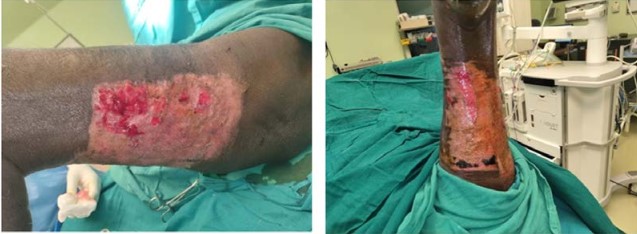
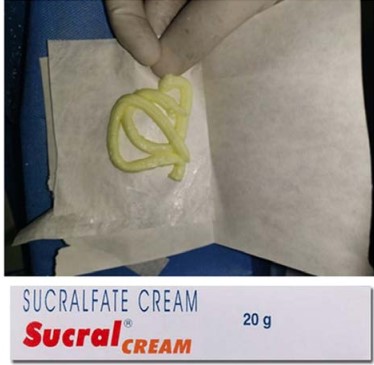
A wound is a typical issue after a burn, injury, or infection. There are numerous ways to stop the infection and cover the exposed skin. However, there is no proven technique to quicken the rate of wound healing. The treatment of duodenal and stomach ulcers using sucralfate. Recent studies have demonstrated the efficacy of sucralfate as a topical medication for the healing of a variety of epithelial wounds, including burn wounds, ulcers, inflammatory dermatitis, and mucositis. This article emphasises the function of sucralfate in treating wounds.
References
- 1. Frykberg RG, Banks J. Challenges in the treatment of chronic wounds. Adv Wound Care (New Rochelle) 2015; 4:560–582.
- 2. Masuelli, L., Tumino, G., Turriziani, M., Modesti, A., & Bei, R. Topical Use of Sucralfate in Epithelial Wound Healing: Clinical Evidence and Molecular Mechanisms of Action. Recent Patents on Inflammation & Allergy Drug Discovery.2010; 4:25–36.
- 3. Banati A, Chowdhury SR, Mazumder S. Topical use of Sucralfate Cream in second- and thirddegree burns. Burns 2001; 27(5): 465-469.
- 4. Tsakayannis D, Li WW, Razvi S, Spirito N. Sucralfate, and chronic venous stasis ulcers. Lancet 1994; 343(8894): 424-425.
- 5. Tumino G, Masuelli L, Bei R, Simonelli L, Santoro A, Francipane S. Topical treatment of chronic venous ulcers with sucralfate: A placebo controlled randomized study. Int J Mol Med 2008; 22(1):17-23.
- 6. Wells M, Macmillan M, Raab G, et al. Does aqueous or sucralfate cream affect the severity of erythematous radiation skin reactions? A randomised controlled trial. Radiotherapy Oncol 2004; 73(2): 153-162.
Data Sharing Statement
There are no additional data available. All raw data and code are available upon request.
Funding
This research received no funding.
Author Contributions
All authors contributed significantly to the work and approve its publication.
Ethics Declaration
This article does not involve any human or animal subjects, and therefore does not require ethics approval.
Acknowledgements
We would like to express our gratitude to the patients, their families, and all those who have contributed to this study.
Conflicts of Interest
No conflicts of interest in this work.
About this article

Cite this article
Pradossh, Ravi Kumar Chittoria, Bharat Prakash Reddy J/Role of Topical Sucralfate in Wound Management/RFP Journal of Dermatology 2023;8(2):113–115.
Licence:
Attribution-Non-commercial 4.0 International (CC BY-NC 4.0)This license enables reusers to distribute, remix, adapt, and build upon the material in any medium or format for noncommercial purposes only, and only so long as attribution is given to the creator.
| Received | Accepted | Published |
|---|---|---|
| June 05, 2023 | July 31, 2023 | December 25, 2023 |
DOI: na
Keywords
TopicalSucralfateWoundManagementSearch for Similar Articles
Similar Articles
- Delving into Wolf’s Isotopic Phenomenon: Tale of Two Cases of Psoriasis Localize...
- Pachydermoperiostosis, Complete Form: A Case Report of Rare Occurrence
- Role of Cyclical Negative Pressure Wound Therapy in Thermal Burns
- Behcets Disease in an Immunocompromised Female
- Tale of an Atypical Herpes Zoster Mimicking Ecthyma and Perforating Dermatosis i...
Article Level Metrics
Last UpdatedWednesday 21 October 2026, 05:05:35 (IST)
1725
Accesses
8
194
00
Citations
NA
NA
NA
Download citation
Article Keywords
Keyword Highlighting
Highlight selected keywords in the article text.
Timeline
| Received | June 05, 2023 |
| Accepted | July 31, 2023 |
| Published | December 25, 2023 |
licence
Attribution-Non-commercial 4.0 International (CC BY-NC 4.0)
This license enables reusers to distribute, remix, adapt, and build upon the material in any medium or format for noncommercial purposes only, and only so long as attribution is given to the creator.