Full Text (PDF)
Journal of Biochemistry and Biophysics 8(1):p 23-26, january-june 2023. | DOI: https://doi.org/10.21088/rfpjbb.2582-3558.8123.3
Case Report
Role of Topical Heparin in Burn Wound
Ravi Kumar Chittoria, Swathi P, Bharath Prakash Reddy
Author Information
Licence:
Attribution-Non-commercial 4.0 International (CC BY-NC 4.0)This license enables reusers to distribute, remix, adapt, and build upon the material in any medium or format for noncommercial purposes only, and only so long as attribution is given to the creator.
Journal of Biochemistry and Biophysics 8(1):p 23-26, january-june 2023. | DOI: https://doi.org/10.21088/rfpjbb.2582-3558.8123.3
How Cite This Article:
Swathi P, Ravi Kumar Chittoria, Bharath Prakash Reddy/Role of Topical Heparin in Burn Wound/RFP Jour. of Bio. and Biophy. 2023;8(1):23–26.Timeline
Received : April 24, 2023
Accepted : May 29, 2023
Published : June 23, 2023
Abstract
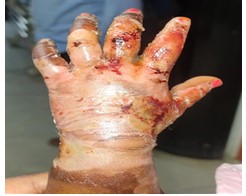
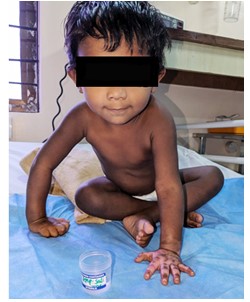
Burns can severely damage a patient's physical and mental health. We should consider pain, hospital stays, lost workdays, and financial strain while handling these patients. Burn patients need rapid specialist care to reduce morbidity and death. Heparin is anti-inflammatory, allergic, histaminic, serotonin blocking, and proteolytic enzyme-blocking. Topical forms have been used to prevent burn extension, limit skin tissue loss, promote quicker healing with fewer contractures, relieve pain, reduce tissue oedema and weeping, prevent infection, and promote revascularization, granulation, and epithelialization of deeply burned tissue. We discuss topical heparin and burn care in this review.
References
- 1. Teot L, Otman S, Brancati A, Mittermayr R. Burn scar treatment. In: Kamolz LP, Jescheke MG, Horch RE, Küntscher M, Brychta P, editors. Handbook of Burns. Vienna: Springer; 2012. p. 55 67.
- 2. Masoud M, Wani AH, Darzi MA. Topical heparin versus conventional treatment in acute burns: a comparative study. Indian J Burns 2014;22:43 50.
- 3. Alrich EM. The effect of heparin on the circulating blood plasma and proteins in experimental burns. Surgery 1949;25:676 80.
- 4. Lu J, Xu T, Yang M, Xu XW, Wu B. Heparin for the treatment of burns (Protocol). Cochrane Database Syst Rev 2011;12:CD009483.
- 5. Reyes A, Astiazaran JA, Chavez CC, Jaramillo F, Saliba MJ. Burns treated with and without heparin: controlled use in a thermal disaster. Ann Burns Fire Disasters 2001;14:183 91.
- 6. Saliba MJ Jr, editor. The Effects of Heparin in the Treatment of Burns. Proceedings of International Meeting; 1994 Feb 24 27.
- 7. Church D, Elsayed S, Reid O, Winston B, Lindsay R. Burn wound infections. Clin Microbiol Rev 2006;19:403 34.
- 8. Saliba MJ Jr, Dempsey WC, Kruggel JL. Large burns in humans. Treatment with heparin. JAMA 1973;225:261 9.
- 9. Ferreira Chacon JM, Mello de Andrea ML, Blanes L, Ferreira LM. Effects of topical application of 10,000 IU heparin on patients with perineal dermatitis and second degree burns treated in a public pediatric hospital. J Tissue Viability 2010;19:150 8.
- 10. Elsayed E, Becker RC. The impact of heparin compounds on cellular inflammatory responses: a construct for future investigation and pharmaceutical development. J Thromb Thrombolysis 2003;15:11 8.
- 11. Saliba M.J. Heparin in the treatment of burns: A review.Burns. 2001;27:348-357.
- 12. Rayes A., Astiazaran J.A., Chavez C.C., Jaramilla F., Saliba M,J. Burns treated with and without heparin: Controlled use in a thermal disaster. Annals of Burnsand Fire Diasters. 2001;14:183-191.
Data Sharing Statement
There are no additional data available. All raw data and code are available upon request
Funding
This research received no funding
Author Contributions
All authors contributed significantly to the work and approve its publication
Ethics Declaration
This article does not involve any human or animal subjects, and therefore does not require ethics approval
Acknowledgements
We would like to express our gratitude to the patients, their families, and all those who have contributed to this study
Conflicts of Interest
No conflicts of interest in this work
About this article

Cite this article
Swathi P, Ravi Kumar Chittoria, Bharath Prakash Reddy/Role of Topical Heparin in Burn Wound/RFP Jour. of Bio. and Biophy. 2023;8(1):23–26.
Licence:
Attribution-Non-commercial 4.0 International (CC BY-NC 4.0)This license enables reusers to distribute, remix, adapt, and build upon the material in any medium or format for noncommercial purposes only, and only so long as attribution is given to the creator.
| Received | Accepted | Published |
|---|---|---|
| April 24, 2023 | May 29, 2023 | June 23, 2023 |
DOI: https://doi.org/10.21088/rfpjbb.2582-3558.8123.3
Keywords
Topical HeparinWoundManagementBurnSearch for Similar Articles
Similar Articles
- Emergent Quantum Phenomena in Topological and Moiré Condensed Matter Systems: Re...
- The Molecular Architecture of Fragility: A Biophysical and Biochemical Dissectio...
- Silent Carcinogens at Home: Understanding Cancer Risks in Indian Kitchens
- Beyond Tone and Tissue: A Biochemical and Biophysical Perspective on Post-partum...
- GLP-1 Therapies as Essential Medicines: Opportunities and Barriers for Diabetes...
Article Level Metrics
Last UpdatedMonday 28 September 2026, 15:35:32 (IST)
1311
Accesses
9
238
00
Citations
NA
NA
NA
Download citation
Article Keywords
Keyword Highlighting
Highlight selected keywords in the article text.
Timeline
| Received | April 24, 2023 |
| Accepted | May 29, 2023 |
| Published | June 23, 2023 |
licence
Attribution-Non-commercial 4.0 International (CC BY-NC 4.0)
This license enables reusers to distribute, remix, adapt, and build upon the material in any medium or format for noncommercial purposes only, and only so long as attribution is given to the creator.