Full Text (PDF)
International Journal of Pediatric Nursing 9(1):p 9-12, January – April 2023. | DOI: https://doi.org/10.21088/ijpen.2454.9126.9123.1
Original Article
Role of Scaffold in Pediatric Scald Burns
Ravi Kumar Chittoria, Jackson Nuli, Neljo Thomas
Author Information
Licence:
Attribution-Non-commercial 4.0 International (CC BY-NC 4.0)This license enables reusers to distribute, remix, adapt, and build upon the material in any medium or format for noncommercial purposes only, and only so long as attribution is given to the creator.
International Journal of Pediatric Nursing 9(1):p 9-12, January – April 2023. | DOI: https://doi.org/10.21088/ijpen.2454.9126.9123.1
How Cite This Article:
Jackson Nuli, Ravi Kumar Chittoria, Neljo Thomas/Role of Scaffold in Pediatric Scald Burns/Int J Pediatr Nurs. 2023;9(1):9–12.Timeline
Received : November 14, 2022
Accepted : December 18, 2022
Published : April 30, 2023
Abstract
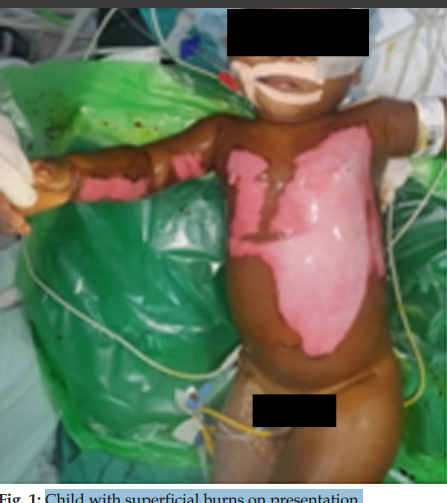
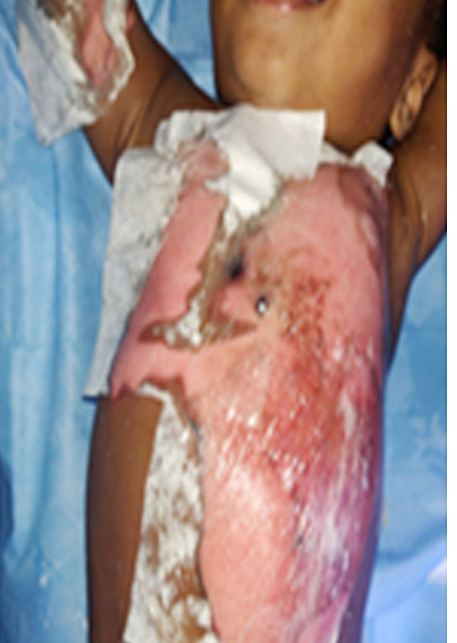
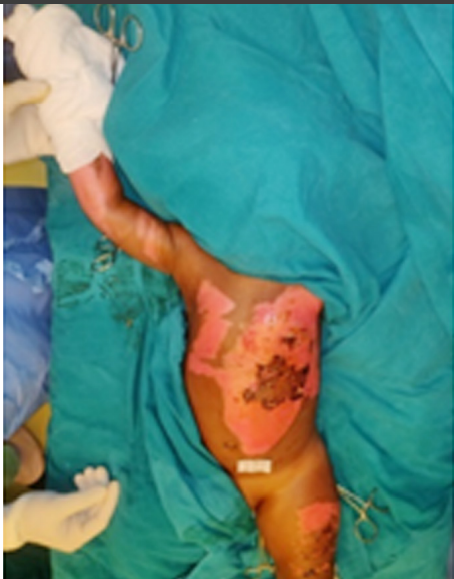
Collagen is the main structural protein of most hard and soft tissues in animals and the human body, which plays an important role in maintaining the biological and structural integrity of the extracellular matrix (ECM) and provides physical support to tissues. Collagen can be extracted and purified from a variety of sources and offers low immunogenicity, a porous structure, good permeability, biocompatibility and biodegradability. Collagen scaffolds have been widely used in tissue engineering due to these excellent properties. However, the poor mechanical property of collagen scaffolds limits their applications to some extent. To overcome this short coming, collagen scaffolds can be cross-linked by chemical or physical methods or modified with natural/synthetic polymers or inorganic materials. Biochemical factors can also be introduced to the scaffold to further improve its biological activity. Here we present the use of scaffold in the management of paediatric thermal injury.
References
- 1. Basu CB, Leong M, Hicks MJ. Acellular cadaveric dermis decreases the inflammatory response in capsule formation in reconstructive breast surgery. Plast Reconstr Surg. 2010; 126: 1842-1847.
- 2. Lo Menzo E, Martinez JM, Spector SA, Iglesias A, Degennaro V, Cappellani A. Use of biologic mesh for a complicated para-colostomy hernia. Am J Surg. 2008;196(5):715-9.
- 3. Butler CE. The role of bioprosthetics in abdominal wall reconstruction. Clin Plast Surg. 2006;33(2):199–211.
- 4. Aszódi A, Legate KR, Nakchbandi I, Fässler R. What mouse mutants teach us about extracellular matrix function. Annu Rev Cell Dev Biol. 2006;22:591–621.
- 5. Cen L, Liu W, Cui L, Zhang W, Cao Y. Collagen tissue engineering: development of novel biomaterials and applications. Pediatr Res. 2008;63(5):492–496.
- 6. Guarino V, Cirillo V, Altobelli R, Ambrosio L. Polymer-based platforms by electric field-assisted techniques for tissue engineering and cancer therapy. Expert Rev Med Devices. 2015;12(1):113–129.
- 7. Burgeson, R.E, Nimni M.E, Collagen types. Molecular structure and tissue distribution. Clin. Orthop Relat. Res.1992, 282, 250–272.
- 8. Chevallay, B, Herbage D, Collagen-based biomaterials as 3D scaffold for cell cultures: Applications for tissue engineering and gene therapy. Med. Biol. Eng. Comput. 2000, 38, 211–218.
- 9. Wolf K, Alexander S, Schacht V, Coussens L, von Andrian U.H, van Rheenen J, Deryugina E, Friedl P, Collagen-based cell migration models in vitro and in vivo. Semin. Cell. Dev. Biol.2009, 20, 931–941.
Data Sharing Statement
There are no additional data available. All raw data and code are available upon request.
Funding
This research received no funding.
Author Contributions
All authors contributed significantly to the work and approve its publication.
Ethics Declaration
This article does not involve any human or animal subjects, and therefore does not require ethics approval.
Acknowledgements
We would like to express our gratitude to the patients, their families, and all those who have contributed to this study.
Conflicts of Interest
No conflicts of interest in this work.
About this article

Cite this article
Jackson Nuli, Ravi Kumar Chittoria, Neljo Thomas/Role of Scaffold in Pediatric Scald Burns/Int J Pediatr Nurs. 2023;9(1):9–12.
Licence:
Attribution-Non-commercial 4.0 International (CC BY-NC 4.0)This license enables reusers to distribute, remix, adapt, and build upon the material in any medium or format for noncommercial purposes only, and only so long as attribution is given to the creator.
| Received | Accepted | Published |
|---|---|---|
| November 14, 2022 | December 18, 2022 | April 30, 2023 |
DOI: https://doi.org/10.21088/ijpen.2454.9126.9123.1
Keywords
Pediatric Scald BurnsScaffoldSearch for Similar Articles
Similar Articles
- Craniosynostosis with Midfacial Hypoplasia and Bilateral Choanal Atresia Present...
- Pediatric Bone Disorders: Interpretation Challenges of Vitamin D and Calcium
- Care of Neonates Under Phototherapy: A Narrative Review on the Impact of Phototh...
- Effectiveness of Structured Teaching Program on Knowledge Regarding Text Neck Sy...
- Hemostatic Testing in Critically Ill Infants and Children
Article Level Metrics
Last UpdatedTuesday 29 September 2026, 12:07:29 (IST)
1496
Accesses
12
286
00
Citations
NA
NA
NA
Download citation
Article Keywords
Keyword Highlighting
Highlight selected keywords in the article text.
Timeline
| Received | November 14, 2022 |
| Accepted | December 18, 2022 |
| Published | April 30, 2023 |
licence
Attribution-Non-commercial 4.0 International (CC BY-NC 4.0)
This license enables reusers to distribute, remix, adapt, and build upon the material in any medium or format for noncommercial purposes only, and only so long as attribution is given to the creator.