Full Text (PDF)
Journal of Dermatology 8(2):p 77-79, July-December 2023. | DOI: na
Original Article
Role of Low Level Laser Therapy in Full Thickness Skingraft Donor Site
Ravi Kumar Chittoria, Amrutha J.S., Barath Kumar Singh P.
Author Information
Licence:
Attribution-Non-commercial 4.0 International (CC BY-NC 4.0)This license enables reusers to distribute, remix, adapt, and build upon the material in any medium or format for noncommercial purposes only, and only so long as attribution is given to the creator.
Journal of Dermatology 8(2):p 77-79, July-December 2023. | DOI: na
How Cite This Article:
Amrutha J.S., Ravi Kumar Chittoria, Barath Kumar Singh P./Role of Low-Level Laser Therapy in Full Thickness Skingraft Donor Site/RFP Journal of Dermatology 2023;8(2):77–79.Timeline
Received : August 14, 2023
Accepted : October 25, 2023
Published : December 25, 2023
Abstract
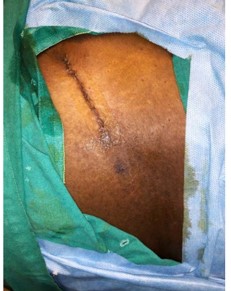
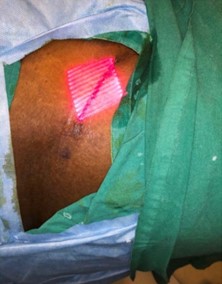
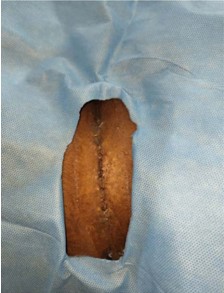
Low level laser therapy (LLLT) has been used in different fields, including healing of chronic ulcers like diabetic and pressure ulcers. Here we are using this method to look for role in FTSG donor site. Full thickness skin grafts include full thickness of the epidermis and dermis whereas split thickness skin grafts (STSG) include the entire epidermis and only partial dermis. LLLT improves tissue perfusion and fibroblast proliferation, with increases in collagen synthesis accelerating wound healing. The purpose of this case report is introducing LLLT as a therapeutic method for accelerating healing of FTSG donor site.
References
- 1. Goel, Arun, and Prabhat Shrivastava. “Postburn scars and scar contractures.” Indian journal of plastic surgery: official publication of the Association of Plastic Surgeons of India vol. 43, Suppl (2010): S63-71.
- 2. Karu TI. Low-power laser therapy. In: Vo-Dinh T, editor. Biomedical photonics handbook, vol. 48. London: CRC Press, 2003. p. 7–20.
- 3. Baxter CD. Therapeutic lasers. Theory and practice. Churchill, Livingstone, 1994.
- 4. Andrade FSSD, Clark RMO, Ferreira ML. Effects of low-level laser therapy on wound healing. Rev Colégio Brasileiro Cirurgiões. 2014;41(2):129–33.
- 5. Lichtenstein, D., Morag, B. Low-level laser therapy in ambulatory patients with venous stasis ulcers. Laser Therapy 1998; 11: 71-78.
- 6. Karu, T. Molecular mechanism of therapeutic effect of low intensity laser irradiation Dokl Akad Nauk SSSR 1986; 291:1245-1249.
- 7. Saperia, D., Glassberg, E., Lyons, R.F. et al. Demonstration of elevated type I and type III procollagen mRNA levels in cutaneous wounds treated with helium-neon laser. Proposed mechanism for enhanced wound healing. BiochemBiophys Res Commun 1986; 138:1123- 1128.
- 8. Schindl, A., Schindl, M., Schindl, L. et al. Increased dermal angiogenesis after lowintensity laser therapy for a chronic radiation ulcer determined by a video measuring system. JAm Acad Dermatol 1999;40: 481-484.
Data Sharing Statement
There are no additional data available. All raw data and code are available upon request.
Funding
This research received no funding.
Author Contributions
All authors contributed significantly to the work and approve its publication.
Ethics Declaration
This article does not involve any human or animal subjects, and therefore does not require ethics approval.
Acknowledgements
We would like to express our gratitude to the patients, their families, and all those who have contributed to this study.
Conflicts of Interest
No conflicts of interest in this work.
About this article

Cite this article
Amrutha J.S., Ravi Kumar Chittoria, Barath Kumar Singh P./Role of Low-Level Laser Therapy in Full Thickness Skingraft Donor Site/RFP Journal of Dermatology 2023;8(2):77–79.
Licence:
Attribution-Non-commercial 4.0 International (CC BY-NC 4.0)This license enables reusers to distribute, remix, adapt, and build upon the material in any medium or format for noncommercial purposes only, and only so long as attribution is given to the creator.
| Received | Accepted | Published |
|---|---|---|
| August 14, 2023 | October 25, 2023 | December 25, 2023 |
DOI: na
Keywords
Low level laser therapyFull thickness skin graftDonor siteSearch for Similar Articles
Similar Articles
- Delving into Wolf’s Isotopic Phenomenon: Tale of Two Cases of Psoriasis Localize...
- Pachydermoperiostosis, Complete Form: A Case Report of Rare Occurrence
- Role of Cyclical Negative Pressure Wound Therapy in Thermal Burns
- Behcets Disease in an Immunocompromised Female
- Tale of an Atypical Herpes Zoster Mimicking Ecthyma and Perforating Dermatosis i...
Article Level Metrics
Last UpdatedWednesday 21 October 2026, 06:23:09 (IST)
1725
Accesses
8
194
00
Citations
NA
NA
NA
Download citation
Article Keywords
Keyword Highlighting
Highlight selected keywords in the article text.
Timeline
| Received | August 14, 2023 |
| Accepted | October 25, 2023 |
| Published | December 25, 2023 |
licence
Attribution-Non-commercial 4.0 International (CC BY-NC 4.0)
This license enables reusers to distribute, remix, adapt, and build upon the material in any medium or format for noncommercial purposes only, and only so long as attribution is given to the creator.