Full Text (PDF)
Journal of Cardiovascular Medicine and Surgery 9(1-2):p 9-13, January - June 2023. | DOI: http://dx.doi.org/10.21088/jcms.2454.7123.91-223.1
Original Article
Role of Cyclical Negative Pressure Wound Therapy in Adult Burn Patients
Ravi Kumar Chittoria, Amrutha JS
Author Information
Licence:
Attribution-Non-commercial 4.0 International (CC BY-NC 4.0)This license enables reusers to distribute, remix, adapt, and build upon the material in any medium or format for noncommercial purposes only, and only so long as attribution is given to the creator.
Journal of Cardiovascular Medicine and Surgery 9(1-2):p 9-13, January - June 2023. | DOI: http://dx.doi.org/10.21088/jcms.2454.7123.91-223.1
How Cite This Article:
Amrutha JS, Chittoria RK. Role of cyclical negative pressure wound therapy in adult burn patients. J Cardiovasc Med Surg. 2023;9(1-2):9–13.Timeline
Received : May 09, 2023
Accepted : June 05, 2023
Published : June 30, 2023
Abstract
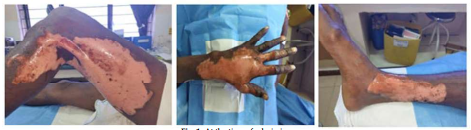
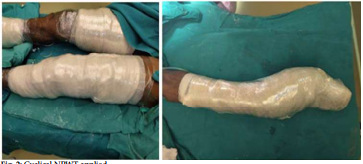
The application of “negative pressure” has evolved to a cornerstone in the treatment of acute and chronic wounds in almost all specialties. Continuous Intermittent, and cyclic are the three types of Negative pressure Wound Therapy (NPWT). The cyclic NPWT system is similar to the intermittent mode in terms of using the same maximal sub-atmospheric pressure, but the pressure never reaches zero in the cyclic mode. The study assesses the role of cyclical Negative pressure wound therapy in adult burn wound healing.
References
- 1. Argenta LC, Morykwas MJ. Vacuum-assisted closure: a new method for wound control and treatment: clinical experience. Ann PlastSurg 1997;38:563–76 discussion 577.
- 2. Morykwas MJ, Argenta LC, Shelton-Brown EI, McGuirt W. Vacuum-assisted closure: a new method for wound control and treatment: animal studies and basic foundation. Ann PlastSurg 1997;38:553–62.
- 3. Glass GE, Nanchahal J. The methodology of negative pressure wound therapy: separating fact from fiction. J PlastReconstrAesthet Surg. (2012) 65:989–1001.
- 4. Kairinos N, Voogd AM, Botha PH, Kotze T, Kahn D, Hudson DA, et al. Negative-pressure wound therapy II: negative-pressure wound therapy and increased perfusion. Just an illusion? PlastReconstr Surg. (2009) 123:601– 12.
- 5. Borgquist O, Ingemansson R, Malmsjö M. Wound edge microvascular blood flow during negativepressure wound therapy: examining the effects of Surg. (2010) 125:502– 9.
- 6. Kairinos N, McKune A, Solomons M, Hudson DA, Kahn D. The flaws of laser Doppler in negativepressure wound therapy research. Wound Repair Regen. (2014) 22:424–9.
- 7. Muenchow S, Horch RE, Dragu A. Effects of topical negative pressure therapy on perfusion and microcirculation of human skin. ClinHemorheolMicrocirc. (2019) 72:365–74.
- 8. Sogorski A, Lehnhardt M, Goertz O, Harati K, Kapalschinski N, Hirsch T, et al. Improvement of local microcirculation through intermittent Negative Pressure Wound Therapy (NPWT). J Tissue Viability. (2018) 27:267– 73.
- 9. Muller-Seubert W, Roth S, Hauck T, Arkudas A, Horch RE, Ludolph I. Novel imaging methods reveal positive impact of topical negative pressure application on tissue perfusion in an in vivo skin model. Int Wound J. (2021) 18:932–9.
- 10. Eisenhardt SU, Schmidt Y, Thiele JR, Iblher N, Penna V, Torio-Padron N, et al. Negative pressure wound therapy reduces the ischaemia/ reperfusionassociated inflammatory response in free muscle flaps. J PlastReconstrAesthet Surg. (2012) 65:640–9.
- 11. Suissa D, Danino A, Nikolis A. Negative-pressure therapy versus standard wound care: a metaanalysis of randomized trials. PlastReconstr Surg. (2011).
- 12. Lee KN, Ben-Nakhi M, Park EJ, Hong JP. Cyclic negative pressure wound therapy: an alternative mode to intermittent system. Int Wound J. (2015) 12:686–92.
- 13. Shore AC. Capillaroscopy and the measurement of capillary pressure. Br J ClinPharmacol. (2000) 50:501–13.
- 14. Fagrell B. Dynamics of skin microcirculation in humans. J CardiovascPharmacol. (1985) 7 (Suppl 3):S53– 8.
- 15. Mahy IR, Tooke JE, Shore AC. Capillary pressure during and after incremental venous pressure el.
- 16. Wong BJ, Hollowed CG. Current concepts of active vasodilation in human skin. Temperature (Austin). (2017) 4:41–59evation in man. J Physiol. (1995) 485 (Pt 1):213-9.
- 17. Wilkin JK. Periodic cutaneous blood flow during postocclusive reactive hyperemia. Am J Physiol. (1986) 250:H765– 8.
- 18. Glass GE, Murphy GF, Esmaeili A, Lai LM, Nanchahal J. Systematic review of molecular mechanism of action of negative-pressure wound therapy. Br J Surg. (2014) 101:1627–36.
- 19. Kolbenschlag J, Sogorski A, Timmermann C, Harati K, Daigeler A, Hirsch T, et al. Ten minutes of ischemia is superior to shorter intervals for the remote ischemic conditioning of human microcirculation. ClinHemorheolMicrocirc. (2017) 66:239–48.
- 20. Sogorski A, Spindler S, Wallner C, Dadras M, Wagner JM, Behr B, et al. Optimizing remote ischemic conditioning (RIC) of cutaneous microcirculation in humans: Number of cycles and duration of acute effects. J PlastReconstrAesthet Surg. (2021) 74:819–27.
- 21. Borgquist O, Ingemansson R, Malmsjö M. Individualizing the use of negative pressure wound therapy for optimal wound healing: a focused review of the literature. Ostomy Wound Manage. (2011) 57:44–54.
Data Sharing Statement
There are no additional data available
Funding
This research received no funding
Author Contributions
All authors contributed significantly to the work and approve its publication
Ethics Declaration
This article does not involve any human or animal subjects, and therefore does not require ethics approval
Acknowledgements
Information Not Provided
Conflicts of Interest
No conflicts of interest in this work.
About this article

Cite this article
Amrutha JS, Chittoria RK. Role of cyclical negative pressure wound therapy in adult burn patients. J Cardiovasc Med Surg. 2023;9(1-2):9–13.
Licence:
Attribution-Non-commercial 4.0 International (CC BY-NC 4.0)This license enables reusers to distribute, remix, adapt, and build upon the material in any medium or format for noncommercial purposes only, and only so long as attribution is given to the creator.
| Received | Accepted | Published |
|---|---|---|
| May 09, 2023 | June 05, 2023 | June 30, 2023 |
DOI: http://dx.doi.org/10.21088/jcms.2454.7123.91-223.1
Keywords
Cyclical negative pressure wound therapyBurnAdultSearch for Similar Articles
Similar Articles
- Giant Intra-cardiac Lipoma in the Right Atrium
- Case Report: Neurophysiological Facilitation of Respiration in an Infant with...
- Left Coronary Artery Fistula Masquerading as Coronary Insufficiency: A Rare Sur...
- Hemodynamic Monitoring by Point-of-Care Ultrasound: A Multiorgan, Physiology-Dri...
- Aortotomy Closure after Cardiac Valve Replacements: Nightmare for Surgeons
Article Level Metrics
Last UpdatedMonday 22 June 2026, 12:28:26 (IST)
681
Accesses
2
121
00
Citations
NA
NA
NA
Download citation
Article Keywords
Keyword Highlighting
Highlight selected keywords in the article text.
Timeline
| Received | May 09, 2023 |
| Accepted | June 05, 2023 |
| Published | June 30, 2023 |
licence
Attribution-Non-commercial 4.0 International (CC BY-NC 4.0)
This license enables reusers to distribute, remix, adapt, and build upon the material in any medium or format for noncommercial purposes only, and only so long as attribution is given to the creator.