Full Text (PDF)
Journal of Cardiovascular Medicine and Surgery 12(1):p 27-30, Jan-April 2026. | DOI: 10.21088/jcms.2454.7123.12126.4
Case Report
Case Report: Neurophysiological Facilitation of Respiration in an Infant with Post-Cardiac Surgery Diaphragmatic Palsy
Amitabh Satsangi, Banty Sheware
Author Information
Licence:
Attribution-Non-commercial 4.0 International (CC BY-NC 4.0)This license enables reusers to distribute, remix, adapt, and build upon the material in any medium or format for noncommercial purposes only, and only so long as attribution is given to the creator.
Journal of Cardiovascular Medicine and Surgery 12(1):p 27-30, Jan-April 2026. | DOI: 10.21088/jcms.2454.7123.12126.4
How Cite This Article:
Satsangi A, Sheware BT. Case Report: Neurophysiological Facilitation of Respiration in an infant with Post-Cardiac Surgery Diaphragmatic Palsy. Indian J Cardiovasc Med Surg. 2026;12(1):27–30.Timeline
Received : February 13, 2026
Accepted : March 14, 2026
Published : April 30, 2026
Abstract
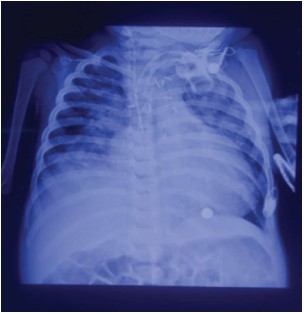
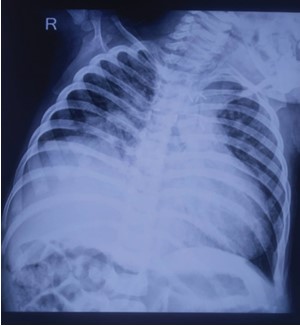
Neurophysiological facilitation (NPF) techniques, including thoracic vertebral compression, intercostal stretching and co-contraction of the abdomen, aim to produce reflex respiratory movement by using external proprioceptive and tactile stimulation that increases the rate and depth of breathing which optimise accessory respiratory muscle function and chest wall mechanics (3,4). Evidence supporting their use in children remains limited. Our aim is to provide scientific insight on the use of neuro physiological facilitation (NPF) of respiration in Paediatric group too. A four-and-a-half-year-old girl presented at eight months of age with cyanosis, feeding difficulty, diaphoresis and tachypnea since birth. Echocardiography revealed D-transposition of great arteries (D-TGA), ventricular septal defect (VSD) and severe pulmonary arterial hypertension (PAH). The Subject Underwent Palliative Senning’s procedure & shifted to ICU for post operative care. On day 20, diaphragmatic palsy was suspected based on the Chest Xray and cine-fluoroscopy revealed right hemi-diaphragmatic palsy. There was complete dependency on Mechanical Ventilator. To facilitate accessory respiratory muscles, Neurophysiological Facilitation (NPF) techniques such as upper thoracic vertebral compression (T2–T5), intercostal stretching, abdominal co-contractions were performed daily. In addition prone positioning and mobilisation were also done along with routine tracheostomy care. On day 77, the child was weaned to CPAP and T-piece support. Almost 120 days after the operation, the tracheostomy was decannulated and the child was maintained on oxygen via nasal cannula. The chest X-ray also showed a slight
References
- 1. Joho-Arreola A.L., Bauersfeld U., Stauffer UG, Baenziger O., Bernet V. Incidence and treatment of diaphragmatic paralysis after cardiac surgery in children. Eur J Cardio Thorac Surg Off J Eur Assoc Cardio-Thorac Surg. 2005 Jan; 27(1): 53–7.
- 2. Baker C.J., Boulom V., Reemtsen B.L., Rollins R.C., Starnes V.A., Wells W.J. Hemidiaphragm plication after repair of congenital heart defects in children: quantitative return of diaphragm function over time. J Thorac Cardiovasc Surg. 2008 Jan; 135(1): 56–61.
- 3. Jennifer A. Prayor & Barbara A. Webber. Physiotherapy for Respiratory and cardiac problems. 2nd edition. Churchill Livingstone. 1998.
- 4. Physiopedia [Internet]. [cited 2025 Sept 27]. Neurophysiological Facilitation of Respiration (NPF). Available from: https://www.physio pedia.com/Neurophysiological_Facilitation_ of_Respiration_(NPF)
- 5. Harper R.M., Kesavan K. Neuromodulatory Support for Breathing and Cardiovascular Action During Development. Front Pediatr. 2021 Sept 30; 9: 753215.
- 6. Mankad D., Trivedi S., Bhatt J.P. Role of Proprioceptive Neuromuscular Facilitation Techniques of Respiration in Mechanically Ventilated Patients – A Systematic Review of Clinical Evidence. Int J Health Sci Res. 2024 Jan 9; 14(1): 51–64.
- 7. Raghupathy M.K., Lewis LES, G.S. Does Neurophysiological Facilitation (NPF) influence respiratory function in a preterm infant with respiratory distress? A Case Report. [cited 2025 Sept 28]; Available from: https://www.authorea.com/users/505025/ articles/584245-does-neurophysiological facilitation-npf-influence-respiratory-function in-a-preterm-infant-with-respiratory-distress a-case-report
- 8. Kunovsky P., Gibson G.A., Pollock J.C., Stejskal L., Houston A., Jamieson M.P. Management of postoperative paralysis of diaphragm in infants and children. Eur J Cardio-Thorac Surg Off J Eur Assoc Cardio-Thorac Surg. 1993; 7(7): 342–6.
Data Sharing Statement
There are no additional data available. All raw data and code are available upon request.
Funding
This research received no funding.
Author Contributions
All authors contributed significantly to the work and approve its publication.
Ethics Declaration
This article does not involve any human or animal subjects, and therefore does not require ethics approval.
Acknowledgements
We would like to express our gratitude to the patients, their families, and all those who have contributed to this study.
Conflicts of Interest
The authors report no conflicts of interest in this work.
About this article

Cite this article
Satsangi A, Sheware BT. Case Report: Neurophysiological Facilitation of Respiration in an infant with Post-Cardiac Surgery Diaphragmatic Palsy. Indian J Cardiovasc Med Surg. 2026;12(1):27–30.
Licence:
Attribution-Non-commercial 4.0 International (CC BY-NC 4.0)This license enables reusers to distribute, remix, adapt, and build upon the material in any medium or format for noncommercial purposes only, and only so long as attribution is given to the creator.
| Received | Accepted | Published |
|---|---|---|
| February 13, 2026 | March 14, 2026 | April 30, 2026 |
DOI: 10.21088/jcms.2454.7123.12126.4
Keywords
Neurophysiological facilitation of RespirationRespiratory PNF in PaediatricsPhysiotherapy in ICUCritical care PhysiotherapySearch for Similar Articles
Similar Articles
- Cardioembolic Stroke as an Initial Presentation of Carney's Complex: A Case Repo...
- Simultaneous Atrioventricular Valve Repair Compelling Creation of Unconventional...
- Iatrogenic Right Radial Arteriovenous Fistula Post Percutaneous Coronary Interve...
- Revascularization in Chronic Coronary Disease: A Comparison between AHA/ACC (202...
- Improvement in Qualitative Indices with Novel Therapy of Nicorandil in Patients...
Article Level Metrics
Last UpdatedMonday 28 September 2026, 16:13:18 (IST)
1823
Accesses
32
242
00
Citations
NA
NA
NA
Download citation
Article Keywords
Keyword Highlighting
Highlight selected keywords in the article text.
Timeline
| Received | February 13, 2026 |
| Accepted | March 14, 2026 |
| Published | April 30, 2026 |
licence
Attribution-Non-commercial 4.0 International (CC BY-NC 4.0)
This license enables reusers to distribute, remix, adapt, and build upon the material in any medium or format for noncommercial purposes only, and only so long as attribution is given to the creator.