Full Text (PDF)
Indian Journal of Research in Anthropology 11(1):p 19-29, Jan-June 2025. | DOI: 10.21088/ijra.2454.9118.11125.2
Original Article
Ritual, Gender and Identity: An Anthropological Perspective
Paramananda Naik, Sanghamitra Sethi
Author Information
Licence:
Attribution-Non-commercial 4.0 International (CC BY-NC 4.0)This license enables reusers to distribute, remix, adapt, and build upon the material in any medium or format for noncommercial purposes only, and only so long as attribution is given to the creator.
Indian Journal of Research in Anthropology 11(1):p 19-29, Jan-June 2025. | DOI: 10.21088/ijra.2454.9118.11125.2
How Cite This Article:
Naik P, Sethi S. Ritual, gender and identity: an anthropological perspective. Ind J Res Anthropol. 2025;11(1):19-29.Timeline
Received : April 22, 2025
Accepted : June 05, 2025
Published : June 18, 2025
Abstract
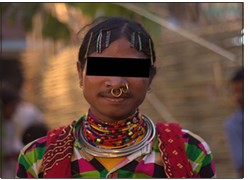
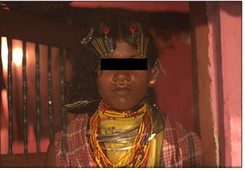
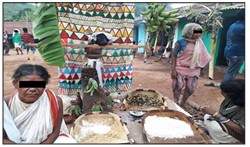
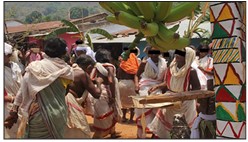
This study explores the complex interrelationship lies inbetween rituals and the formation of gender identity in contemporary contexts. Gender and ritual are interconnected aspects of indigenous culture that influence and shape the human experience as a whole. The paperexplained the holistic discourse on the remarkable participation of Bejuni (female Shamanin) in fairs and festivals in Dongria Kandha society. This paper examined the symbiotic relationship between gender identity and rituals within the Dongria Kandha community of Odisha, India. The study was conducted among the Dongria Kandha community of Bissamcuttack Block, Rayagada District, Odisha. The Dongria Kandha is one of the Particularly Vulnerable Tribal Groups (PVTGs) inhabiting in the Rayagada district of Odisha. The objectives of the paper are to highlight the life and culture of Dongria Kandha as well as the significance of gender roles in rituals within their culture. The present paper seeks to analyze the cultural empowerment dimension of gender identity among Dongria Kandha. The data had been collected from both primary and secondary sources. The paper has been concluded with a broader field of gender identity by offering insights into how gender and ritual contributed to the cultural identity of Dongria Kandha. The exploration of the role of rituals in shaping gender identity within contemporary perspectives reveals a dynamic and intricate interplay between cultural practices and the construction of individual and collective gender identities. The Dongria Kandha women have made a tremendous contribution to their culture, showing the autonomy of gender. From the perspectives of feminists and gender, the Dongria Kandha women enjoy high status in socio-cultural life, which shows their gender identity within society as a whole.
References
- 1. Bourdieu, P. (1977). Outlineofatheoryofpractice. Cambridge University Press.
- 2. Chatterjee, S., & Sharma, R. (2018). Belief of tribal’s in supernatural power and its relation with religious life [With special reference to Indian tribal society]. International Journal of ResearchandAnalyticalReviews(IJRAR),5(3), 48.
- 3. Das, B., & Pattamajhi, T. (2022, April-May). Religious practices of tribal women in Gajapati District of Odisha. International Journal of MechanicalEngineering, 7(5). ISSN 0974-5823.
- 4. Das, H., & Bhol, L. (2008). Tribal festival: assortment of pure pleasure, ecstasy and celebration. In A.B. Ota (Ed.), Festivalsoftribal Orissa, 48 (2), 4-6. Bhubaneswar: ADIVASI.
- 5. Dash, R. N. (2016). Cultural life of the tribals of the Koraput region. OdishaReview. ISSN 0970 8669.
- 6. Doye, E. (2015). Indigenous beliefs and practices among the Galos of Arunachal Pradesh. SouthAsiaResearch, 35(3), 334–348. https://doi.org/10.1177/0262728015598701
- 7. Frazer,J.G.(1922).The golden bough: A study in magic and religion (3rd ed.). Macmillan.
- 8. Gomango, A.K., & Mohanty, S.C. (2008). Festivals, rituals and shamans among the Dongria Kondh. In A.B. Ota (Ed.), Festivals of tribal Orissa, 48 (2), 7-24. Bhubaneswar: ADIVASI.
- 9. Jena, M., Pathi, P., & Dash, J. (2002). Forest tribes of Orissa: TheDongariaKondh (Vol. 1). New Delhi: D.K. Print World Ltd.
- 10. Konwar, P. (2019). Women empowerment in theveyearplansofIndia.International Journal ofResearchCultureSociety. 3 (4), 64-69.
- 11. Lévi-Strauss, C. (1963). Structural anthropology. Basic Books.
- 12. Malinowski, B. (1954). Magic, science, and religion and other essays (Mass market paperback ed.). Doubleday Anchor.
- 13. Mohapatra, K. (2008). Kedu: a big festival of the KutiaKondh. In A. B. Ota (Ed.), Festivalsoftribal Orissa, 48 (2), 1-3. Bhubaneswar: ADIVASI.
- 14. Murmu, S.C., & Pramanik, R. (2018). Remarking an analysis on shamanistic beliefs and practices: Emerging trends towards a new horizon. Remarking: An Analisation, 3(8).
- 15. Nayak, P.K. (1989). Blood, women, and territory: Ananalysisof clanfeudsof theDongriaKondhs. New Delhi: Reliance Publishing House.
- 16. Oraon, J. (2021). Role of traditional community festivals of the Oraon in maintenance of ecological balance and mitigate the effect of global warming. International Journal of MultidisciplinaryResearch,10(1), 5.
- 17. Ortner, S.B. (1974). Is female to male as nature is to culture? In M.Z. Rosaldo& L. Lamphere (Eds.), Women, culture, and society (pp. 67-87). Stanford University Press.
- 18. Ota, A.B., Mohanty, B.N., & Mohanty, S.C. (2020). Particularly vulnerable tribal groups of Odisha. Scheduled Castes & Scheduled Tribes Research and Training Institute (SCSTRTI).
- 19. Padel,F. (2010).Sacrificingpeople: Invasionsofa tribal landscape. New Delhi: Orient Blackswan.
- 20. Rappaport, R.A. (1968). Pigs for the ancestors: RitualintheecologyofaNewGuineapeople. Yale University Press.
- 21. Rowkith, S., & Bhagwan, R. (2020). Honoring tribal spirituality in India: An exploratory study of their beliefs, rituals and healing practices. Religions, 11(11), 549. https://doi. org/10.3390/rel11110549
- 22. Sarkar, M., & Modak, B.K. (2022). Rituals and festivals of indigenous people of Chota Nagpur plateau of West Bengal: A positive correlation with the environment. In U. Chatterjee, A. Kashyap, M. Everard, G.K. Panda, & D. Mahata (Eds.), Indigenous people and nature: Insights for social, ecological, and technological sustainability (pp. 465-491). Elsevier.
- 23. Sethi, S., & Acharya, S. (2019). Tribal Women in Traditional Livelihood Practices: A Case Study of Dongria Kandha in Rayagada District, Odisha. Journal of EmergingTechnologies and InnovativeResearch, 6(6), 961.
- 24. Sethi, S., & Naik, P. (2020). Cultural perspective on shifting cultivation: A case study of Dongria Kandha in South Odisha. International Journal ofAppliedResearch, 6(2), 145-148.
- 25. Sethi, S., & Naik, P. (2020). Gender Role in Handicraft Promotion: A Case Study Among Dongria Kandha Women in Rayagada District, Odisha. InternationalJournalofCreativeResearch Thoughts, 8(2), 84.
- 26. Shaktiprasad, S. (2015, April). Role and presence of women in tribal festivals: A case study of Odisha. AmericanResearchThoughts, 1(6). 10.6084
- 27. Sharma, N. (2022). The study of fairs, festivals and languages in Ravi river basin in Himachal Pradesh, India. Central Asian Journal of Literature,PhilosophyandCulture. 3 (6), 140-150.
- 28. Thomas, A. (2021). Participation and role of women in events and festivals: A study on the contributions of women in revitalizing and sustaining the folk potential of fairs and festivals in India. ResearchGate. https://doi. org/10.1201/9781003161134-17
- 29. Turner, V.W. (1969). The ritual process: Structure and anti-structure. Aldine.
- 30. Tylor, E.B. (1871). Primitiveculture:Researches into the development of mythology, philosophy, religion, language, art and custom (Vol. 2). John Murray
Data Sharing Statement
There are no additional data available
Funding
This research received no funding.
Author Contributions
All authors contributed significantly to the work and approve its publication.
Ethics Declaration
None
Acknowledgements
No Information provided
Conflicts of Interest
No conflicts of interest in this work.
About this article

Cite this article
Naik P, Sethi S. Ritual, gender and identity: an anthropological perspective. Ind J Res Anthropol. 2025;11(1):19-29.
Licence:
Attribution-Non-commercial 4.0 International (CC BY-NC 4.0)This license enables reusers to distribute, remix, adapt, and build upon the material in any medium or format for noncommercial purposes only, and only so long as attribution is given to the creator.
| Received | Accepted | Published |
|---|---|---|
| April 22, 2025 | June 05, 2025 | June 18, 2025 |
DOI: 10.21088/ijra.2454.9118.11125.2
Keywords
GenderRitualIdentityEmpowermentCultureSearch for Similar Articles
Similar Articles
- Indigenous Knowledge System in Formal Education
- Contemporary Issues and Challenges in Women’s Weavers in the Varanasi Silk Sare...
- Understanding through Traversing the Corridors of History: Richness of Indian He...
- Challenges and Opportunities in Digital Preservation of Intangible Culture Herit...
- Assessment of Nutritional Indicators: A Comparative Study among Pre-School Child...
Article Level Metrics
Last UpdatedThursday 09 July 2026, 14:35:10 (IST)
821
Accesses
1
223
00
Citations
NA
NA
NA
Download citation
Article Keywords
Keyword Highlighting
Highlight selected keywords in the article text.
Timeline
| Received | April 22, 2025 |
| Accepted | June 05, 2025 |
| Published | June 18, 2025 |
licence
Attribution-Non-commercial 4.0 International (CC BY-NC 4.0)
This license enables reusers to distribute, remix, adapt, and build upon the material in any medium or format for noncommercial purposes only, and only so long as attribution is given to the creator.