Full Text (PDF)
Indian Journal of Surgical Nursing 12(2):p 45-58, May-August 2023. | DOI: https://doi.org/10.21088/ijsn.2277.467X.12223.1
Original Article
Prevalence of Depression and its Contributing Factors
Barkha Devi, Hishey Lamu Bhutia
Author Information
Licence:
Attribution-Non-commercial 4.0 International (CC BY-NC 4.0)This license enables reusers to distribute, remix, adapt, and build upon the material in any medium or format for noncommercial purposes only, and only so long as attribution is given to the creator.
Indian Journal of Surgical Nursing 12(2):p 45-58, May-August 2023. | DOI: https://doi.org/10.21088/ijsn.2277.467X.12223.1
How Cite This Article:
Hishey Lamu Bhutia, Barkha Devi/Prevalence of Depression and its Contributing Factors/ J Surg.Nurs.2023;12(2):45-58Timeline
Received : April 14, 2023
Accepted : April 24, 2023
Published : August 30, 2023
Abstract
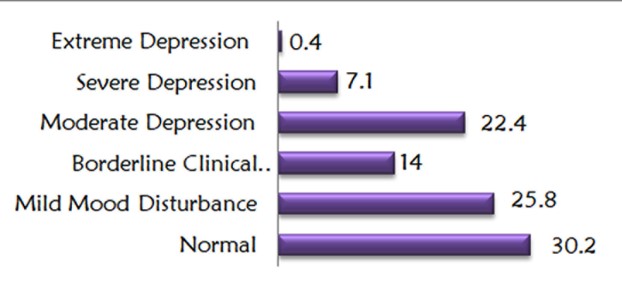
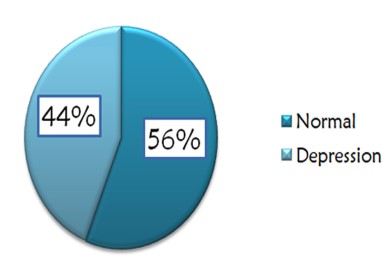
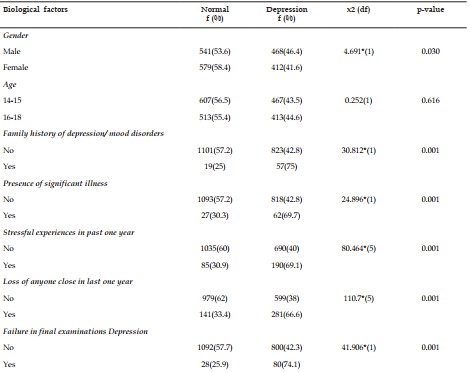
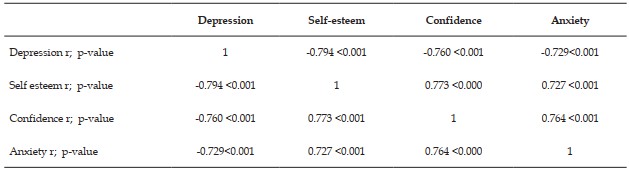
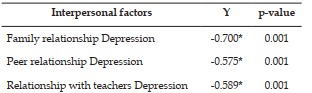
Introduction: Adolescence represents a critical phase of development and is characterized by major changes in all areas of human life; physical, emotional, spiritual, cognitive and moral. Depression has been found to be the most common psychiatric disorder among adolescents. Methods and materials: A survey approach with a school based cross-sectional design was adopted. Convenient sampling was used to select the main setting (Udupi block); random sampling was used to select the schools, PUCs, & students. The data collection tools used comprised of demographic proforma, Beck Depression Inventory-I, Factors contributing to adolescent depression questionnaire and scale, Rosenberg’s self-esteem scale. Statistical analysis: Data collected were analyzed using SPSS version 16 by computing the descriptive and inferential statistics. Results: The main findings of the study show overall prevalence of adolescent depression was 44%. Depression was found to be significantly associated with gender (r=4.69, p=0.030), family history of depression or any mood disorders (r=30.81, p<0.001), presence of any illness (r= 23.692, =p<0.001), stressful life events (r=80.183, p<0.001), loss of someone close (r=1.107, p<0.001) and failure in final examinations (r=41.906, p<0.001). There was no association of adolescent depression with age. Depression was found to be negatively correlated with self-esteem (r=-0.794, p<0.001), anxiety (r=-0.729, p<0.001) and confidence (r=-0.760, p<0.001). Depression was found to have a significant negative correlation with family relationships (r=-0.700, p<0.001), peer relationship (r=- 0.575, p<0.001) and relationship with teachers (r=-0.589, p<0.001). Depression was found to be independent of the selected demographic variables as class of study, age, religion, type of family, parental marital status, parental occupation, and annual income. However, there was a significant association between depression and father’s education (r=57.21, p<0.001), and mother’s education (r=23.62, p=0.003). Conclusion: The community health department may extend their services to the school by planning adolescent health education on prevention and identification of depression. Further exploration of factors contributing to adolescent depression may be conducted through qualitative research.
References
- 1. Centers for Disease Control and Prevention National Center for Injury Prevention and Control. Web-based Injury Statistics Query and Reporting System (WISQARS).
- 2. Vanya H, Magorno M. Assessment of adolescents for depression in the pediatric primary care setting. Pediatric Nursing. 2010 March-April; 36(2): 103-11.
- 3. Sharp LK, Lipsky MS. Screening for depression across the lifespan:a review of measures for use in primary care sttings. American Family Physician. 2002 Sept 15; 66 (6): 1001-4.
- 4. Shashi K, Bhatia MD, Bhatia SC. Childhood and adolescent depression. American Family Physician. 2007 Jan 1; 75 (1): 73-9.
- 5. National Institute of Mental Health.2010. Blueprint for change; research on child and adolescent mental health. Betrhseda, Md: National Advisory Mental Health Council’s Workup on Child and Adolescent Mental Health Intervention, Prevention, and Development, 2001. retrieved from http://www. nih.gov/publiccat/nimhblueprint.pdf.
- 6. Sund M A, Larsson B, Wichstrom L. Prevalence and characteristics of depressive symptoms in early adolescence in Central Norway. Child and Adolescent Psychiatry and Mental Health. 2011; 5 (28).
- 7. Grover S, Dutt A, Avasthi A. An overview of Indian research in depression. Indian J Psychiatry [serial online] 2010 [cited 2012 Aug 20];52:178-88.available from: http://www.indianjpsychiatry.org/text. asp?2010/52/7/178/69231.
- 8. Reddy MV, Chandrashekhar CR. Prevalence of mental and behavioural disorders in India: A metaanalysis. Indian Journal of Psychiatry 1998;40:149-57.
- 9. Mohanraj R, Subbaiah K. Prevalence of depressive symptoms among urban adolescents in south India. Journal of Indian Association of Child Adolescents Mental Health. 2010; 6 (2).33-45.
- 10. Bansal V, Goyal S, Srivastava K. Study of prevalence of depression in adolescent students of a public school. Industrial Psychitry Journal; 2009 Jan-Jun; 18(1).
- 11. Nair MKC, John R. Prevalence of depression among adolescents. Indian Journal of Pediatrics.2010.71; 523-24.
- 12. WHO Mental Health Department, Definition of depression [internet].2010. Available from .www. int/mental health/management/ depression/ definition/en.
- 13. Steinhausen HC, Winkler M. Prevalence of affective disorders in children and adolescents; findings from the Zurich Epidemiological Studies. Acta Psychiatric Scand 2003, 108:(suppl 418);20-23.
- 14. Saluja G, Lachan R, Scheidt PC, Overpeck MD, Sun W, Giedd JN. Prevalence and risk factors of depressive symptoms among young adolescents. Archives of Pediatrics and Adolescent Medicine. 2004 Aug; 158(8); 760-65.
- 15. Sun Y, Tao F, Wan Y. The mediating effects of stress and coping on depression among adolescents in China. Journal of Occupational and Adolescent Psychiatric Nursing, 2010;23(3): 173-80.
- 16. Asal ARA, Abdel-Fattah MM. Prevalence, symptomatology, and risk factors for depression among high school students in Saudi Arabia. Neuroscience. 2007, 12(1); 8-16.
- 17. Sajjadi H, Kamal SHM, Rafiey H, Vameghi M, Forouzan AS, Rezaei M. A systematic review of the prevalence and risk factors of depression among Iranian adolescents. Global Journal of Health Science. 2013; 5(3): 16-27.
- 18. Bhasin SK, Sharma R, Saini NK. Depression, anxiety and stress among adolescent students belonging to affluent families: a school-based study. Indian Journal of pediatrics, 2010;77: 161-64.
- 19. Baron, P., &Perron, L. M. Sex differences in the Beck Depression Inventory scores of adolescents. Journal of Youth and Adolescence. 1986; 15: 165-71.
- 20. Li CE, DiGiuseppa R, Froh J. The roles of sex, gender, and coping in adolescent depression. Adolescence. 2006; 41(163), 409-13.
- 21. Adewuya AO, Ologun YA. Factors associated with depressive symptoms in Nigerian adolescents. Journal of Adolescent Health. 2006 Jul; 39(1):105-10.
- 22. Cook MN, Peterson J, Sheldon C. Adolescent depression: an update and clinical guide to clinical decision making. Psychiatry (Edgemont) 2009; 6(9):17-31.
- 23. Hirshfeld-Becker DRetal. American Journal of Psychiatry. Psychopathology in adolescent offspring of parents with panic disorder, major depression, or both: a 10-year follow-up .2012 Nov 1; 169(11):1175-84.
- 24. Aslund C, Nilson KU, Starrin B, S joberg RL. Shameful experiences and association of adolescent depression and psychosocial risk factors. European Journal of Child and Adolescent Psychiatry, 2007 August; 16(5): 298-304.
- 25. Adams J, Adams M. Effects of a negative life events and perceived problem solving alternatives on depression in adolescents: A prospective study. Journal of Child Psychology and Psychiatry. 1991 July; 32(5): 811-20.
- 26. Lipps GE, Lowe GA, Halliday S, Morris-Patterson A, Clarke N, Wilson RN. The association of academic tracking to depressive symptoms among adolescents in three Caribbean countries. Child and Adolescent Psychiatry and Mental Health. 2010 May 28; 4(16).
- 27. Basavarajjapa, Khaneshkeshi A. The relationships of academic stress, depression and self-efficacy with academic performance among high school students in Iran. Indian Stream Research Journal. 2012 June; 1(v); 1-4.
- 28. Avison WR, McAlpine DD. Gender differences in symptoms of depression among adolescents. Journal of Health and Social Behavior. 1992 June; 33( 2): 77-96.
- 29. Malekiha M , Abedi MR, Baghban I. Personality, self-esteem predictors of happiness and depression among high school students in Iran. Inter disciplinary Journal of Contemporary Research in Business. 2012 Feb; 3(10): 569-80.
- 30. Matos D, Gasper M, Paula B, Mark D, Allison S. Anxiety, Depression, and Peer Relationships during Adolescence: Results from the Portuguese National Health Behaviour in School-Aged Children Survey. European Journal of Psychology of Education. 2003 March; 18(1): 3-14.
- 31. Sahoo SKhess CR. Prevalence of depression, anxiety, and stress among young male adults in India: a dimensional and categorical diagnoses-based study. Journal of Nervous and Mental Disease. 2010 Dec; 198(12):901-4.
- 32. Cheng H, Furnham A. Personality, peer relations, and self confidence as predictors of happiness and loneliness. Journal of Adolescence. 2002; 25: 327-39.
- 33. Voorhees BWV, Paunesku D, Kuwabara SA, Basu A, Gollan J etal. Protective and vulnerability factors predicting new-onset depressivde episode in a representative of U.S. adolescents. Journal of Adolescent Health. 2008; 42: 605-16.
- 34. Field T, Diego M, Sanders C. Adolescent depression and risk factors. Adoloscence, 2001; 36(14): 492-98.
- 35. Consoli A, Peyre H, Speranza M, Hassler C, Falissard B, Touchette E, etal. Suicidal behaviors in depressed adolescents: role of perceived relationships in the family relationships. Child and Adolescent Psychiatry and Mental Health. 2013; 7(8): 1-24.
- 36. Khasakhala LI, Ndetei DM, Mutiso V, Mbwayo AW, Mathai M. The prevalence of depressive symptoms among adolescents in Nairobi public secondary schools: association with perceived maladaptive parental behaviour. African Journal of Psychiatry (Johannesbg). 2012 Mar; 15(2):106-13.
- 37. Uba I, Yaacob SN, Juhari R. The relationship between peer relationship and depression among adolescents in Selangor, Malaysia. European Journal of Social Services. 2009; 11(1): 149-59.
- 38. Reddy R, Rhodes J.E, Mulhall P. The influence of teacher support on student adjustment in the middle school years: A latent growth curve study. Development and Psychopathology. 2003; 15: 119- 38.
Data Sharing Statement
There are no additional data available. All raw data and code are available upon request.
Funding
This research received no funding.
Author Contributions
All authors contributed significantly to the work and approve its publication.
Ethics Declaration
This article does not involve any human or animal subjects, and therefore does not require ethics approval.
Acknowledgements
We would like to express our gratitude to the patients, their families, and all those who have contributed to this study.
Conflicts of Interest
No conflicts of interest in this work.
About this article

Cite this article
Hishey Lamu Bhutia, Barkha Devi/Prevalence of Depression and its Contributing Factors/ J Surg.Nurs.2023;12(2):45-58
Licence:
Attribution-Non-commercial 4.0 International (CC BY-NC 4.0)This license enables reusers to distribute, remix, adapt, and build upon the material in any medium or format for noncommercial purposes only, and only so long as attribution is given to the creator.
| Received | Accepted | Published |
|---|---|---|
| April 14, 2023 | April 24, 2023 | August 30, 2023 |
DOI: https://doi.org/10.21088/ijsn.2277.467X.12223.1
Keywords
DepressionAdolescentsAdolescent DepressionAdolescent AnxietyAdolescent HealthSearch for Similar Articles
Similar Articles
Article Level Metrics
Last UpdatedFriday 24 July 2026, 02:53:37 (IST)
1069
Accesses
4
216
00
Citations
NA
NA
NA
Download citation
Article Keywords
Keyword Highlighting
Highlight selected keywords in the article text.
Timeline
| Received | April 14, 2023 |
| Accepted | April 24, 2023 |
| Published | August 30, 2023 |
licence
Attribution-Non-commercial 4.0 International (CC BY-NC 4.0)
This license enables reusers to distribute, remix, adapt, and build upon the material in any medium or format for noncommercial purposes only, and only so long as attribution is given to the creator.