Full Text (PDF)
Physiotherapy and Occupational Therapy Journal 16(1):p 19-34, January-March 2023. | DOI: https://doi.org/10.21088/potj.0974.5777.16123.2
Original Article
Postural Evaluation and Virtually Designed Bin Table for Collection and Eviction of Slab Concrete Mix at Construction Work
Suman Das, Manoj T. Gajbhiye, Debamalya Banerjee, Saurav Nandi
Author Information
Licence:
Attribution-Non-commercial 4.0 International (CC BY-NC 4.0)This license enables reusers to distribute, remix, adapt, and build upon the material in any medium or format for noncommercial purposes only, and only so long as attribution is given to the creator.
Physiotherapy and Occupational Therapy Journal 16(1):p 19-34, January-March 2023. | DOI: https://doi.org/10.21088/potj.0974.5777.16123.2
How Cite This Article:
Manoj T. Gajbhiye, Suman Das, Debamalya Banerjee, et al./Postural Evaluation and Virtually Designed Bin Table for Collection and Eviction of Slab Concrete Mix at Construction Work/Physiotherapy and Occupational Therapy Journal. 2023;16(1): 19-34.Timeline
Received : November 17, 2022
Accepted : February 11, 2023
Published : March 25, 2023
Abstract
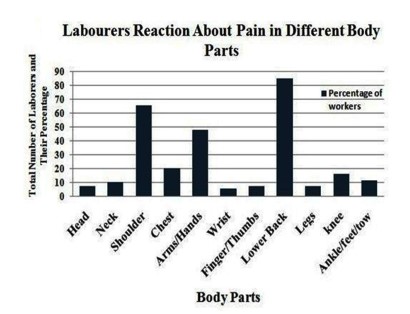
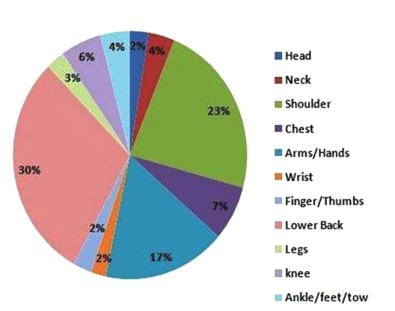
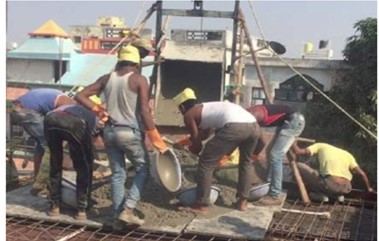
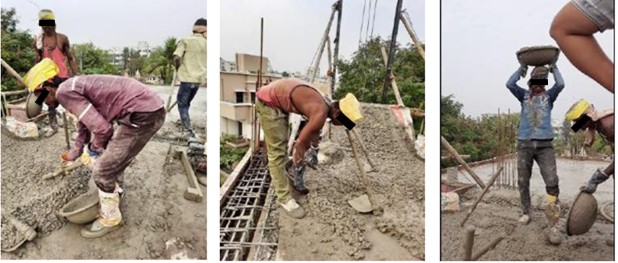
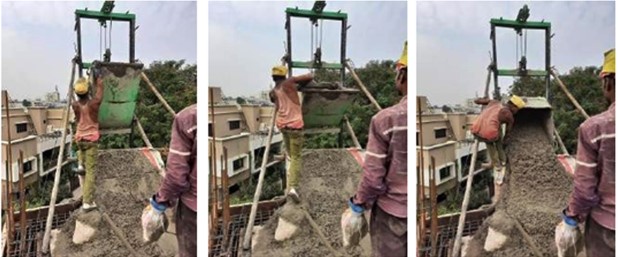
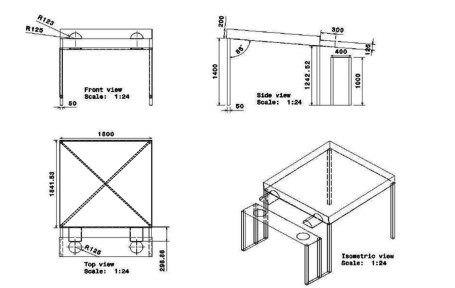
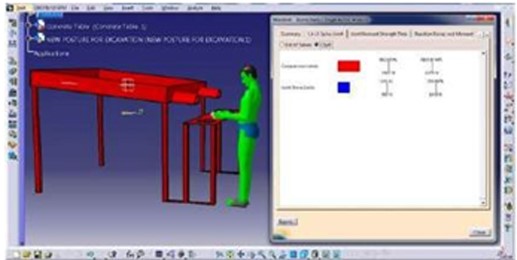
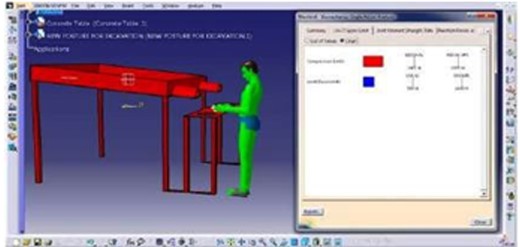
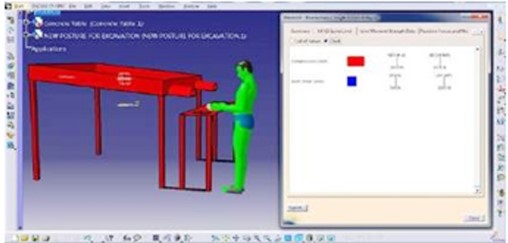
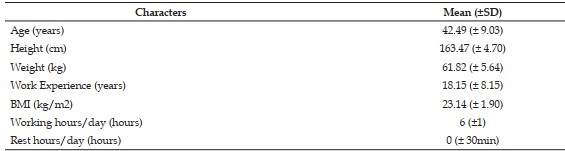
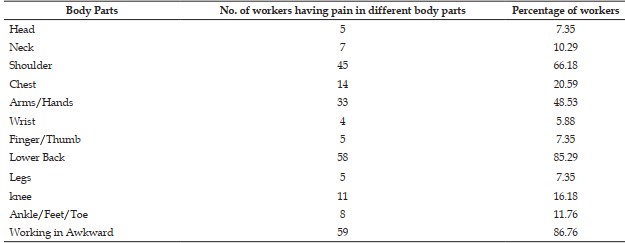
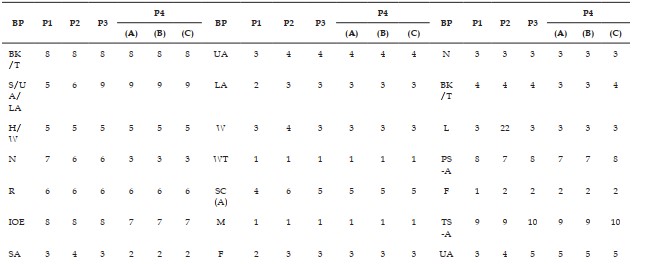
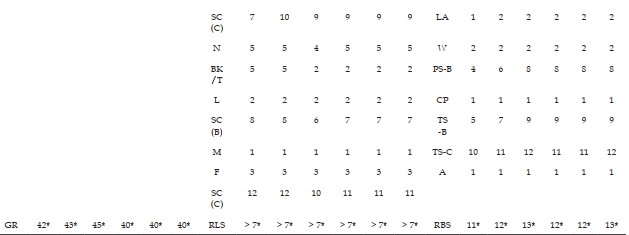
Slab concreting is one of the important tasks in construction in which structural element exercises to generate horizontal flat surface at the roof or ceilings. The study was conducted to evaluate the working postures of 68 laborers performing concrete mix laying on the floor for slab concreting. The ERIN, RULA and REBA methods were used to evaluate workers' real-time work patterns followed by design of collection and discharging tables designed and modelled. Biomechanical and lifting/lowering analysis were performed on the manikin while working on the newly developed table. Results indicate that laborers are working in vulnerable condition with extremely high ergonomic risk and exposing to work-related musculoskeletal disorders. The most exposed parts of the body are the Lower back (85.29%), shoulders (66.18%), arms/hand (48.53%). Newly proposed collecting and Eviction bin table minimizes the risk of work-related musculoskeletal disorder on the different parts of the body.
References
- 1. Chen, Diliang; Cai, Yi; Cui, Jiawei; Chen, Jia; Jiang, Haotian; Huang, Ming-Chun (2018). Risk Factors Identification and visualization for Work-related Musculoskeletal Disorders with Wearable and Connected Gait Analytics System and Kinect Skeleton Models. Smart Health, (), S2352648317301137. DOI:10.1016/j. smhl.2018.05.003.
- 2. AbdulHafeez, I., & Smallwood, J. (2017). Adoption of Construction Ergonomic Interventions on Building Construction Sites in Nigeria. Advances in Physical Ergonomics and Human Factors, 124–133. DOI:10.1007/978-3- 319-60825-9_15.
- 3. Roja, Z., Kalkis, H., Roja, I., & Zalkalns, J. (2017). Work Related Musculoskeletal Disorders (WRMSD) in Construction Workers and Main Causes. Advances in Physical Ergonomics and Human Factors, 279–286. DOI:10.1007/978-3- 319-60825-9_31.
- 4. Rahman, A. and Palaneeswaran, E. (2018). Modelling Back Problems from Lifting and Lowering Tasks in Australian Construction Industry. International Research Journal of Engineering and Technology, 5 (3), 2198- 2205. https://www.irjet.net/archives/V5/i3/ IRJET-V5I3506.pdf
- 5. Chatterjee, A., & Sahu, S. (2018). A physiological exploration on operational stance and occupational musculoskeletal problem manifestations amongst construction Skilled Workers of West Bengal, India. Journal of Back and Musculoskeletal Rehabilitation, 1–9. DOI:10.3233/bmr-170935.
- 6. Kulkarni, V. S., & Devalkar, R. V. (2018). Postural analysis of building construction workers using ergonomics. International Journal of Construction Management, 1–8. DOI :10.1080/15623599.2018.1452096.
- 7. Cheraghi M., Shahrabi-Farahani M., MoussaviNajarkola S. Ali. (2018). Ergonomic Risk Factors Evaluation of Work- related Musculoskeletal Disorders by PATH and MMH in a Construction Industry. Iranian Journal of Health, Safety & Environment, Vol.6, No.1, pp.1175-1189. http://oaji.net/articles/2019/509-1549341560. pdf.
- 8. Cho, Y. K., Kim, K., Ma, S., & Ueda, J. (2018). A Robotic Wearable Exoskeleton for Construction Worker’s Safety and Health. Construction Research Congress 2018. DOI:10.1061/9780784481288.003.
- 9. Antwi-Afari, M. F., Li, H., Yu, Y., & Kong, L. (2018). Wearable insole pressure system for automated detection and classification of awkward working postures in construction workers. Automation in Construction, 96, 433– 441. DOI:10.1016/j.autcon.2018.10.004.
- 10. Zhang, Y., Wu, X., Gao, J., Chen, J., & Xv, X. (2019). Simulation and Ergonomic Evaluation of Welders’ Standing Posture Using Jack Software. International Journal of Environmental Research and Public Health, 16(22), 4354. DOI:10.3390/ijerph16224354.
- 11. Jahanbanifar, S. and Akhavian, R. (2018). Evaluation of wearable sensors to quantify construction workers muscle force: an ergonomic analysis. Proceedings of the 2018 Winter Simulation Conference M. Rabe, A.A. Juan, N. Mustafee, A. Skoogh, S. Jain, and B. Johansson, eds. 3921- 3929. DOI:10.1109/ wsc.2018.8632419.
- 12. Lee, W., Seto, E., Lin, K.-Y., & Migliaccio, G. C. (2017). An evaluation of wearable sensors and their placements for analyzing construction worker’s trunk posture in laboratory conditions. Applied Ergonomics, 65, 424–436. DOI:10.1016/j.apergo.2017.03.016.
- 13. Massiris, F. M., Fernández, J. Á., Bajo, J. M., & Delrieux, C. A. (2020). Ergonomic risk assessment based on computer vision and machine learning. Computers & Industrial Engineering, 106816. DOI:10.1016/j. cie.2020.106816.
- 14. Hoozemans, Marco J.M.; Kingma, Idsart; de Vries, Wiebe H.K.; van Dieën, Jaap H. (2008). Effect of lifting height and load mass on low back loading. Ergonomics, 51(7), 1053–1063. DOI:10.1080/00140130801958642.
- 15. Gajbhiye, M.T., Banerjee, D., Nandi, S. (2021) “Ergonomic Assessment of Collecting, Lifting, Throwing and Receiving Postures’ of Indian Excavation Workers using CATIA” – 2nd International congress on Advances in Mechanical and System Engineering (CAMSE 2021), Dr. B. R. Ambedkar National Institute of Technology, Jalandhar, Punjab., July 17-19, 2021.
- 16. Hlavkova,J., Lebeda,T., Tichy,T., Gadourek, P., Urban, P., Nakladalova, M., Lastovkova, A., Fenclova, Z., Ridzon, P., Ehler, E., Richter, M., Pesakova, L., Pelclova, D. (2016). Evaluation of Lumbar Spine Load by Computational Method in Order to Acknowledge Low-back Disorders as Occupational Diseases Cent Eur J Public Health,24(1), pp. 58- 67, DOI: 10.21101/cejph. a4332.
- 17. Konz, Stephan (1982). NIOSH lifting guidelines. American Industrial Hygiene Association Journal, 43(12), 931–933. DOI:10.1080/15298668291410846.
- 18. Jones, Troy; Kumar, Shrawan (2011). Biomechanical Loads and Subjective Stress Exposure to Lumber Graders in Sawmill Industry. International Journal of Occupational Safety and Ergonomics, 17(1), 87– 97. DOI:10.10 80/10803548.2011.11076875.
- 19. Cho, Y., Kim, K., Ma, S., and Ueda, J. (2018). “A Robotic Wearable Exoskeleton for Construction Worker’s Safety and Health.” ASCE Construction Research Congress 2018: pp. 19-28, Apr. 2-4, New Orleans, Louisiana, DOI: 10.1061/9780784481288.003.
- 20. Rahman, A. and Palaneeswaran, E. (2018). Modelling Back Problems from Lifting and Lowering Tasks in Australian Construction Industry. International Research Journal of Engineering and Technology, 5 (3), 2198- 2205. https://www.irjet.net/archives/V5/i3/ IRJET-V5I3506.pdf.
- 21. Chatterjee, A., & Sahu, S. (2018). A physiological exploration on operational stance and occupational musculoskeletal problem manifestations amongst construction Skilled Workers of West Bengal, India. Journal of Back and Musculoskeletal Rehabilitation, 1–9. DOI:10.3233/bmr-170935.
- 22. Van der Beek, A. J., Erik Mathiassen, S., Windhorst, J., & Burdorf, A. (2005). An evaluation of methods assessing the physical demands of manual lifting in scaffolding. Applied Ergonomics, 36(2), 213–222. DOI:10.1016 /j.apergo.2004.10.012.
- 23. Cheraghi M., Shahrabi-Farahani M., MoussaviNajarkola S. Ali. (2018). Ergonomic Risk Factors Evaluation of Work- related Musculoskeletal Disorders by PATH and MMH in a Construction Industry. Iranian Journal of Health, Safety & Environment, Vol.6, No.1, pp.1175-1189. http://oaji.net/articles/2019/509-1549341560. pdf.
Data Sharing Statement
There are no additional data available. All raw data and code are available upon request.
Funding
This research received no funding.
Author Contributions
All authors contributed significantly to the work and approve its publication.
Ethics Declaration
This article does not involve any human or animal subjects, and therefore does not require ethics approval.
Acknowledgements
We would like to express our gratitude to the patients, their families, and all those who have contributed to this study.
Conflicts of Interest
No conflicts of interest in this work.
About this article

Cite this article
Manoj T. Gajbhiye, Suman Das, Debamalya Banerjee, et al./Postural Evaluation and Virtually Designed Bin Table for Collection and Eviction of Slab Concrete Mix at Construction Work/Physiotherapy and Occupational Therapy Journal. 2023;16(1): 19-34.
Licence:
Attribution-Non-commercial 4.0 International (CC BY-NC 4.0)This license enables reusers to distribute, remix, adapt, and build upon the material in any medium or format for noncommercial purposes only, and only so long as attribution is given to the creator.
| Received | Accepted | Published |
|---|---|---|
| November 17, 2022 | February 11, 2023 | March 25, 2023 |
DOI: https://doi.org/10.21088/potj.0974.5777.16123.2
Keywords
Postural evaluationSlab-concreteERINRULAREBASearch for Similar Articles
Similar Articles
- Leadership in Physiotherapy: A Narrative Review
- Effectiveness of Low Level Laser Theapy in the Management of Temporomandibular J...
- The Impact of Air Pollution on Cardiopulmonary Health: Molecular Mechanisms, Pre...
- Efectiveness of Physiotherapy in Postpartum Women with Diastasis Recti: A Review
- Pain Neuroscience Education: Transforming Physiotherapy Practice
Article Level Metrics
Last UpdatedFriday 23 October 2026, 14:02:19 (IST)
4355
Accesses
7
739
00
Citations
NA
NA
NA
Download citation
Article Keywords
Keyword Highlighting
Highlight selected keywords in the article text.
Timeline
| Received | November 17, 2022 |
| Accepted | February 11, 2023 |
| Published | March 25, 2023 |
licence
Attribution-Non-commercial 4.0 International (CC BY-NC 4.0)
This license enables reusers to distribute, remix, adapt, and build upon the material in any medium or format for noncommercial purposes only, and only so long as attribution is given to the creator.