Full Text (PDF)
Journal of Microbiology and Related Research 11(1):p 7-13, Jan-June 2025. | DOI: https://doi.org/10.21088/jmrr.2395.6623.11125.1
Original Article
Plant-mediated Synthesis of Alternanthera philoxeroides Titanium Dioxide Nanoparticles (APTiO2NP)
Anju Meena, Pallavi Sharma, N.S. Leel
Author Information
Licence:
Attribution-Non-commercial 4.0 International (CC BY-NC 4.0)This license enables reusers to distribute, remix, adapt, and build upon the material in any medium or format for noncommercial purposes only, and only so long as attribution is given to the creator.
Journal of Microbiology and Related Research 11(1):p 7-13, Jan-June 2025. | DOI: https://doi.org/10.21088/jmrr.2395.6623.11125.1
How Cite This Article:
Anju Meena, Pallavi Sharma, N.S. Leel. Plant-mediated Synthesis of Alternanthera philoxeroides Titanium Dioxide Nanoparticles (APTiO2NP). J Microbiol Relat Res. 2025; 11(1): 07–13.Timeline
Received : March 03, 2025
Accepted : May 10, 2025
Published : June 30, 2025
Abstract
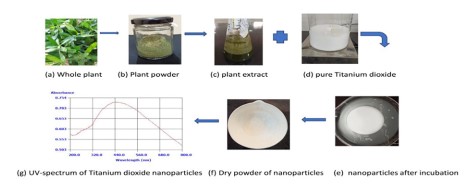
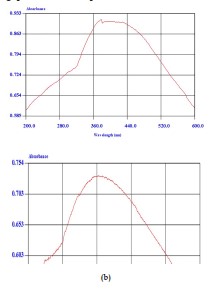
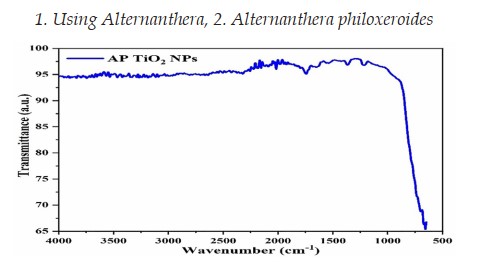
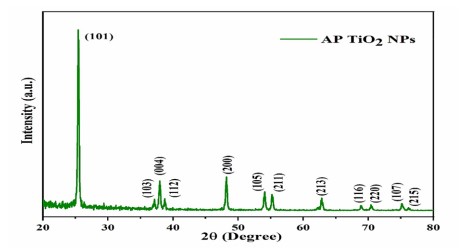
Background and Aim: Physical and chemical methods of synthesizing metal nanoparticles have been the focus for the last decade as researchers have broadly exploited them. These methods produce harmful by products. The biological synthesis of metal nanoparticles was found to be easy and economical. Green synthesis is a significant tool for reducing the destructive effects associated with the traditional methods for nanoparticle synthesis. The present work focuses on an eco-friendly approach for the green synthesis of titanium dioxide nanoparticles based on Alternanthera philoxeroides plant extract. Objective: The advantages of the green synthesis method include biocompatibility, cost-effectiveness, sustainable practices, nontoxic, environmentally benign precursors, and simple procedures with time-saving. Material and Method: Titanium dioxide, sterile distilled water, What’s man filter paper No. 1, and Alternanthera philoxeroides. The green synthesis of titanium dioxide nanoparticles is carried out in simple steps. The extract of Alternanthera philoxeroides was used for the biological synthesis of the titanium dioxide nanoparticles. Nanoparticles were characterized by UV-vis spectrophotometer, Fourier-transform infrared spectroscopy (FTIR), and X-ray powder diffraction (XRD). Results: The UV-Vis spectral pattern established the colloidal APTiO2NP. The surface plasmon resonance (SPR) of APTiO2NP showed maximum absorption at 372.8nm, and its energy bandgap of APTiO2NP was calculated to be 3.326 eV. FTIR spectrum confirmed the involvement of Protein, Tannins, Saponins, Phenols, flavonoids, Glycosides, and Terpenoids, which are present in Alternanthera philoxeroides that would act as capping agents for TiO2 NPs. The XRD result confirmed that the products were highly crystalline. The prominent peak was shown at 25.58°, and some other peak positions characterize the anatase phase of TiO 2NPs. Conclusion: The synthesized APTiO2NP could be used for environmental remediation regarding antimicrobial activity, catalytic activity, removal of pollutants dyes, and heavy metal ion sensing.
References
- 1. Saif, S., Tahir, A., & Chen, Y. (2016). Green Synthesis of Iron Nanoparticles and Their Environmental Applications and Implications. Nanomaterials, 6(11), 209. https://doi. org/10.3390/nano6110209
- 2. Ahmad, W., Jaiswal, K., K., & Soni, S.,Green synthesis of titanium dioxide (TiO2) nanoparticles by using Mentha arvensis leaves extract and its antimicrobial properties (2020), Inorganic and Nano-Metal Chemistry, Volume 50, 2020 - Issue 10, https://doi.org/10.1080/24 701556.2020.1732419
- 3. Kaur, P. (2017). Biosynthesis of nanoparticles using eco-friendly factories and their role in plant pathogenicity: A review. Biotechnology Research and Innovation, 2(1), 63-73. https://doi. org/10.1016/j.biori.2018.09.003
- 4. Lai Y, Wang L, Liu D, Chen Z, Lin C (2015) TiO 2-based nanomaterials design, synthesis and applications.Journal of Nanomaterials, Volume 2015, 250632, 3 pages 10.1155/2015/250632
- 5. Srinivasan, M., Venkatesan, M., Arumugam, V., Natesan, G., Saravanan, N., Murugesan, S., Ramachandran, S., Ayyasamy, R., & Pugazhendhi, A. (2019). Green synthesis and characterization of titanium dioxide nanoparticles (TiO2 NPs) using Sesbania grandiflora and evaluation of toxicity in zebrafish embryos. Process Biochemistry, 80, 197-202. https://doi.org/10.1016/j.procbio.2019.02.010
- 6. Vasanth V, Murugesh KA,and Susikaran S., Synthesis of titanium dioxide nanoparticles using Spirulina platensis algae extract. The Pharma Innovation Journal 2022; SP-11(7): 266- 269, DOI: https://doi.org/10.22271/tpi.2022. v11.i7Sd.13643
- 7. Gao R, Safrany A, Rabani J. Reactions of TiO2 excess electron in nanocrystallite aqueous solutions studied in pulse and gammaradiolytic systems. Radiation Physics and Chemistry. 2003 May 1; 67(1):25-39.
- 8. Sunmathi, D., Siva Kumar, R.,& Ravi Kumar, K., In vitro Anti-inflammatory and Antiarthritic activity of ethanolic leaf extract of Alternanthera sessilis (L.) R.BR. ex DC and Alternanthera philoxeroides (Mart.) Griseb. International Journal of Advances in Pharmacy, Biology and Chemistry, IJAPBC – Vol. 5(2), 2016, ISSN: 2277 – 4688.
- 9. Bhattacharjee, A., Ghosh, T., Sil, R.,& Datta, A., Isolation, and characterization of methanolsoluble fraction of Alternanthera philoxeroides (Mart.) evaluation of their antioxidant, α-glucosidase inhibitory and antimicrobial activity in in vitro systems.Natural Product Research, 2014, 10.1080/14786419.2014.
- 10. S. Shanavas, A. Priyadharsan, S. Karthikeyan, K. Dharmaboopathi, I. Raghavan, C. Vidya, R. Acevedo, P.M. Anbarasana, Green synthesis of titanium dioxide nanoparticles using Phyllanthus niruri leaf extract and study on its structural, optical and morphological properties. Materials Today: Proceedings, Volume 26, Part 4, 2020, Pages 3531-3534
- 11. Subhapriya, S., & Gomathipriya, P. (2018). Green synthesis of titanium dioxide nanoparticles by Trigonella foenum-graecum extract and its antimicrobial properties. Microbial Pathogenesis, 116, 215-220.https:// doi.org/10.1016/j.micpath.2018.01.027
- 12. K. Ganapathi Rao, CH. Ashok, K. Venkateswara Rao, CH. Shilpa Chakra, Pavani Tambur,Green Synthesis of TiO2 Nanoparticles Using Aloe Vera Extract. International Journal of Advanced Research in Physical Science (IJARPS), Volume 2, 2015, pp. 28-34.
- 13. Mbenga, Y., Adeyemi, J. O., Mthiyane, M.N., Singh, M., Onwudiwe, D.C., Green synthesis, antioxidant and anticancer activities of TiO2 nanoparticles using aqueous extract of Tulbhagia violacea. Results in Chemistry 6 (2023) 101007.
- 14. Masoodi, A., & Khan, F., A., Invasion of alligator weed (Alternanthera philoxeroides) in Wular Lake, Kashmir, India. Aquatic Invasions (2012) Vol. 7, Issue 1: 143–146 Doi: 10.3391/ ai.2012.7.1.016
- 15. Das N, Saikia S, Sarkar N. Medicinal plants of North-kamrup districts of Assam used in primary healthcare systems. Indian Journal of Traditional Knowledge, vol (5), October 2006: 489-493.
- 16. Okwu, D.O. (2001). Evaluation of the chemical composition of Indigenous spices and flavouring agents. Global. J. Pure and Applied Sciences, 7: 3; 455 – 459.
- 17. Sunmathi, D., Sivakumar, R., and Ravikumar, K., In vitro Anti-inflammatory and Antiarthritic activity of ethanolic leaf extract of Alternanthera sessilis (L.) R.BR. ex-DC and Alternanthera philoxeroides (Mart.) Griseb. International Journal of Advances in Pharmacy, Biology,and Chemistry, Vol. 5(2), 2016; pp. 109-115.
- 18. Sivakumar, R., and Sunmathi, D., Phytochemical screening and antimicrobial activity of ethanolic leaf extract of Alternanthera sessils(L.) R.BR. EX DC and Alternanthera philoxeroides (mart.) Grise. European Journal of Pharmaceutical and Medical Research, (2016), pp. 409-412.
- 19. Rajamehala M., Renugaa Su., Muthu Kumara Pandian A., Gopalakrishnan B., Vijay Pradhap Singh M., Green Synthesis of titanium Dioxide and its Application on Anti-Fungal Activity. Research Journal of Pharmacy and Technology, 2022, DOI:10.52711/0974-360X.2022.0011.
- 20. Dinesh D, Murugan K, Madhiya Zhagan P, Panneerselvam C, Nicoletti M,Jiang W, Benelli G, Chandramohan B, Suresh U (2015), Mosquitocidal and antibacterial activity of green-synthesized silver nanoparticles from Aloe vera extracts: towards an effective tool against the malaria vector Anopheles. stephensi, Parasitol Res 2015 (4): 1519-29. Doi: 10.1007/s00436-015-4336-z
- 21. Pulipati, S., and Babu, P.S., In-vitro antibacterial potential of Alternanthera philoxeroides (Mart) Griseb against multi-drug resistant Uropathogens, International Journal of Pharmaceutical Sciences and Research, IJPSR, 2020; Vol. 11(8): 3834-3840.
- 22. Kumar, D.A., Palanichamy, V., & Roopan, S.M. (2014). Green synthesis of silver nanoparticles using Alternanthera dentata leaf extract at room temperature and their antimicrobial activity. Spectrochimica Acta Part A: Molecular and Biomolecular Spectroscopy, 127, 168-171. https:// doi.org/10.1016/j.saa.2014.02.058
- 23. Sethy, N.K., Arif, Z., Mishra P.K., & Kumar P., Green synthesis of TiO2 nanoparticles from Syzygium cumini extract for photo-catalytic removal of lead (Pb) in explosive industrial wastewater. De Gruyter Green Processing and Synthesis, 2020; 9: 171-181
- 24. Sankar, R., Rizwana, K., Shivashangari, K.S.,& Ravikumar, V., Ultra-rapid photocatalytic activity of Azadirachta indica engineered colloidal titanium dioxide nanoparticles. Appl. Nanosci. 5(6), 731–736 (2015)
- 25. Santiago M., Rivera D., Torres A., Green Synthesis of Titanium Oxide Nanoparticles Using Natural Extracts. Journal of Materials Science and Chemical Engineering, 2023, 11, 29-40
- 26. Doughari, J. H. Phytochemicals: Extraction methods, Basic structures, and mode of action as potential chemotherapeutic agents. Phytochemicals –A global perspective of their role in nutrition and health, (2012), 14:31-39.
- 27. Rajamehala M., Renugaa Su., Muthu Kumara Pandian A., Gopalakrishnan B., Vijay Pradhap Singh M., Green Synthesis of Titanium Dioxide and its Application on Anti-Fungal Activity. Research Journal of Pharmacy and Technology, 2022, DOI:10.52711/0974-360X.2022.00115
- 28. Hariharan D., Srivasan K., Nehru L.,Synthesis and Characterization of Tio2 Nanoparticles Using CynodonDactylon Leaf Extract for Antibacterial and Anticancer (A549 Cell Lines) Activity. Journal of Nanomedicine Research, 2017, Vol. 5 Issue 6.
- 29. Sundrarajan, M. and Gowri, S., Green synthesis of Titanium dioxide nanoparticles byNyctanthes Arbor-Tristis leaves extract. Chalcogenide Letters Vol. 8, 2011, p. 447-451
- 30. Khadar, A., Behara, D. K., & Kumar M.K., Synthesis and Characterization of Controlled Size TiO 2 Nanoparticles via Green Route using Aloe vera Extract. International Journal of Science and Research, Volume 5 Issue 11, 2016,1913-16
- 31. Makarov, VV.; Love, AJ.; Sinitsyna, OV; Makarova, SS.; Yaminsky, IV.; Taliansky, ME, Kalinina, NO., “Green” nanotechnologies: synthesis of metal nanoparticles using plants. Acta. Naturae, 2014, Vol.- 6(1): 35-44.
- 32. Khamphukdee, C., Monthakantirat, O., Chulikhit, Y., Buttachon, S., Lee, M., Silva, A. M., Sekeroglu, N., &Kijjoa, A. (2018). Chemical Constituents and Antidepressant-Like Effects in Ovariectomized Mice of the Ethanol Extract of Alternanthera philoxeroides. Molecules, 23(9), 2202. https://doi.org/10.3390/molecules23092202
- 33. Morones, J.R., Elechiguerra, J.L., Camacho. A., Holt, K., Kouri, J.B., Ramirez JT (2005) The bactericidal effect of silver nanoparticles.J Nanotechnol, 16: 2346–53.
Data Sharing Statement
There are no additional data available. All raw data and code are available upon request.
Funding
This research received no funding.
Author Contributions
This research received no funding.
Ethics Declaration
This article does not involve any human or animal subjects, and therefore does not require ethics approval.
Acknowledgements
We would like to express our gratitude to the patients, their families, and all those who have contributed to this study.
Conflicts of Interest
No conflicts of interest in this work.
About this article

Cite this article
Anju Meena, Pallavi Sharma, N.S. Leel. Plant-mediated Synthesis of Alternanthera philoxeroides Titanium Dioxide Nanoparticles (APTiO2NP). J Microbiol Relat Res. 2025; 11(1): 07–13.
Licence:
Attribution-Non-commercial 4.0 International (CC BY-NC 4.0)This license enables reusers to distribute, remix, adapt, and build upon the material in any medium or format for noncommercial purposes only, and only so long as attribution is given to the creator.
| Received | Accepted | Published |
|---|---|---|
| March 03, 2025 | May 10, 2025 | June 30, 2025 |
DOI: https://doi.org/10.21088/jmrr.2395.6623.11125.1
Keywords
Alternanthera philoxeroidesNanoparticlesUV-Vis spectrophotometerXRDFTIRsurface plasmon resonanceSearch for Similar Articles
Similar Articles
- Vitiligo: A Comprehensive Review
- Seaweed-Derived Bioplastics: A Sustainable Alternative to Petroleum Based Plasti...
- Antibiogram of Bacterial Isolates from Critical Care Patients in Sharda Hospital...
- Prevalence and Antimicrobial Resistance Patterns of Staphylococcus aureus Isolat...
- Bacteriology of Burn Wound Infections and their Antibiogram
Article Level Metrics
Last UpdatedSaturday 24 October 2026, 14:10:42 (IST)
1871
Accesses
6
223
00
Citations
NA
NA
NA
Download citation
Article Keywords
Keyword Highlighting
Highlight selected keywords in the article text.
Timeline
| Received | March 03, 2025 |
| Accepted | May 10, 2025 |
| Published | June 30, 2025 |
licence
Attribution-Non-commercial 4.0 International (CC BY-NC 4.0)
This license enables reusers to distribute, remix, adapt, and build upon the material in any medium or format for noncommercial purposes only, and only so long as attribution is given to the creator.