Full Text (PDF)
Indian Journal of Agriculture Business 10(1):p 7-14, January - June 2024. | DOI: https://doi.org/10. 21088/ijab.2454.7964.10124.1
Original Article
Perception of Students towards Viral Social Media Content
Arpita S. Kandpal, Gaurav Beri, Anupriya Arya, Tejaswini Pandey, Ria Mehra
Author Information
Licence:
Attribution-Non-commercial 4.0 International (CC BY-NC 4.0)This license enables reusers to distribute, remix, adapt, and build upon the material in any medium or format for noncommercial purposes only, and only so long as attribution is given to the creator.
Indian Journal of Agriculture Business 10(1):p 7-14, January - June 2024. | DOI: https://doi.org/10. 21088/ijab.2454.7964.10124.1
How Cite This Article:
Kandpal AS, Beri G, Arya A, et al. Perception of Students towards Viral Social Media Content. Indian J Agri Busi. 2024;10(1):7-14.Timeline
Received : November 06, 2023
Accepted : December 30, 2023
Published : June 30, 2024
Abstract
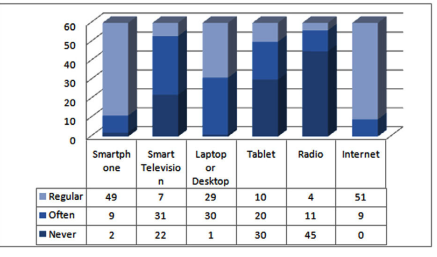
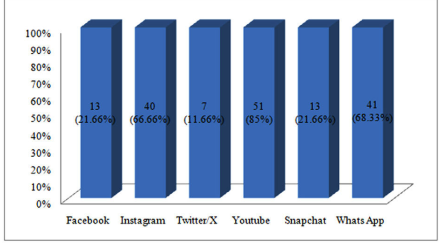
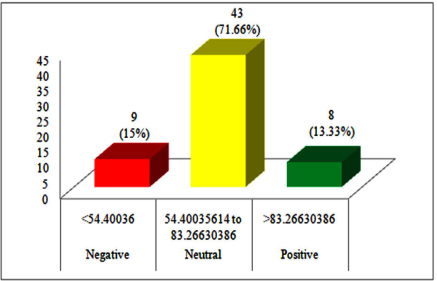
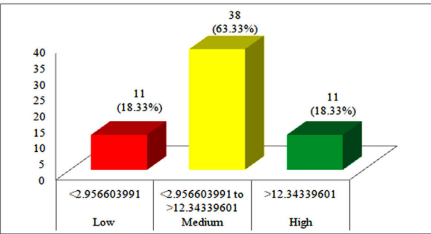
This study delves into the intricate landscape of perception of students of a state agricultural university towards viral social media content, offering insights into gender, mass media ownership, extent of use, sources of viral social media content, perception of students regarding viral social media content, as well as benefits and constraints. The respondents consisted of 60 post graduate students of a state agricultural university, with a slight majority of female students (56. 67%) and 43. 33 percent male students. The prevalence of smartphone ownership (95. 00%) and digital device usage (65. 00% for laptops/desktops) underscores their reliance on technology. Internet usage was widespread, with 85. 00% of students accessing it regularly. Our investigation revealed that YouTube serves as the primary source for viral social media content (85. 00%), followed by WhatsApp (68. 33%) and Instagram (66. 66%). Students exhibited diverse perceptions, with 71. 66% holding a neutral view, while 15. 00% leaned towards a negative perception, and 13. 33% maintained a positive outlook. Noteworthy benefits of viral content included its role in raising awareness (85. 00%) and fostering creativity (70. 00%). However, constraints were evident, notably the spread of false information (86. 66%) and concerns regarding addiction (65. 00%). These findings emphasize the paramount importance of promoting critical media literacy and responsible content sharing among students. In an era characterized by digital media dominance, this research enriches our understanding of how students navigate and engage with mass media and viral content, spotlighting both the opportunities and challenges they encounter.
References
- 1. Brown, R. 2020. Understanding the Role of Emotions in the Perception of Viral Social Media Content. Journal of Online Behavior, 24(1): 78-93.
- 2. Chen, M. 2017. The Power of Influencers: Impact on Viral Content Perception. Journal of Social Media Research, 5(2): 112-127.
- 3. Garcia, L. 2020. The Psychology of Viral Content: Exploring Emotional Responses. Social Media Studies, 12(3): 45-58.
- 4. Harris, P. (2016). Viral Politics: Shaping Political Perceptions Among Students. Political Communication Research, 14(3): 309-324.
- 5. Johnson, A. 2019. Credibility and Virality: Exploring the Impact of Source Evaluation on Perceptions of Viral Content. Journal of Digital Media Studies, 15(2): 45-60.
- 6. Kim, J. 2018. Cross-Cultural Variations in Viral Content Perception. International Journal of Communication, 22(2): 211-227.
- 7. Lee, S. 2019. Echo Chambers and Viral Content Perception Among Students. Digital Communication Journal, 8(4): 221-235.
- 8. Martinez, R. 2017. Algorithmic Curation and Viral Content Exposure. Journal of Digital Communication, 10(4): 145-160.
- 9. Nguyen, H. (2020). Timing Matters: Examining Temporal Aspects of Viral Content Perception. Journal of New Media Studies, 7(1): 34-49.
- 10. Patel, S. 2019. The Impact of Emotional Appeals on the Perception of Viral Social Media Content. Journal of Media Psychology, 28(3): 123-139.
- 11. Smith, L. 2018. Emotional Appeal in Viral Social Media Content: An Analysis of Its Influence on Perceptions and Behaviors. Social Media Research Quarterly, 7(3): 231-247.
- 12. Wang, E. 2018. Ethics in Viral Content: Students' Perspectives. Media and Ethics Quarterly, 26(1): 78-91.
Data Sharing Statement
There are no additional data available.
Funding
This research received no funding.
Author Contributions
All authors contributed significantly to the work and approve its publication.
Ethics Declaration
This article does not involve any human or animal subjects, and therefore does not require ethics approval.
Acknowledgements
Information not provide.
Conflicts of Interest
The authors report no conflicts of interest in this work.
About this article

Cite this article
Kandpal AS, Beri G, Arya A, et al. Perception of Students towards Viral Social Media Content. Indian J Agri Busi. 2024;10(1):7-14.
Licence:
Attribution-Non-commercial 4.0 International (CC BY-NC 4.0)This license enables reusers to distribute, remix, adapt, and build upon the material in any medium or format for noncommercial purposes only, and only so long as attribution is given to the creator.
| Received | Accepted | Published |
|---|---|---|
| November 06, 2023 | December 30, 2023 | June 30, 2024 |
DOI: https://doi.org/10. 21088/ijab.2454.7964.10124.1
Keywords
AwarenessStudentsSocial mediaSearch for Similar Articles
Similar Articles
- Studies on Bee and Pollination is Changing Environment: A Review
- Importance of Need Assessment for Development of Prog. for Rural Community
- Assessment of Sperm Damage with use of Unconventional Practices for Freeze Thawi...
- Diseases of Pulse Crops and their Management in India
- Expression of Natural Behaviour in Domestic Goats (Capra hircus): Implications f...
Article Level Metrics
Last UpdatedThursday 10 September 2026, 21:37:37 (IST)
2959
Accesses
23
418
00
Citations
NA
NA
NA
Download citation
Article Keywords
Keyword Highlighting
Highlight selected keywords in the article text.
Timeline
| Received | November 06, 2023 |
| Accepted | December 30, 2023 |
| Published | June 30, 2024 |
licence
Attribution-Non-commercial 4.0 International (CC BY-NC 4.0)
This license enables reusers to distribute, remix, adapt, and build upon the material in any medium or format for noncommercial purposes only, and only so long as attribution is given to the creator.