Full Text (PDF)
Community and Public Health Nursing 4(2):p 113-116, May-August 2019. | DOI: https://doi.org/10.21088/cphn.2455.8621.4219.10
Original Article
Perceived TB Stigma among General Population : A Cross Sectional Study
Nutan Kumari null, J. Violet Jayamani1 null, Nutan Kumari2 null
Author Information
Licence:
Community and Public Health Nursing 4(2):p 113-116, May-August 2019. | DOI: https://doi.org/10.21088/cphn.2455.8621.4219.10
How Cite This Article:
J. Violet Jayamani, Nutan Kumari. Perceived TB Stigma among General Population : A Cross Sectional Study. Community and Public Health Nursing. 2019; 4(2): 113-116.
Timeline
Received : May 05, 2019
Accepted : June 12, 2019
Published : July 03, 2019
Abstract
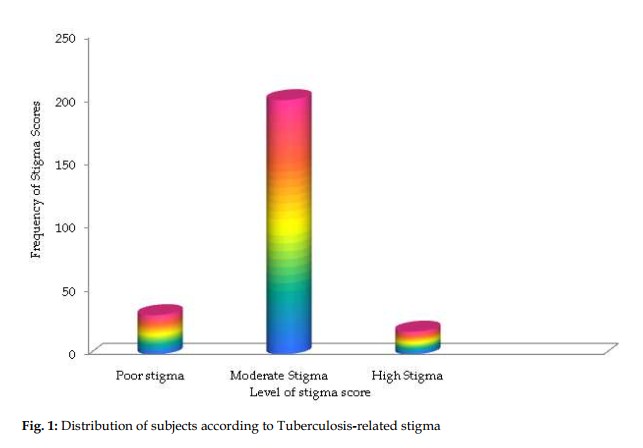
Introduction: Stigma and discrimination are recognised as the most commonly identified barriers to fight the TB epidemic. Reducing TB stigma is essential because it hinders care seeking, contact tracing, outbreak investigations, treatment initiation, adherence and quality of care. Objective: The objective of the study was to determine the stigma associated with tuberculosis and find out the association of TB stigma with selected demographical variables. Methodology: Descriptive design was used in the study and data collection was done in the urban and in the rural areas of Bangalore. The total sample size was 250 based on the review of literature. Convenient sampling was done to select the subjects. Data collection was done after getting the informed consent. Modified Tuberculosis-Related stigma scale was used. Data analysis was done by descriptive and inferential statistics. Result: Majority of the subjects 201 (80.4%) had moderate stigma, 31 (12.4%) had poor stigma and 18 (7.2%) had high stigma related to tuberculosis. In this more subjects had high stigma (58.4%) for the item “I am afraid of people who have TB” and lowest stigma for the item (8.8%) “People get TB because of multiple sex partners.” The study findings also shows statistically significant association regarding tuberculosis stigma with gender (1.44), residence (3.41), family member having Tuberculosis (3.647) and friends or neighbours having Tuberculosis (2.41 ) at 0.05 level of significance. Discussion: In the present study, majority of population had moderate stigma (201) 80.4% similar to a study where 21 (34.43%) of the 61 DOTS patients were found to be stigmatised and 40 (65.57%) were not stigmatised. 10 (47.62%) females and 11 (27.5%) males were found to be stigmatised. 43 (70.49%) patients preferred to keep other people from knowing that they were suffering from tuberculosis. 27 (44.26%) patients decided to stay away from work/social groups and 26 (42.62%) felt that others gave them less respect. Conclusion: TB stigma is high and will likely affect care seeking behaviour; TB awareness campaigns should be a priority and emphasise the treatability and curability of TB.
References
No records found.
Data Sharing Statement
There are no additional data available. All raw data and code are available upon request.
Funding
This research received no funding.
Author Contributions
All authors contributed significantly to the work and approve its publication.
Ethics Declaration
Provide information related to the Ethics Committee approval with approval number OR write This article does not involve any human or animal subjects, and therefore does not require ethics approval.
Acknowledgements
We would like to express our gratitude to the patients, their families, and all those who have contributed to this study.
Conflicts of Interest
The authors report no conflicts of interest in this work.
About this article

Cite this article
J. Violet Jayamani, Nutan Kumari. Perceived TB Stigma among General Population : A Cross Sectional Study. Community and Public Health Nursing. 2019; 4(2): 113-116.
Licence:
| Received | Accepted | Published |
|---|---|---|
| May 05, 2019 | June 12, 2019 | July 03, 2019 |
DOI: https://doi.org/10.21088/cphn.2455.8621.4219.10
Keywords
Stigma; Tuberculosis.Search for Similar Articles
Similar Articles
- A Study to assess the Impact of Structured Teaching Programme on Knowledge of Pl...
- Effectiveness of Nurse Led Intervention on Knowledge and Practice of Food Borne...
- Effectiveness of a Structured Teaching Programme on Knowledge, Attitude, and Pra...
- A Study to assess the Effectiveness of Video Assisted Teaching on Knowledge Rega...
- Effectiveness of Planned Teaching Programme on Knowledge and Skill Regarding BLS...
Article Level Metrics
Last UpdatedTuesday 29 September 2026, 12:53:21 (IST)
7591
Accesses
7
1522
00
Citations
NA
NA
NA
Download citation
Article Keywords
Keyword Highlighting
Highlight selected keywords in the article text.
Timeline
| Received | May 05, 2019 |
| Accepted | June 12, 2019 |
| Published | July 03, 2019 |