Full Text (PDF)
Community and Public Health Nursing 11(2):p 95-99, May-August 2026. | DOI: https://doi.org/10.21088/cphn.2455.8621.11226.7
Original Article
A Study to assess the Impact of Structured Teaching Programme on Knowledge of Plotting of Partograph among Nursing Student, Rajkot
Author Information
Licence:
Attribution-Non-commercial 4.0 International (CC BY-NC 4.0)This license enables reusers to distribute, remix, adapt, and build upon the material in any medium or format for noncommercial purposes only, and only so long as attribution is given to the creator.
Community and Public Health Nursing 11(2):p 95-99, May-August 2026. | DOI: https://doi.org/10.21088/cphn.2455.8621.11226.7
How Cite This Article:
Usha Devi. S, Mira Vala. A Study to assess the Impact of Structured Teaching Programme on Knowledge of plotting of Partograph among Nursing student, Rajkot. Community Pub Health Nurs. 2026; 11(2): 95-99.Timeline
Received : May 11, 2026
Accepted : June 15, 2026
Published : August 30, 2026
Abstract
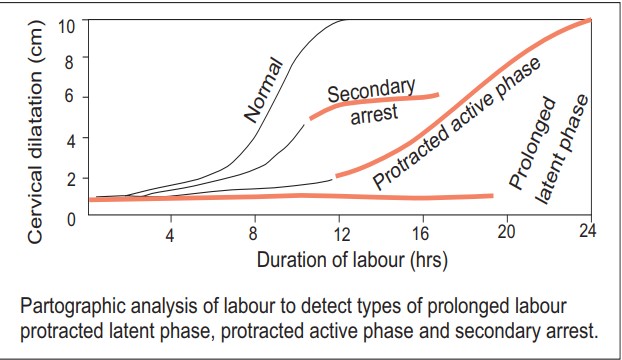
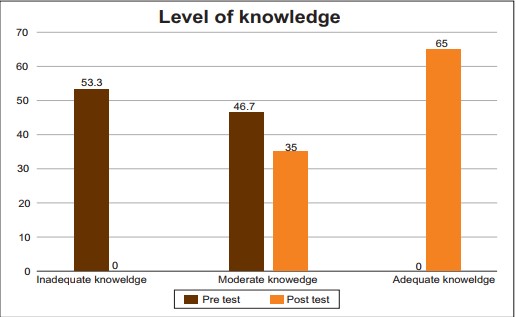
Labour has been described as the most perilous journey a person ever embarks on. The reason is that, despite being a natural process, complications may occur at any point along the way. A partograph is a preprinted one-page form utilized to track labour and avert extended and obstructed labour, on which observations of labour are documented. The aim of the partograph is to assist healthcare professionals in documenting, understanding, analysing, and utilizing information to inform clinical management choices during ongoing labour. The form offers a visual representation of labour progression and logs details regarding the health of both the mother and foetus during labour. The partograph indicates variations from the typical labour progress and highlights any issues with maternal or fetal health during this time. It notifies providers when a woman might require an intervention and supports continuous assessment of the outcomes of those interventions. A significant advancement in labour management was the implementation of the partograph. A partograph illustrates the variations that take place during labour, such as cervical dilation, fetal heart rate, maternal pulse, blood pressure, and temperature. It additionally presents a numerical documentation of characteristics like urine production and the amount and kind of intravenous infusions (including oxytocin drips). Thus, one can easily spot irregularities in any of these variables. Midwives’ staff can utilize the partograph to evaluate the progression of labour and determine when intervention is required. Research indicates that employing the partograph can be very beneficial in minimizing complications arising from prolonged labour for mothers, including postpartum hemorrhage, sepsis, uterine rupture, and its consequences, as well as for new-borns, such as death, anoxia, and infections. It plays a crucial role in aiding the proper decision-making regarding transfer, caesarean delivery, or other critical interventions. The partograph is a crucial tool for overseeing labour progress. This aids in recognizing extended labour, determining the need for assisted labour, and for surgical delivery. The current pre-experimental design involving one group with pre-test and post-test was implemented among women to assess the impact of a structured teaching program on knowledge about the plotting of partographs among nursing students. The researcher chose 60 samples using a non-probability sampling method. The results indicated that knowledge levels increased following the implementation of the structured teaching program, demonstrating its effectiveness. The researcher determined that the educational tools will aid in enhancing knowledge among women and the general public. The researcher suggested that an education program and personal behaviour change training are necessary to raise awareness about he use of partographs among nursing students.
References
- 1. WHO. Preventing prolonged Labour – A practice guide: Partograph. Programme of maternal midwife and safe motherhood programme manual; 1994. P 2-24
- 2. Azandeqbe N, Testa J, Makontoda M. Assessment of partogram utilization in benin. International journal of obstetrics and gynaecology; in 2001 Sep-Oct;129(9-10). P 239- 42 World Health Organization. Preventing prolonged labour: a practical guide.
- 3. Philpott RH; Castle WM. Cervicograph in management of labor in primigravidae. Journal of Obstetrics and Gynaecology of the British Common wealth; 1972, 79: 599602.
- 4. Gupta N. Maternal mortality, Magnitude causes and consensus. Journal obstetrics and Gynecnectodat. Year 2004.
- 5. Lavende T, Hart A, Smyth RMD. Effects of partograph use on outcomes for women in spontaneous labour at term. The Cochrane collaboration. John Wiley and sons, Ltd. Cochrance libr: Year 2009.
- 6. Kala S ,Yound Wanichsate S, Chuman S. Effect of instrumental videos on the knowledge and labour practical skills of nursing students. Songkla Med J. Year 2008.
- 7. Ghirway A Michael MD, Skilled birth attendant competence and facility readiness for managing obstetric emergencies in Eritrea. A Journal of Eritrea medical association. 2006.
- 8. Burgess Ha, (1986), “Journal Of NurseMidwifery- Use Of The Labor Graph In Malawi”, Vol.31, Pp: 46-52.
- 9. Dr. Arul Kumaran Aggarwal, (2005), “Indian Journal Of Community Medicine- Skilled Care For Maternal And Neonatal Health”, Vol 30(3), Pp: 136-139.
- 10. Itembu. L, (2002), “Midwives Knowledge In The Use Of The Partograph”, S.N Publications, Namibia, Pp: 31- 56.
- 11. https://www.who.int/reproductivehealth/ publications/monitornig/maternalmorality 2013/en/
- 12. https://www.ncbi.nlm.nih.gov/pmc/
- 13. www.obgyn.net/educational-tutorials
- 14. www.partograph.com
- 15. www.find-health-articles.com
Data Sharing Statement
There are no additional data available. All raw data and code are available upon request.
Funding
This research received no funding.
Author Contributions
All authors contributed significantly to the work and approve its publication.
Ethics Declaration
This article does not involve any human or animal subjects, and therefore does not require ethics approval.
Acknowledgements
We would like to express our gratitude to the patients, their families, and all those who have contributed to this study.
Conflicts of Interest
No conflicts of interest in this work.
About this article

Cite this article
Usha Devi. S, Mira Vala. A Study to assess the Impact of Structured Teaching Programme on Knowledge of plotting of Partograph among Nursing student, Rajkot. Community Pub Health Nurs. 2026; 11(2): 95-99.
Licence:
Attribution-Non-commercial 4.0 International (CC BY-NC 4.0)This license enables reusers to distribute, remix, adapt, and build upon the material in any medium or format for noncommercial purposes only, and only so long as attribution is given to the creator.
| Received | Accepted | Published |
|---|---|---|
| May 11, 2026 | June 15, 2026 | August 30, 2026 |
DOI: https://doi.org/10.21088/cphn.2455.8621.11226.7
Keywords
KnowledgePlotting of PartographNursing StudentSearch for Similar Articles
Similar Articles
- Assess the Effectiveness of Strutctured Teaching Program on Knowledge Regarding...
- Assess the Effectiveness of Structured Teaching Program on Knowledge Regarding S...
- Health Monitoring in Community under NRHM
- A Descriptive Study to Assess the Knowledge of Adolescents Regarding Tobacco Smo...
- The Prevalence of Zinc Deficiency in Diabetic Subjects
Article Level Metrics
Last UpdatedFriday 23 October 2026, 02:49:48 (IST)
8098
Accesses
16
1691
00
Citations
NA
NA
NA
Download citation
Article Keywords
Keyword Highlighting
Highlight selected keywords in the article text.
Timeline
| Received | May 11, 2026 |
| Accepted | June 15, 2026 |
| Published | August 30, 2026 |
licence
Attribution-Non-commercial 4.0 International (CC BY-NC 4.0)
This license enables reusers to distribute, remix, adapt, and build upon the material in any medium or format for noncommercial purposes only, and only so long as attribution is given to the creator.