Full Text (PDF)
Community and Public Health Nursing 9(3):p 107-110, September - December 2024. | DOI: https://doi.org/10.21088/cphn.2455.8621.9324.4
Original Article
The Prevalence of Zinc Deficiency in Diabetic Subjects
Author Information
Licence:
Attribution-Non-commercial 4.0 International (CC BY-NC 4.0)This license enables reusers to distribute, remix, adapt, and build upon the material in any medium or format for noncommercial purposes only, and only so long as attribution is given to the creator.
Community and Public Health Nursing 9(3):p 107-110, September - December 2024. | DOI: https://doi.org/10.21088/cphn.2455.8621.9324.4
How Cite This Article:
Silky, Gita Bisla, The Prevalence of Zinc Deficiency in Diabetic Subjects. Community Pub Health Nurs. 2024;9(3):107-110Timeline
Received : September 10, 2024
Accepted : October 05, 2024
Published : December 30, 2024
Abstract
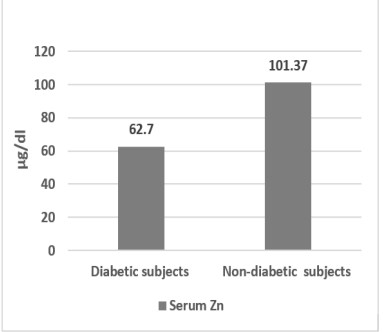
Zinc (Zn) is an essential trace element for many physiological, immunological, and metabolic functions in the human body. Both developed and developing nations’ populations are impacted by zinc deficiencies. Insulin is significantly influenced by zinc. Diabetes mellitus (DM) is a term used to describe impaired glucose metabolism, which can cause a variety of illnesses and is characterized by a weakened immune system in the affected individual. Objective: The aim of this study was to assess serum zinc level in diabetic subjects in comparison of non-diabetic subjects. Methodology: In the study normal (n 30) and type-2 diabetic (n 30) volunteer subjects of both genders (age 35-50 years) enrolled for the study. All normal and diabetic subjects were screened serum Zn level, to find out serum zinclevel among diabetic and non-diabetic subjects. Result: The results revealed that the mean of serum zinc level in normal subjects was 101.37±25.76 μg/dl and diabetic subjects it was 62.70±11.74 μg/dl. Conclusion: It was found that serum zinc levels were low in diabetic subjects.
References
- 1. Al-Maroof, R. A., & Al-Sharbatti, S. S. (2006). Serum zinc levels in diabetic patients and effect of zinc supplementation on glycemic control of type 2 diabetics. Saudi medical journal, 27(3), 344.
- 2. Andrews, C. (2005). Zinc, Diabetes Mellitus and Oxidative Disease. A Nutritional, 22.
- 3. da Silva Bandeira, V., Pires, L. V., Hashimoto, L. L., de Alencar, L. L., Almondes, K. G.S., Lottenberg, S. A., & Cozzolino, S. M. F. (2017). Association of reduced zinc status with poor glycemic control in individuals with type 2 diabetes mellitus. Journal of Trace Elements in Medicine and Biology, 44, 132-136.
- 4. Daradkeh, G., Zerie, M., Othman, M., Chandra, P., Jaiosi, A., Mahmood, L., & Daghash, M. (2014). Zinc status among type (2) diabetes mellitus in the State of Qatar. Public Health Front, 3(1), 4-10. doi: 10.5963/PHF0301002
- 5. Farooq, M. (2019). Zinc deficiency is associated with poor glycemic control. J Coll Physicians Surg Pak, 29, 253-7.
- 6. Hotz. C., Peerson. J.M., Brown. K.H. (2003). Suggested lower cutoffs of serum zinc concentrations for assessing zinc status: reanalysis of the second national health and nutritional examination survey data (1976-1980). Am J Clin Nutr, 78:756-64
- 7. Hwalla, N., Al Dhaheri, A. S., Radwan, H., Alfawaz, H. A., Fouda, M. A., Al-Daghri, N. M., ... & Blumberg, J. B. (2017). The prevalence of micronutrient deficiencies and inadequacies in the Middle East and approaches to interventions. Nutrients, 9(3), 229.
- 8. Johansen, J. S., Harris, A. K., Rychly, D. J., & Ergul, A. (2005). Oxidative stress and the use of antioxidants in diabetes: linking basic science to clinical practice. Cardiovascular diabetology, 4, 1-11. doi:10.1186/1475-2840-4-5
- 9. Mamza, Y. P., Abdullahi, Z. B., Gali, R. M., Mshelia, D. S., Genesis, R. Y., & Habu, S. A. (2016). Status of serum zinc and magnesium among type 2 diabetic subjects in Maiduguri. J Dent Med Sci, 15, 66-70.
- 10. Marchesini, G., Bugianesi, E., Ronchi, M., Flamia, R., Thomaseth, K., & Pacini, G. (1998). Zinc supplementation improves glucose disposal in patients with cirrhosis. Metabolism, 47(7), 792-798.
- 11. Masood, N., Baloch, G. H., Ghori, R. A., Memon, I. A., Memon, M. A., & Memon, M. S. (2009). Serum zinc and magnesium in type-2 diabetic patients. J Coll Physicians Surg Pak, 19(8), 483-486.
- 12. Phungamla Vashum, K., McEvoy, M., Shi, Z., Milton, A., Islam, M., Sibbritt, D., & Attia, J. (2013). Is dietary zinc protective for type 2 diabetes? Results from the Australian longitudinal study on women's health.
- 13. Saharia, G. K., & Goswami, R. K. (2013). Evaluation of serum zinc status and glycated hemoglobin of type 2 diabetes mellitus patients in a tertiary care hospital of assam. Journal of laboratory physicians, 5(01), 30-33.
- 14. Saha-Roy, S., Pal, S., Bera, S., Choudhury, K. M., Bhattacharya, A., Sen, G., & Gupta, S. (2014). Status of serum magnesium, zinc & copper in patients suffering from type-2 diabetes mellitus. Journal of Drug Delivery and Therapeutics, 4(1), 70-72.
- 15. Silky., Bisla. G & Gupta. S. (2024). Zinc: Importance of zinc in human nutrition and health in plant based diet. International Journal of Applied Home Science. 11 (3-4): 125-128. doi: 10.36537/ IJAHS/11.3&4/125-128
- 16. Wessels, I., Fischer, H. J., & Rink, L. (2012). Dietary and physiological effects of zinc on the immune system. Annual review of nutrition, 41(1), 133-175.
- 17. Zargar, A. H., Shah, N. A., Masoodi, S. R., Laway, B. A., Dar, F. A., Khan, A. R., ... & Wani, A. I. (1998). Copper, zinc, and magnesium levels in non-insulin dependent diabetes mellitus. Postgraduate medical journal, 74(877), 665-668.
- 18. Zhu, K., Nie, S., Li, C., Huang, J., Hu, X., Li, W., & Xie, M. (2013). Antidiabetic and pancreas-protective effects of zinc threoninate chelate in diabetic rats may be associated with its antioxidative stress ability. Biological trace element research, 153, 291- 298
Data Sharing Statement
There are no additional data available. All raw data and code are available upon request.
Funding
This research received no funding.
Author Contributions
All authors contributed significantly to the work and approve its publication.
Ethics Declaration
This article does not involve any human or animal subjects, and therefore does not require ethics approval.
Acknowledgements
We would like to express our gratitude to the patients, their families, and all those who have contributed to this study.
Conflicts of Interest
No conflicts of interest in this work.
About this article

Cite this article
Silky, Gita Bisla, The Prevalence of Zinc Deficiency in Diabetic Subjects. Community Pub Health Nurs. 2024;9(3):107-110
Licence:
Attribution-Non-commercial 4.0 International (CC BY-NC 4.0)This license enables reusers to distribute, remix, adapt, and build upon the material in any medium or format for noncommercial purposes only, and only so long as attribution is given to the creator.
| Received | Accepted | Published |
|---|---|---|
| September 10, 2024 | October 05, 2024 | December 30, 2024 |
DOI: https://doi.org/10.21088/cphn.2455.8621.9324.4
Keywords
ZincInsulinDiabetesMetabolismNon-diabeticSearch for Similar Articles
Similar Articles
- Assess the Effectiveness of Strutctured Teaching Program on Knowledge Regarding...
- Assess the Effectiveness of Structured Teaching Program on Knowledge Regarding S...
- Health Monitoring in Community under NRHM
- A Descriptive Study to Assess the Knowledge of Adolescents Regarding Tobacco Smo...
- Exploring Immunization Coverage and Determinants among Bhunjia Tribal Children i...
Article Level Metrics
Last UpdatedFriday 16 October 2026, 05:39:49 (IST)
7872
Accesses
4
1651
00
Citations
NA
NA
NA
Download citation
Article Keywords
Keyword Highlighting
Highlight selected keywords in the article text.
Timeline
| Received | September 10, 2024 |
| Accepted | October 05, 2024 |
| Published | December 30, 2024 |
licence
Attribution-Non-commercial 4.0 International (CC BY-NC 4.0)
This license enables reusers to distribute, remix, adapt, and build upon the material in any medium or format for noncommercial purposes only, and only so long as attribution is given to the creator.