Full Text (PDF)
Indian Journal of Agriculture Business 11(1):p 7-17, Jan-June 2025. | DOI: https://doi.org/10. 21088/ijab.2454.7964.11125.1
Original Article
Online Shopping Preferences: A Consumer Behaviour Study
Arpita Sharma Kandpal, Disha Agarwal
Author Information
Licence:
Attribution-Non-commercial 4.0 International (CC BY-NC 4.0)This license enables reusers to distribute, remix, adapt, and build upon the material in any medium or format for noncommercial purposes only, and only so long as attribution is given to the creator.
Indian Journal of Agriculture Business 11(1):p 7-17, Jan-June 2025. | DOI: https://doi.org/10. 21088/ijab.2454.7964.11125.1
How Cite This Article:
Disha Agarwal, Arpita Sharma Kandpal. Online Shopping Preferences: A Consumer Behaviour Study. J Agri Busi 2025; 11(1): 07–17.Timeline
Received : January 23, 2025
Accepted : April 04, 2025
Published : June 25, 2025
Abstract
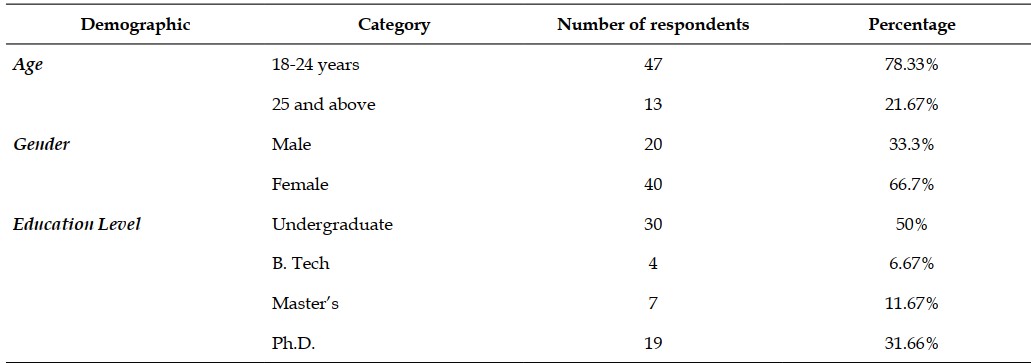
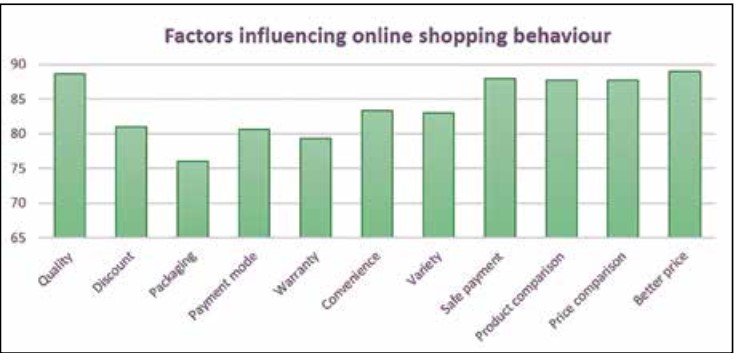
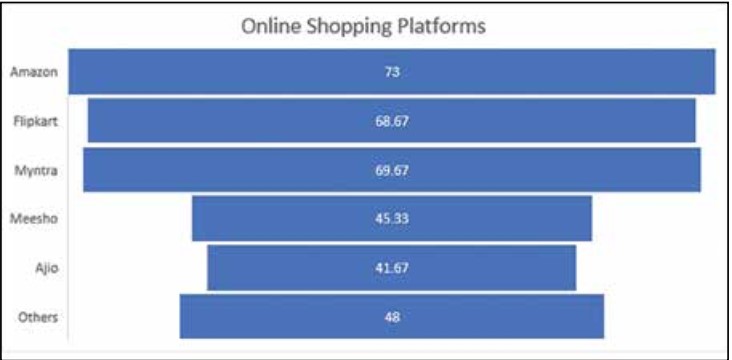
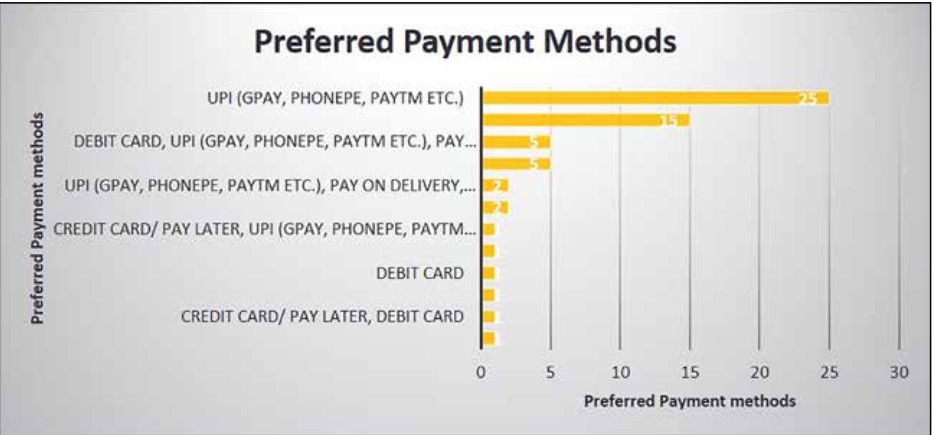
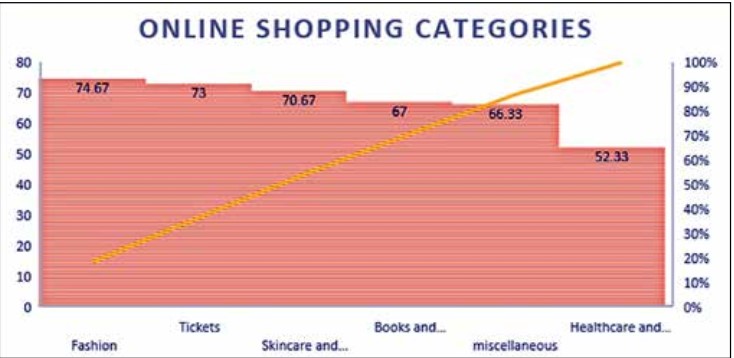
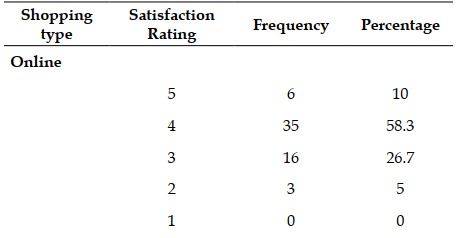
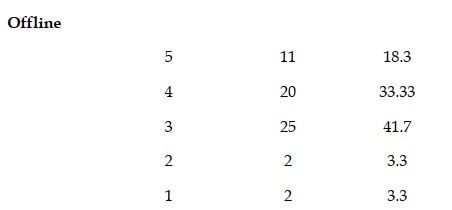
This study investigates the online shopping preferences of students at G.B. Pant University of Agriculture and Technology, Pantnagar, India, using a quantitative cross-sectional survey approach. Data were collected from 60 students via a structured questionnaire distributed through Google Forms. The research aimed to explore various aspects of consumer behaviour towards online shopping among university students. The demographic breakdown showed that 78.33% were aged 18-24 years, and 21.67% were 25 years or older. Gender distribution revealed that 33.3% of the respondents were male and 66.7% were female. Educational levels among the respondents included 50% undergraduate students, 6.67% B.Tech students, 11.67% Master’s students, and 31.67% Ph.D. students. The survey assessed multiple factors influencing online shopping behaviour using a 5-point Likert scale. The highest-rated factor was obtaining a better price, with an average rating of 89% of the maximum score. Product quality followed closely with an average rating of 88.67%, and the security of payment methods was also crucial, rated at 88%. Other significant factors included product comparison and price comparison (87.67% each), convenience (83.33%), variety (83%), payment mode (80.67%), warranty considerations (79.33%), discounts (81%), and packaging (76%). In terms of platform preferences, Amazon emerged as the most preferred shopping platform with a score of 73, followed by Myntra (69.67) and Flipkart (68.67). Other platforms like Meesho and Ajio were less favoured, with scores of 45.33 and 41.67, respectively. The survey also explored preferred payment methods among respondents. UPI (such as GPay, PhonePe, Paytm, etc.) was the most popular, followed by combinations of UPI, debit cards, and pay-on-delivery options. Credit card/pay later options combined with UPI and debit cards showed lesser preference, while the least favoured methods were using debit cards alone or combining credit cards/pay later with debit cards. Regarding product categories, fashion items were the most commonly purchased (74.67%), followed by tickets (73%), skincare and haircare products (70.67%), books and stationery (67%), and miscellaneous items (66.33%). Healthcare and fitness products were less frequently purchased (52.33%). The study also evaluated satisfaction levels with online versus offline shopping. It found that 68.3% of respondents reported high satisfaction (ratings of 4 or 5) with online shopping, compared to 51.63% for offline shopping. Moderate satisfaction (rating of 3) was higher for offline shopping (41.7%) than for online shopping (26.7%). Low satisfaction (ratings of 2 or 1) was slightly higher for offline shopping (6.6%) compared to online shopping (5%). These results indicate that respondents generally derive more satisfaction from online shopping services. Overall, the study emphasize the significance of perceived value, brand reputation, and secure payment methods in enhancing the online shopping experience for young consumers. This will be useful for businesses aiming to thrive in the competitive online retail landscape by understanding the factors that influence consumer behaviour and satisfaction.
References
- 1. Akbar, S., & James, T.P. (2014). Consumer attitude towards online shopping: Factors influencing employees of Crazy Domains to shop online. Journal of Management and Marketing Research, 4, 1-11.
- 2. Balakrishna, K., Rao, S.S., & Manoj, S. (2016). Consumer attitude towards online shopping with reference to Kakinada City. International Journal of Scientific Development and Research, 1(9), 1-5. ISSN: 2455-2631.
- 3. Basu, S., & Anwar, M.R. (n.d.). A study on consumer behaviour towards online shopping in India – A review of literature. Retrieved from https://www.academia.edu/39860644/A_ Study_on_Consumer_Behaviour_towards_ online_shopping_in_India_A_Review_of_ Literature?auto=download
- 4. Bhagyasree, J.D. (2021). A study on the impact of online shopping on consumer’s buying behavior. Turkish Journal of Computer and Mathematics Education (Turcomat), 12(12), 2843- 2851.
- 5. Bhatt, A. (2014). Consumers attitude towards online shopping in selected region of Gujarat Journal of Marketing & Management, ISSN- 2333-6080, 2(2).
- 6. Dani, N.J. (2017). A study on consumers’ attitude towards online shopping. International Journal of Research in Management & Business Studies, 4(3), 42-46.
- 7. Hooda, S., & Aggarwal, S. (2012). Consumer behaviour towards e-marketing: A study of Jaipur consumers. Researchers World, 3(2), 107-118.
- 8. Jain, D., Goswami, S., & Bhutani, S. (2014). Consumer behavior towards online shopping: an empirical study from Delhi. IOSR Journal of Business and Management, 16(9), 65-72.
- 9. Kaur, H., & Kochar, R. (2018). A review of factors affecting consumer behavior towards online shopping. International Journal of Engineering and Management Research (IJEMR), 8(4), 54-58.
- 10. Kavitha, T. (2017). Consumer buying behavior of online shopping-a study. International Journal of Research in Management & business studies, 4(3), 38-41.
- 11. Lakshmi, S.G. (2021). A Study On Consumer Behaviour Towards Online Shopping-With Special Reference To Kanchipuram. NveoNatural Volatiles & Essential Oils Journal| NVEO, 1412-1418.
- 12. Mahmud, K., Imtiaz, M., & Ahmed, W.U. (2019). General consumer satisfaction towards online shopping in Bangladesh. Asia Journal of Contemporary Business, Economics and Law, 18(2), 11-21.
- 13. Nagendrababu, K., Girisha, M.C., & Vedamurthy, M.B. (2020). Consumer buying behaviour towards online shopping. In Proceedings of the Conference on Sustainable Development: Role of Business Education and Research. Mysore, India.
- 14. Ranganathan, V., et al. (2015). Consumer perception towards online study: An analytical study. EPRA International Journal of Economic and Business Review, 3(12), 205-208.
- 15. Rao, M.B., & Rao, M.M. (2018). Factors affecting female consumers’ online buying behaviour. Academy of Marketing Studies Journal, 22(2), 1-20.
- 16. Santhosh, V., & Basavarajappa, B. (2022). A Study on Consumer Behaviour Towards Online Shopping. IJRAR-International Journal of Research and Analytical Reviews (IJRAR), 9(1), 864-874.
- 17. Sen, T., Khatun, M., Khan, M.A., & Rahman, M. A. (2024). Customer attitude, buying behaviour and satisfaction towards online shopping: An empirical study in some selected areas of Bangladesh. Archives of Agriculture and Environmental Science, 9(1), 76-84, https:// dx.doi.org/10.26832/24566632.2024.0901012
- 18. Sharma, C. (2015). Consumer buying behaviour towards online shopping: A review of literature. Indian journal of appliedresearch, 5(4), 854-856.
- 19. Shen, K.N., Cai, Y., & Guo, Z. (2016). When Do Online Consumers Shop in an Offline Store: The Moderating Effects of Product Characteristics. Journal of Marketing Channels, 23(3), 129– 145. https://doi.org/10.1080/1046669X.2016. 1186472
- 20. Singhal, P., & Patra, S. (2018). A study on consumer behaviour towards online shopping in Kolkata. IOSR Journal of Business and Management, 91-102.
- 21. Vidya, M., & Selvamani, P. (2019). Consumer behaviour towards online shopping–an analysis with product dimensions. International Journal of Innovative Technology and Exploring Engineering, 8(12S), 511-514.
- 22. Vora, C.N. (2018). A Study on Consumer Buying Behaviour Towards Offline Shopping Vis Online Shopping.University,12(1),420–425. http:// hdl.handle.net/10603/236695%0Ahttp:// shodhganga.inflibnet.ac.in:8080/jspui/handl e/10603/236695
Data Sharing Statement
There are no additional data available. All raw data and code are available upon request.
Funding
This research received no funding.
Author Contributions
All authors contributed significantly to the work and approve its publication.
Ethics Declaration
This article does not involve any human or animal subjects, and therefore does not require ethics approval.
Acknowledgements
We would like to express our gratitude to the patients, their families, and all those who have contributed to this study.
Conflicts of Interest
No conflicts of interest in this work.
About this article

Cite this article
Disha Agarwal, Arpita Sharma Kandpal. Online Shopping Preferences: A Consumer Behaviour Study. J Agri Busi 2025; 11(1): 07–17.
Licence:
Attribution-Non-commercial 4.0 International (CC BY-NC 4.0)This license enables reusers to distribute, remix, adapt, and build upon the material in any medium or format for noncommercial purposes only, and only so long as attribution is given to the creator.
| Received | Accepted | Published |
|---|---|---|
| January 23, 2025 | April 04, 2025 | June 25, 2025 |
DOI: https://doi.org/10. 21088/ijab.2454.7964.11125.1
Keywords
ConsumerE-commercePerceptionSatisfactionSearch for Similar Articles
Similar Articles
- Studies on Bee and Pollination is Changing Environment: A Review
- Importance of Need Assessment for Development of Prog. for Rural Community
- Assessment of Sperm Damage with use of Unconventional Practices for Freeze Thawi...
- Diseases of Pulse Crops and their Management in India
- Expression of Natural Behaviour in Domestic Goats (Capra hircus): Implications f...
Article Level Metrics
Last UpdatedFriday 16 October 2026, 04:38:04 (IST)
3274
Accesses
5
433
00
Citations
NA
NA
NA
Download citation
Article Keywords
Keyword Highlighting
Highlight selected keywords in the article text.
Timeline
| Received | January 23, 2025 |
| Accepted | April 04, 2025 |
| Published | June 25, 2025 |
licence
Attribution-Non-commercial 4.0 International (CC BY-NC 4.0)
This license enables reusers to distribute, remix, adapt, and build upon the material in any medium or format for noncommercial purposes only, and only so long as attribution is given to the creator.