Full Text (PDF)
Journal of Microbiology and Related Research 10(1):p 29-37, January – June 2024. | DOI: https://doi.org/10.21088/jmrr.2395.6623.10124.4
Review Article
On Earth Harmony: Algae Crafting Environment Revival
Kinjal Upadhyay, Devanshi Trivedi, Vivek Pandya
Author Information
Licence:
Attribution-Non-commercial 4.0 International (CC BY-NC 4.0)This license enables reusers to distribute, remix, adapt, and build upon the material in any medium or format for noncommercial purposes only, and only so long as attribution is given to the creator.
Journal of Microbiology and Related Research 10(1):p 29-37, January – June 2024. | DOI: https://doi.org/10.21088/jmrr.2395.6623.10124.4
How Cite This Article:
Devanshi Trivedi, Vivek Pandya, Kinjal Upadhyay. On Earth Harmony: Algae Crafting Environment Revival. J Microbiol Relat Res. 2024;10(1):29–37.Timeline
Received : April 21, 2024
Accepted : June 09, 2024
Published : June 25, 2024
Abstract
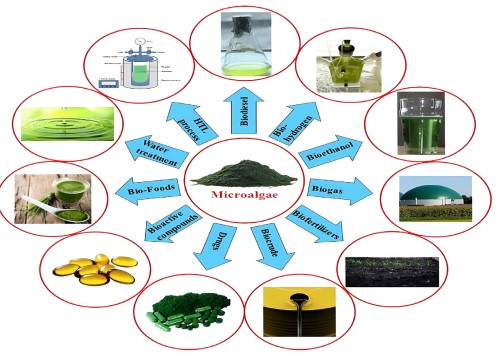
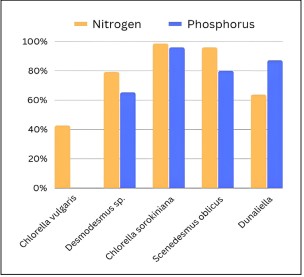
In the intricate dance of nature, algae emerge not just as the silent architects of vibrant underwater realms, but as the unsung heroes with the power to breathe life into the natural world. In this comprehensive analysis we go through how algae jack into— carbon’s void by sequestering carbon of CO2 using photosynthesis and mitigates greenhouse emissions, purifies tainted waters by using wastes from wastewater like nutrients, sparks a green revolution as it produces biofuels and being used as food for nutrient enrichment as well as monitors environment as biosensors, thus concluding into algae’s ability to transcending conventional boundaries of environmental stewardship. The more emphasis will be on illuminating on major benefits like biofuels, carbon sequestration and wastewater treatment which might be sweet in the citrus.
References
- 1. Abdelfattah, A., Ali, S. S., Ramadan, H., ElAswar, E. I., Eltawab, R., Ho, S., Elsamahy, T., Li, S., El-Sheekh, M. M., Schagerl, M., Kornaros, M., & Sun, J. (2023). Microalgaebased wastewater treatment: Mechanisms, challenges, recent advances and future prospects. Environmental Science and Ecotechnology, 13, 100205. https://doi. org/10.1016/j.ese.2022.100205
- 2. Ahmad, S. F., Mofijur, M., Parisa, T. A., Islam, N., Kusumo, F., Inayat, A., et al. (2022). Progress and challenges of contaminate removal from wastewater using microalgae biomass. Chemosphere 286, 131656. doi:10.1016/j. chemosphere.2021.131656
- 3. Anand, U., Dey, S., Parial, D., Federici, S., Ducoli, S., Bolan, N., Dey, A., & Bontempi, E. (2023). Algae and bacteria consortia for wastewater decontamination and transformation into biodiesel, bioethanol, biohydrogen, biofertilizers and animal feed: a review. Environmental Chemistry Letters, 21(3), 1585–1609 https://doi.org/10.1007/ s10311-023-01562-w
- 4. Batista, A. P., Ambrosano, L., Graça, S., Sousa, C., Marques, P. A., Ribeiro, B., et al. (2015). Combining urban wastewater treatment with biohydrogen production-an integrated microalgae-based approach. Bioresour. Technol. 184, 230–235. doi:10.1016/j. biortech.2014.10.064
- 5. Bilal, M., Rasheed, T., Sosa-Hernández, J. E., Raza, A., Nabeel, F., & Iqbal, H. M. (2018). Biosorption: An Interplay between Marine Algae and Potentially Toxic Elements — A Review. Marine Drugs, 16(2), 65. doi: 10.3390/ md16020065. PMID: 29463058; PMCID: PMC5852493.
- 6. Bolan NS, Saggar S, Luo JF, Bhandral R, Singh J (2004) Gaseous emissions of nitrogen from grazed pastures. In: DL Sparks (Ed.) Processes, measurements and modelling, environmental implications and mitigation, Advances in Agronomy, Vol. 84. Else- vier academic pressinc. https://doi.org/10.1016/S0065- 2113(04) 840021
- 7. Brilman, W., Alba, L. G. and Veneman, R. (2013). Capturing atmospheric CO2 using supported amine sorbents for microalgae cultivation. Biomass Bioenergy 53, 39–47. doi:10.1016/j.biombioe.2013.02.042
- 8. C. Song, Y. Wei, Y. Qiu, Y. Qi, Y. Li, Y. Kitamura, Biodegradability and mechanism of florfenicol via Chlorella sp. UTEX1602 and L38: experimental study, Bioresour. Technol. 272 (2019) 529e534. doi:10.1016/j. biortech.2018.10.080
- 9. Chinnasamy, S., Bhatnagar, A., Hunt, R. W. and Das, K. C. (2010). Microalgae cultivation in a wastewater dominated by carpet mill effluents for biofuel applications. Bioresour. Technol. 101 (9), 3097–3105.doi:10.1016/j. biortech.2009.12.026
- 10. Chisti, Y. (2007). Biodiesel from microalgae. Biotechnol. Adv. 25, 294–306. doi:10. 1016/j. biotechadv.2007.02.001
- 11. Choudhary, P., Prajapati, S. K. and Malik, A. (2016). Screening native microalgal consortia for biomass production and nutrient removal from rural wastewater for bioenergy applications. Ecol. Eng. 91, 221–230. doi:10.1016/j.ecoleng.2015.11.056
- 12. Danquah, M., Liu, B. and Harun, R. (2011). “Analysis of process configurations for bioethanol production from microalgal biomass,”in Progress in biomass and bioenergy production. Editor S. S. Shaukat (London: IntechOpen).
- 13. Fazal T, Mushtaq A, Rehman F, Khan AU, Rashid N, Farooq W, Xu J (2018) Bioremediation of textile wastewater and successive biodiesel production using microalgae. Renew Sustain Energy Rev 82:3107–3126. https://doi. org/10.1016/j.rser.2017.10.029
- 14. H. Zheng, M. Liu, Q. Lu, X. Wu, Y. Ma, Y. Cheng, M. Addy, Y. Liu, R. Ruan, Balancing carbon/nitrogen ratio to improve nutrients removal and algal biomass production in piggery and brewery wastewater, Bioresour. Tech- nol. 249 (2018) 479e486. doi:10.1016/j. biortech.2017.10.057.
- 15. I. de Godos, R. Mun~oz, B. Guieysse, Tetracycline removal during wastewater treatment in high-rate algal ponds, J. Hazard Mater. 229 (2012) 446e449..http://dx.doi. org/10.1016/j.jhazmat.2012.05.106
- 16. Kandasamy, S., Zhang, B., He, Z., Bhuvanendran, N., EL-Seesy, A. I., Wang, Q., Narayanan, M., Thangavel, P., & Dar, M. A. (2022). Microalgae as a multipotential role in commercial applications: Current scenario and future perspectives. Fuel, 308, 122053. https:// doi.org/10.1016/j.fuel.2021.122053
- 17. Kinnunen, V. and Rintala, J. (2016). The effect of low-temperature pretreatment on the solubilization and biomethane potential of microalgae biomass grown in synthetic and wastewater media. Bioresour. Technol. 221, 78–84. doi:10.1016/j. Biortech.2016.09.017
- 18. L. Wang, M. Min, Y. Li, P. Chen, Y. Chen, Y. Liu, Y. Wang, R. Ruan, Cultivation of green algae Chlorella sp. in different wastewater from municipal wastewater treatment plant, Appl. Biochem. Biotechnol. 162 (2010) 1174e1186. doi: 10.1007/s12010-009-8866-7
- 19. Loiseau, E., Saikku, L., Antikainen, R., Droste, N., Hansjürgens, B., Pitkänen, K., et al. (2016). Green economy and related concepts: An overview. J. Clean. Prod. 139, 361–371. doi:10.1016/j.jclepro.2016.08.024
- 20. Manikandan A, Suresh Babu P, Shyamalagowri S, Kamaraj M, Muthu- kumaran P, Aravind J (2022) Emerging role of microalgae in heavy metal bioremediation. J Basic Microbiol 62(3–4):330–347. https://doi.org/10.1002/ jobm.202100363
- 21. Mondal, M., Goswami, S., Ghosh, A., Oinam, G., Tiwari, O. N., Das, P., et al. (2017). Production of biodiesel from microalgae through biological carbon capture: A review. 3 Biotech. 7 (2), 99. doi:10.1007/s13205-017-0727-4
- 22. Monteiro CM, Castro PM, Malcata FX (2012) Metal uptake by micro- algae: underlying mechanisms and practical applications. Biotechnol Prog 28(2):299–311. https://doi. org/10.1002/btpr.1504
- 23. Morin-Crini N, Lichtfouse E, Fourmentin M, Ribeiro ARL, Nout- sopoulos C, Mapelli F, Crini G (2022) Removal of emerging contaminants from wastewater using advanced treatments a review. Environ Chem Lett 20:1–43. https:// doi.org/10.1007/ s10311-021-01379-5
- 24. Müller K, Magesan GN, Bolan NS (2007) A critical review of the influence of effluent irrigation on the fate of pesticides in soil. AgrEcosyst Environ 116–93:(4–2)120. https:// doi.org/10.1016/j. Agee.2006.08.016
- 25. Pancha, I., Chokshi, K. and Mishra, S. (2019). “Industrial wastewater-based microalgal biorefinery: A dual strategy to remediate waste and produce microalgal bioproducts,”in Application of microalgae in wastewater treatment. Editors S. Gupta and F. Bux (Cham: Springer), 173–193.
- 26. Ruiz-Marin, A., Canedo-López, Y. and ChávezFuentes, P. (2020). Biohydrogen production by Chlorella vulgaris and Scenedesmus obliquus immobilized cultivated in artificial wastewater under different light quality. Amb. Express 10, 191. doi:10. 1186/s13568-020-01129-w
- 27. Salam, K. A. (2019). Biofuel Research Journal, 6(2), 948–961. https://doi.org/10.18331/ brj2019.6.2.2
- 28. Sanyal, D., Kodgire, S., Desai, D., Saxena, N., Singh, S., & Dasgupta, S. (2019). Commitment for a Cleaner India: Utilization of CO2 and Sewage Wastewater by Green Algae Scenedesmus sp. Under Laboratory Conditions. In Smart innovation, systems and technologies (pp. 277–286).https://doi. org/10.1007/978-981-32-9578-0_25
- 29. Srimongkol, P., Sangtanoo, P., Songserm, P., Watsuntorn, W., & Karnchanatat, A. (2022). Microalgae-based wastewater treatment for developing economic and environmental sustainability: Current status and future prospects. Frontiers in Bioengineering and Biotechnology, 10. https://doi.org/10.3389/ fbioe.2022.904046
- 30. Stepan, D. J., Shockey, R. E., Moe, T. A. and Dorn, R. (2002). Carbon dioxide sequestering using microalgal systems. Pittsburgh, PA: U.S: Department of Energy. https://doi. org/10.2172/882000
- 31. Stewart, C. and Hessami, M. A. (2005). A study of methods of carbon dioxide capture and sequestration-the sustainability of a photosynthetic bioreactor approach. Energy Convers. Manag. 46, 403-420. doi:10.1016/j. enconman.2004.03.009
- 32. Tinpranee, N., Incharoensakdi, A. and Phunpruch, S. (2018). Screening cyanobacteria from marine coastal waters of Thailand for biohydrogen production. J. Appl. Phycol. 30, 3471-3481. doi:10.1007/s10811-018-1490-6
- 33. Tripathi S, Poluri KM (2021) Heavy metal detoxification mechanisms by microalgae: insights from transcriptomics analysis. Environ Pollut 285:117443. https://doi.org/10.1016/j. envpol.2021.117443
- 34. Valdovinos-García, E. M., Barajas-Fernández, J., Olán-Acosta, M. D. L. Á., Petriz- Prieto, M. A., Guzmán-López, A. and Bravo-Sánchez, M. G. (2020). Techno- economic study of CO2 capture of a thermoelectric plant using microalgae (Chlorella vulgaris) for production of feedstock for bioenergy. Energies 13 (2), 413. doi:10.3390/en13020413
- 35. Vijayaraghavan K, Yun YS (2007) Utilization of fermentation waste (Corynebacterium glutamicum) for biosorption of reactive black 5 from aqueous solution. J Hazard Mater 141(1):45–52. https://doi.org/10.1016/j. jhazmat.2006.06.081
- 36. Wang, K., Khoo, S. K., Kit, W. C., Anurita, S., Wei-Hsin, C., Jo-Shu, C., et al. (2021). Microalgae: The future supply house of biohydrogen and biogas. Front. Energy Res. 9. doi:10.3389/fenrg.2021.660399
- 37. Xiong J-Q (2019) Combined effects of sulfamethazine and sulfameth- oxazole on a freshwater microalga, Scenedesmus obliquus: toxic- ity, biodegradation and metabolic fate. J Hazard Mater 370:138–146. https://doi. org/10.1016/j.jhazmat.2018.07.049
- 38. Y. Zhang, M.Y. Habteselassie, E.P. Resurreccion, V. Mantripragada, S. Peng, S. Bauer, L.M. Colosi, Evaluating removal of steroid estrogens by a model alga as a possible sustainability benefit of hypothetical integrated algae cultiva- tion and wastewater treatment systems, ACS Sustain. Chem. Eng. 2 (2014) 2544e2553.https://doi.org/10.1021/ sc5004538
- 39. Zeng, X., Danquah, M. K., Chen, X. D. and Yinghua, L. (2011). Microalgae bioengineering: From CO 2 fixation to biofuel production. Renew. Sustain. Energy Rev. 15, 3252-3260. doi:10.1016/j.rser.2011.04.014
- 40. Zhang, S. and Liu, Z. (2021). Advances in the biological fixation of carbon dioxide by microalgae. J. Chem. Technol. Biotechnol. 96 (6), 1475–1495. doi:10.1002/jctb. 6714
- 41. Zhao, B., & Su, Y. (2020). Macro assessment of microalgae-based CO2 sequestration: Environmental and energy effects. Algal Research, 51, 102066.https://doi. org/10.1016/j.algal.2020.102066
Data Sharing Statement
There are no additional data available. All raw data and code are available upon request.
Funding
This research received no funding.
Author Contributions
All authors contributed significantly to the work and approve its publication.
Ethics Declaration
This article does not involve any human or animal subjects, and therefore does not require ethics approval.
Acknowledgements
We would like to express our gratitude to the patients, their families, and all those who have contributed to this study.
Conflicts of Interest
No conflicts of interest in this work.
About this article

Cite this article
Devanshi Trivedi, Vivek Pandya, Kinjal Upadhyay. On Earth Harmony: Algae Crafting Environment Revival. J Microbiol Relat Res. 2024;10(1):29–37.
Licence:
Attribution-Non-commercial 4.0 International (CC BY-NC 4.0)This license enables reusers to distribute, remix, adapt, and build upon the material in any medium or format for noncommercial purposes only, and only so long as attribution is given to the creator.
| Received | Accepted | Published |
|---|---|---|
| April 21, 2024 | June 09, 2024 | June 25, 2024 |
DOI: https://doi.org/10.21088/jmrr.2395.6623.10124.4
Keywords
MicroalgaeApplicationWastewater treatmentCarbon sequestrationbiofuelsSearch for Similar Articles
Similar Articles
- Ochrobactrum anthropi Bacteremia in Immunocompromised Patients: A Unique Threat...
- A Survey of Current Research on the Green Synthesis of Silver Nanoparticles (AgN...
- Navigating the Global Obesity a Global Catastrophe: The Role of Pancreatic Lipas...
- Phenotypic Detection of MRSA from Conventional Methods and CHROM Agar Medium in...
- Isolation of Exopolysaccharides Producing Microorganisms from Garden Soils
Article Level Metrics
Last UpdatedMonday 21 September 2026, 14:26:23 (IST)
1469
Accesses
7
188
00
Citations
NA
NA
NA
Download citation
Article Keywords
Keyword Highlighting
Highlight selected keywords in the article text.
Timeline
| Received | April 21, 2024 |
| Accepted | June 09, 2024 |
| Published | June 25, 2024 |
licence
Attribution-Non-commercial 4.0 International (CC BY-NC 4.0)
This license enables reusers to distribute, remix, adapt, and build upon the material in any medium or format for noncommercial purposes only, and only so long as attribution is given to the creator.