Full Text (PDF)
Journal of Microbiology and Related Research 10(1):p 39-45, January – June 2024. | DOI: https://doi.org/10.21088/jmrr.2395.6623.10124.5
Review Article
Eco-Alchemy - Algae Cultivation and Its Application in Bioplastic Production
Kinjal Upadhyay, Vivek Pandya, Devanshi Trivedi
Author Information
Licence:
Attribution-Non-commercial 4.0 International (CC BY-NC 4.0)This license enables reusers to distribute, remix, adapt, and build upon the material in any medium or format for noncommercial purposes only, and only so long as attribution is given to the creator.
Journal of Microbiology and Related Research 10(1):p 39-45, January – June 2024. | DOI: https://doi.org/10.21088/jmrr.2395.6623.10124.5
How Cite This Article:
Vivek Pandya, Devanshi Trivedi, Kinjal Upadhyay. Eco-Alchemy - Algae Cultivation and Its Application in Bioplastic Production. J Microbiol Relat Res. 2024;10(1):39–45.Timeline
Received : January 21, 2024
Accepted : April 19, 2024
Published : June 25, 2024
Abstract
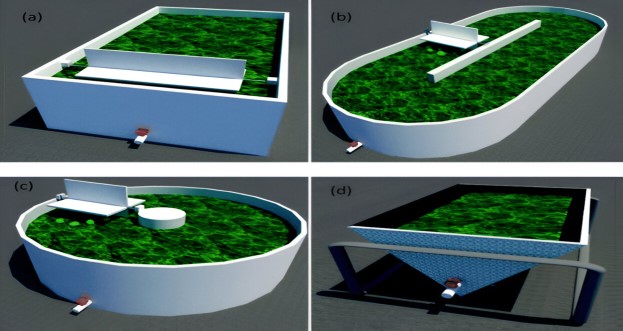
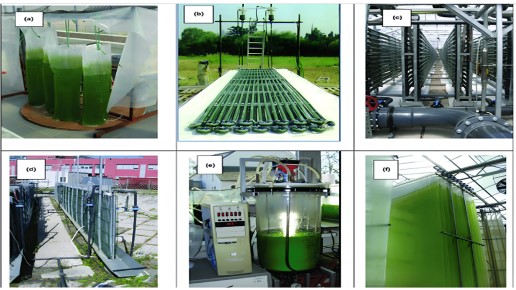
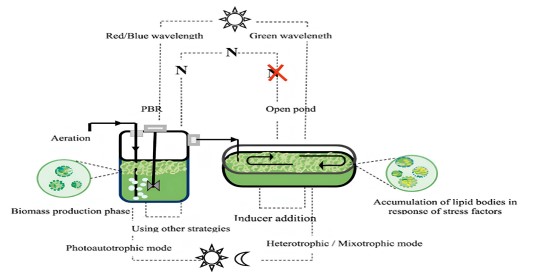
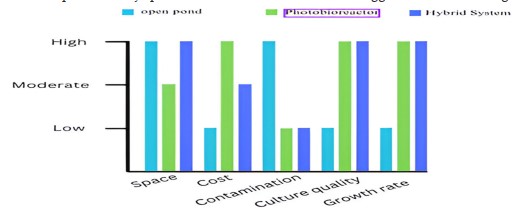
In this world of rapidly growing techs and steadfast alternatives which rather damage environment than make it flourishing, we need the actual green alternative which will efficiently supersede— the intoxication by petro fuels, waste-treatment machinery, green house effects and many more. This search of alternative has made its way to sleek end through the cultivation of algae and its benefits. As little amounts will do no good to the seeking benefits the major ways found by scientists soaring through early methods like dilution isolation method and use of stencil & gelatine to create patterns to more modern ways of open pond systems to photobioreactors. The review includes various efficient ways of algal cultivation such as use of photobioreactors, open raceways, two-phase hybrid systems and 3D triangular systems by discussing its limitations plus advantages. The photo bioreactors though providing more efficiency than open pond system they still are not much used. The greed for improved systems made discovery of the two-phase hybrid systems which obliterates disadvantage of both systems which are discussed. Though the thirst of improving led to the more different designs in the way of trials like 3D triangular systems which will be honoured in this review. We also go through a brief glimpse of algae’s role in replacing synthetic plastics with its bioplastic production as it shows very versatile group of polymers and high degradability.
References
- 1. A. Pownall, 10 bioplastic projects made from algae, corn starch and other natural materials. https://www.dezeen.com/2018/10/09/ bioplastic-projects-algae-corn-starch-beetleshells/, 2018. (Accessed 20 August 2020).
- 2. Arora, Y. K., Sharma, S., & Sharma, V. (2023). Microalgae in Bioplastic Production: A Comprehensive review. Arabian Journal for Science and Engineering, 48(6), 7225–7241. https://doi.org/10.1007/s13369-023-07871-0
- 3. Aziz, M. A., Kassim, K. A., Shokravi, Z., Jakarni, F. M., Liu, H., Zaini, N., Tan, L. S., Islam, A. B. M. S., & Shokravi, H. (2020). Two-stage cultivation strategy for simultaneous increases in growth rate and lipid content of microalgae: A review. Renewable & Sustainable Energy Reviews, 119, 109621. https://doi. org/10.1016/j.rser.2019.109621
- 4. Benemann, J. (1980). Overview: Algae oil to biofuels. ResearchGate. https://www. researchgate.net/publication/229039925
- 5. Chia, W. Y., Tang, D. Y. Y., Khoo, K. S., Lup, A. N. K., & Chew, K. W. (2020). Nature’s fight against plastic pollution: Algae for plastic biodegradation and bioplastics production. Environmental Science and Ecotechnology, 4, 100065. https://doi.org/10.1016/j. ese.2020.100065
- 6. Chong, J. W. R., Tan, X., Khoo, K. S., Ng, H. S., Jonglertjunya, W., Yew, G. Y., & Show, P. L. (2022). Microalgae-based bioplastics: Future solution towards mitigation of plastic wastes. Environmental Research, 206, 112620. https:// doi.org/10.1016/j.envres.2021.112620
- 7. Hall, J. (2011) The most important Organism? Ecology Global Network [online]. Ecology Communications Group, Inc. Available from: http://www.ecology.com/ 2011/09/12/ important-organism/[assessed Sep. 15, 2011]
- 8. IMechE Report, Institution of Mechanical Engineers (2009) Geo- Engineering Giving Us the Time to Act? Institution of Mechanical Engineers, London.
- 9. Karan, H., Funk, C., Grabert, M., Oey, M., & Hankamer, B. (2019). Green bioplastics as part of a circular bioeconomy. Trends in Plant Science, 24(3), 237–249. https://doi.org/10.1016/j. tplants.2018.11.010
- 10. Khoo, K. S., Chia, W. Y., Tang, D. Y. Y., Show, P. L., Chew, K. W., & Chen, W. (2020). Nanomaterials utilization in biomass for biofuel and bioenergy production. Energies, 13(4), 892. https://doi.org/10.3390/en13040892
- 11. Kizililsoley, M. & Helvacioglu, S. (2008) Microalgae Growth Technology Systems. Soley Institute. Presentation at IIMSAM, New York, NY, 2008
- 12. Li, Y., Naghdi, F. G., Garg, S., Adarme-Vega, T. C., Thurecht, K. J., Ghafor, W. A., et al. (2014). A comparative study: the impact of different lipid extraction methods on current microalgal lipid research. Microb. Cell Fact. 13, 14. doi:10.1186/1475-2859-13-14
- 13. Lim, D. K., Garg, S., Timmins, M., Zhang, E. S., Thomas-Hall, S. R., Schuhmann, H., et al. (2012). Isolation and evaluation of oilproducing microalgae from sub- tropical coastal and brackish waters. PLoS ONE 7:e40751. doi:10.1371/journal.pone.0040751
- 14. Masojídek, J., &Torzillo, G. (2008). Mass cultivation of freshwater microalgae. In Elsevier eBooks (pp. 2226–2235). https://doi. org/10.1016/b978-008045405-4.00830-2
- 15. Mekonnen, T. H., Mussone, P., Khalil, H., & Bressler, D. C. (2013). Progress in bio-based plastics and plasticizing modifications. Journal of Materials Chemistry. A, Materials for Energy and Sustainability, 1(43), 13379. https://doi. org/10.1039/c3ta12555f
- 16. Moheimani, N. R., and Borowitzka, M. A. (2006). The long-term culture of coccolithophore Pleurochrysiscarterae (Haptophyta) in outdoor raceway ponds. J. Appl. Phycol. 18, 703–712. doi:10.1007/s10811-006-9075-1
- 17. Morton, S. L. Modern Uses of Cultivated Algae. (1998) Ethnobotanical Leaflets [online]. Southern Illinois University Carbondale. Available from: http://www. ethnoleaflets. com/leaflets/algae.htm [assessed Sep. 3, 2011]
- 18. Narala, R. R., Garg, S., Sharma, K., Thomas-Hall, S. R., Deme, M., Li, Y., & Schenk, P. M. (2016). Comparison of microalgae cultivation in photobioreactor, open raceway pond, and a Two-Stage hybrid system. Frontiers in Energy Research, 4. https://doi.org/10.3389/ fenrg.2016.00029
- 19. Olaizola, M. (2000). Commercial production of astaxanthin from Haematococcuspluvialis using 25,000-liter outdoor photo bioreactors. J. Appl. Phycol. 12, 499–506. doi:10.1023/A:1008159127672
- 20. Proksch, G. (2013). Growing Sustainability - Integrating Algae Cultivation into the Built Environment. Research Gate. https://www. researchgate.net/publication/337292607
- 21. Rahman, A., & Miller, C. D. (2017). Microalgae as a source of bioplastics. In Elsevier eBooks (pp. 121–138). https://doi.org/10.1016/b978-0- 444-63784-0.00006-0
- 22. Rasul, I., Azeem, F., Siddique, M. H., Muzammil, S., Rasul, A., Munawar, A., Afzal, M., Ali, M., & Nadeem, H. (2017). Algae Biotechnology. In Elsevier eBooks (pp. 301–334). https://doi.org/10.1016/b978-0-12-812360- 7.00008-2
- 23. Santos, M. G. B. D., Duarte, R. L., Maciel, A. M., Abreu, M., Reis, A., & De Mendonça, H. V. (2020). Microalgae biomass production for biofuels in Brazilian scenario: A critical review. Bioenergy Research, 14(1), 23–42. https://doi. org/10.1007/s12155-020-10180-1
- 24. Schenk, P. M., Thomas-Hall, S. R., Stephens, E., Marx, U. C., Mussgnug, J. H., Posten, C., Kruse, O. & Hankamer, B. (2008). Second generation biofuels: High-Efficiency microalgae for biodiesel production. Bioenergy Research, 1(1), 20–43. https://doi.org/10.1007/s12155- 008-9008-8
- 25. Sharma, K., Li, Y., and Schenk, P. M. (2014). UV-C mediated lipid induction and settling, a step change towards economical microalgae biodiesel production. Green Chem. 16, 3539–3548. doi:10.1039/C4GC00552J
- 26. Su, C.-H., Chien, L.-J., Gomes, J., Lin, Y.-S., Yu, Y.-K., Liou, J.-S., et al. (2011). Factors affecting lipid accumulation by Nannochloropsis oculata in a two-stage cultivation process. J. Appl. Phycol. 23, 903–908. doi:10.1007/s10811-010-9609-4
- 27. Tseng, C. K. (1981) Commercial Cultivation. IN: Lobban, C. S. & Wynne, M. J. (Eds) The Biology of Seaweeds, Oxford: Blackwell Scientific Publication. 680-725.
- 28. Wang, H., Zhang, W., Chen, L., Wang, J., and Liu, T. (2013). The contamination and control of biological pollutants in mass cultivation of microalgae. Bioresour. Technol. 128, 745–750. doi:10.1016/j.biortech.2012.10.158.
- 29. Yew, G. Y., Khoo, K. S., Chia, W. Y., Ho, Y., Law, C. L., Leong, H. Y., & Show, P. L. (2020). A novel lipids recovery strategy for biofuels generation on microalgae Chlorella cultivation with waste molasses. Journal of Water Process Engineering, 38, 101665. https://doi. org/10.1016/j.jwpe.2020.101665.
Data Sharing Statement
There are no additional data available. All raw data and code are available upon request.
Funding
This research received no funding.
Author Contributions
All authors contributed significantly to the work and approve its publication.
Ethics Declaration
This article does not involve any human or animal subjects, and therefore does not require ethics approval.
Acknowledgements
We would like to express our gratitude to the patients, their families, and all those who have contributed to this study.
Conflicts of Interest
No conflicts of interest in this work.
About this article

Cite this article
Vivek Pandya, Devanshi Trivedi, Kinjal Upadhyay. Eco-Alchemy - Algae Cultivation and Its Application in Bioplastic Production. J Microbiol Relat Res. 2024;10(1):39–45.
Licence:
Attribution-Non-commercial 4.0 International (CC BY-NC 4.0)This license enables reusers to distribute, remix, adapt, and build upon the material in any medium or format for noncommercial purposes only, and only so long as attribution is given to the creator.
| Received | Accepted | Published |
|---|---|---|
| January 21, 2024 | April 19, 2024 | June 25, 2024 |
DOI: https://doi.org/10.21088/jmrr.2395.6623.10124.5
Keywords
MicroalgaeCultivation-methodsOpen systemClosed systemBioplasticSearch for Similar Articles
Similar Articles
- Ochrobactrum anthropi Bacteremia in Immunocompromised Patients: A Unique Threat...
- A Survey of Current Research on the Green Synthesis of Silver Nanoparticles (AgN...
- Navigating the Global Obesity a Global Catastrophe: The Role of Pancreatic Lipas...
- Phenotypic Detection of MRSA from Conventional Methods and CHROM Agar Medium in...
- Isolation of Exopolysaccharides Producing Microorganisms from Garden Soils
Article Level Metrics
Last UpdatedMonday 21 September 2026, 14:27:09 (IST)
1469
Accesses
5
188
00
Citations
NA
NA
NA
Download citation
Article Keywords
Keyword Highlighting
Highlight selected keywords in the article text.
Timeline
| Received | January 21, 2024 |
| Accepted | April 19, 2024 |
| Published | June 25, 2024 |
licence
Attribution-Non-commercial 4.0 International (CC BY-NC 4.0)
This license enables reusers to distribute, remix, adapt, and build upon the material in any medium or format for noncommercial purposes only, and only so long as attribution is given to the creator.