Full Text (PDF)
Indian Journal of Maternal-Fetal & Neonatal Medicine 11(2):p 45-51, July-December 2024. | DOI: https://doi.org/10.21088/ijmfnm.2347.999X.11224.2
Original Article
Maternal Satisfaction Among Pregnant Women Regarding Midwife Led Antenatal Care Services in Public Health Facility of Dehradun
Arti Kaparwan, Usha Rawat, Kafia null, Shabana null, Vandana Rawat
Author Information
Licence:
Attribution-Non-commercial 4.0 International (CC BY-NC 4.0)This license enables reusers to distribute, remix, adapt, and build upon the material in any medium or format for noncommercial purposes only, and only so long as attribution is given to the creator.
Indian Journal of Maternal-Fetal & Neonatal Medicine 11(2):p 45-51, July-December 2024. | DOI: https://doi.org/10.21088/ijmfnm.2347.999X.11224.2
How Cite This Article:
Arti Kaparwan, Usha Rawat, Kafia, et al. Acute Fetal Distress. Ind J of Matern-Fetal & Neonatal Med 2024;11(2):45–51.Timeline
Received : November 08, 2024
Accepted : December 11, 2024
Published : December 30, 2024
Abstract
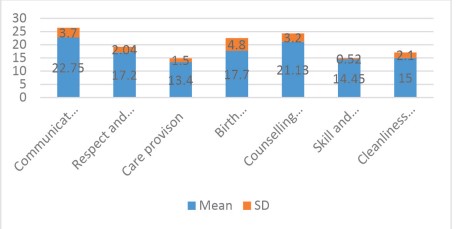
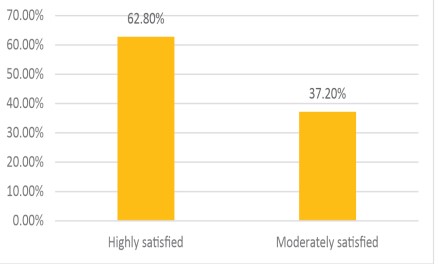
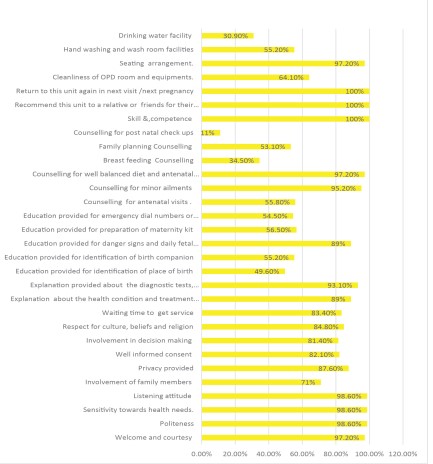
Every pregnant women has a right to get respectful maternal care, positive pregnancy experience and best possible health services during her antenatal period. It has been established that by implementing timely and appropriate evidence-based practices, antenatal care reduce maternal mortality by 20% if given of good quality and regular attendance. Clients’ satisfaction is a measure of the quality of care of health system performance.1 Global evidence has shown that the introduction of midwifery care has historically translated into the increased availability of quality maternal and newborn health services, and significantly aided the reduction of maternal and newborn mortality and morbidity. Therefore, this study aimed to assess maternal satisfaction among pregnant women regarding midwife led antenatal care services in Public health facility of Dehradun. Methods: A facility based cross-sectional study was conducted among pregnant women attending midwife led antenatal care services in public health facility of Dehradun. 145 low risk pregnant women were selected using a non probability purposive sampling method. Data was collected using a self structured satisfaction rating scale andanalysed using SPSS software. The level of significance was determined at a p-value of less than 0.05. Results: Overall, 62.8% of pregnant women were satisfied with antenatal care services provided by midwives in public health facility. Most of the respondents were satisfied with skills and competency of midwives, respect and dignity provided, care approaches, cleanliness and hygiene. Initiating ANC services within 1sttrimester, frequency of antenatal visits, educational status of partner, number of previous pregnancy have shown significant association with the maternal satisfaction. Conclusion: Majority of the respondents were satisfied with the service. It concludes that pregnant women expressed positive satisfaction with antenatal care provided by midwives. Midwives can provide women centered care which promotes positive pregnancy experience and thus provides high quality of antenatal care.
References
- 1. Assefa F, Mosse A, Michael Y.H, Assessment of clients’satisfaction with health service deliveries at JimmaUniversity specialized hospital.Ethiopian; Journal of Health ScienceEthiop J Health Sci. 2011 Jul; 21(2): 101–109. Available from: https://www.ncbi.nlm.nih.gov/pmc/articles/PMC3275861/
- 2. Gebreyohannes Y, Ararso D, Mengistu F, Abay S, Hadis M. Improving antenatal care services utilization in Ethiopia: an evidence-based policy brief. Int; J. Health Econ Policy. 2017;2:111–117. Available from: https://www.researchgate.net/publication/315655287_Improving_Antenatal_Care_Services_Utilization_in_Ethiopia_An_Evidence-Based_Policy_Brief
- 3. Ali S.A, Dero A.A, Ali SA, Ali G.B, Factors affecting the utilization of antenatal care among pregnant women: a literature review. J. Pregnancy and Neonatal Med. 2018;2 (2):e545 .Available from: https://www.alliedacademies.org/abstract/factors-affecting-the-utilization-of-antenatalcare-among-pregnant-women-a-literaturereview-10793.html
- 4. Khatri R.B, Mengistu T.S, Assefa Y, Input, process, and output factors contributing to quality of antenatal care services: a scoping review of evidence: BMC Pregnancy Childbirth. 2022;22 (1):1–5. Doi: 10.1186/s12884-02205. Availablefrom: https://bmcpregnancychildbirth.biomedcentral.com/articles/10.1186/s12884-022-05331-5
- 5. Bleich S.N, Özaltin E, Murray KL, How does satisfaction with the health-care system relate to patient experience: Bull World Health Organ. 2009;87 (4) :271–8. Available from: https://pubmed.ncbi.nlm.nih.gov/19551235/
- 6. Berhan Y, Berhan A, Antenatal care as a means of increasing birth in the health facility and reducing maternal mortality: a systematic review: Ethiop. J .Health Sci.: 2014; Sep; 24(0 ): 93–104.Doi: 10.4314/ejhs.v24i0.9s. Available from: https://www.ncbi.nlm.nih.gov/pmc/articles/PMC4249212/
- 7. Bauserman M, Thorsten VR, Nolen TL. et al, Maternal mortality in six low and lower-middle income countries from 2010 to 2018: risk factors and trends. Reprod Health. 2020;17 ( 3):173. Doi: 10.1186/s12978-020-00990-z. Available from: https://reproductive-health-journal.biomedcentral.com/articles/10.1186/s12978-020-00990-z
- 8. WHO Maternal mortality fact sheets 2020: Available from: https://www.who.int/europe/news-room/fact-sheets/item/maternal-mortality
- 9. Birhanu S, DemenaM, Baye Y, Desalew Y, Dawud B and Egata G, Pregnant women’s satisfaction with antenatal care services and its associated factors at public health facilities in the Harari region, Eastern Ethiopia : Med. 2020; Nov 20:8:2050312120973480. Doi: 10.1177/2050312120973480. eCollection2020. Available from:https://pubmed.ncbi.nlm.nih.gov/33282295/
- 10. Guidelines on midwifery initiatives 2018: Available from: https://dgnm.portal.gov.bd/sites/default/files/files/dgnm.portal.gov.bd/npfblock//2020-10-27-15-48-e0363e5af701072c1d0 594bd39c3d746.pdf
- 11. Srivastava A, AvanB. I, RajbangshiP & Bhattacharyya S, Determinants of women’s satisfaction with maternal health care: a review of literature from developing countries BMC Pregnancy and Childbirth volume 15, Article number: 97 (2015). Available from: https://bmcpregnancychildbirth.biomedcentral.com/articles/10.1186/s12884-015-0525-0
Data Sharing Statement
There are no additional data available. All raw data and code are available upon request.
Funding
This research received no funding.
Author Contributions
All authors contributed significantly to the work and approve its publication.
Ethics Declaration
This article does not involve any human or animal subjects, and therefore does not require ethics approval.
Acknowledgements
We would like to express our gratitude to the patients, their families, and all those who have contributed to this study.
Conflicts of Interest
No conflicts of interest in this work.
About this article

Cite this article
Arti Kaparwan, Usha Rawat, Kafia, et al. Acute Fetal Distress. Ind J of Matern-Fetal & Neonatal Med 2024;11(2):45–51.
Licence:
Attribution-Non-commercial 4.0 International (CC BY-NC 4.0)This license enables reusers to distribute, remix, adapt, and build upon the material in any medium or format for noncommercial purposes only, and only so long as attribution is given to the creator.
| Received | Accepted | Published |
|---|---|---|
| November 08, 2024 | December 11, 2024 | December 30, 2024 |
DOI: https://doi.org/10.21088/ijmfnm.2347.999X.11224.2
Keywords
Fetal Distress; Meconium; Fetal Surveillance; Fetal Hypoxia; Interventions.Fetal DistressMeconiumFetal SurveillanceFetal HypoxiaInterventionsSearch for Similar Articles
Similar Articles
- Maternal Mental-Health During Pregnancy and Postpartum Period: A Review of Recen...
- Prenatal Diagnosis of Costello Syndrome: A Case Report
- Innovations in Obstetric Hemorrhage Management: The Evolution of Transvaginal Ba...
- Maternal Plasma Cytokines and the Subsequent Risk of Uterine Atony and Postpartu...
- Amniotic Band Syndrome
Article Level Metrics
Last UpdatedSaturday 17 October 2026, 15:09:47 (IST)
1730
Accesses
30
189
00
Citations
NA
NA
NA
Download citation
Article Keywords
Keyword Highlighting
Highlight selected keywords in the article text.
Timeline
| Received | November 08, 2024 |
| Accepted | December 11, 2024 |
| Published | December 30, 2024 |
licence
Attribution-Non-commercial 4.0 International (CC BY-NC 4.0)
This license enables reusers to distribute, remix, adapt, and build upon the material in any medium or format for noncommercial purposes only, and only so long as attribution is given to the creator.