Full Text (PDF)
Indian Journal of Maternal-Fetal & Neonatal Medicine 13(1):p 7-14, January-June 2026. | DOI: https://doi.org/10.21088/ijmfnm.2347.999X.13126.1
Original Article
Maternal Plasma Cytokines and the Subsequent Risk of Uterine Atony and Postpartum Haemorrhage
Uma Pandey, Neeraj Agarwal, Surendra Pratap Mishra, Snehal Agarwal
Author Information
Licence:
Attribution-Non-commercial 4.0 International (CC BY-NC 4.0)This license enables reusers to distribute, remix, adapt, and build upon the material in any medium or format for noncommercial purposes only, and only so long as attribution is given to the creator.
Indian Journal of Maternal-Fetal & Neonatal Medicine 13(1):p 7-14, January-June 2026. | DOI: https://doi.org/10.21088/ijmfnm.2347.999X.13126.1
How Cite This Article:
Uma Pandey, Neeraj Agarwal, Snehal Agarwal et. al, Maternal Plasma Cytokines and the Subsequent Risk of Uterine Atony and Postpartum Haemorrhage. Indian J Matern Fetal Neonatal Med. 2026; 13(1): 07-14.Timeline
Received : October 06, 2025
Accepted : December 27, 2025
Published : June 30, 2026
Abstract
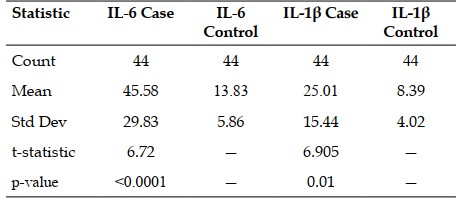
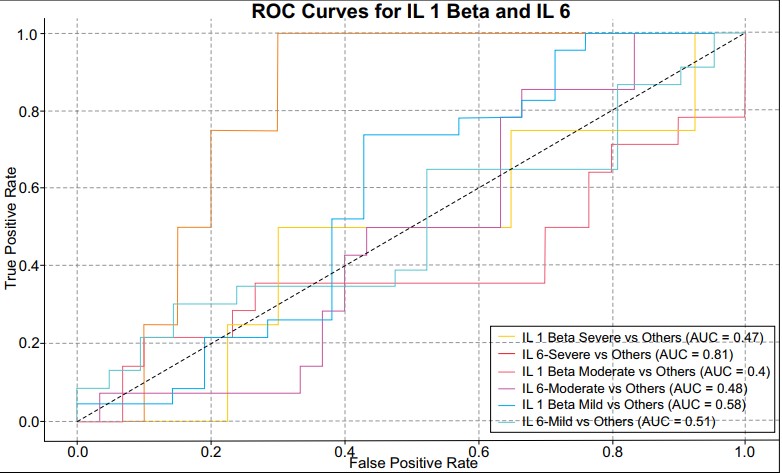
Background: Postpartum hemorrhage (PPH) remains a leading cause of maternal morbidity and mortality, particularly in low-resource settings. Uterine atony is the most common etiology, marked by inadequate uterine contraction following delivery. Emerging evidence suggests a role for inflammatory cytokines, including interleukin-6 (IL-6) and interleukin-1 beta (IL-1β), in regulating uterine contractility and vascular remodelling. Aim: This study aimed to evaluate maternal plasma levels of IL-6 and IL-1β in women with PPH due to uterine atony compared to controls, to assess their potential as predictive biomarkers and explore their clinical utility in risk stratification. Materials and Methods: A case-control study was conducted involving 88 pregnant women—44 with PPH secondary to uterine atony and 44 matched controls without PPH. Blood samples were collected antepartum and within 24 hours postpartum, and cytokine levels were measured using enzyme-linked immunosorbent assay (ELISA). Demographic, obstetric, hematologic, and clinical management data were recorded. Statistical analyses included t-tests, chi-square tests, and receiver operating characteristic (ROC) curve analysis. Results: IL-6 levels were significantly higher in cases than controls (45.58 ± 29.83 vs. 13.83 ± 5.86 pg/mL; p < 0.0001), as were IL-1β levels (25.01 ± 15.44 vs. 8.39 ± 4.02 pg/mL; p = 0.01). IL-6 showed superior diagnostic accuracy (AUC = 0.812), with 100% sensitivity and 70% specificity for severe PPH. Elevated cytokines were associated with greater blood loss, increased transfusion needs, adverse maternal outcomes, longer hospital stays, and higher rates of surgical intervention. Conclusion:IL-6 is a promising biomarker for predicting PPH severity and identifying high-risk patients early. Its incorporation into postpartum risk assessment protocols could enhance maternal care. Further multicenter studies are warranted to validate these findings and explore targeted anti-inflammatory therapies.
References
- 1. Belardelli FI. Role of interferons and other cytokines in the regulation of the immune response. Apmis. 1995 Jan;103(1-6):161-79.
- 2. Mousa A, Bakhiet M. Role of cytokine signaling during nervous system development. International journal of molecular sciences. 2013 Jul 4;14(7):13931-57.
- 3. Mousa A, Bakhiet M. Role of cytokine signaling during nervous system development. International journal of molecular sciences. 2013 Jul 4;14(7):13931-57.
- 4. Orsi NM, Tribe RM. Cytokine networks and the regulation of uterine function in pregnancy and parturition. Journal of neuroendocrinology. 2008 Apr;20(4):462-9.
- 5. Shynlova O, Lee YH, Srikhajon K, Lye SJ. Physiologic uterine inflammation and labor onset: integration of endocrine and mechanical signals. Reproductive sciences. 2013 Feb;20(2):154-67.
- 6. Gomez-Lopez N, StLouis D, Lehr MA, SanchezRodriguez EN, Arenas-Hernandez M. Immune cells in term and preterm labor. Cellular & molecular immunology. 2014 Nov;11 6): 571-81.
- 7. Christiaens I, Zaragoza DB, Guilbert L, Robertson SA, Mitchell BF, Olson DM. Inflammatory processes in preterm and term parturition. Journal of reproductive immunology. 2008 Oct 1;79(1):50-7.
- 8. Vidaeff AC, Ramin SM. Potential biochemical events associated with initiation of labor. Current medicinal chemistry. 2008 Mar 1;15(6):614-9.
- 9. Kelly RW. Pregnancy maintenance and parturition: the role of prostaglandin in manipulating the immune and inflammatory response. Endocrine reviews. 1994 Oct 1;15(5):684-706.
- 10. Moncrieff G. Postpartum haemorrhage: Aetiology and intervention. British Journal of Midwifery. 2018 Apr 2;26(4):224-31.
- 11. Gallo DM, Romero R, Bosco M, Chaiworapongsa T, Gomez-Lopez N, ArenasHernandez M, Jung E, Suksai M, Gotsch F, Erez O, Tarca AL. Maternal plasma cytokines and the subsequent risk of uterine atony and postpartum hemorrhage. Journal of perinatal medicine. 2023 Feb 23;51(2):219-32.
- 12. Qu J, Jiang H, Shi H, Huang N, Su J, Zhang Y, Chen L, Zhao Y. Novel predictive biomarkers for atonic postpartum hemorrhage as explored by proteomics and metabolomics. BMC Pregnancy and Childbirth. 2025 Jan 30;25(1):96.
- 13. Sebghati M, Chandraharan E. An update on the risk factors for and management of obstetric haemorrhage. Women’s Health. 2017 Aug;13(2):34-40.
- 14. Festic E, Johnson MM, Moraghan TJ. Postpartum Uterine Atony and Diabetes Insipidus; A Case Report: 626. Critical Care Medicine. 2004 Dec 1;32(12):A176.
- 15. Annecke T, Geisenberger T, Kürzl R, Penning R, Heindl B. Algorithm-based coagulation management of catastrophic amniotic fluid embolism. Blood coagulation & fibrinolysis. 2010 Jan 1;21(1):95-100.
- 16. Shen Y, Oda T, Tamura N, KohmuraKobayashi Y, Furuta-Isomura N, Yaguchi C, Uchida T, Suzuki K, Itoh H, Kanayama N. Elevated bradykinin receptor type 1 expression in postpartum acute myometritis: Possible involvement in augmented interstitial edema of the atonic gravid uterus. Journal of Obstetrics and Gynaecology Research. 2019 Aug;45(8):1553-61.
- 17. Jiang H, Shi H, Chen L, Yang J, Yuan P, Wang W, Pang Y, Wei Y, Zhao Y. Is there a relationship between plasma, cytokine concentrations, and the subsequent risk of postpartum hemorrhage?. American journal of obstetrics and gynecology. 2022 Jun 1;226(6):835-e1.
- 18. Zhang P, Jia Y, Song H, Fan Y, Lv Y, Geng H, Zhao Y, Cui H, Chen X. Novel biomarkers for prediction of atonic postpartum hemorrhage among ‘low-risk’women in labor. Frontiers in Immunology. 2024 Jul 11;15:1416990.
- 19. Baird EJ. Identification and management of obstetric hemorrhage. Anesthesiology clinics. 2017 Mar 1;35(1):15-34.
- 20. Carter SW, Neubronner S, Su LL, Dashraath P, Mattar C, Illanes SE, Choolani MA, Kemp MW. Chorioamnionitis: an update on diagnostic evaluation. Biomedicines. 2023 Oct 28;11(11):2922.
- 21. Santoso JT, Saunders BA, Grosshart K. Massive blood loss and transfusion in obstetrics and gynecology. Obstetrical & gynecological survey. 2005 Dec 1;60(12):827-37.
- 22. Shynlova O, Lee YH, Srikhajon K, Lye SJ. Physiologic uterine inflammation and labor onset: integration of endocrine and mechanical signals. Reproductive sciences. 2013 Feb;20(2):154-67.
- 23. Beagley JC, Whitman KJ, Baptiste KE, Scherzer J. Physiology and treatment of retained fetal membranes in cattle. Journal of veterinary internal medicine. 2010 Mar;24 (2):261-8.
- 24. O’brien D, Babiker E, O’Sullivan O, Conroy R, McAuliffe F, Geary M, Byrne B. Prediction of peripartum hysterectomy and end organ dysfunction in major obstetric haemorrhage. European Journal of Obstetrics & Gynecology and Reproductive Biology. 2010 Dec 1;153(2):165-9.
- 25. Martínez-Martínez C, Adaya-Leythe EA, Ángeles-Vázquez MD, Jiménez-De Luna AJ, Cepeda-Nieto AC. Transfusion-related acute lung injury in obstetric hemorrhage: prevalence and risk factors. Ginecología y obstetricia de México. 2021;89(4):318-24.
- 26. Rivers JM. Transfusión. Trali and taco OB. Revista Mexicana de Anestesiología. 2011;34(S1):322-33.
- 27. Mordak R, Stewart PA. Periparturient stress and immune suppression as a potential cause of retained placenta in highly productive dairy cows: examples of prevention. Acta Veterinaria Scandinavica. 2015 Dec 2;57(1):84.
- 28. Mahendra V, Clark SL, Suresh MS. Neuropathophysiology of preeclampsia and eclampsia: A review of cerebral hemodynamic principles in hypertensive disorders of pregnancy. Pregnancy Hypertension. 2021 Mar 1;23:104-11.
Data Sharing Statement
There are no additional data available. All raw data and code are available upon request.
Funding
This research received no funding.
Author Contributions
All authors contributed significantly to the work and approve its publication.
Ethics Declaration
This article does not involve any human or animal subjects, and therefore does not require ethics approval.
Acknowledgements
We would like to express our gratitude to the patients, their families, and all those who have contributed to this study.
Conflicts of Interest
No conflicts of interest in this work.
About this article

Cite this article
Uma Pandey, Neeraj Agarwal, Snehal Agarwal et. al, Maternal Plasma Cytokines and the Subsequent Risk of Uterine Atony and Postpartum Haemorrhage. Indian J Matern Fetal Neonatal Med. 2026; 13(1): 07-14.
Licence:
Attribution-Non-commercial 4.0 International (CC BY-NC 4.0)This license enables reusers to distribute, remix, adapt, and build upon the material in any medium or format for noncommercial purposes only, and only so long as attribution is given to the creator.
| Received | Accepted | Published |
|---|---|---|
| October 06, 2025 | December 27, 2025 | June 30, 2026 |
DOI: https://doi.org/10.21088/ijmfnm.2347.999X.13126.1
Keywords
Postpartum Hemorrhage (PPH)Uterine AtonyInterleukin-6 (IL-6)CytokinesBiomarkersObstetric Risk FactorsPredictive DiagnosticsSearch for Similar Articles
Article Level Metrics
Last UpdatedSaturday 17 October 2026, 15:08:33 (IST)
1730
Accesses
24
189
00
Citations
NA
NA
NA
Download citation
Article Keywords
Keyword Highlighting
Highlight selected keywords in the article text.
Timeline
| Received | October 06, 2025 |
| Accepted | December 27, 2025 |
| Published | June 30, 2026 |
licence
Attribution-Non-commercial 4.0 International (CC BY-NC 4.0)
This license enables reusers to distribute, remix, adapt, and build upon the material in any medium or format for noncommercial purposes only, and only so long as attribution is given to the creator.