Full Text (PDF)
Indian Journal of Dental Education 18(3):p 141-150, Sept - Dec. 2025. | DOI: https://doi.org/10.21088/ijde.0974.6099.18325.5
Original Article
Managing Prosthetic Mismatch: Complete Denture Occlusion Against FP1 and FP2 Implant-Supported Restorations
Manjit Kumar, Priyanka Johar, Tarun Kalra, Ajay Bansal, Abhishek Avasthi, Arpit Sikri
Author Information
Licence:
Attribution-Non-commercial 4.0 International (CC BY-NC 4.0)This license enables reusers to distribute, remix, adapt, and build upon the material in any medium or format for noncommercial purposes only, and only so long as attribution is given to the creator.
Indian Journal of Dental Education 18(3):p 141-150, Sept - Dec. 2025. | DOI: https://doi.org/10.21088/ijde.0974.6099.18325.5
How Cite This Article:
Johar P, Kalra T, Kumar M, et al. Managing Prosthetic Mismatch: Complete Denture Occlusion Against FP1 and FP2 Implant-Supported Restorations. Ind J Dent Educ. 2025;18(3):141-50.Timeline
Received : July 23, 2025
Accepted : September 05, 2025
Published : September 05, 2025
Abstract
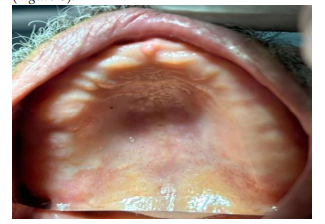
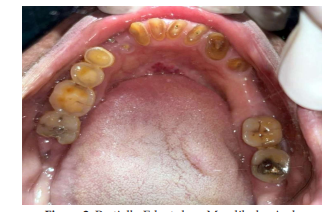
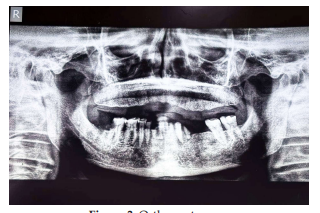
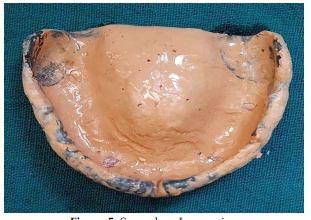
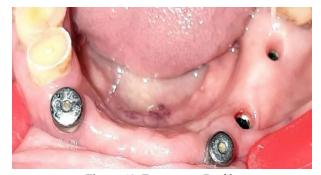
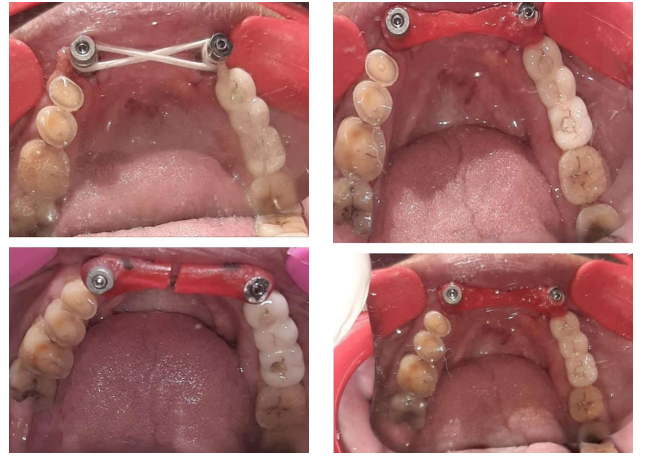
The rehabilitation of a completely edentulous arch opposing a dentate or implantsupported dentition presents significant biomechanical and prosthetic challenges. The rehabilitation of edentulous and partially edentulous patients requires a strategic approach to restore both function and esthetics. In cases where the maxillary arch is fully edentulous and the mandibular arch retains natural posterior teeth, a combination of a maxillary complete denture and a mandibular implantsupported prosthesis provides a balanced occlusal scheme. The presence of natural posterior teeth in the mandible influences occlusal load distribution, requiring careful prosthetic planning. This article presents a prosthodontic rehabilitation case involving a maxillary complete denture opposing a mandibular FP1 and FP2 implant-supported fixed prosthesis with five remaining natural posterior teeth. In cases of a single denture opposing an implant-supported fixed prosthesis, special attention must be given to occlusal harmony, implant-protected occlusion principles, and balanced denture stability to avoid rapid ridge resorption and prosthetic complications. This case emphasizes the importance of precise prosthetic planning, occlusal scheme customization, and regular follow-up to ensure longterm success and patient satisfaction. The report highlights the interplay between fixed and removable prosthodontics in a partially edentulous patient, providing a functional and aesthetic solution tailored to the patient’s needs.
References
- 1. Swaminathan Y., Rao G. Implant protected occlusion. IOSR J Dent Med Sci. 2013 Nov-Dec; 11(3): 20-25.
- 2. Resnik R.R. Principles of implant occlusion: Part 3 – Recommendations for fixed full-arch implant prostheses [Internet]. Scottsdale (AZ):Spear Education; 2017 Jun 15 [cited 2025 Jun 23].
- 3. Basunbul A., Goktug G., Morgano S.M. Modification of denture teeth for improved occlusal stability of a maxillary removable complete denture opposed by a mandibular implant-supported fixed complete denture: A clinical report. The Journal of Prosthetic Dentistry. 2021 Jan 1; 125(1): 22-e1.
- 4. Factors influencing implant restoration utilizing an FP1 approach. Int J Prosthodont Implantol. 2025 Apr 25; 5(1): Article 004. 5. Annaldasula S.V., Yen C.S. A comprehensive review of impression techniques In implant dentistry.
- 6. Hussaini S., Wong T. One clinical visit for a multiple implant restoration master cast fabrication. The Journal of prosthetic dentistry. 1997 Dec 1; 78(6): 550-3.
- 7. Misch C.E. Implant Prosthetics. 3rd ed. St. Louis: Elsevier Mosby; 2015. p. 45-46.
- 8. Driscoll C.F., Masri R.M. Single maxillary complete denture. Dental Clinics. 2004 Jul 1; 48(3): 567-83.
- 9. Shah U., Shyani N., Das P., Kumar A. Fabrication of maxillary single complete denture opposing deranged mandibular occlusion using customized broadrick occlusal plane analysis (BOPA): A case report.
- 10. Ellinger C.W., Rayson J.H., Henderson D. Single complete dentures. The Journal of prosthetic dentistry. 1971 Jul 1; 26(1): 4-10.
- 11. Selvaraj S., Dorairaj J., Mohan J., Simon P. Comparison of implant cast accuracy of multiple implant impression technique with different splinting materials: An: in vitro: study. The Journal of Indian Prosthodontic Society. 2016 Apr 1; 16(2): 167-75.
Data Sharing Statement
There are no additional data available. All raw data and code are available upon request.
Funding
This research received no funding.
Author Contributions
All authors contributed significantly to the work and approve its publication.
Ethics Declaration
This article does not involve any human or animal subjects, and therefore does not require ethics approval.
Acknowledgements
We would like to express our gratitude to the patients, their families, and all those who have contributed to this study.
Conflicts of Interest
No conflicts of interest in this work.
About this article

Cite this article
Johar P, Kalra T, Kumar M, et al. Managing Prosthetic Mismatch: Complete Denture Occlusion Against FP1 and FP2 Implant-Supported Restorations. Ind J Dent Educ. 2025;18(3):141-50.
Licence:
Attribution-Non-commercial 4.0 International (CC BY-NC 4.0)This license enables reusers to distribute, remix, adapt, and build upon the material in any medium or format for noncommercial purposes only, and only so long as attribution is given to the creator.
| Received | Accepted | Published |
|---|---|---|
| July 23, 2025 | September 05, 2025 | September 05, 2025 |
DOI: https://doi.org/10.21088/ijde.0974.6099.18325.5
Keywords
SplintingImplant protected occlusionComplete DentureSearch for Similar Articles
Similar Articles
- One Step Apexification using PRF as Matrix and MTA Apical Barrier
- Infective Ulcers in the Oral Cavity: A Review
- Effect of COVID-19 Lockdown on Patients Undergoing Orthodontic Therapy in Distri...
- Wire Splinting: An Effective Management Approach for Lateral Luxation: A Clinica...
- Prosthodontics in Healthy Ageing and Longevity Medicine: A Critical Narrative R...
Article Level Metrics
Last UpdatedMonday 19 October 2026, 19:48:50 (IST)
3456
Accesses
38
611
00
Citations
NA
NA
NA
Download citation
Article Keywords
Keyword Highlighting
Highlight selected keywords in the article text.
Timeline
| Received | July 23, 2025 |
| Accepted | September 05, 2025 |
| Published | September 05, 2025 |
licence
Attribution-Non-commercial 4.0 International (CC BY-NC 4.0)
This license enables reusers to distribute, remix, adapt, and build upon the material in any medium or format for noncommercial purposes only, and only so long as attribution is given to the creator.