Full Text (PDF)
Journal of Orthopedic Education 12(2):p 51-54, May-August 2026. | DOI: https://doi.org/10.21088/joe.2454a.7956.12226.4
Case Report
Management of Fracture Lateral end of Clavicle
R B Uppin, Ravi B Patil, Halesh NB, S.G Vastrad, S S Gatawalimath, Dhruvin Viradia
Author Information
Licence:
Attribution-Non-commercial 4.0 International (CC BY-NC 4.0)This license enables reusers to distribute, remix, adapt, and build upon the material in any medium or format for noncommercial purposes only, and only so long as attribution is given to the creator.
Journal of Orthopedic Education 12(2):p 51-54, May-August 2026. | DOI: https://doi.org/10.21088/joe.2454a.7956.12226.4
How Cite This Article:
R B Uppin, Ravi B Patil, Halesh NB et al. Management of Fracture Lateral end of Clavicle. Jr. Orth. Edu. 2026; 12(2): 51–54.Timeline
Received : June 27, 2026
Accepted : July 30, 2026
Published : August 30, 2026
Abstract
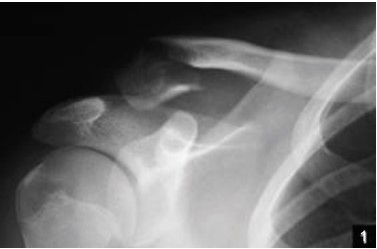
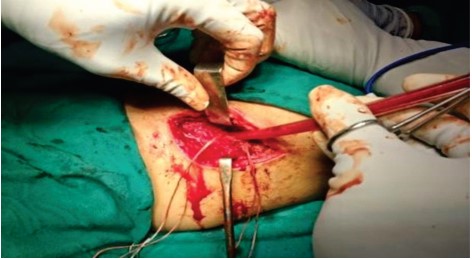
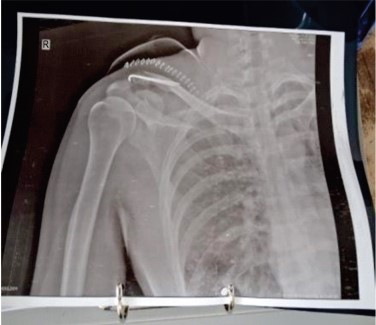
Clavicle fractures account for a significant proportion of shoulder girdle injuries, with an estimated annual incidence of approximately 29 per 100,000 population. Distal (lateral-end) clavicle fractures represent a clinically important subgroup because disruption of the coracoclavicular ligament complex frequently results in fracture instability and displacement. Consequently, these injuries have a higher incidence of delayed union and non-union than fractures involving the middle third of the clavicle. The usual mechanism of injury is a direct impact to the lateral aspect of the shoulder or a fall onto the shoulder, commonly occurring during sports activities, falls, or road traffic accidents. Patients typically present with shoulder pain, swelling, tenderness, restricted range of motion, and, in displaced fractures, a visible deformity over the lateral clavicle. Although non-operative treatment may be appropriate for selected stable fractures, displaced unstable distal clavicle fractures often require surgical stabilization to restore anatomical alignment, promote fracture union, and facilitate early functional recovery. Various operative techniques have been described, including locking plate fixation, hook plate fixation, coracoclavicular screw fixation, Kirschner (K)- wire fixation, tension-band wiring, intramedullary fixation, and coracoclavicular suture augmentation. We report the case of a displaced lateral-end clavicle fracture treated with open reduction and internal fixation using two 2.0-mm Kirschner wires combined with coracoclavicular stabilization using No. 5 FiberWire. Early supervised shoulder mobilization was initiated three weeks postoperatively, resulting in satisfactory fracture union and a good functional outcome.
References
- 1. Nordqvist A, Petersson C. The incidence of fractures of the clavicle. Clin Orthop Relat Res. 1994:127–132. [PubMed] [Google Scholar]
- 2. Postacchini F, Gumina S, De Santis P, Albo F. Epidemiology of clavicle fractures. J Shoulder Elbow Surg. 2002;11:452–456. doi: 10.1067/ mse.2002.126613. [DOI] [PubMed] [Google Scholar]
- 3. Zlowodzki M, Zelle BA, Cole PA, Jeray K, McKee MD Evidence-Based Orthopaedic Trauma Working Group. Treatment of acute midshaft clavicle fractures: systematic review of 2144 fractures: on behalf of the Evidence-Based Orthopaedic Trauma Working Group. J Orthop Trauma. 2005;19:504–507. doi: 10.1097/01. bot.0000172287.44278.ef. [DOI] [PubMed] [Google Scholar]
- 4. McKee RC, Whelan DB, Schemitsch EH, McKee MD. Operative versus nonoperative care of displaced midshaft clavicular fractures: a metaanalysis of randomized clinical trials. J Bone Joint Surg Am. 2012;94:675–684. doi: 10.2106/ JBJS.J.01364. [DOI] [PubMed] [Google Scholar]
- 5. Robinson CM, Goudie EB, Murray IR, Jenkins PJ, Ahktar MA, Read EO, Foster CJ, Clark K, Brooksbank AJ, Arthur A, Crowther MA, Packham I, Chesser TJ. Open reduction and plate fixation versus nonoperative treatment for displaced midshaft clavicular fractures: a multicenter, randomized, controlled trial. J Bone Joint Surg Am. 2013;95:1576–1584. doi: 10.2106/JBJS.L.00307. [DOI] [PubMed] [Google Scholar]
- 6. Van der Meijden OA, Gaskill TR, Millett PJ. Treatment of clavicle fractures: current concepts review. J Shoulder Elbow Surg. 2012; 21(3): 423-9.
- 7. Toogood P, Horst P, Samagh S, Feeley BT. Clavicle fractures: a review of the literature and update on treatment. Phys Sports Med. 2011; 39(3):142-50.
- 8. Allman FL. Fractures and ligamentous injuries of the clavicle and its articulation. J Bone Joint Surg Am.1967; 49(4):774-84.
- 9. Nordquit A, Peterson C. The incidence of fractures of the clavicle. Clin Orthop Relat Res. 1994; 300:127-32.
- 10. Robinson CM. Fractures of the clavicle in the adult. Epidemiology and classification. J Bone Joint Surg Br. 1998; 80(3):476-84.
- 11. Postacchini F, Gumina S, De Santis P, Albo F. Epidemiology of clavicle fractures. J Shoulder Elbow Surg. 2002; 11(5):452-6.
Data Sharing Statement
There are no additional data available. All raw data and code are available upon request.
Funding
This research received no funding.
Author Contributions
All authors contributed significantly to the work and approve its publication.
Ethics Declaration
This article does not involve any human or animal subjects, and therefore does not require ethics approval.
Acknowledgements
We would like to express our gratitude to the patients, their families, and all those who have contributed to this study.
Conflicts of Interest
No conflicts of interest in this work.
About this article

Cite this article
R B Uppin, Ravi B Patil, Halesh NB et al. Management of Fracture Lateral end of Clavicle. Jr. Orth. Edu. 2026; 12(2): 51–54.
Licence:
Attribution-Non-commercial 4.0 International (CC BY-NC 4.0)This license enables reusers to distribute, remix, adapt, and build upon the material in any medium or format for noncommercial purposes only, and only so long as attribution is given to the creator.
| Received | Accepted | Published |
|---|---|---|
| June 27, 2026 | July 30, 2026 | August 30, 2026 |
DOI: https://doi.org/10.21088/joe.2454a.7956.12226.4
Keywords
Hook PlateTension Band WiringK WiresSearch for Similar Articles
Similar Articles
- Use of Ocular Biomarkers for Predicting Systemic Bone Health in Orthopaedic Pati...
- Management of Pathological Fracture with Metastasis of Proximal Femur Secondary...
- Impact of Blood Transfusion on Bone Healing and Regeneration in Orthopaedic Surg...
- Cognitive Behavioural Interventions for Freezing of Gait in Parkinson’s Disease:...
- A Case Report: Reverse Shoulder Joint Replacement - Neer’s Four Part Fractures o...
Article Level Metrics
Last UpdatedSaturday 17 October 2026, 10:29:33 (IST)
2659
Accesses
19
319
00
Citations
NA
NA
NA
Download citation
Article Keywords
Keyword Highlighting
Highlight selected keywords in the article text.
Timeline
| Received | June 27, 2026 |
| Accepted | July 30, 2026 |
| Published | August 30, 2026 |
licence
Attribution-Non-commercial 4.0 International (CC BY-NC 4.0)
This license enables reusers to distribute, remix, adapt, and build upon the material in any medium or format for noncommercial purposes only, and only so long as attribution is given to the creator.