Full Text (PDF)
Indian Journal of Cancer Education and Research 10(2):p 81-84, july-december 2022. | DOI: https://doi.org/10.21088/ijcer.2321.9815.10222.3
Original Article
Keystone to Transposition Flap: Our Experience
Ravi Kumar Chittoria null, Marenika1 null, Neljo2 null, Ravi Kumar Chittoria3 null
Author Information
Licence:
Attribution-Non-commercial 4.0 International (CC BY-NC 4.0)This license enables reusers to
distribute, remix, adapt, and build upon the material in any medium or format
for noncommercial purposes only, and only so long as attribution is given to
the creator.
Indian Journal of Cancer Education and Research 10(2):p 81-84, july-december 2022. | DOI: https://doi.org/10.21088/ijcer.2321.9815.10222.3
How Cite This Article:
How to cite this article: Marenika, Neljo, Ravi Kumar Chittoria/Keystone to Transposition Flap: Our Experience/Indian J Canc Educ Res 2022;10(2):81- 84.
Timeline
Received : February 15, 2022
Accepted : July 20, 2022
Published : December 10, 2022
Abstract
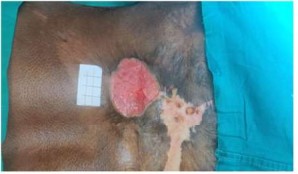
Squamous cell carcinoma is one of the most prevalent skin cancers, and it can appear in any burn scar. Its
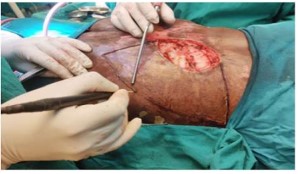
incidence ranges from 2% to 6%. A local fasciocutaneous advancement perforator flap based on the underlying
perforator is known as a Keystone flap.1
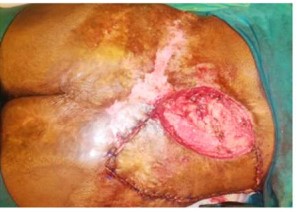
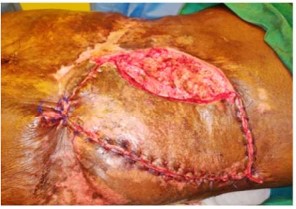
A transposition flap is raised from a laxity area, lifted over neighbouring
tissue, and transplanted into a surgical wound. To mobilise and move tissue from a region of laxity to an area of
necessity, adjacent laxity is used.2
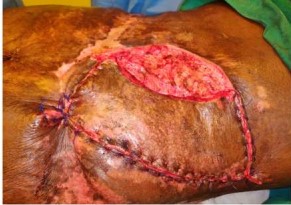
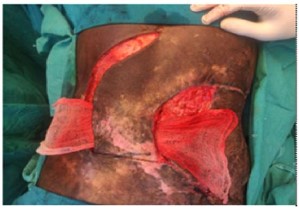
Delaying the conversion of the keystone flap to a transposition flap in our study
resulted in good survival and a positive outcome.
References
- 1. Kopp J, Loos B, Spilker G, Horch RE: Correlation between serum creatinine kinase levels and extent of muscle damage in electrical burns. Burns. 2004.
- 2. Robert S. Bednarek and Miguel Sequeira Campos and Marc H. Hohman and Michael L. Ramsey, Roenigk's Dermatologic Surgery: Current Techniques in Procedural Dermatology.
- 3. Stekelenburg CM, Marck RE, Tuinebreijer WE, de Vet HC, Ogawa R, van Zuijlen PP. A systematic review on burn scar contracture treatment: Searching for evidence. J Burn Care.
- 4. Behan FC. The keystone design perforator island flap in reconstructive surgery. ANZ J Surg.
- 5. Mohan AT, Rammos CK, Akhavan AA, Martinez J, Wu PS, Moran SL, et al. Evolving concepts of keystone perforator island flaps (KPIF): Principles of perforator anatomy, design modifications, and extended clinical applications. Plast Reconstr Surg.
Data Sharing Statement
There are no additional data available. All raw data and code are available upon request.
Funding
This research received no funding.
Author Contributions
All authors contributed significantly to the work and approve its publication.
Ethics Declaration
This article does not involve any human or animal subjects, and therefore does not require ethics approval.
Acknowledgements
We would like to express our gratitude to the patients, their families, and all those who have contributed to this study.
Conflicts of Interest
No conflicts of interest in this work.
About this article

Cite this article
How to cite this article: Marenika, Neljo, Ravi Kumar Chittoria/Keystone to Transposition Flap: Our Experience/Indian J Canc Educ Res 2022;10(2):81- 84.
Licence:
Attribution-Non-commercial 4.0 International (CC BY-NC 4.0)This license enables reusers to
distribute, remix, adapt, and build upon the material in any medium or format
for noncommercial purposes only, and only so long as attribution is given to
the creator.
| Received | Accepted | Published |
|---|---|---|
| February 15, 2022 | July 20, 2022 | December 10, 2022 |
DOI: https://doi.org/10.21088/ijcer.2321.9815.10222.3
Keywords
Keywords: Squamous cell cancer; Delay; Keystone flap; Transposition flap.Squamous cell cancerDelayKeystone flapTransposition flapSearch for Similar Articles
Similar Articles
- Unusual Presentation of Solitary Metastasis to the Right Metacarpal Bone in Rena...
- Technical Feasibility and Planning Challenges of Delivering Total Body Irradiat...
- Excellent Response Rates with Bortezomib - Cyclophosphamide – Dexamethasone (VCD...
- Optimizing Postoperative Radiation Therapy in Ewing’s Sarcoma with Lung Metasta...
- Current Therapeutic Strategies Targeting Tyrosine Kinase Receptor in Colon Canc...
Article Level Metrics
Last UpdatedWednesday 30 September 2026, 08:33:53 (IST)
1909
Accesses
16
289
00
Citations
NA
NA
NA
Download citation
Article Keywords
Keyword Highlighting
Highlight selected keywords in the article text.
Timeline
| Received | February 15, 2022 |
| Accepted | July 20, 2022 |
| Published | December 10, 2022 |
licence
Attribution-Non-commercial 4.0 International (CC BY-NC 4.0)
This license enables reusers to
distribute, remix, adapt, and build upon the material in any medium or format
for noncommercial purposes only, and only so long as attribution is given to
the creator.