Full Text (PDF)
Indian Journal of Agriculture Business 11(2):p 73-83, July-December 2025. | DOI: https://doi.org/10. 21088/ijab.2454.7964.11225.2
Original Article
Influence of Organic Manures and Bio-stimulants on Growth, Yield and Economics of Onion CV. Nasik Red
Ranjit Chatterjee, Uday Kumar, Arindam Das, Mamoni Deori, Raj Kumar
Author Information
Licence:
Attribution-Non-commercial 4.0 International (CC BY-NC 4.0)This license enables reusers to distribute, remix, adapt, and build upon the material in any medium or format for noncommercial purposes only, and only so long as attribution is given to the creator.
Indian Journal of Agriculture Business 11(2):p 73-83, July-December 2025. | DOI: https://doi.org/10. 21088/ijab.2454.7964.11225.2
How Cite This Article:
Uday Kumar, Ranjit Chatterjee Arindam Das, et al. Influence of Organic Manures and Bio-stimulants on Growth, Yield and Economics of Onion CV. Nasik Red. J Agri Busi 2025; 11(2): 73–83.Timeline
Received : April 01, 2025
Accepted : June 05, 2025
Published : December 25, 2025
Abstract
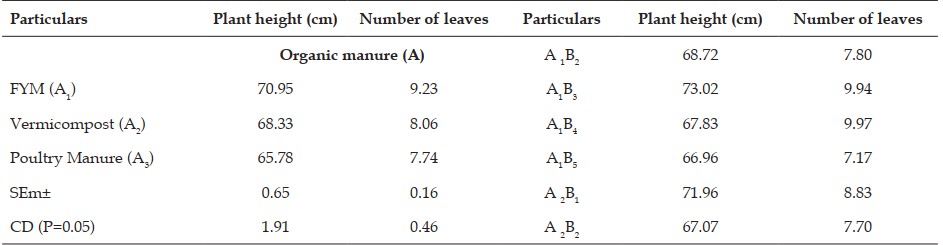
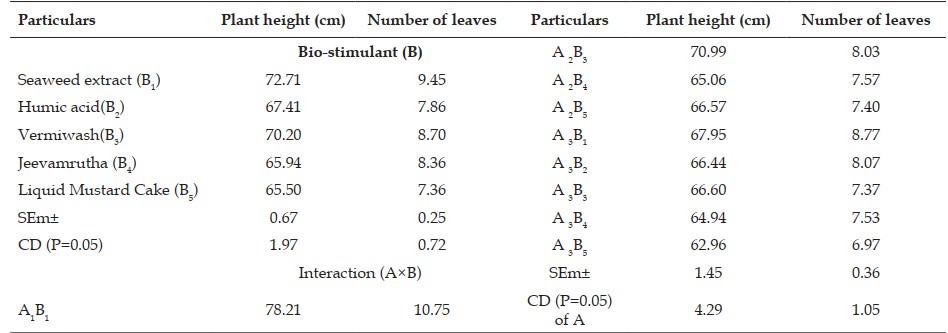
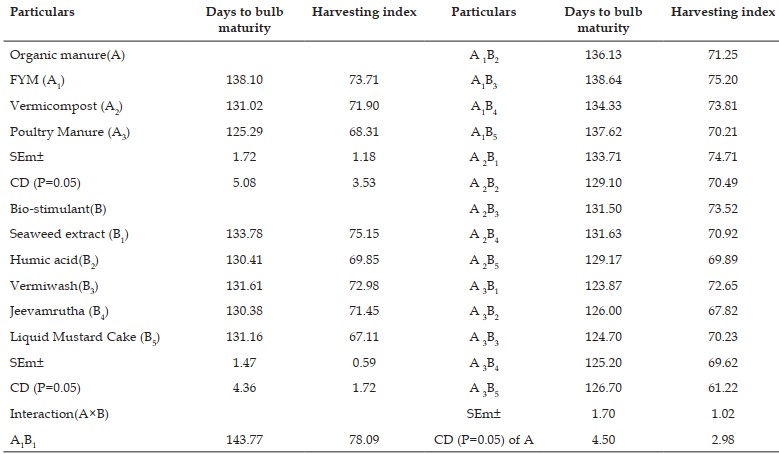
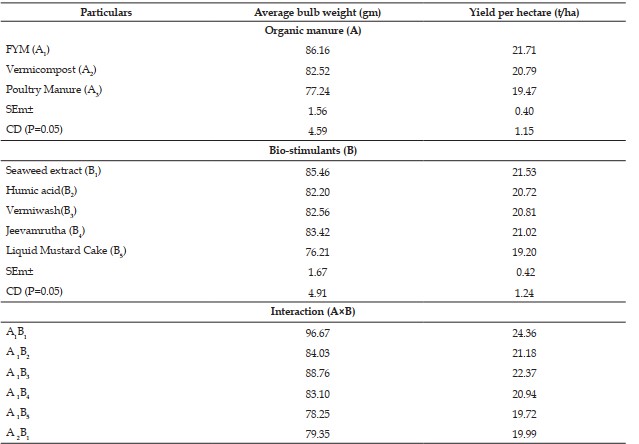
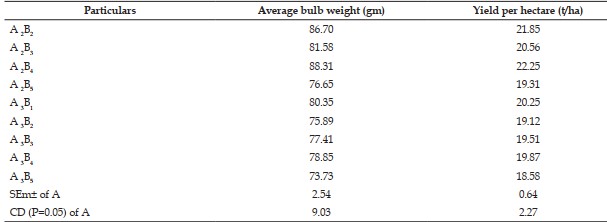
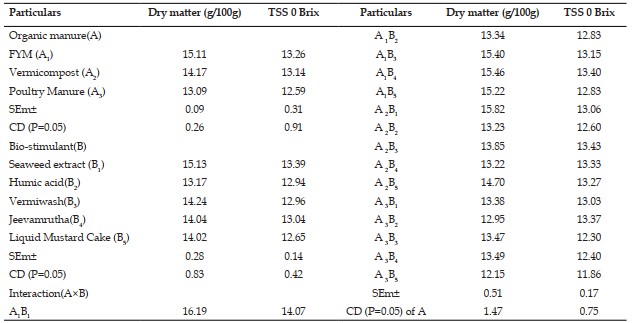
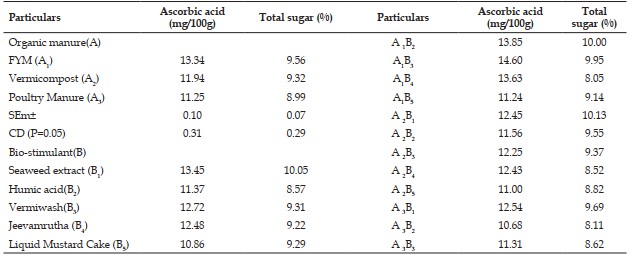
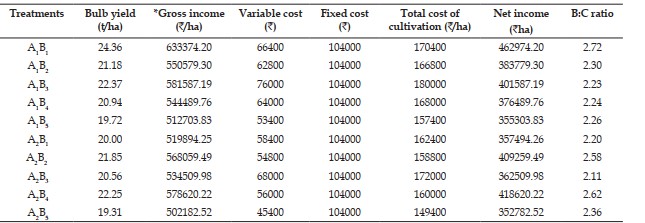
Background: Onion (Allium cepa L.) is a vital vegetable crop in India, significantly contributing to domestic consumption and exports. Sustainable agricultural practices, incorporating organic manures and bio-stimulants can enhance crop productivity, soil and environmental health and economic returns. Aim: The aim of the investigation was to evaluate the impact of different types of organic manures and bio-stimulants on onion growth, yield, quality and soil health under organic cultivation. Objectives: 1. To study the effect of different nutrient sources on growth, yield and quality of onion. 2. To find out the soil qualities under different organic nutrient sources. 3. To work out the comparative economics of organic onion cultivation. Material: The experiment was laid out in split-plot design with three replications during the winter season of 2021–2022 at UBKV, West Bengal. Three levels of organic manures (farmyard manure, vermicompost, poultry manure) and five bio-stimulants (seaweed extract, humic acid, vermiwash, jeevamrutha, and liquid mustard cake) were evaluated for different growth parameters, yield attributes, soil properties and economic return. Result: The results showed that enriched farmyard manure (20 t/ha) significantly improved plant growth, bulb yield (21.71 t/ha) as well as quality attributes such as dry matter, TSS and ascorbic acid content. Among bio stimulants, foliar application of seaweed extract (0.3%) resulted in the highest yield (21.53 t/ha) and enhanced soil properties. The combination of enriched farmyard manure and seaweed extract recorded the highest bulb yield (24.36 t/ha) and economic return (B:C ratio of 2.72). Conclusion: The integration of enriched farmyard manure (20 t/ha), combined with bio-stimulants like seaweed extract (0.3%), significantly enhanced onion growth, yield, quality and economic returns, making organic onion cultivation a viable and sustainable alternative to conventional farming. Organic amendments contribute to better nutrient availability, improved plant vigour, and reduced dependency on synthetic fertilizers.
References
- 1. Chaurasia, S.N.S., De, N., Bahadur, A., & Singh, K. P. (2003). Influence of organic sources of nutrients on yield performances of onion cv. Agri Found Light Red. In Approaches for Sustainable Development of Onion and Garlic pp. 209–212.
- 2. Sharma, A., & Sharma, J.J. (2004). Influence of organic and inorganic sources of nutrients on tomato (Lycopersicon esculentum) under high hill dry temperate conditions. Indian Journal of Agricultural Sciences, 74, 465–467.
- 3. Pandey, A.K., Gopinath, K., Chattacharya, P., Hooda, K.S., Sushil, S.N., Kundu, S., Selvakumar, G., & Gupta, H.S. (2006). Effect of source and rate of organic manures on yield attributes, pod yield and economics of organic garden pea (Pisum sativum subsp. hortense) in northwest Himalaya. Indian Journal of Agricultural Sciences, 76, 230–234.
- 4. Yürürdurmaz, C. (2022). Determination of oil composition of cowpea (Vigna unguiculata L.) seeds under the influence of organic fertilizer forms. Open Chemistry, 20(1), 1065–1073.
- 5. Priya, E., Sarkar, S., & Maji, P.K. (2024). A review on slow-release fertilizer: Nutrient release mechanism and agricultural sustainability. Journal of Environmental Chemical Engineering, 12, 113211.
- 6. Sindhu, S., Dahiya, A., Gera, R., & Sindhu, S.S. (2020). Mitigation of abiotic stress in legumenodulating rhizobia for sustainable crop production. Agricultural Research, 9(4), 444–459.
- 7. Thakur, O., Kumar, V., & Singh, J. (2018). Pruning and gibberellic acid on the growth and yield attributes of onion (Allium cepa L.) var. Agrifond Light Red. International Journal of Current Microbiology and Applied Sciences, 7, 976–981.
- 8. Chatterjee, R. (2015). Influence of nutrient sources on growth, yield and economics of organic lettuce production under foothills of eastern Himalayan region. Emirates Journal of Food and Agriculture, 27(5), 460.
- 9. Chatterjee, R., Debnath, A., & Mishra, S. (2020). Vermicompost and soil health. Soil Health, 69–88.
- 10. Ismil, R., & Ali Besar, N. (2025). Therapeutic, cosmetic, and agricultural applications of Allium sativum L. (garlic) and Allium cepa L. (onion): A review. Egyptian Journal of Botany, 65(1), 303–310.
- 11. Diri, K.H., & Kedoneojo, A.T. (2024). Evaluating the impact of poultry manure variants and swine manure on soil chemical properties and growth of maize (Zea mays). Asian Journal of Agriculture, 8(1).
- 12. Yilmaz, E., & Alagöz, Z. (2010). Effects of short-term amendments of farmyard manure on some soil properties in the Mediterranean region-Turkey. Journal of Food Agriculture & Environment, 8, 859–862.
- 13. Sarkar, S., Sarkar, I., Sarkar, D., Maitra, S., & Chatterjee, R. (2024). Effect of organic sources of nutrients on growth and flowering of spray chrysanthemum. International Journal of Plant & Soil Science, 36(1), 131–139.
- 14. Choudhary, R.C., Bairwa, H.L., Kumar, U., Javed, T., Asad, M., Lal, K., ... & Abdelsalam, N.R. (2022). Influence of organic manures on soil nutrient content, microbial population, yield, and quality parameters of pomegranate (Punica granatum L.) cv. Bhagwa. PLOS ONE, 17(4), e0266675.
- 15. Mughunth, R.J., Velmurugan, S., Mohanalakshmi, M., & Vanitha, K. (2024). A review of seaweed extract’s potential as a biostimulant to enhance growth and mitigate stress in horticulture crops. Scientia Horticulturae, 334, 113312.
- 16. Panse, V.G. and P.V. Sukhatme (1978). Statistical methods for Agricultural warkers, Indian Council of Agrl. Res., New Delhi, 3rd edn.
Data Sharing Statement
There are no additional data available. All raw data and code are available upon request.
Funding
University fund
Author Contributions
All authors contributed significantly to the work and approve its publication.
Ethics Declaration
This article does not involve any human or animal subjects, and therefore does not require ethics approval.
Acknowledgements
We would like to express our gratitude to the patients, their families, and all those who have contributed to this study.
Conflicts of Interest
No conflicts of interest in this work.
About this article

Cite this article
Uday Kumar, Ranjit Chatterjee Arindam Das, et al. Influence of Organic Manures and Bio-stimulants on Growth, Yield and Economics of Onion CV. Nasik Red. J Agri Busi 2025; 11(2): 73–83.
Licence:
Attribution-Non-commercial 4.0 International (CC BY-NC 4.0)This license enables reusers to distribute, remix, adapt, and build upon the material in any medium or format for noncommercial purposes only, and only so long as attribution is given to the creator.
| Received | Accepted | Published |
|---|---|---|
| April 01, 2025 | June 05, 2025 | December 25, 2025 |
DOI: https://doi.org/10. 21088/ijab.2454.7964.11225.2
Keywords
Organic manureBio-stimulantOrganic cultivationOnion yield and qualitySearch for Similar Articles
Similar Articles
- Information Technology Impact on Libraries
- Questions of Social Reforms and Social Justice: Challenges in the Context of Str...
- Farmer Producer Company: A Case Study of Coimbatore Coconut Producer Company Lim...
- Perception of Students towards Viral Social Media Content
- Strategies for Climate-Smart Farming in Agribusiness: Soil to Carbon Markets
Article Level Metrics
Last UpdatedSaturday 17 October 2026, 06:21:25 (IST)
3325
Accesses
4
461
00
Citations
NA
NA
NA
Download citation
Article Keywords
Keyword Highlighting
Highlight selected keywords in the article text.
Timeline
| Received | April 01, 2025 |
| Accepted | June 05, 2025 |
| Published | December 25, 2025 |
licence
Attribution-Non-commercial 4.0 International (CC BY-NC 4.0)
This license enables reusers to distribute, remix, adapt, and build upon the material in any medium or format for noncommercial purposes only, and only so long as attribution is given to the creator.