Full Text (PDF)
Indian Journal of Research in Anthropology 9(2):p 89-98, July-December 2023. | DOI: 10.21088/ijra.2454.9118.9223.5
Original Article
Indigenous Knowledge and Tribal Worldview on Forest
Author Information
Licence:
Attribution-Non-commercial 4.0 International (CC BY-NC 4.0)This license enables reusers to distribute, remix, adapt, and build upon the material in any medium or format for noncommercial purposes only, and only so long as attribution is given to the creator.
Indian Journal of Research in Anthropology 9(2):p 89-98, July-December 2023. | DOI: 10.21088/ijra.2454.9118.9223.5
How Cite This Article:
Giri D. Indigenous knowledge and tribal worldview on forest. Indian J Res Anthropol. 2023;9(2):89–98Timeline
Received : December 11, 2023
Accepted : December 28, 2023
Published : January 01, 2024
Abstract
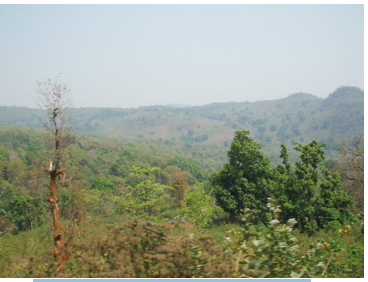
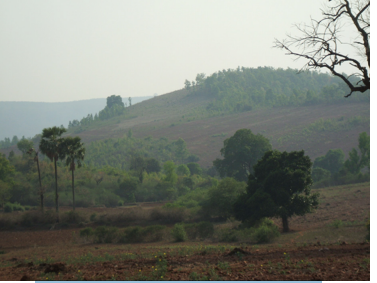
This durable ethnographic study explores the Indigenous knowledge of the local landscape of the Juang one of the Particular Vulnerable Tribal Groups (PVTGs) of Odisha. Following an ethno-ecology method supported by the case study method, an attempt has been made to highlight the emic view of the tribal people based on their knowledge and worldview. All parts of their natural environment, like hills, streams, forests, vegetation soil type etc. are integral parts of their cultural ambience. Classifying the resources found within their lives and livelihood activities incorporates the bio-physical tenets that include the use, composition, position, and size of the objects and belief system as an inseparable part of their culture. Explanations attributed to naming the natural objects and material goods reveal that with the change in contents due to internal demands and/or external interventions, the context of livelihood changes however, even with the decline of biodiversity, the traditional knowledge remains unchanged.
References
- 1. Bandyapadhyay, S. (2001). Perceptual categories of environmental resources and their utilization. Journal of the Indian Anthropological Society, 36, 245–250.
- 2. Bose, N. K. (1928). Marriage and kinship among the Juangs. Man in India, 8(4), 233–242.
- 3. Conklin, H. C. (1954). The relation of Hanunóo culture to the plant world [Doctoral dissertation, Yale University].
- 4. Dalton, E. T. (1872). Descriptive ethnology of Bengal. Office of the Superintendent of Government Printing.
- 5. Elwin, V. (1948). Notes on the Juangs. Man in India, 28(1–2), 1–143.
- 6. Fowler, C. S. (1977). Ethnoecology. In D. L. Hardesty (Ed.), Ecological anthropology (pp. 215–243). John Wiley & Sons.(Note: I identified the specific chapter
- 7. Frake, C. O. (1962). Cultural ecology and ethnography. American Anthropologist, 64(1), 53–59
- 8. Frechione, J., Posey, D. A., & da Silva, L. F. (1989). The perception of ecological zones and natural resources in the Brazilian Amazon: An ethnoecology of Lake Coari. Advances in Economic Botany, 7, 260–282.
- 9. Giri, D. B. (2002). Juang. In P. C. Mehta (Ed.), Ethnographical atlas of Indian tribes. Discovery Publishing House.(Note: Standardized the publisher. Your source listed an address in Udaipur, but Mehta's
- 10. Giri, D. (2017). Indigenous resource taxonomy, knowledge and culture. Bookwell.
- 11. Hardesty, D. L. (1977). Ecological anthropology. John Wiley & Sons.
- 12. Knight, C. G. (1974). Ethnoscience as a research paradigm. In W. C. McCormack & S. A. Wurm (Eds.), Language and thought: Anthropological issues (pp. 367–404). Mouton.(Note: Corrected the book title.
- 13. Mohanty, B. B. (1989). Shifting cultivation in Orissa: With a case study among the Juangs. Adivasi, 26(4), 17–26.
- 14. Patnaik, N., Pradhan, S. C., & Patnaik, K. K. (2007). Forest tribes of Orissa: Vol. 3. The Juang. D.K. Printworld.
- 15. Patnaik, N., Pradhan, S. C., & Patnaik, K. K. (2015). Forest tribes of Orissa: Vol. 4. The Bhuiyan. D.K. Printworld.
- 16. Pike, K. L. (1979). On the extension of etic-emic anthropological methodology to referential units-in-context. Lembaran Pengkajian Budaya.
- 17. Samuells, E. A. (1856). Notes on a forest race called Puttooas or Juang. Journal of the Asiatic Society of Bengal, 25(4), 295–303.(Note: Corrected the year from 1956 to 1856, as Samuells wrote in the 19th century).
- 18. Sarkar, A., & Dasgupta, S. (2000). Ethno-ecology of Indian tribes. Rawat Publications.
- 19. Vayda, A. P., & Rappaport, R. A. (1968). Ecology, cultural and noncultural. In J. A. Clifton (Ed.), Introduction to cultural anthropology: Essays in the scope and methods of the science of man (pp. 477–497).
Data Sharing Statement
There are no additional data available. All raw data and code are available upon request.
Funding
This research received no funding.
Author Contributions
Whether all authors contributed significantly to the work and approve its publication.
Ethics Declaration
This article does not involve any human or animal subjects, and therefore does not require ethics approval.
Acknowledgements
We would like to express our gratitude to the patients, their families, and all those who have contributed to this study.
Conflicts of Interest
The authors report no conflicts of interest in this work.
About this article

Cite this article
Giri D. Indigenous knowledge and tribal worldview on forest. Indian J Res Anthropol. 2023;9(2):89–98
Licence:
Attribution-Non-commercial 4.0 International (CC BY-NC 4.0)This license enables reusers to distribute, remix, adapt, and build upon the material in any medium or format for noncommercial purposes only, and only so long as attribution is given to the creator.
| Received | Accepted | Published |
|---|---|---|
| December 11, 2023 | December 28, 2023 | January 01, 2024 |
DOI: 10.21088/ijra.2454.9118.9223.5
Keywords
Bhuiyan-Juang PirhaIndigenous KnowledgeEnvironmental PerceptionEthnoecologyFolkloreIndigenous PeopleMythicNatural ResourcesNomenclatureSearch for Similar Articles
Similar Articles
- Indigenous Knowledge System in Formal Education
- Contemporary Issues and Challenges in Women’s Weavers in the Varanasi Silk Sare...
- Understanding through Traversing the Corridors of History: Richness of Indian He...
- Challenges and Opportunities in Digital Preservation of Intangible Culture Herit...
- Assessment of Nutritional Indicators: A Comparative Study among Pre-School Child...
Article Level Metrics
Last UpdatedMonday 22 June 2026, 06:25:33 (IST)
761
Accesses
7
221
00
Citations
NA
NA
NA
Download citation
Article Keywords
Keyword Highlighting
Highlight selected keywords in the article text.
Timeline
| Received | December 11, 2023 |
| Accepted | December 28, 2023 |
| Published | January 01, 2024 |
licence
Attribution-Non-commercial 4.0 International (CC BY-NC 4.0)
This license enables reusers to distribute, remix, adapt, and build upon the material in any medium or format for noncommercial purposes only, and only so long as attribution is given to the creator.