Full Text (PDF)
Indian Journal of Genetics and Molecular Research 11(1):p 9-17, January-June 2022. | DOI: https://doi.org/10.21088/ijgmr.2319.4782.11122.1
Review Article
Heterochromatin Dosage Compensation: A Review
Abyt Ibraimov, Stalbek Akhunbayev, Orozali Uzakov
Author Information
Licence:
Attribution-Non-commercial 4.0 International (CC BY-NC 4.0)This license enables reusers to distribute, remix, adapt, and build upon the material in any medium or format for noncommercial purposes only, and only so long as attribution is given to the creator.
Indian Journal of Genetics and Molecular Research 11(1):p 9-17, January-June 2022. | DOI: https://doi.org/10.21088/ijgmr.2319.4782.11122.1
How Cite This Article:
Abyt Ibraimov, Stalbek Akhunbayev, Orozali Uzakov/Heterochromatin Dosage Compensation: A Review/Indian J Genet Mol Res. 2022; 11(1):9–17.Timeline
Received : January 19, 2022
Accepted : February 14, 2022
Published : June 20, 2022
Abstract
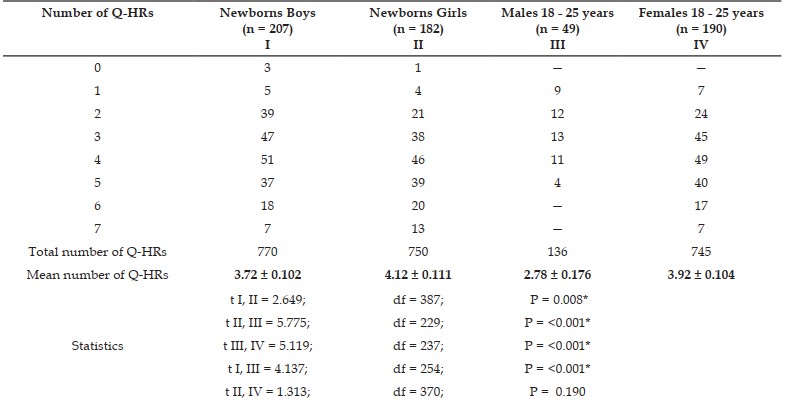
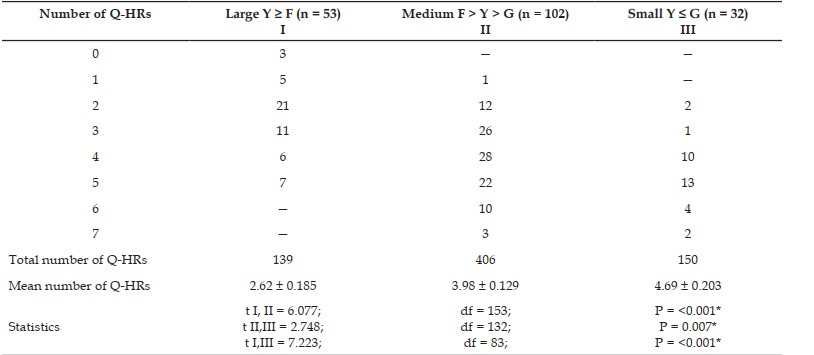
The fact that there is a phenomenon of dosage compensation for the euchromatin part of the genome in eukaryotes has been known for almost a seventy years. This phenomenon is currently being studied under the name epigenetic control of gene expression. Evidence for the existence of dosage compensation at the gene level is obtained from genes localized on the sex chromosomes, the most famous example of which is the X-chromosome inactivation in mammals. As for genes localized on autosomes, there are no convincing data on this score. The question of whether there is a dosage compensation for the heterochromatic part of the genome in eukaryotes remains open. We have data indicating the existence of dosage compensation for the heterochromatin part of the human genome, using the example of chromosomal Q-heterochromatin regions (Q-HRs). It turned out that this phenomenon manifests itself both in sex chromosomes and in autosomes, regardless of gender, age, racial-ethnic origin and climatogeographical characteristics of the place of permanent residence of a human. Moreover, this process is associated with an important part of human life (maintaining temperature homeostasis) and has a phenotypic manifestation, which can be objectively studied. The question is discussed whether the phenomenon of chromosomal heterochromatin dosage compensation should be considered as an example of epigenetics, or it is a different phenomenon, since it does not affect genes?
References
- 1. Galupa R, Heard E. 2018. X-chromosome inactivation: a crossroads between chromosome architecture and gene regulation. Annu Rev Genet. 52: 535-66. Ref.: https://bit.ly/2HM5n3b
- 2. Ibraimov AI. 2014. Chromosomal Q-heterochromatin and sex in human population. J. Mol. Biol. Res., vol. 4, No. 1: 10-19.
- 3. Ibraimov АI, Karagulova GО, Kim ЕY. 2000. The relationship between the Y chromosome size and the amount of autosomal Q-heterochromatin in human populations. Cytobios. 102: 35-53. Ref.: https://bit.ly/2CylJIH
- 4. Ibraimov AI. 2020. Chromosomal Q-heterochromatin in the Human Genome. Cambridge Scholars
- 5. Geraedts JPМ, Pearson PL. 1974. Fluorescent chromosome polymorphism: frequencies and segregation in а Dutch population. Clin Genet 6: 247-257. Ref.:https://bit.ly/30Se6YQ
- 6. MüllerНJ,KlingerНP,GlasserМ.1975.Chromosome polymorphism in а human newborn population. II. Potentials of polymorphic chromosome variants for characterizing the idiograms of an individual.
- 7. Buckton KE, O’Riordan ML, Jacobs PA, et al. 1976. C- and Q-band polymorphisms in the chromosomes f three human populations. Ann Hum Genet 40: 90- 112. Ref.: https://bit.ly/2QZgeYH
- 8. Lubs HA, Patil SR, Kimberling WJ, et al. 1977. Racial differences in the frequency of Q- and C-chromosomal heteromorphism. Nature. 268: 631-632. Ref.: https://bit.ly/2Tw7Eln
- 9. Yamada К, Hasegawa Т. 1978. Types and frequencies of Q-variant chromosomes in а Japanese population. Нum Genet, 44: 89-98. Ref.: https://bit.ly/2R4WJOu
- 10. Al-Nassar КЕ, Palmer СG, Connealy PМ, et al. 1981. The genetic structure of the Kuwaiti population. II. The distribution of Q-band chromosomalheteromorphisms. Нum Genet, 57: 423-427. Ref.: https://bit.ly/30SbfPC
- 11. Ibraimov АI, Mirrakhimov ММ. 1982. Human chromosomal polymorphism. III. Chromosomal Q-polymorphism in Mongoloids of Northern Asia. Hum Genet, 62: 252-257. Ref.: https://bit. ly/2S0nsjG
- 12. Ibraimov АI, Mirrakhimov ММ. 1982. Human chromosomal polymorphism. IV.Q-polymorphism in Russians living in Kirghizia. Hum Genet, 62: 258- 260. Ref.: https://bit.ly/2RVUnGd
- 13. Ibraimov АI, Mirrakhimov ММ. 1982. Human chromosomal polymorphism. V. Chromosomal Q-polymorphism in African populations. Hum Genet, 62: 261-265. Ref.: https://bit.ly/2R48ynY
- 14. IbraimovА ,Mirrakhimov ММ. 1982. Human chromosomal polymorphism. II. Chromosomal С-polymorphism in Mongoloid populations of Central Asia. Hum. Genet, 60: 8-9.
- 15. Ibraimov АI, Mirrakhimov ММ, Nazarenko SА, et al. 1982. Нumanchromosomal polymorphism. I. Chromosomal Q-polymorphism in Mongoloid populations of Central Asia. Hum Gene,. 60: 1-7. Ref.: https://bit.ly/2DnlC4q
- 16. Ibraimov АI, Mirrakhimov ММ, Axenrod ЕI, et al. 1986. Human chromosomal polymorphism. IX. Further data on the possible selective value of chromosomal Q-heterochromatin material. Hum Genet, 73: 151-156. Ref.: https://bit.ly/2RWoA7T
- 17. Ibraimov АI, Kurmanova GU, Ginsburg ЕК, et al. 1990. Chromosomal Qheterochromatin regions in native highlanders of Pamir and Tien-Shan and in newcomers. Cytobios, 63: 71-82. Ref.: https://bit. ly/2RYpQHI
- 18. Ibraimov АI, Axenrod ЕI, Kurmanova GU, et al. 1991. Chromosomal Qheterochromatin regions in the indigenous population of the Northern part of West Siberia and in new migrants. Cytobios, 67:95- 100. Ref.: https://bit.ly/2FAuPIM
- 19. Ibraimov AI, Akanov AA, MeymanalievTS, et al. 2013. Chromosomal Qheterochromatin polymorphisms in 3 ethnic groups (Kazakhs, Russians and Uygurs) of Kazakhstan. Int J Genet, 5:121-124. Ref.: https://bit.ly/2MgRv5b
- 20. Ibraimov AI, Akanov AA, Meymanaliev TS, Smailova RD, Baygazieva GD.2014. Chromosomal Q-heterochromatin and age in human population. J MolBiol Res, 4(1): 1-9.
- 21. Lyon MF. 1961. Gene action in the X-chromosome of the mouse (Musmusculus L.). Nature 190: 372–373.
- 22. Takagi N, Sugawara O, Sasaki M. 1982. Regional and temporal changes in the pattern of X-chromosome replication during the early post-implantation development of the female mouse. Chromosoma, 85: 275-286. Ref.: https://bit.ly/2WcjHdP
- 23. Tada T, Takagi N, Adler ID. 1993. Parental imprinting on the mouse X chromosome: effects on the early development of X0, XXY and XXX embryos. Genet Res, 62:139-48. Ref.: https://bit. ly/2XaWjtG
- 24. Buzin CH, Mann JR, Singer-Sam J. 1994. Quantitative RT-PCR assays show Xist RNA levels are low in mouse female adult tissue, embryos and embryoid bodies. Development, 120: 3529–3536.
- 25. Marahrens Y, Panning B, Dausman J, et al. 1997. Xist-deficient mice are defective in dosage compensation but not spermatogenesis. Genes Dev, 11:156-66. Ref.: https://bit.ly/30SlG5Z
- 26. ChaligneR, Heard E. 2014. X-chromosome inactivation in development and cancer. FEBS Lett, 588: 2514-2522. Ref.: https://bit.ly/2WcHEBV
- 27. Ibraimov AI. 2003. Condensed chromatin and cell thermoregulation. Complexus, 1: 164-170.
- 28. Ibraimov AI. 2017. Cell Thermoregulation: Problems, Advances and Perspectives. J MolBiol Res, 7(1): 58-79. doi:10.5539/jmbr.v7n1p58
- 29. Ibraimov AI, Akanov AA, Meimanaliev TS, et al. 2014. Human Chromosomal Q-heterochromatin Polymorphism and Its Relation to Body Heat Conductivity. Int J Genet, 6: 142-148. Ref.: https://bit.ly/2McMudN
- 30. Ibraimov AI,Tabaldiev SK. 2007. Condensed chromatin, cell thermoregulation and human body heat conductivity. J. Hum. Ecol., 21(1): 1-22.
- 31. Ibraimov AI, Kazakova AK, Moldotashev IK, SultanmuratovMT,AbdyevAS. 2010. Variability of Human Body Heat Conductivity in Population. I. Methodological and Theoretical Approaches. J Hum Ecol, 32(1): 1-22.
- 32. Klinger HP. 1958. The fine structure of the sex chromatin body.Exp Cell Res, 14: 207-211. Ref.: https://bit.ly/2HZ6sDi
- 33. Hoehn H, Martin GM. 1973. Nonrandom arrangement of human chromatin: topography of disomic markers X, Y, and 1h+. Cytogenet Genome Res, 12: 443-452. Ref.: https://bit.ly/2Xgrwf6
- 34. Belmont AS, Bignone F, Ts’o POP. 1986. The relative intranuclear positions of Barr bodies in XXX nontransformed human fibroblasts. Exp Cell Res. 16:165-79. Ref.: https://bit.ly/2JGdgck
- 35. Bourgeois CA, Laquerriere F, Hemon D, et al. 1985. New data on the in-situ position of the inactive X chromosome in the interphase nucleus of human fibroblasts. Hum Genet, 69:122-29. Ref.:https:// bit.ly/2JJcPOz
- 36. Zhang L-F, Huynh KD, Lee JT. 2007. Perinucleolar targeting of the inactive X during S phase: evidence for a role in the maintenance of silencing. Cell, 129: 693-706. Ref.: https://bit.ly/2I33az2
- 37. Schmid, M., ogel, W., Krone, W. 1975. Attraction between centric heterochromatin of human chromosomes. Cytogenet Cell Genet, 15: 66-80. Ref. : https://bit.ly/2MboY0B
- 38. Ibraimov AI. 2015. Heterochromatin: The visible with many invisible effects. Global Journal of Medical Research, 15: 7-32. Ref.: https://bit. ly/2HHJAJO
- 39. Ibraimov AI. 2017. Cell Thermoregulation: Problems, Advances and Perspectives. J MolBiol Res, 7(1): 58-79. doi:10.5539/jmbr.v7n1p58
- 40. Ibraimov AI. 2004. The origin of condensed chromatin, cell thermoregulation and multicellularity. Complexus, 2: 23-34
- 41. Paris Conference. (1971) and Supplement (1975). Standartization in human cytogenetics. Birth Defects: Original Article Series. XI. 1-84. The National Foundation. New York. Ref.: https://bit.ly/2I4q5u0
- 42. Ibraimov AI. 2018. Human Body Heat Conductivity in norm and pathology: A review. Advance Research Journal of Multidisciplinary Discoveries, 32(3): 12-21.
- 43. Ibraimov AI. 2019. Sex determination and Y chromosome constitutive heterochromatin. Current Research in Biochemistry and Molecular Biology, 1(1) 1-5. http://dx.doi.org/10.33702/crbmb.2019.1.1.1
- 44. Ibraimov AI. 2019. Cell thermoregulation and origin of homeothermic animals, Current Research in Biochemistry and Molecular Biology, 1(1) 10-13. http://dx.doi.org/10.33702/crbmb.2019.1.1.3
Data Sharing Statement
There are no additional data available. All raw data and code are available upon request.
Funding
This research received no funding.
Author Contributions
All authors contributed significantly to the work and approve its publication.
Ethics Declaration
This article does not involve any human or animal subjects, and therefore does not require ethics approval.
Acknowledgements
We would like to express our gratitude to the patients, their families, and all those who have contributed to this study.
Conflicts of Interest
No conflicts of interest in this work.
About this article

Cite this article
Abyt Ibraimov, Stalbek Akhunbayev, Orozali Uzakov/Heterochromatin Dosage Compensation: A Review/Indian J Genet Mol Res. 2022; 11(1):9–17.
Licence:
Attribution-Non-commercial 4.0 International (CC BY-NC 4.0)This license enables reusers to distribute, remix, adapt, and build upon the material in any medium or format for noncommercial purposes only, and only so long as attribution is given to the creator.
| Received | Accepted | Published |
|---|---|---|
| January 19, 2022 | February 14, 2022 | June 20, 2022 |
DOI: https://doi.org/10.21088/ijgmr.2319.4782.11122.1
Keywords
Heterochromatin dosage compensation; Gene dosage compensation; chromosomal Q-heterochromatin regions; Epigenetics; X-chromosome inactivation; Cell thermoregulation.Heterochromatin dosage compensationGene dosage compensationchromosomal Q-heterochromatin regionsEpigeneticsX-chromosome inactivationCell thermoregulationSearch for Similar Articles
Similar Articles
- Success After Unexplained Multiple Miscarriages using PGT-A and PGT-M for RELN G...
- A Translational Strategy to Overcome Platinum Resistance in Ovarian Cancer via...
- Bridging Classic Cytogenetics with Modern Chromosomics: A Historical and Scienti...
- Mitochondrial D-Loop and HBB Gene Profiling in Antenatal Hemoglobinopathy Carrie...
- Histopathologic Features of High Grade Serous Ovarian Carcinomas Associated with...
Article Level Metrics
Last UpdatedWednesday 26 August 2026, 22:51:56 (IST)
1465
Accesses
15
316
00
Citations
NA
NA
NA
Download citation
Article Keywords
Keyword Highlighting
Highlight selected keywords in the article text.
Timeline
| Received | January 19, 2022 |
| Accepted | February 14, 2022 |
| Published | June 20, 2022 |
licence
Attribution-Non-commercial 4.0 International (CC BY-NC 4.0)
This license enables reusers to distribute, remix, adapt, and build upon the material in any medium or format for noncommercial purposes only, and only so long as attribution is given to the creator.