Full Text (PDF)
Indian Journal of Genetics and Molecular Research 15(1):p 35-50, Jan-June 2026. | DOI: https://doi.org/10.21088/ijgmr.2319.4782.15126.4
Review Article
Bridging Classic Cytogenetics with Modern Chromosomics: A Historical and Scientific Overview
Komal Uppal, Srugvi Gupta, Somya Goyal, Nitya Dinesh Lulla, Rishika Tripathi, Ashvin Basant Malik, Rajamahanthi Shirdi Krishna, Sunil Kumar Polipalli, Seema Kapoor
Author Information
Licence:
Attribution-Non-commercial 4.0 International (CC BY-NC 4.0)This license enables reusers to distribute, remix, adapt, and build upon the material in any medium or format for noncommercial purposes only, and only so long as attribution is given to the creator.
Indian Journal of Genetics and Molecular Research 15(1):p 35-50, Jan-June 2026. | DOI: https://doi.org/10.21088/ijgmr.2319.4782.15126.4
How Cite This Article:
Srugvi Gupta, Somya Goyal, Nitya Dinesh Lulla et. al, Bridging Classic Cytogenetics with Modern Chromosomics: A Historical and Scientific Overview. Ind J Genet Mol Res. 2026; 15(1): 35-50.Timeline
Received : October 31, 2025
Accepted : December 10, 2025
Published : June 30, 2026
Abstract
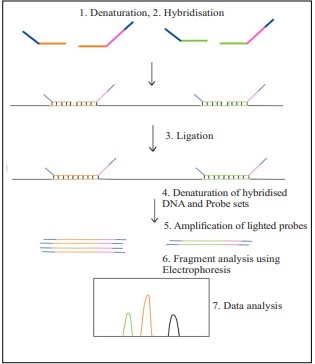
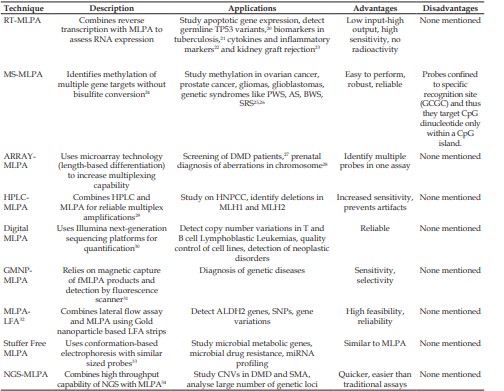
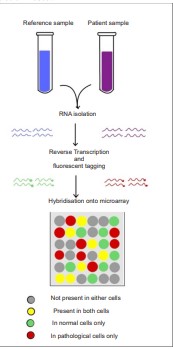
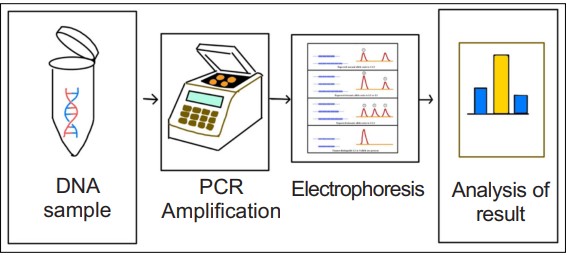
Cytogenetics is the study of structure and behavior of chromosome at a macroscopic level. Various cytogenetic techniques can detect different numerical such as aneuploidies and abnormalities in chromosomal structure such as Duplication, Deletion, Translocation, Inversion, Insertion and Copy Number Variations (CNVs) etc. Scientific and technical advancements from conventional cytogenetics to molecular cytogenetics in the field of medical genetics have brought improvements in the resolution of chromosome analysis facilitating a deeper understanding of chromosomes, structurally and functionally. Shift in cytogenetics to chromosomics has helped in understanding the influence of three-dimensional dynamic structure and function of chromosomes on gene expression and genome evolution by integrating cytogenetics with genomics and cell biology. This evolution in cytogenetics has made the possibility of not only postnatal diagnosis of chromosomal abnormalities but is also responsible for the advent of prenatal chromosomal disorders’ diagnosis and genetic counseling in clinical medicine. Now it is our aim to make aware our patients about these available advanced tests and make available these tests to our patients at low cost. This incredible journey from symptomatic disease to conventional karyotype to molecular cytogenetic to chromosomics (genotype) should be continued in the future for the futuristic genetic evolution. This review article talks over the evolution and advancements in cytogenetic techniques covering a brief overview of conventional Karyotyping and FISH and discussing in detail about molecular cytogenetics advanced techniques like Multiple Ligation Dependent Probe Amplification (MLPA), Quantitative Flourescent-Polymerase Chain Reaction (QFPCR), Chromosomal microarray and Optical Genome mapping.
References
- 1. Duke, S.E.; Samollow, P.B.; Mauceli, E.; Lindblad-Toh, K.; Breen, M. Integrated
- 2. Mikkelsen, T.S.; Wakefield, M.J.; Aken, B.; Amemiya, C.T.; Chang, J.L.; Duke, S.; Garber, M.; Gentles, A.J.; Goodstadt, L.; Heger, A.; et al. Genome of the marsupial Monodelphis
- 3. The Tomato Genome Consortium. The tomato genome sequence provides insights into fleshy fruit evolution. Nature 2012, 485, 635–641.
- 4. Shearer, L.A.; Anderson, L.K.; de Jong, H.; Smit, S.; Goicoechea, J.L.; Roe, B.A.; Hua, A.; Giovannoni, J.J.; Stack, S.M. Fluorescence in situ hybridization and optical mapping to correct scaffold arrangement in the tomato genome. G3 2014, 4, 1395–1405.
- 5. Putnam, N.H.; Connell, B.O.; Stites, J.C.; Rice, B.J.; Hartley, P.D.; Sugnet, C.W.; Haussler, D.; Rokhsar, D.S. Chromosome-scale shotgun assembly using an in vitro method for longrange linkage. Genome Res. 2016, 26, 342–350.
- 6. Mostovoy, Y.; Levy-Sakin, M.; Lam, J.; Lam, E.T.; Hastie, A.R.; Marks, P.; Lee, J.; Chu, C.; Lin, C.; Džakula, Ž.; et al. A hybrid approach for de novo human genome sequence assembly and phasing. Nat. Methods 2016, 13, 12–17.
- 7. Zheng, G.X.Y.; Lau, B.T.; Schnall-Levin, M.; Jarosz, M.; Bell, J.M.; Hindson, C.M.; Kyriazopoulou-Panagiotopoulou, S.; Masquelier, D.A.; Merrill, L.; Terry, J.M.; et al.
- 8. Rhoads, A.; Au, K.F. PacBio Sequencing and Its Applications. Genom. Proteom. Bioinform. 2015, 13, 278–289
- 9. Lu, H.; Giordano, F.; Ning, Z. Oxford Nanopore MinION Sequencing and Genome Assembly. Genom. Proteom. Bioinform. 2016, 14, 265–279.
- 10. Yunis JJ, Sanchez O. G-banding and chromosome structure. Chromosoma. 1973 Mar;44(1):15-23.
- 11. Sharwini Baskar, Dr. M. P. Brundha, Dr. Preetha. S. Karyotyping and its Recent Advances - A Review. J Arch.Egyptol. 2020;17(7):629-642.
- 12. Gall JG, Pardue ML. Formation and detection of RNA-DNA hybrid molecules in cytological preparations. Proc Natl Acad Sci U S A.1969;63(2):378-383.
- 13. Ratan ZA, Zaman SB, Mehta V, Haidere MF, Runa NJ, Akter N. Application of fluorescence in situ hybridization (FISH) technique for the
- 14. Deng W, Shi X, Tjian R, Lionnet T, Singer RH. CASFISH: CRISPR/Cas9-mediated in situ
- 15. Chen F, Tillberg PW, Boyden ES. Optical imaging. Expansion microscopy. Science. 2015;347(6221):543-8.
- 16. Urbanek MO, Krzyzosiak WJ. RNA FISH for detecting expanded repeats in human diseases. Methods. 2015; 98:115-123.
- 17. Kochan J, Wawro M, Kasza A. Simultaneous detection of mRNA and protein in single cells using immunofluorescence-combined singlemolecule RNA FISH. Biotechniques. 2015;59(4)
- 18. Schouten JP, McElgunn CJ, Waaijer R, Zwijnenburg D, Diepvens F, Pals G.
- 19. Bohler S, Afreen S, Fernandez-Orth J, Demmerath E-M, Molnar C, Wu Y, et al. Inhibition of the anti-apoptotic protein MCL1 severely suppresses human hematopoiesis. Haematologica. 2021;106(12):3136–3148.
- 20. Raad S, Rolain M, Coutant S, Derambure C, Lanos R, Charbonnier F, et al. Blood functional
- 21. Leo S, Narasimhan M, Rathinam S, Banerjee A. Biomarkers in diagnosing and therapeutic
- 22. Heutz JW, Rogier C, Niemantsverdriet E, van den Eeden SJF, de Jong PHP, Lubberts E, et al.
- 23. de Nattes T, Beadle J, Toulza F, Candon E, Ruminy P, François A, et al. A simple
- 24. Moelans CB, Atanesyan L, Savola SP, van Diest PJ. Methylation-specific multiplex ligationdependent probe amplification (MS-MLPA). Methods Mol Biol. 2018;1708:537–549.
- 25. Kim B, Park Y, Cho SI, Kim MJ, Chae J-H, Kim JY, et al. Clinical utility of methylationspecific multiplex ligation-dependent probe
- 26. Acosta-Fernández E, Corona-Rivera JR, RíosFlores IM, Torres-Anguiano E, Corona-Rivera A, Peña-Padilla C, et al. Usefulness of the MSMLPA technique in the diagnosis of BeckwithWiedemann syndrome and Silver-Russell syndrome. Gac Med Mex. 2022;158(4):202–209.
- 27. Zeng F, Ren Z-R, Huang S-Z, Kalf M, Mommersteeg M, Smit M, et al. Array-MLPA:
- 28. Yan J-B, Xu M, Xiong C, Zhou D-W, Ren Z-R, Huang Y, et al. Rapid screening for
- 29. De Lellis L, Curia MC, Catalano T, De Toffol S, Bassi C, Mareni C, et al. Combined use of MLPA
- 30. Benard-Slagter A, Zondervan I, de Groot K, Ghazavi F, Sarhadi V, Van Vlierberghe P, et
- 31. Yang H, Liu M, Jiang H, Zeng Y, Jin L, Luan T, et al. Copy number variation analysis
- 32. Yin D, Li X, Mai L, Wang R, Tang S, Hu L. Visual single nucleotide polymorphism (SNP) detection for ALDH2 genotyping based on multiplex ligation probe amplification (MLPA) and lateral flow assay. Microchem J. 2023; 194(109329):109329.
- 33. Shin GW, Na J, Seo M, Chung B, Nam HG, Lee S-J, et al. Precise expression profiling by
- 34. Yang Y, Xia C, Song X, Tang X, Nie X, Xu W, et al. Application of a multiplex ligationdependent probe amplification-based nextgeneration sequencing approach for the
- 35. Levy B, Wapner R. Prenatal diagnosis by chromosomal microarray analysis. Fertil Steril. 2018;109(2):201-212.
- 36. Liu X, Liu S, Wang H, Hu T. Potentials and challenges of chromosomal microarray
- 37. Zou, G., Zhang, J., Li, X. W., He, L., He, G., & Duan, T. (2008). Quantitative fluorescent
- 38. Nicolini U, Lalatta F, Natacci F, Curcio C, Bui TH. The introduction of QF-PCR in
- 39. Sun L, Fan Z, Long J, Weng X, Tang W, Pang W. Rapid prenatal diagnosis of aneuploidy for chromosomes 21, 18, 13, X, and Y using
- 40. Muthuswamy S, Agarwal S. Segmental duplication QF-PCR: A simple and alternative
- 41. Liehr T, Othman MAK, Rittscher K, Alhourani E. The current state of molecular cytogenetics
- 42. Mikhail FM, Heerema NA, Rao KW, Burnside RD, Cherry AM, Cooley LD. Section E6.1-6.4 of
- 43. Asif A, Mushtaq S, Hassan U, Akhtar N, Hussain M, Azam M, et al. Fluorescence in situ hybridization (FISH) for differential diagnosis of soft tissue sarcomas. Asian Pac J Cancer Prev. 2018;19(3):655–660.
- 44. Tamminga GG, Jansen GJ, Wiersma M. Evaluation of a fluorescence in situ
- 45. Shah J, Mark O, Weltman H, Barcelo N, Lo W, Wronska D, et al. Fluorescence in situ
- 46. Baliga S, Murphy C, Sharon L, Shenoy S, Biranthabail D, Weltman H, et al. Rapid
- 47. Mutez, E., Swiderski, M., Devos, D., Moreau, C., Baille, G., Degardin, A., Ryckewaert, G.,
- 48. Schouten J, van Vught P, Galjaard R-J. Multiplex Ligation-dependent Probe
- 49. Kosztolányi S, Kiss R, Atanesyan L, Gángó A, de Groot K, Steenkamer M, et al. Highthroughput copy number profiling by
- 50. Ji YL, Luo H, Wen JZ, Haer-Wigman L, Veldhuisen B, Wei L, et al. RHD genotype and zygosity analysis in the Chinese Southern Han
- 51. Santos PFG dos, Costa ERD, Ramalho DM, Rossetti ML, Barcellos RB, Nunes L de S, et al. Detection of tuberculosis drug resistance:
- 52. ACOG Committee on Genetics. Committee Opinion No. 682: Microarrays and NextGeneration Sequencing Technology: The Use
- 53. Awuah WA, Shah MH, Sanker V, Mannan KM, Ranganathan S, Nkrumah-Boateng PA,
- 54. Frost A, van Campen J. Common aneuploidy testing (QF-PCR). GeNotes. https://www.
- 55. Chen Q, Zhang H, Li X, Li J, Chen H, Liu L, et al. Sequential application of copy number
- 56. Qi M-L, Zhang Y-Y, Liu X-L, He R, Zhao Y-Y. Chromosomal abnormality diagnosis of male infertility by QF-PCR. Yi Chuan. 2011;33(8):895–900.
- 57. Yuanyuan Z, Qiang D, Xiaoliang L, Wanting C, Rong H, Yanyan Z. Screening of azoospermia factor microdeletions on Y chromosome in infertile men by QF-PCR. Yi Chuan. 2014;36(6):552–557.
- 58. Neveling K, Mantere T, Vermeulen S, Oorsprong M, van Beek R, Kater-Baats E, et al. Next-generation cytogenetics: Comprehensive assessment of 52 hematological malignancy genomes by optical genome mapping. The American Journal of Human Genetics. 2021;108(8):1423–1435.
- 59. Shim Y, Koo YK, Shin S, Lee ST, Lee KA, Jong Rak Choi. Comparison of Optical Genome Mapping With Conventional Diagnostic Methods for Structural Variant Detection in Hematologic Malignancies. Annals of laboratory medicine. 2024;44(4):324–334.
- 60. Dai Y, Li P, Wang Z, Liang F, Yang F, Fang L, et al. Single-molecule optical mapping enables quantitative measurement of D4Z4 repeats in facioscapulohumeral muscular dystrophy (FSHD). Journal of Medical Genetics. 2019;57(2):109–120.
- 61. Stence AA, Thomason J, Pruessner JA, Ramakrishna Sompallae, Snow AN, Ma D, et al. Validation of Optical Genome Mapping for the Molecular Diagnosis of Facioscapulohumeral Muscular Dystrophy. The Journal of Molecular Diagnostics. 2021;23(11):1506–14.
- 62. Goumy C, Ouedraogo ZG, Bellemonte E, Eymard-Pierre E, Soler G, Perthus I, et al. Feasibility of Optical Genome Mapping from Placental and Umbilical Cord Sampled after Spontaneous or Therapeutic Pregnancy Termination. Diagnostics. 2023;13(23):3576.
- 63. sKlinger K, Landes G, Shook D, Harvey R, Lopez L, Locke P, et al. Rapid detection of chromosome aneuploidies in uncultured amniocytes by using fluorescence in situ hybridization (FISH). Am J Hum Genet. 1992;51(1):55–65.
- 64. Ried T, Landes G, Dackowski W, Klinger K, Ward DC. Multicolor fluorescence in situ hybridization for the simultaneous detection of probe sets for chromosomes 13, 18, 21, X and Y in uncultured amniotic fluid cells. Hum Mol Genet. 1992;1(5):307–313.
- 65. Sellner LN, Taylor GR. MLPA and MAPH: new techniques for detection of gene deletions. Hum Mutat. 2004;23(5):413–419.
- 66. Cifuentes R, Padilla J, de la Morena-Barrio ME, de la Morena-Barrio B, Bravo-Pérez C, Garrido-Rodríguez P, et al. Usefulness and limitations of multiple ligation-dependent probe amplification in antithrombin deficiency. Int J Mol Sci. 2023;24(5).
- 67. Ferri L, Cavicchi C, Fiumara A, Parini R, Guerrini R, Morrone A. Pitfalls in the detection of gross gene rearrangements using MLPA in Fabry disease. Clin Chim Acta. 2016;452:82–6.
- 68. Konialis C, Savola S, Karapanou S, Markaki A, Karabela M, Polychronopoulou S, et al. Routine application of a novel MLPA-based first-line screening test uncovers clinically relevant copy number aberrations in haematological malignancies undetectable by conventional cytogenetics. Hematology. 2014;19(4):217–24.
- 69. Bernatowicz K, Zimowski J, Łaczmańska I, Piotrowski K, Kashyap A, BednarskaMakaruk M, et al. Clinical utility of MLPA and QF-PCR techniques in the genetic testing of miscarriages. Russ J Genet. 2019;55(10): 1259–65.
- 70. Dremsek P, Schachner A, Reischer T, et al. Retrospective study on the utility of optical genome mapping as a follow-up method in genetic diagnostics. J Med Genet. 2025;62(2): 89-96.
- 71. Zhang Q, Wang Y, Xu Y, Zhou R, Huang M, Qiao F, et al. Optical genome mapping for detection of chromosomal aberrations in prenatal diagnosis. Acta Obstetricia Et Gynecologica Scandinavica. 2023;102(8): 1053–62.
- 72. Mathew MT, Akkari YMN. Optical Genome Mapping in Prenatal Diagnosis: Democratizing Comprehensive Cytogenomic Testing. Clinical Chemistry. 2024;70(6):783–5.
Data Sharing Statement
There are no additional data available. All raw data and code are available upon request.
Funding
This research received no funding
Author Contributions
All authors contributed significantly to the work and approve its publication.
Ethics Declaration
This article does not involve any human or animal subjects, and therefore does not require ethics approval.
Acknowledgements
We would like to express our gratitude to the patients, their families, and all those who have contributed to this study
Conflicts of Interest
No conflicts of interest in this work.
About this article

Cite this article
Srugvi Gupta, Somya Goyal, Nitya Dinesh Lulla et. al, Bridging Classic Cytogenetics with Modern Chromosomics: A Historical and Scientific Overview. Ind J Genet Mol Res. 2026; 15(1): 35-50.
Licence:
Attribution-Non-commercial 4.0 International (CC BY-NC 4.0)This license enables reusers to distribute, remix, adapt, and build upon the material in any medium or format for noncommercial purposes only, and only so long as attribution is given to the creator.
| Received | Accepted | Published |
|---|---|---|
| October 31, 2025 | December 10, 2025 | June 30, 2026 |
DOI: https://doi.org/10.21088/ijgmr.2319.4782.15126.4
Keywords
CytogeneticsChromosomicsKaryotypingFISHChromosomal MicroarrayMLPAOptical Genome MappingQF-PCRSearch for Similar Articles
Similar Articles
- Success After Unexplained Multiple Miscarriages using PGT-A and PGT-M for RELN G...
- A Translational Strategy to Overcome Platinum Resistance in Ovarian Cancer via...
- Mitochondrial D-Loop and HBB Gene Profiling in Antenatal Hemoglobinopathy Carrie...
- Histopathologic Features of High Grade Serous Ovarian Carcinomas Associated with...
- Genetic Insight into Familial and Sporadic Alzheimer’s Disease
Article Level Metrics
Last UpdatedTuesday 20 October 2026, 07:20:23 (IST)
2261
Accesses
100
325
00
Citations
NA
NA
NA
Download citation
Article Keywords
Keyword Highlighting
Highlight selected keywords in the article text.
Timeline
| Received | October 31, 2025 |
| Accepted | December 10, 2025 |
| Published | June 30, 2026 |
licence
Attribution-Non-commercial 4.0 International (CC BY-NC 4.0)
This license enables reusers to distribute, remix, adapt, and build upon the material in any medium or format for noncommercial purposes only, and only so long as attribution is given to the creator.