Full Text (PDF)
Physiotherapy and Occupational Therapy Journal 18(2):p 125-128, April- June 2025. | DOI: https://doi.org/10.21088/potj.0974.5777.18225.3
Original Article
Ergonomic Evaluation of Manual Material Handling Workers in a Ceramic Factory Using REBA: An Observational Study
Nikhita Dodiya, Parthkumar Devmurari
Author Information
Licence:
Attribution-Non-commercial 4.0 International (CC BY-NC 4.0)This license enables reusers to distribute, remix, adapt, and build upon the material in any medium or format for noncommercial purposes only, and only so long as attribution is given to the creator.
Physiotherapy and Occupational Therapy Journal 18(2):p 125-128, April- June 2025. | DOI: https://doi.org/10.21088/potj.0974.5777.18225.3
How Cite This Article:
Nikhita Dodiya, Parthkumar Devmurari. Ergonomic Evaluation of Manual Material Handling Workers in a Ceramic Factory Using REBA: An Observational Study. Physiotherapy and Occupational Therapy Journal 2025; 18(2): 125-128.Timeline
Received : January 29, 2025
Accepted : May 24, 2025
Published : June 30, 2025
Abstract
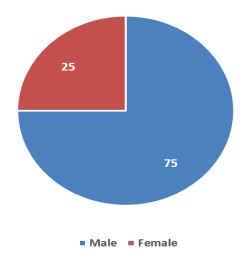
A ceramic is an inorganic non-metallic solid made up of either metal or nonmetal compounds that have been shaped and then hardened by heating to high temperatures. In general, they are hard, corrosion-resistant and brittle. Tiles are thin objects, usually square or rectangular in shape. Ceramic factory workers are involved in lifting, pulling, bending and making models. Most of their working task are subjective and requires repetitive movements and static postures in them leading to musculoskeletal disorders. Methodology: his study was conducted on 100 ceramic workers at the Styline factory in Morbi, with participants aged between 25 and 34 years. Their working postures were assessed using the REBA scale. Conclusion: The findings indicate that nearly all ceramic workers are at moderate risk of developing musculoskeletal disorders. This highlights the need for intervention and increased awareness of postural correction exercises to help prevent further musculoskeletal injuries.
References
- 1. Sue Hignett, Lynn McAtamney et al (2000) Rapid Entire Body Assessment (REBA) Applied Ergonomics (31) 201-205.
- 2. Alirenza Choobineh, Hadi Deneshmandi, AgshinFallahpoor, Hoda Rahimi Fard et al (2013) Ergonomic Assessement of Musculoskeletal Disorders risk level of workers of petrochemical company. 10(3). 78-79.
- 3. Leyla Maghsoudian, Samira Barakat, Hossein Ebrahimi Ehsanollah Habibi et al (2017) Ergonomic Assessment of Musculoskeletal Disorders Risk Factors in Office Staff using ROSA Method and Its Relation with Efficiency. Journal of Military Medicine 9(1). 31-39.
- 4. G.C. David (2005) Ergonomic methods for assessing exposure to risk factors for workrelated musculoskeletal disorders. Occupation medicine. 55: 190–199.
- 5. Winkel J., Mathiassen S (1994). Assessment of physical work in epidemiology studies: concepts, issues and operational considerations. Ergonomics; 37: 979 –988.
- 6. Devereux J., Vlachonikolis I., Buckle P. (2002) Epidemiological study to investigate potential interaction between physical and psychosocial factors at work that may increase the risk of symptoms of musculoskeletal disorder of the neck and upper limb. Occup Environ Med; 59: 269 –277.
- 7. Bernard B., ed. (1997) Musculoskeletal Disorders and Workplace Factors: A Critical Review of the Epidemiological Evidence for Work-Related Musculoskeletal Disorders of the Neck, Upper Extremity, and Low Back. Cincinnati: DHHS (NIOSH) Publication, No. 97 141.
- 8. Keyserling M., Brouwer M., Silverstein B. (1992) A checklist for evaluating ergonomic risk factors resulting from awkward postures of the legs, trunk, and neck. Int J Ind Ergon; 9: 283 –301.
- 9. Occhipinti E. OCRA: (1998) a concise index for the assessment of exposure to repetitive movements of the upper limb. Ergonomics; 41: 1290–1311.
- 10. Chaffin D., Andersson G., Martin B. (1999) Occupational Biomechanics, 3rd edn. New York: John Wiley,
- 11. Leigh J.P., Markowitz S.B., Fahs M., Shin C., Landrigan P.J.( 1997) Occupational Injury and Illness in the United States, Estimates of Costs, Morbidity, and Mortality. Arch Intern Med.; 157(14):1557–68
- 12. Palmer K.T., Harris E.C., Linaker C., Barker M., Lawrence W., Cooper C., et al (2012). Effectiveness of community- and workplacebased interventions to manage musculoskeletalrelated sickness absence and job loss: a systematic review. Rheumatology;51(2):230–42
- 13. Kennedy C.A., Amick B.C., Dennerlien JT, Brewer S., Catli S., William R., et al. (2010) Systematic Review of the Role of Occupational Health and Safety Interventions in the Prevention of Upper Extremity Musculoskeletal Symptoms, Signs, Disorders, Injuries, Claims and Lost Time. J Occup Rehabil; 20(2): 127–62
- 14. National Research Council and Institute of Medicine . (2001) Musculoskeletal Disorders and the Workplace: Low Back and Upper Extremities. The National Academy Press; Washington, DC: pp. 364–5
- 15. Eatough E.M., Way J.D., Chang C.H. (2012) Understanding the link between psychosocial work stressors and work-related musculoskeletal complaints. Appl Ergon; 43(3): 554–63.
- 16. Okunribido OO, Magnusson M, Pope MH.(2008) The role of whole body vibration, posture and manual materials handling as risk factors for low back pain in occupational drivers. Ergonomics.; 51(3): 308–29.
- 17. V.D., Codru I.R., Saini V., Devmurari P., Goyal S., Kaur P. Study of the duration of the post-covid effects and associated risks amongdoctors. Salud, Ciencia y Tecnologia. 2024; 4: 923. https://doi.org/10.56294/ saludcyt2024.923
- 18. Dodiya N., Joshi N., kumar Saharan A., Devmurari P. The Effect of Respiratory Muscle Training on Pulmonary Function among Workers of Cotton Industry: An Observational Study.
Data Sharing Statement
There are no additional data available. All raw data and code are available upon request.
Funding
This research received no funding.
Author Contributions
All authors contributed significantly to the work and approve its publication.
Ethics Declaration
This article does not involve any human or animal subjects, and therefore does not require ethics approval.
Acknowledgements
We would like to express our gratitude to the patients, their families, and all those who have contributed to this study.
Conflicts of Interest
No conflicts of interest in this work.
About this article

Cite this article
Nikhita Dodiya, Parthkumar Devmurari. Ergonomic Evaluation of Manual Material Handling Workers in a Ceramic Factory Using REBA: An Observational Study. Physiotherapy and Occupational Therapy Journal 2025; 18(2): 125-128.
Licence:
Attribution-Non-commercial 4.0 International (CC BY-NC 4.0)This license enables reusers to distribute, remix, adapt, and build upon the material in any medium or format for noncommercial purposes only, and only so long as attribution is given to the creator.
| Received | Accepted | Published |
|---|---|---|
| January 29, 2025 | May 24, 2025 | June 30, 2025 |
DOI: https://doi.org/10.21088/potj.0974.5777.18225.3
Keywords
WordCeramic workersPostureRapid Entire Body Assessment (REBA)ErgonomicsMusculoskeletal RiskSearch for Similar Articles
Similar Articles
- Evidence Synthesis of Gait Impairments in Stroke Patients and Various Mechanisms...
- Active and Passive Physiotherapy in Neurorehabilitation: Narrative Review
- The Impact of Supervised Home-Based Progressive Resistance Exercise Programs on...
- Effect of Motor Control Exercises on Pain and Mobility in Professional Drivers O...
- Influence of Stretching Exercises on Primary Dysmenorrhea in Adolescent Girls: A...
Article Level Metrics
Last UpdatedFriday 02 October 2026, 06:48:17 (IST)
3640
Accesses
5
662
00
Citations
NA
NA
NA
Download citation
Article Keywords
Keyword Highlighting
Highlight selected keywords in the article text.
Timeline
| Received | January 29, 2025 |
| Accepted | May 24, 2025 |
| Published | June 30, 2025 |
licence
Attribution-Non-commercial 4.0 International (CC BY-NC 4.0)
This license enables reusers to distribute, remix, adapt, and build upon the material in any medium or format for noncommercial purposes only, and only so long as attribution is given to the creator.