Full Text (PDF)
Physiotherapy and Occupational Therapy Journal 19(1):p 49-55, Jan - March 2026. | DOI: 10.21088/potj.0974.5777.19126.5
Original Article
Effectiveness of a Plyometric Training Program in Improving Ankle Instability among Indian Volleyball Players
P. Shanmuga Raju, Karthikeyan T
Author Information
Licence:
Attribution-Non-commercial 4.0 International (CC BY-NC 4.0)This license enables reusers to distribute, remix, adapt, and build upon the material in any medium or format for noncommercial purposes only, and only so long as attribution is given to the creator.
Physiotherapy and Occupational Therapy Journal 19(1):p 49-55, Jan - March 2026. | DOI: 10.21088/potj.0974.5777.19126.5
How Cite This Article:
Karthikeyan T., Shanmuga Raju P. Effectiveness of a Plyometric Training Program in Improving Ankle Instability among Indian Volleyball Players. Therapy Jr. 2026; 19(1): 49-55.Timeline
Received : November 19, 2026
Accepted : January 29, 2026
Published : March 30, 2026
Abstract
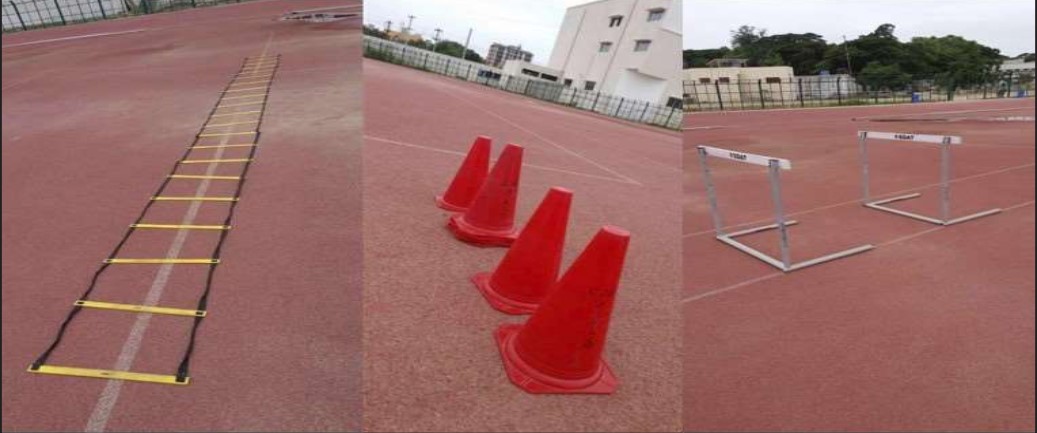
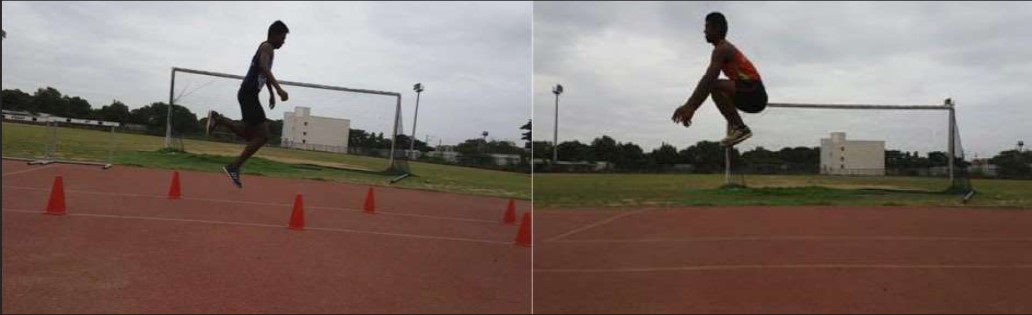
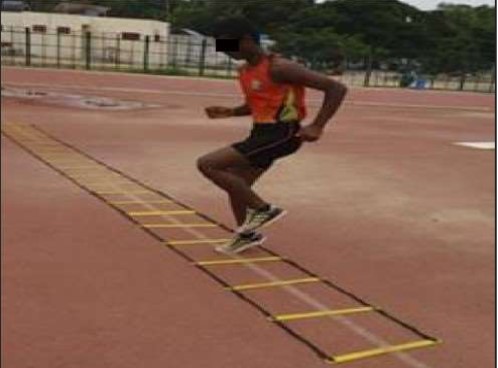
Aim: The aim of study was to evaluate the effectiveness of a structured plyometric exercise training program in improving ankle instability among Indian Volleyball Players.Design: A pre and post-test quasi-experimental study using standardized assessment tools. Materials and Methods: A total of 30 Indian Volleyball Players were recruited and randomly assigned into two groups: 15 participants in the experimental group underwent a plyometric training program, while the remaining 15 in the control group did not receive this intervention. The study assessed ankle instability using the Cumberland Ankle Instability Tool (CAIT) and pain perception using the Visual Analogue Scale (VAS) before and after the intervention. The experimental group followed a supervised plyometric training protocol over a designated period. Results: Data analysis revealed a statistically significant improvement (p<0.05) in the experimental group compared to the control group. The CAIT scores increased,indicating improved ankle stability, and VAS scores decreased, reflecting reduced discomfort. Conclusion: The findings suggest that plyometric training is effective in enhancing ankle stability and reducing instability-related symptoms among Indian Volleyball Players. Implementing such training could be beneficial for injury prevention and performance enhancement in sports involving dynamic lower limb activity
References
- 1. Freeman M.A. Instability of the foot after injuries to the lateral ligament of the ankle. J Bone Joint Surg Br. 1965; 47(4): 669-677.
- 2. Yeung M.S., Chan K.M., So C.H., Yuan W.Y. An epidemiological survey on ankle sprain. Br J Sports Med. 1994; 28(2): 112-116.
- 3. Gerber J.P., Williams G.N., Scoville C.R., Arciero R.A., Taylor D.C. Persistent disability associated with ankle sprains: a prospective examination of an athletic population. Foot Ankle Int. 1998; 19(10): 653-660.
- 4. Delahunt E., Coughlan G.F., Caulfield B., Nightingale E.J., Lin C.W., Hiller C.E. Inclusion criteria when investigating insufficiencies in chronic ankle instability. Med Sci Sports Exerc. 2010; 42(11): 2106-2121.
- 5. Gribble P.A., Delahunt E., Bleakley C.M., et al. Selection criteria for patients with chronic ankle instability in controlled research: A position statement of the international ankle consortium. J Athl Train. 2014; 49(1): 121-127.
- 6. De Noronha M., França L.C., Haupenthal A., Nunes G.S. Intrinsic predictive factors for ankle sprain in active university students: A prospective study. Scand J Med Sci Sports. 2013; 23(5): 541-547.
- 7. Hootman J.M., Dick R., Agel J. Epidemiology of collegiate injuries for 15 sports: Summary and recommendations for injury prevention initiatives. J Athl Train. 2007; 42(2): 311-319.
- 8. Wikstrom E.A., Brown C.N. Minimum reporting standards for copers in chronic ankle instability research. Sports Med. 2014; 44(2): 251-268.
- 9. Wikstrom E.A., Tillman M.D., Chmielewski T.L., Cauraugh JH, Naugle K.E., Borsa P.A. Discriminating between copers and people with chronic ankle instability. J Athl Train 2012; 47(2): 136-142. 36
- 10. Hiller C.E., Refshauge K.M., Herbert RD, Kilbreath S.L. Intrinsic predictors of lateral ankle sprain in adolescent dancers: A prospective cohort study. Clinical J Sport Med. 2008; 18(1): 44-48.
- 11. Hiller C.E., Nightingale E.J., Lin C.W., Coughlan G.F., Caulfield B., Delahunt E.Characteristics of people with recurrentankle sprains: a systematic review with metaanalysis. Br J Sports Med. 2011; 45(8): 660-672.
- 12. Munn J., Sullivan S.J., Schneiders A.G.Evidence of sensorimotor deficits in functional ankle instability: a systematic review with metaanalysis. J Sci Med Sport. 2009; 13(1): 2-12.
- 13. Konradsen L. Sensori-motor control of the uninjured and injured human ankle. J Electromyogr Kinesiol. 2002; 12(3): 199-203.
- 14. Chimera N.J., Swanik K.A., Swanik CB, Straub SJ. Effects of plyometric training on muscleactivation strategies and performance in female athletes. J Athl Train. 2004; 39(1): 24-31.
- 15. Ismail M.M., Ibrahim M.M., Youssef E.F., El Shorbagy K.M. Plyometric training versus resistive exercises after acute lateral ankle sprain. Foot Ankle Int. 2010; 31(6): 523-530.
- 16. Lephart S., Abt J.P., Ferris C., et al. Neuromuscular and biomechanical characteristic changes in high school athletes: a plyometric versus basic resistance program. Br J Sports Med. 2005; 39(12): 932-938.
- 17. Renstrom P., Arms SW, Stanwyck T.S., Johnson R.J., Pope M.H. Strain within the anterior cruciate ligament during hamstring and quadriceps activity. Am J Sports Med. 1986; 14(1): 83-87.
Data Sharing Statement
There are no additional data available. All raw data and code are available upon request.
Funding
This research received no funding.
Author Contributions
All authors contributed significantly to the work and approve its publication.
Ethics Declaration
This article does not involve any human or animal subjects, and therefore does not require ethics approval.
Acknowledgements
We would like to express our gratitude to the patients, their families, and all those who have contributed to this study.
Conflicts of Interest
No conflicts of interest in this work.
About this article

Cite this article
Karthikeyan T., Shanmuga Raju P. Effectiveness of a Plyometric Training Program in Improving Ankle Instability among Indian Volleyball Players. Therapy Jr. 2026; 19(1): 49-55.
Licence:
Attribution-Non-commercial 4.0 International (CC BY-NC 4.0)This license enables reusers to distribute, remix, adapt, and build upon the material in any medium or format for noncommercial purposes only, and only so long as attribution is given to the creator.
| Received | Accepted | Published |
|---|---|---|
| November 19, 2026 | January 29, 2026 | March 30, 2026 |
DOI: 10.21088/potj.0974.5777.19126.5
Keywords
Plyometric trainingAnkle instabilityIndian Volleyball PlayersCAITVASInjury preventionSearch for Similar Articles
Similar Articles
- Leadership in Physiotherapy: A Narrative Review
- Effectiveness of Low Level Laser Theapy in the Management of Temporomandibular J...
- The Impact of Air Pollution on Cardiopulmonary Health: Molecular Mechanisms, Pre...
- Efectiveness of Physiotherapy in Postpartum Women with Diastasis Recti: A Review
- Pain Neuroscience Education: Transforming Physiotherapy Practice
Article Level Metrics
Last UpdatedSaturday 24 October 2026, 16:08:27 (IST)
4389
Accesses
31
739
00
Citations
NA
NA
NA
Download citation
Article Keywords
Keyword Highlighting
Highlight selected keywords in the article text.
Timeline
| Received | November 19, 2026 |
| Accepted | January 29, 2026 |
| Published | March 30, 2026 |
licence
Attribution-Non-commercial 4.0 International (CC BY-NC 4.0)
This license enables reusers to distribute, remix, adapt, and build upon the material in any medium or format for noncommercial purposes only, and only so long as attribution is given to the creator.