Full Text (PDF)
Indian Journal of Ancient Medicine and Yoga 15(4):p 175-178, October – December 2022. | DOI: https://doi.org/10.21088/ijamy.0974.6986.15422.6
Case Report
Effect of Kunjal Kriya on Class I Obesity: A Case Study
P Sudhakar Reddy, Professor & Head, Department of PG Studies, Swasthavritta, JSS Ayurveda Medical College & Hospital, Mysuru 570015, Karnataka, India. null, Nimmi A N1 null, P Sudhakar Reddy2 null, Aparna Surendra3 null
Author Information
Licence:
Attribution-Non-commercial 4.0 International (CC BY-NC 4.0)Indian Journal of Ancient Medicine and Yoga 15(4):p 175-178, October – December 2022. | DOI: https://doi.org/10.21088/ijamy.0974.6986.15422.6
How Cite This Article:
Nimmi A N, P Sudhakar Reddy, AparnaSurendra/Effect of Kunjal Kriya on Class I Obesity: A Case Study/Indian J of Ancient
& Yoga. 2022;15(4): 175–178
Timeline
Received : October 05, 2022
Accepted : October 29, 2022
Published : November 30, 2022
Abstract
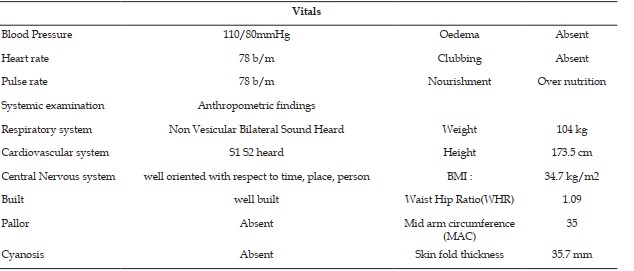
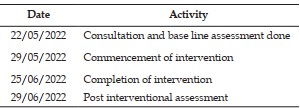
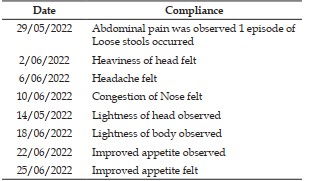
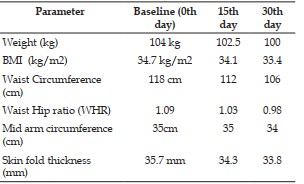
Obesity has been identified as a major public health challenge of the twenty-first century across the globe. Obese individuals often face obstacles in society and in their day-to-day lives, far beyond health risks. Psychological suffering may be one of the most painful parts of obesity. Class I obesity boosts the risk of multiple diseases, including hypertension, coronary artery disease, congestive heart failure, stroke, asthma, pulmonary embolism, and gallbladder disease. The shatkarma of Hathayoga is indicated in excess Kapha (phlegm) and Medas (fat) condition like Obesity and Kunjalkriya or Gajakarani is one of the types of Shatkarma (Dhouti) which is easy to carry out with high compliance level has an effect on reducing the body weight. A Male patient aged 22 years approached to Swastharakshana OPD on 22nd May 2022 with a history of excessive weight gain for 2 years associated with exertional dyspnoea and excessive perspiration. After taking informed consent, Kunjal Kriya was carried out weekly twice for 4 weeks in our hospital under direct supervision. At the end of the intervention period, patient weight was reduced by 4 kgs, BMI reduced by 1.3, and good compliance to treatment was noticed.
References
- 1. Kalra S, Unnikrishnan AG. Obesity in India: the weight of the nation. J Med Nutr Nutraceut 2012;1:37-41.
- 2. Finucane MM, Stevens GA, Cowan MJ, Danaei G, Lin JK, Paciorek CJ, et al. National, regional, and global trends in body-mass index since 1980: Systematic analysis of health examination surveys and epidemiological studies with 960
- 3. Popkin BM. The shift in stages of the nutritional transition in the developing world differs from past experiences. Public Health Nutr. 2002;5:205–14.
- 4. H.Lubetkin E. The impact of obesity on healthrelated quality-of-life in the general adult US population. Journal of Public Health. 2005;27(2): 156–64.
- 5. Shin N. Y. Shin M. S. Body dissatisfaction, self-esteem, and depression in obese Korean children. The Journal of Pediatrics. 2008; 152(4):502–06.
- 6. Jia H. Lubetkin E. I. The impact of obesity on health-related quality-of-life in the general adult US population. Journal of Public Health. 2005;27(2):156–64.
- 7. Rai Bahadur Srisa Chandra Vasu, English translation, (2007), Gheranda Samhita, Munshiram Manoharlal Publications, New Delhi, Lesson I, Verse no. 9-11, Page no. 3.
- 8. Swami Muktibodhananda,commentary on Hatha yoga pradipika (2006), Yoga publications Trust, Munger, Bihar. Reprint edition, ISBN:81- 85787-38-1, chapter 2,Verse no.21, Page no.185.
- 9. Swami Muktibodhananda, commentary on Hatha yoga pradipika (2006), Yoga publications Trust, Munger,Bihar. Reprint edition, ISBN:81- 85787-38-1, chapter 2, Page no.194.
- 10. Sudhanshuverma Impact of yoga on obesity management of corporate personnel International Journal of Yoga & Allied Sciences 5(2):152-157 • October 2016.
- 11. Swami Muktibodhananda, commentary on Hatha yoga pradipika (2006) ,Yoga publications Trust, Munger, Bihar. Reprint edition, ISBN: 978-81-85787-38-1 Page no.196.
- 12. Ragavendraswamy Balakrishnan, Ramesh mavathur nanjudaiah and Nandikrishnamurhy, manjunath. Voluntarily induced vomiting- a yoga technique to enhance pulmonary functions in healthy humans. Journal of Ayurveda and Integrative Medicine 2018; 9(213).
Data Sharing Statement
There are no additional data available. All raw data and code are available upon request.
Funding
This research received no funding.
Author Contributions
All authors contributed significantly to the work and approve its publication.
Ethics Declaration
Provide information related to the Ethics Committee approval with approval number OR write, This article does not involve any human or animal subjects, and therefore does not require ethics approval.
Acknowledgements
We would like to express our gratitude to the patients, their families, and all those who have contributed to this study.
Conflicts of Interest
The authors report no conflicts of interest in this work.
About this article

Cite this article
Nimmi A N, P Sudhakar Reddy, AparnaSurendra/Effect of Kunjal Kriya on Class I Obesity: A Case Study/Indian J of Ancient
& Yoga. 2022;15(4): 175–178
Licence:
Attribution-Non-commercial 4.0 International (CC BY-NC 4.0)| Received | Accepted | Published |
|---|---|---|
| October 05, 2022 | October 29, 2022 | November 30, 2022 |
DOI: https://doi.org/10.21088/ijamy.0974.6986.15422.6
Keywords
Obesity; Yoga; Kunjal Kriya; Shatkarma; Saptasadhana.Search for Similar Articles
Similar Articles
- Efficacy of Katupila Ghrita in the Management of Itartha dagdha Vrana (Burn Woun...
- Clinical Outcomes of Ayurvedic Management in Acute Influenza Like Illness: A Cas...
- Effect of Ayurvedic Drugs on Scalp Psoriasis (Kitibha Kustha)
- Yogic Elements in the Brahma Mahapurana: A Textual and Comparative Study
- Management of Adenoid Hypertrophy: An Ayurvedic Perspective
Article Level Metrics
Last UpdatedTuesday 15 September 2026, 14:25:25 (IST)
4098
Accesses
12
833
00
Citations
NA
NA
NA
Download citation
Article Keywords
Keyword Highlighting
Highlight selected keywords in the article text.
Timeline
| Received | October 05, 2022 |
| Accepted | October 29, 2022 |
| Published | November 30, 2022 |