Full Text (PDF)
Indian Journal of Waste Management 7(1):p 27-37, January-June 2023. | DOI: NA
Original Article
Eco Friendly Energy Models for Total Waste and Reuse Management in Selected Villages of Punjab State: Observational Study Report
Author Information
Licence:
Attribution-Non-commercial 4.0 International (CC BY-NC 4.0)This license enables reusers to distribute, remix, adapt, and build upon the material in any medium or format for noncommercial purposes only, and only so long as attribution is given to the creator.
Indian Journal of Waste Management 7(1):p 27-37, January-June 2023. | DOI: NA
How Cite This Article:
P Chitra/Eco Friendly Energy Models for Total Waste and Reuse Management in Selected Villages of Punjab State: Observational Study Report./Indian Journal of Waste Management. 2023;7(1):27–37.Timeline
Received : January 17, 2023
Accepted : February 28, 2023
Published : June 30, 2023
Abstract
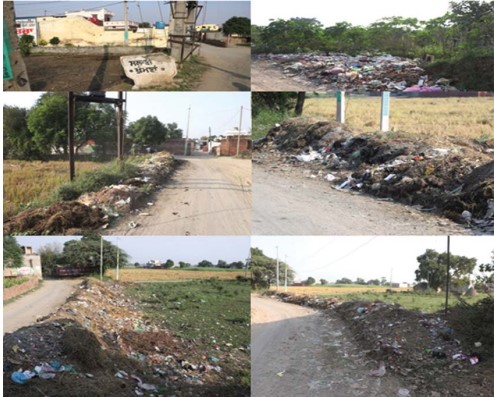
Introduction: Eco Friendly Energy Models (EFUEM) solving everyday problems and ineffective waste management have an impact on life, work, health and overall wellbeing of humans, all beings in the planet and also Earth itself.The investigator trying to identify the best practices of total waste and re use management system on needs/issues of the current practices. Based on assessment and evaluating the process of TWaRUM in Pilot study report, the large scale study will be conducted in Fategarh sahib district, Punjab, India Overall Aims of the study are; Primary Aims; 1. Develop an appropriate system of total waste and re use management focused on reducing waste volumes, re using materials for cost effective beneficial of whole and specific indisposal of reusable wastes products and the byproducts to create value in worth. 2. Implement specific new equipment’s for high effective and moderate cost for total waste and re use management for selected villages. Secondary Aims; Based on Pilot study report the best practices and issues will be identified to implement in Larger scale study on Fategarh Sahib District. EFEM will be introduced in larger population such as Cities, Municipalities, and Corporation. Objectives: I Assessment i. Assess the existing practices of waste management system in selected villages. ii. Explore the current reusable energy sources, recycling products and byproducts. iii. Identify the waste disposal reached points and check the environmental health hazards. iv. Survey and screen the health hazards illness of people and prepare the report. v. Provide and refer the health care services based on needs and problems. vi. Write report regarding the needs and issues in selected villages of Punjab state. Methods & Materials: Qualitative approach of Observational field notes was used to assess the current practices of villages of Khumna and Khanian. The investigator interviewed Sarpanch (Panchayat President) with translator of Punjabi of each village, with Panchayat President Approval. Results: The researcher visited the villages and interacted with people and the details is narrated with photographs of Khumna. The village have open drainage system and few places obstructed the drainage, mosquitoes breeding may be for long times happened. People are managing with mosquitoes repellents with cow dung smoke at evening in their house premises to control and prevent health issues. The waste disposable is in road side dumping or the spaces anywhere throwing are the real practices existing; there are no facilities to follow waste management of using different dust bins for disposable and regular collecting waste and in different streets. No sanitary workers and other Government schemes of benefits not reached to this village. This village has Primary school and Primary Health Centre for their use. In this village cattle’s are living around 300. The cow dung used for manure and dry cow dung named Guhara for fuel use. This village is practicing open drainage system and maintaining somewhat cleanliness. Sanitary worker arranged by their own to disposable of waste in weekly 2 or 3 times. The villagers are paying money for sanitary worker who is residing from the same village.When the observation of waste disposable, the road side dumping is commonly seen and plastics wastes are found everywhere in village. It is affecting the cultivating land, pollution of air and water sources. Discussion: The investigator observed the village practices of Waste Management with check list of current waste management system and Drainage facility of the 2 villages. There is no appropriate waste and re use management system and open drainage system is existing and road side dumping is regular practice of this two villages. Based on observation a basic equipments of Wet Composter Machines, Plastic Scrab Grinder Machine and Municipality Solid Waste Plant is required for a village to keep clean. For all equipments to keep and function on a unit of minimum 2400 square feet is required for shelter of each village. Conclusion: Eco friendly models for basic equipment of wet composting, plastic scrap grinder machine, municipality solid waste trommel plant and plan of construction unit to install equipment, manpower requirements and the cost of implementation of each equipment described in brief. If once the unit establishes it may collaborate with available Government existing sanitary workers to continue the unit as permanent salary basis. The use of TWaRUM and EFEM the sanitary workers, families, children they will follow right practice of segregating waste disposable for long time, it will continue throughout their life time. The Government will implement such a system in all the villages, cities in India to maintain good waste management system.
References
- 1. h t t p s : / / w w w . u n . o r g / e n / d e s a / w o r l d - population - reach - 8- billion- 15-november-2022.
- 2. Solid Waste Management (MOOC). Open learning campus. Washington: World Bank Group; 2020 (https://olc.worldbank.org/content/solid-wastemanagement-mooc, accessed 2 June2020).
- 3. Kaza S, Yao L, Bhada-Tata P, Van Woerden F. What a Waste 2.0. A Global Snapshot of Solid WasteManagement to 2050. Washington: The World Bank; 2018 (https://openknowledge. worldbank.org/handle/10986/30317, accessed 2 June 2020).
- 4. UNU, ITU, UNITAR, ISWA. Global e-waste monitor 2020. Geneva: ITU; 2020 (https:// www.itu.int/en/ITU-D/Environment/Pages/ Spotlight/Global-Ewaste-Monitor-2020.aspx, accessed 7 October 2020).
- 5. Electrical/electronic waste and children’s health. Training for health care providers. Geneva: World HealthOrganization; 2019 (https://apps.who.int/ iris/handle/10665/331057, accessed 2 June 2020).
- 6. Alam, P., Mazhar, M.A., Khan, A.H., Khan, N.A., Mahmoud, A.E.D., 2021. Seasonal characterization of municipal solid waste in the city of Jammu, India. IOP Conf.Ser.: Mater. Sci. Eng. 1058 (1), 012061.https://doi.org/10.1088/1757- 899X/1058/1/012061.
- 7. Wang, H., Nie, Y., 2001. Municipal Solid Waste Characteristics and Management in China. Journal of Air and Waste Management Association 51 (2), 250-263.https://doi.org/10.1080/10473289.2001.1 0464266.
- 8. Mazhar, M.A., Khan, N.A., Khan, A.H., Ahmed, S., Siddiqui, A.A., Husain, A.,Rahisuddin, , Tirth, V., Islam, S., Shukla, N.K., Changani, F., Yousefi, M.,Hassaballa, A.E., Radwan, N., 2021. Upgrading combined anaerobic-aerobicUASB-FPU to UASBDHS system: Cost comparison and performance perspectivefor developing countries. Journal of Cleaner Production 284, 124723.https://doi. org/10.1016/j.jclepro.2020.124723.
- 9. Mohammed, S., Gill, A.R., Alsafadi, K., Hijazi, O., Yadav, K.K., Hasan, M.A., Khan, A.H., Islam, S., Cabral-Pinto, M.M.S., Harsanyi, E., 2021. An overview of greenhousegases emissions in Hungary.J of Cle Prod 314, 127865.https://doi. org/10.1016/j.jclepro.2021.127865.
- 10. Alam, P., Sharholy, M., Ahmad, K., (2020). A Study on the Landfill Leachate and Its Impact on Groundwater Quality of Ghazipur Area, New Delhi, India.In:Kalamdhad A. (eds) Recent Developments in Waste Management. LectureNotes in Civil Engineering, 57. Springer, Singapore.https://doi.org/10.1007/978-981-15- 0990-2_27.
- 11. Idris, A., Inane, B., Hassan, M.N., 2004.Overview of Waste Disposal and Landfills/Dumps in Asian Countries.Journal of Material Cycles and Waste Management 6,104–110.https://doi.org/10.1007/ s10163-004-0117-y
- 12. Afzal Husain Khan a, MufeedSharholy b, Pervez Alam c, Abdullah I. Al-Mansour d, Kafeel Ahmad b, et al. Evaluation of cost benefit analysis of municipal solid waste managementsystems. Journal of King Saud University – Science.Date of publication 26 March 2022. Volume number 34(2022) 101997.
- 13. Pistoia, G., 2010. Electric and hybrid vehicles. Power sources, models, sustainability, infrastructure and the market. The Netherlands Linacre House, Oxford.
- 14. Azarov, V., Sajkin, A., 2013. Vehicle and its impact on the Road–Environment–Human system. Trudy NAMI, 2, 47–57
- 15. Gusarov, A., 2009. Fuel consumption and CO2 emissions from motor vehicles.Zurnal AAI 3 (56), 46–53.
- 16. WHO (1969). Problems In Community Wastes lviana 9 ernent, Public Health Papers NO.38.
- 17. Assar, M. (1971). Guide to Sanitation In Natural Disorders, WHO, Geneva.
- 18. https://mohua.gov.in/upload/uploadfiles/ files/93.pdf.
Data Sharing Statement
There are no additional data available. All raw data and code are available upon request.
Funding
This research received no funding.
Author Contributions
All authors contributed significantly to the work and approve its publication.
Ethics Declaration
This article does not involve any human or animal subjects, and therefore does not require ethics approval.
Acknowledgements
We would like to express our gratitude to the patients, their families, and all those who have contributed to this study.
Conflicts of Interest
No conflicts of interest in this work.
About this article

Cite this article
P Chitra/Eco Friendly Energy Models for Total Waste and Reuse Management in Selected Villages of Punjab State: Observational Study Report./Indian Journal of Waste Management. 2023;7(1):27–37.
Licence:
Attribution-Non-commercial 4.0 International (CC BY-NC 4.0)This license enables reusers to distribute, remix, adapt, and build upon the material in any medium or format for noncommercial purposes only, and only so long as attribution is given to the creator.
| Received | Accepted | Published |
|---|---|---|
| January 17, 2023 | February 28, 2023 | June 30, 2023 |
DOI: NA
Keywords
(TWaRUM) Total Waste and Re Use Management(EFEM) Eco Friendly Energy Mode(MSWM) Municipality Solid Waste Management(WCM) Wet Composter Machine(WMU) Waste Management UnitSearch for Similar Articles
Similar Articles
- Pet Poop, Waste Management, Strays
- Recycling of Waste Materials Generated in the streets of Puducherry (Pondicherr...
- A Study on Benefits, Challenges and Role of Artificial Intelligence in Law
- Evaluation of MPKV Central Campus (West), Rahuri (M.S.) Watershed for Priority...
- Indus Waters Treaty Hidden Tensions, Flowing Rivers
Article Level Metrics
Last UpdatedSunday 27 September 2026, 14:24:24 (IST)
906
Accesses
26
183
00
Citations
NA
NA
NA
Download citation
Article Keywords
Keyword Highlighting
Highlight selected keywords in the article text.
Timeline
| Received | January 17, 2023 |
| Accepted | February 28, 2023 |
| Published | June 30, 2023 |
licence
Attribution-Non-commercial 4.0 International (CC BY-NC 4.0)
This license enables reusers to distribute, remix, adapt, and build upon the material in any medium or format for noncommercial purposes only, and only so long as attribution is given to the creator.